Long Beach 1

Tariff Front-loading Pushes US Imports from Record Highs to Year-End Declines

After setting an all-time monthly record for container imports in July, US retailers are bracing for a sharp reversal to close out 2025, with volumes projected to tumble nearly 20% year on year through the holiday season.

The National Retail Federation’s (NRF) latest Global Port Tracker shows that front-loading tied to tariff deadlines and labour fears has left supply chains overstocked heading into the final quarter. As a result, the NRF forecasts full-year imports will be down almost 6% on 2024.

September’s forecast suggest that inbound containerised cargo will be down 20% on last year, while October and November are predicted to be almost 20% below 2024 levels. November would mark the lowest monthly total since April 2023. December imports are also set to fall nearly 20% year over year.

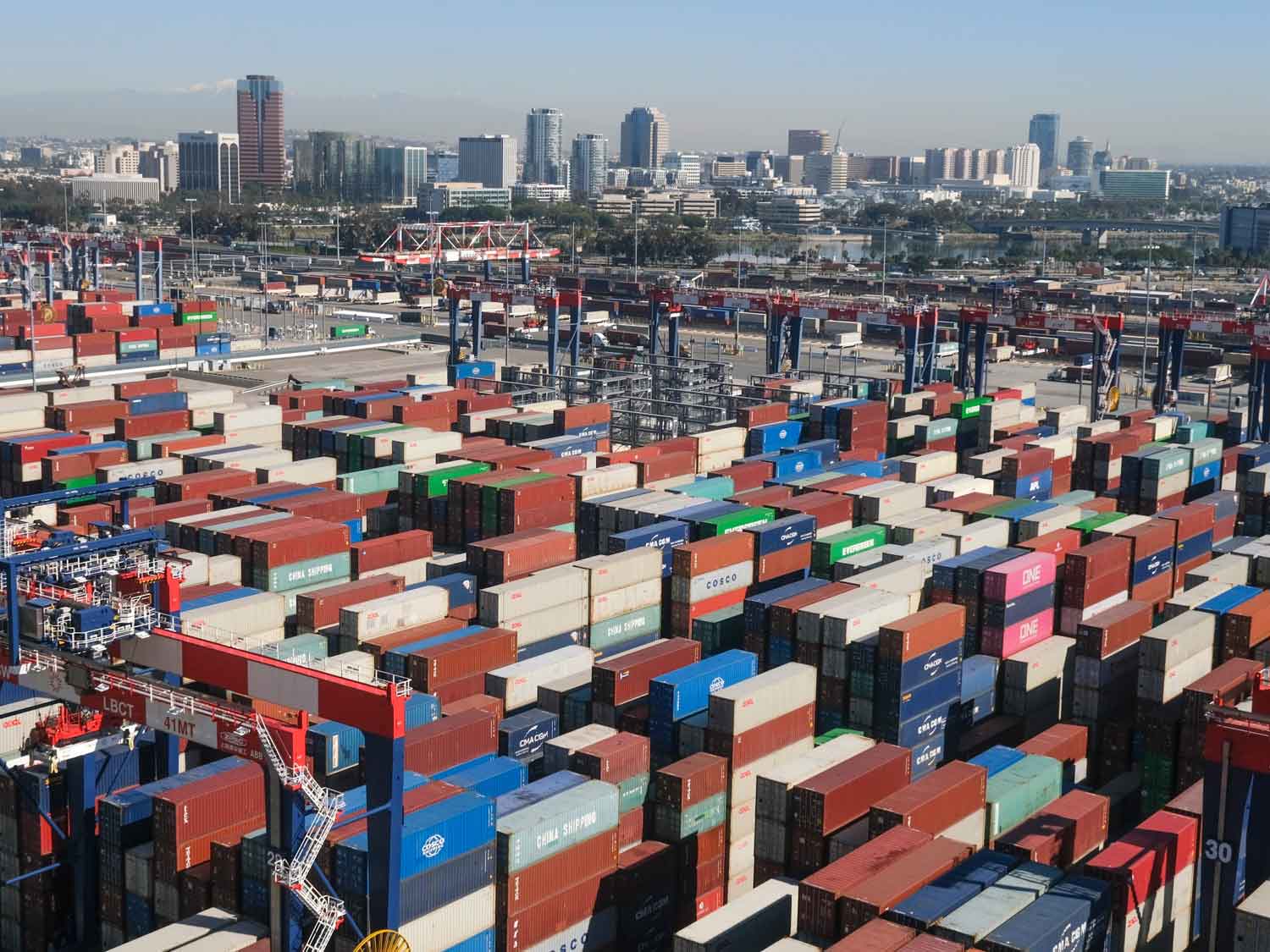
This comes in stark contrast to July, when tariff-driven front-loading propelled US imports to 2.609 million TEUs. The highest monthly figure ever recorded. Ports such as Los Angeles and Houston reported double-digit growth compared with June, as shippers rushed to beat potential duty increases. Imports from Southeast Asia and the Indian subcontinent set new records, while China’s volumes rebounded 36% month on month, even if still down compared with 2024.

But analysts caution that the surge represented a distortion, not a sustainable trend. “Friends, allies and foes are all being hit by distortions in trade flows as importers try to second-guess tariff levels by pulling forward imports before the tariffs take effect,” warned one. “This will certainly lead to a downturn in trade volumes by late September because inventories for the holiday season will already be in hand.”

The tariff backdrop remains fluid. Washington and Beijing recently extended their trade truce until November, keeping tariffs at 30% on Chinese goods entering the US and 10% on American exports to China. That temporary pause avoided the escalation to triple-digit duties threatened earlier in the year, but left shippers in limbo.

Jonathan Gold, NRF’s vice president for supply chain and customs policy, said the figures underline how tariffs are reshaping supply chains. “Tariffs are beginning to drive up consumer prices, and fewer imports will eventually mean fewer goods on store shelves,” he noted.

With consumer demand uncertain and trade policy still in flux, retailers are preparing for a far quieter peak season than the record-breaking summer surge suggested.

From record highs to steep year-end declines, many supply chains are overstocked and exposed to policy uncertainty.

In this volatile environment, shippers need more than capacity, they need agility and control.

Metro’s dedicated sea freight team and expanding US footprint, helps businesses navigate these swings with confidence. From proactive capacity management and efficient routing to supply chain visibility and inventory optimisation, we ensure your cargo keeps moving smoothly across the Pacific, whatever the market conditions.

EMAIL Andy Smith, Managing Director, to discuss how Metro can safeguard your transpacific supply chain.

Six question marks 1440x1080 1

H1 2025: Six Developments Reshaping Global Trade

The first half of 2025 has been one of the most turbulent periods for supply chains in recent memory. From renewed tariff wars to fresh geopolitical flashpoints, logistics professionals have had to contend with a constantly shifting landscape.

At the same time, structural challenges around skills, safety, and sustainability have continued to grow. Here we review six developments that defined H1 2025.

1. Tariffs return to the fore
The pause in US tariff escalation ended in August, with the White House reintroducing “reciprocal” tariffs that apply baseline duties of 10% to all countries and higher rates of 10–41% depending on origin. The UK sit at the low end, while Syria faces the steepest levels. Brazil has been singled out further, hit by an additional 40% levy. Canada also saw tariffs raised from 25% to 35% on certain goods, justified by Washington’s claim that Ottawa has not done enough to curb fentanyl flows.

The executive order applies from 7 August 2025, with a grace period allowing cargo already loaded onto vessels before that date to arrive until 5 October 2025. To add complexity, US Customs will also impose new fees on Chinese-built or operated vessels from 14 October, potentially forcing alliances such as the Ocean Alliance into costly fleet reshuffles. Carriers are already working through how to redeploy capacity to avoid penalties, with COSCO and OOCL particularly exposed.

2. New shipping alliances reshape networks
The recomposition of global shipping alliances in Q1 has reshaped carrier strategies. The launch of the Gemini Cooperation between Maersk and Hapag-Lloyd marked one of the most significant realignments in recent years, focused on achieving 90%+ schedule reliability. Shippers are already seeing more dependable services, but questions remain about whether premium pricing will follow.

Other alliances, particularly Ocean and THE Alliance (now Premier Alliance), are recalibrating networks, with competition sharpening across Asia–Europe and transpacific trades. For shippers, the alliance changes mean rethinking service contracts and adapting to new network structures that could endure for much of the decade.

3. Houthi attacks deepen Red Sea crisis
The Red Sea crisis, triggered by Houthi rebel attacks, has now stretched on for nearly two years. In July 2025 the threat escalated further with the sinking of the Magic Seas, a Greek-operated vessel targeted for its links to companies calling at Israeli ports. Analysis suggests that one in six vessels globally could now be considered threatened under the Houthis’ broad definition of violators.

For container lines, this effectively rules out a return to Suez Canal routings before 2026 — and possibly not until 2027. Rerouting around the Cape of Good Hope adds up to two weeks to Asia–Europe journeys, pushing up costs and insurance premiums, and putting additional strain on fleet capacity. The Red Sea instability has been a reminder of how localised conflicts can have global consequences for supply chains.

4. Logistics skills shortages persist
The UK continues to face a significant shortfall in logistics skills, with the Road Haulage Association estimating a deficit of around 50,000 HGV drivers. The ONS also reports 6,000 fewer courier and delivery drivers than the previous year. With 55% of HGV drivers aged between 50 and 65, the demographic imbalance remains a long-term concern.

Factors include reduced access to EU workers post-Brexit, poor industry perception, and limited uptake of government training schemes. Although the crisis is not as acute as during the height of the pandemic, the ageing workforce and lack of young entrants mean structural shortages will continue. Rising wage costs, recruitment struggles, and bottlenecks in road transport all add to the burden on UK supply chains.

5. EV shipping challenges raise alarm
The growth of electric vehicle (EV) trade has created new safety risks at sea. Several high-profile fires on car carriers have been linked to lithium-ion batteries, sparking concern among insurers, regulators, and shipowners. Insurers are pushing for tougher loading protocols, enhanced crew training, and more advanced fire suppression systems.

For supply chains, this adds cost and complexity to automotive logistics, with carriers facing higher insurance premiums and the need to retrofit vessels. It is also slowing the momentum of EV exports, just as demand for cleaner vehicles accelerates globally.

6. Sustainability regulations tighten
Sustainability regulation is reshaping procurement strategies. The EU’s Carbon Border Adjustment Mechanism (CBAM) is beginning to impact trade in carbon-intensive products such as steel, aluminium, and cement, with importers required to report embedded emissions.

At the same time, sustainable aviation fuel (SAF) is moving toward a tipping point. UK and EU mandates are pushing airlines to integrate SAF into their fuel mix, with new investments underway to scale production.

While tariffs and geopolitics grab headlines, sustainability is quietly becoming a decisive factor in supplier choice, cost structures, and long-term resilience planning. For many organisations, compliance with emissions and ESG frameworks is no longer optional but critical.

Outlook
H1 2025 has exposed the vulnerability of supply chains to political shocks, armed conflict, safety risks, and structural labour shortages. Tariffs, alliances, and attacks have disrupted networks, while long-term challenges around sustainability and skills remain unresolved.

The message for supply chain leaders is clear: resilience, agility, and visibility will be critical in the second half of 2025, as disruption becomes the new normal.

H1 2025 has underlined how vulnerable global supply chains have become and staying ahead demands visibility, expertise, and a trusted partner by your side.

Metro’s account management team works proactively with customers to anticipate risks, share insights, and design solutions that are resilient and adaptable to change.

Our expertise encompasses dangerous goods and lithium battery shipping, customs, and multimodal freight, backed by a strong people strategy that includes apprenticeships, engagement programmes, and our Great Place to Work certification.

We are also leading the way on sustainability. Metro has been carbon neutral for five years, pioneering the use of Sustainable Aviation Fuel (SAF), while our MVT ECO platform helps businesses forecast, measure, and offset emissions across their global supply chains.

EMAIL Andrew Smith, Managing Director, to learn how Metro can build resilience into your supply chain.

Trumps tariffs 1440x1080 1

August 2025 Tariff Situation: New Rules, New Rates

The US tariff reset that took effect from has ushered in a tiered regime targeting dozens of trading partners, while locking in new agreements with key allies including the UK and EU. The measures follow months of negotiation and a deadline that forced countries to strike deals or face steep duties.

The executive order signed on 1 August by President Trump introduced a new system linking tariff rates to trade balances:

  • 10% tariff – for partners with strong reciprocal purchasing, including the UK and Brazil.
  • 15% tariff – for partners with smaller deficits, such as the EU, Japan and South Korea.
  • Higher rates – for countries with large surpluses or no negotiated deal, rising steeply depending on product category. Examples include:
    • Canada – now at 35% (USMCA‑compliant goods exempt).
    • India – 25%.
    • Switzerland – 39%.
    • Taiwan – 20%.

China remains outside the framework, facing a 12 August deadline to conclude its own agreement or revert to previously threatened peak tariffs.

Most new rates officially take effect 7 August, giving US Customs a brief window to configure enforcement systems. For companies shipping under pre‑deal arrangements, any goods cleared into the US before this date will avoid the new duties; shipments arriving later will be assessed at the revised rates.

Supply Chain Impacts

  • UK–US trade – While the UK avoided steeper tariffs, the 10% rate still raises import costs for UK‑origin goods into the US, particularly in manufacturing, automotive, and speciality food sectors.
  • EU–US trade – 15% baseline tariff now locked in under the July framework deal, with specific product carve‑outs still to be agreed.
  • Canada and Mexico – Canada now faces significant exposure outside USMCA‑compliant flows; Mexico remains under a 90‑day extension before potential hikes.
  • Asia–US trade – Taiwan, India, and other regional suppliers face higher rates, pushing importers to reassess sourcing strategies.

Strategic Considerations for Shippers

  • Re‑map sourcing – Companies may need to adjust supplier portfolios to balance cost impact against tariff exposure.
  • Track compliance – Documentation proving origin will be critical to avoid unintended penalties, especially for goods moving through multiple countries.
  • Build flexibility – With China’s 12 August deadline looming and other bilateral negotiations ongoing, trade conditions could shift again within weeks.

In today’s changing tariff environment, Metro’s customs brokerage services keep U.S. importers compliant, informed, and in control. Our proprietary AI, ML, and automation‑driven brokerage platform — CuDoS — is updated instantly as new rules and tariffs take effect.

Metro Global USA delivers end‑to‑end clearance support, from documentation validation and tariff strategy to structuring entries for exemption eligibility, even on shipments routed via transshipment hubs. Whether navigating classification changes or securing the right evidence for tariff relief, we combine local knowledge, intelligent systems, and customs expertise to simplify compliance and protect your business.

Email Managing Director, Andrew Smith, to learn more about our customs services and CuDoS platform.

ULD on tarmac

Front‑Loading and Hidden Inventory Disrupt Traditional Peak Season

The traditional second‑half transpacific cargo peak is unlikely to materialise this year as a wave of accelerated shipments in the first half of 2025 has drained demand from the later months, while significant volumes of hidden inventory remain stalled in supply chains.

In the first half of 2025, shippers brought forward large volumes of cargo in anticipation of increasing tariffs later in the year. This front‑loading intensified in May and June, particularly on Asia–US West Coast and East Coast routes. By July and August, the usual third‑quarter build‑up failed to materialise, with demand easing as warehouses filled with earlier‑delivered stock. Through August and September, significant volumes remained stored in bonded facilities and regional hubs across the US, delaying their movement into end‑markets.

US importers are taking a cautious stance, with many shifting to calling-off or ordering only what is immediately required, adopting a “wait‑and‑see” approach in response to ongoing uncertainty over the US economic outlook and potential trade policy shifts.

Hidden Inventory Dampens Air Cargo Flow
The holding back of cargo is affecting airfreight patterns. Instead of moving directly to consignees, goods are being held at warehouses, hubs and terminals throughout the supply chain, often without showing on anyone’s dashboard. This “hidden inventory” keeps spot demand artificially subdued while preventing a normal seasonal rate drop.

As a result, air cargo rates may remain supported and despite signs of a cooling demand environment. Market turnover is slowed, with more tariff turmoil pushing the impact of inventory release further into the year.

With peak volumes shifted earlier in the year, the traditional seasonal curve has flattened, making weaker‑than‑usual cargo surges likely in the third and fourth quarters. This shift creates capacity planning challenges for carriers that had anticipated a late‑summer rush, potentially leading to under‑utilised sailings or the need to adjust service rotations. At the same time, US importers are taking a cautious approach, placing smaller and more frequent orders while deferring larger commitments until there is greater certainty over the economic outlook and future trade policy.

Until the hidden stock is released and importers regain confidence, the transpacific market is unlikely to see the kind of seasonal uplift typical in past years. Both ocean and air freight providers may need to adapt to a longer‑than‑expected period of muted demand through the remainder of 2025.

Metro’s dedicated air freight team and expanding U.S. presence help shippers navigate shifting transpacific flows with confidence. From capacity management and efficient routing to agile supply chain control and inventory visibility, we keep your air cargo moving smoothly across the Pacific.

Email Managing Director, Andy Smith, to learn more.