The global airfreight market is becoming increasingly difficult to predict through headline averages. While worldwide volumes remain above last year’s levels, conditions are diverging sharply between individual origins and trade lanes as de-minimis regulation, technology demand, weather disruption and capacity shifts reshape cargo flows.
For UK, European and US shippers, this means the availability and cost of airfreight increasingly depend on exactly where cargo originates and which carrier networks it uses. Asia may appear relatively balanced overall, while individual gateways can experience much tighter capacity or rapidly changing rates.
The latest WorldACD data reinforces that picture. Global tonnage fell 4% in the latest reporting week, but remained 1% higher year on year, while individual Asian origins recorded movements ranging from double-digit growth to double-digit declines.
Asia–Europe adjusts to e-commerce changes and shifting capacity
Asia–Europe is undergoing a significant adjustment following changes to the EU’s treatment of low-value e-commerce shipments.
The introduction of a €3 charge on packages valued below €150 at the beginning of July has affected one of air cargo’s most important sources of recent growth. By week 32, China–Europe e-commerce volumes were 8% lower year on year, while Hong Kong–Europe volumes were down almost 30%.
Overall Asia Pacific–Europe tonnage fell, yet rates moved in the opposite direction on some important lanes, with Asia Pacific–Europe spot pricing increasing 1%, led by a 6% increase from China and 3% from Hong Kong.
This apparent contradiction reflects changes in available capacity. Freighter capacity previously deployed for e-commerce traffic appears to be moving between markets, allowing pricing to strengthen even as overall volumes soften.
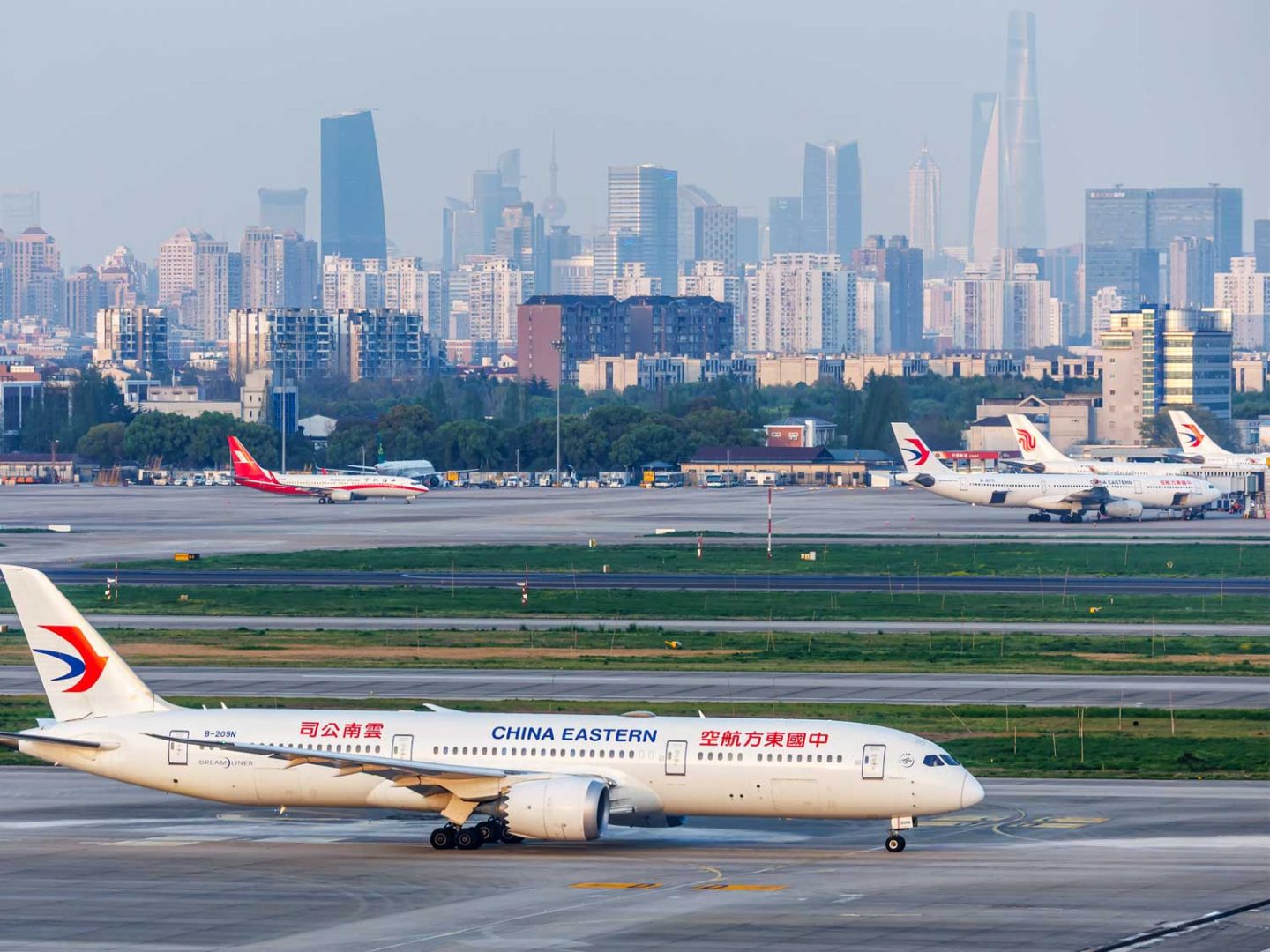
Weather is adding another variable. Typhoon Dolphin caused more than 1,000 flight cancellations in Shanghai, contributing to an 8% week-on-week decline in total air cargo from the gateway. Disruption to Chinese seaports could subsequently generate some modal shift from ocean to air as businesses try to recover delayed shipments.
“Airfreight is becoming much more localised,” says Phil Morris, Metro’s Head of Airfreight. “A regional average can suggest that capacity is plentiful, but that may not reflect what is happening at an individual origin. Shippers increasingly need to look at the cargo mix, available capacity and conditions at specific gateways rather than relying on the headline market.”
Transpacific technology demand creates localised pressure
The transpacific market presents a different picture. Asia Pacific–US tonnage declined 4% week on week in early August and spot rates fell 3%, suggesting a relatively balanced market at regional level. But significant variations sit beneath those figures.
Japan–US volumes increased 12% in a single week, while Taiwan and Indonesia’s volumes were down around 10%. High-value technology cargo is also supporting demand from Japan, South Korea, Taiwan, Thailand and Vietnam.
AI servers, semiconductors, electronics and associated data-centre infrastructure are particularly important because these products are high-value, time-sensitive and often linked to fixed deployment schedules. Airfreight can therefore remain the preferred mode even when ocean capacity is available.
That demand can have consequences for businesses outside the technology sector. Cargo moving through the same airports, using the same freighter capacity or competing for uplift during concentrated production periods can encounter tighter availability and firmer pricing.
“For shippers, it is important to understand what else is moving from their origin,” Phil adds. “A surge in one high-value vertical can tighten an airport very quickly. That makes early conversations about capacity and alternative routings particularly valuable, especially as we approach Q4.”
Further typhoon activity across Asia could amplify these localised pressures if flight cancellations or airport disruption coincide with peaks in technology exports.
Transatlantic capacity remains comparatively accessible
The transatlantic market currently offers a more stable environment, with capacity generally available as the summer passenger schedule provides substantial belly-hold space.
WorldACD data shows North America–Europe volumes fell 5% over the latest two-week comparison, while European exports to North America increased 3%. This creates different conditions depending on direction rather than a single transatlantic trend.
The current availability provides an opportunity for shippers with flexible requirements, but the position could change as passenger schedules transition from summer to winter and belly capacity reduces.
The broader lesson is that airfreight has moved away from a market where one global trend reliably describes conditions everywhere. Regulation is reshaping e-commerce demand, technology is concentrating demand around particular Asian origins, weather can remove capacity with little warning and seasonal passenger schedules continue to influence individual corridors.
Shippers can respond by separating genuinely time-critical freight from cargo with greater delivery flexibility, securing capacity earlier on constrained origins and maintaining alternative gateway and routing options.
Metro’s global airfreight network gives shippers the visibility and flexibility to respond to these increasingly localised conditions. Our airfreight teams monitor capacity, rates, weather disruption and demand at origin level, identifying where space is tightening and where alternative gateways, carriers or routings can provide an advantage.
Whether you are moving cargo from Asia to the UK, Europe or US, or across the Atlantic, talk to Metro early so we can secure the capacity and routing that best protects your cost, transit time and delivery commitments.
To learn more, EMAIL Managing Director Andrew Smith today