NYC 1440x1080 1

U.S. Supply Chains Grapple Cost Pressures and Uncertainty

Heading into the second half of 2026 shippers face, a politically charged USMCA review, an early tightening on the trans‑Pacific, and war‑driven fuel costs pushing up inland transport prices across North America. 

Together, they are rewriting the assumptions many companies use for peak‑season planning, pricing and inland network design.

USMCA stability at stake for North American production

The United States–Mexico–Canada Agreement (USMCA) reaches its first scheduled “joint review” on 1 July 2026, six years after it took effect. The three governments must decide whether to confirm the deal through 2042, seek adjustments, or signal opposition that could trigger renegotiation and, in the worst case, open the door to an eventual sunset in 2036 if no resolution is found.

Manufacturing across North America, and especially in the automotive sector, has a lot riding on the outcome. Automotive trade accounts for roughly 20–25% of total USMCA trade flows, making it the single largest sectorial user of the agreement. Since 2020, higher regional content requirements and labour‑value rules have already reshaped sourcing patterns for OEMs and tier suppliers, driving more production and component sourcing into Mexico, the U.S. and Canada.

Industry groups on all sides of the border are pushing for a stable, growth‑oriented review that preserves tariff‑free access and gives long‑term visibility to investors. At the same time, policymakers are signalling that the review will not be a formality. Areas likely to come under scrutiny include automotive rules of origin and tracing, enforcement of labour and environmental commitments, energy and state‑owned enterprise disputes, digital trade and data rules, and the role of Chinese investment and components in North American supply chains.

For U.S. manufacturers and importers, this means the next 12–18 months are a critical window to:

  • Verify that products truly qualify under current USMCA rules and identify any borderline cases.
  • Model how tighter regional content or new tracing requirements could change compliance status and cost.
  • Stress‑test footprint and sourcing decisions, particularly where there is high China content flowing via Mexico or Canada into the U.S.

Trans‑Pacific signs of an early peak

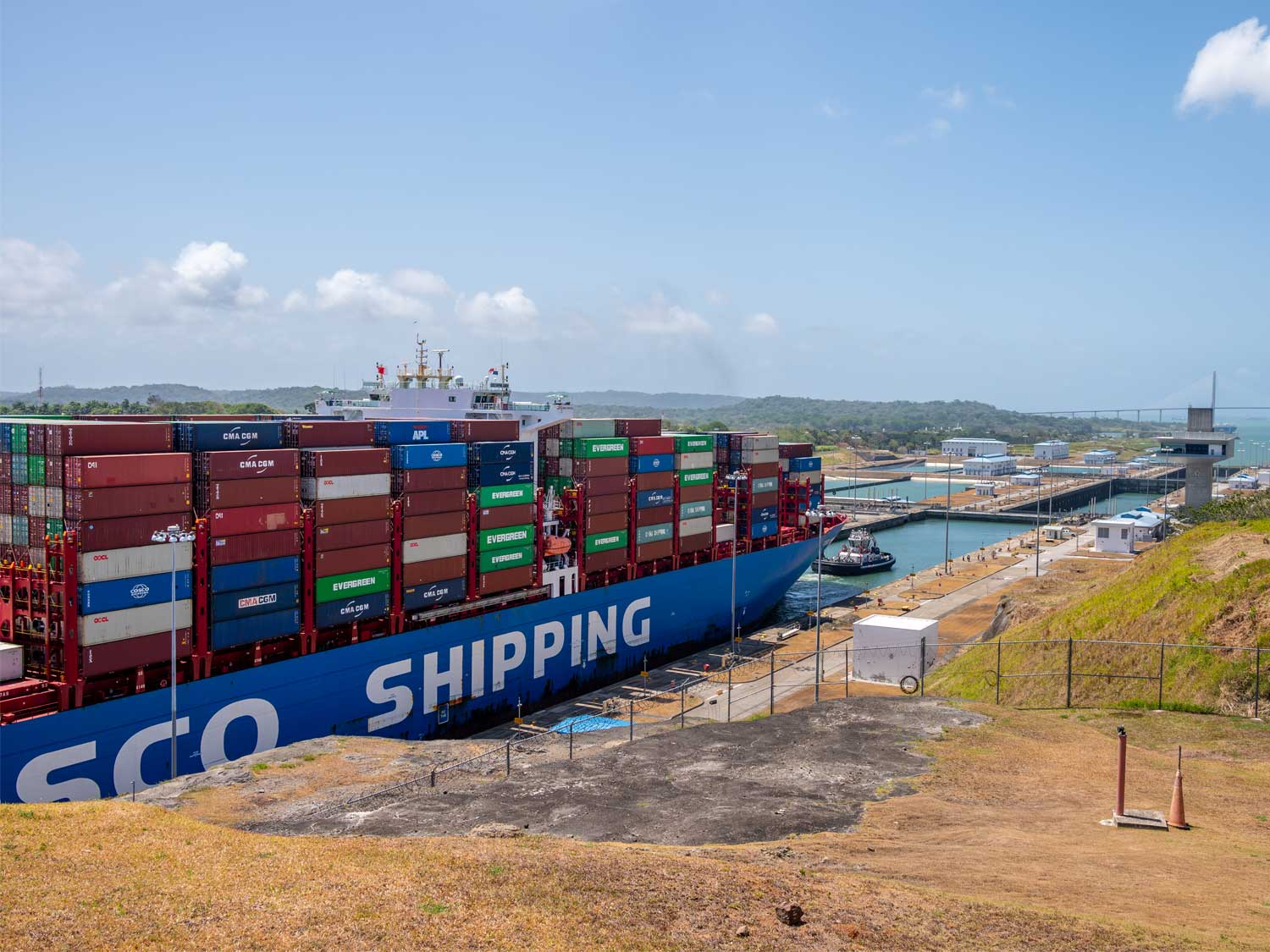
Eastbound trans‑Pacific trades are already showing signs of an early peak‑season, with container spot rates from Asia to the U.S. west and east coasts climbing sharply on the back of May general rate increases, as carriers tighten capacity and push through surcharges.

Recent data shows:

  • Spot rates from major South China ports to the U.S. west coast rising almost 100% on levels from only weeks earlier.
  • Asia–U.S. east coast spot rates climbing by 50–60% over a similar period, with some indices even higher.
  • Carriers rolling out peak season surcharges and emergency fuel surcharges ahead of the usual schedule, with higher amounts signalled for late June and 1 July.

Several dynamics are driving this early tightening:

  • Importers are front‑loading orders to get ahead of further cost increases later in the year, including potential tariff changes and bunker‑linked adjustments.
  • Vessel diversions around southern Africa to avoid Red Sea and Gulf of Aden risks, coupled with congestion at some Asian load ports, are absorbing capacity and disrupting schedules.
  • Capacity additions have lagged demand on key lanes, and carriers are using blank sailings and service adjustments to keep utilisation high.

We expect some rate relief later in the summer if additional capacity returns and front‑loaded volumes drop off, but the near‑term picture is one of elevated spot rates and tight space as peak‑season volumes converge with constrained supply.

Trucking and inland costs rise on fuel‑driven inflation

War‑driven fuel prices are pushing trucking and intermodal costs sharply higher, even before demand has fully recovered.

Since the escalation of conflict involving Iran, U.S. retail diesel prices have moved from just under USD 4 per gallon to around USD 5.60 per gallon on average, with some regions significantly higher. This jump has fed directly into trucking Producer Price Index (PPI) measures:

  • Truckload and LTL PPIs have risen markedly in recent months, reversing a multi‑year period of freight deflation;
  • Spot truckload rates on long‑haul lanes have climbed to their highest levels since 2022, with average per‑mile prices up more than 25% year‑on‑year in some benchmarks;
  • Higher fuel and capacity discipline are also starting to pull contract rates up, with increases spreading from truckload into LTL and intermodal.

It is worth noting that these increases are being driven largely by supply‑side constraints, reduced capacity, higher fuel costs and more disciplined carrier pricing, rather than by booming freight demand. For shippers, that means transport inflation can persist even if volumes remain only modestly above 2025 levels.

Metro’s CEO Grant Liddell and Managing Director Andrew Smith will be visiting U.S. offices and customers next week, to review operations and discuss these challenges on the ground, to help shape next‑step plans.

If you’d like to sense‑check your outlook for the second half of 2026 – from USMCA exposure and sourcing footprints to peak‑season capacity and inland cost pressures you can EMAIL Andrew directly or connect with the Metro Global USA team.

US tariffs

US tariff refund process opens

The long-anticipated process to recover US tariffs imposed under the International Emergency Economic Powers Act (IEEPA) has now begun, with U.S. Customs and Border Protection (CBP) launching its new refund system.

The introduction of the Consolidated Administration and Processing of Entries (CAPE) platform on 20 April 2026 marks a critical milestone. Businesses can now begin submitting claims for duties paid during the affected period, with the first submission deadlines from 4 May 2026.

However, while access to refunds is now available, the window to act is narrow and the process itself is far from straightforward.

For UK businesses trading with the United States, and particularly those operating under Delivered Duty Paid (DDP) terms, this represents a significant financial opportunity and a complex compliance exercise.

CAPE system introduces structured but time-sensitive process

The CAPE system, accessed via the ACE portal, is the exclusive route for submitting refund claims. Only the Importer of Record or an authorised customs broker can file, using a structured declaration format that requires detailed historical entry data.

Phase 1 of the programme is now active, covering unliquidated entries and those recently finalised. This initial phase is expected to account for a significant proportion of eligible claims, but strict timelines mean businesses must act quickly to avoid missing eligibility windows.

Once claims are accepted, refunds including interest are expected within 60 to 90 days, although actual timelines will depend on the quality and completeness of submissions.

A large-scale reconciliation exercise, not a simple refund

Despite the introduction of automated systems, the process is best understood as a full customs reconciliation programme rather than a standard reimbursement.

Each claim must be validated against historical entry data, including confirmation of importer-of-record status, tariff classifications, and whether entries have been liquidated, adjusted or previously disputed.

Given the scale, with tens of millions of entries under review, submission, validation and payment will take place in phases, and delays are likely where data is incomplete or inconsistent.

For entries outside the initial phase, businesses may need to pursue alternative routes such as formal protests, typically within 180 days of liquidation, adding further complexity.

The opportunity to recover duties is not limited to US-based importers. Many UK and international exporters may also be eligible where they acted as importer of record under DDP terms.

In these cases, businesses must demonstrate full control and responsibility for the original customs entries, making data accuracy and documentation critical to a successful claim.

Early action will determine success

With submission windows already open and deadlines in force, the focus now shifts to preparation.

Businesses should prioritise identifying affected shipments, confirming importer-of-record status, verifying tariff classifications, checking liquidation timelines and consolidating supporting documentation.

Those that act early and submit accurate, well-prepared claims will be best placed to move through the process efficiently and secure full recovery.

Metro supports importers and exporters in identifying eligible entries, preparing compliant submissions and managing claims through to reimbursement. If your business has exposure to US tariffs, EMAIL our Head of Customs & Compliance, Andy Fitchett, today to assess your position and secure the recovery you are entitled to.

CBP 1440x1080 1

US tariff refunds move closer as customs systems adapt to process large-scale repayments

The process of refunding tariffs to US importers is beginning to take shape following the Supreme Court’s decision to strike down duties imposed under emergency powers. 

US Customs and Border Protection (CBP) is developing a dedicated system within its Automated Commercial Environment to handle what is expected to be one of the largest refund exercises undertaken by the agency.

The process is being designed around four key stages: claim submission, automated validation and recalculation of duties, review and liquidation, and final refund payment. Importers will be required to submit detailed entry data, which the system will validate before calculating the amounts owed and issuing repayments electronically.

Although progress is being made, the scale of the task remains considerable. Tens of millions of entries are potentially affected, and the volume of data required means the process cannot be implemented immediately. Current timelines suggest the system will take several weeks to become fully operational, with further updates expected as development continues.

Data requirements will increase scrutiny on historical entries

The refund process will require importers to provide a comprehensive dataset covering entries where tariffs were paid. This includes classification details, country of origin, entry numbers, duty amounts and supporting documentation.

As a result, the process is likely to do more than simply return funds. By consolidating this level of information into a single submission, it effectively creates a detailed audit trail of past imports.

For businesses, this increases the importance of data accuracy and consistency. Any discrepancies in classification, valuation or origin could trigger further review, potentially extending timelines or leading to additional compliance checks.

Despite the scale of the opportunity, readiness across the importing community remains relatively low.

Only a small proportion of eligible importers have completed the necessary setup to receive refunds electronically. Until this process is finalised, any payments issued may be rejected, delaying recovery of funds.

At the same time, recent changes to US customs requirements mean that more detailed shipment information is already being requested earlier in the import process. Combined with the refund requirements, this is increasing the administrative burden on importers.

Submitting claims without fully validating the underlying data may expose businesses to additional scrutiny. Conversely, delaying preparation could result in slower access to funds once the system becomes fully operational.

This creates a balance between speed and compliance, where careful preparation is likely to be the most effective strategy.

Technology and expertise will play a critical role

Given the volume of entries and the level of detail required, technology is expected to play an increasingly important role in managing the process.

Automated systems can help organise entry data, validate submissions and identify inconsistencies before claims are filed. At the same time, experienced customs oversight remains essential to ensure that filings are accurate and aligned with regulatory requirements.

For many importers, this combination of technology and expertise will be key to navigating what is likely to be a complex and closely monitored process.

The tariff refund process presents a clear financial opportunity, but it also requires careful handling of data, compliance and submission timing.

Metro combines its US presence, local customs brokerage expertise and advanced systems, including its AI and machine-learning powered CuDoS platform, to support the CBP refund process - helping customers prepare accurate, compliant claims.

If you want to understand what you may be owed and how to approach the refund process with confidence, EMAIL Andrew Smith, Managing Director at Metro, to discuss how Metro’s US customs team can support your submission strategy.

Supreme Court

U.S. Tariff ruling resets importing landscape

In a decision that reshapes the mechanics of U.S. trade policy, the U.S. Supreme Court has curtailed the use of emergency powers to impose broad import tariffs. 

The outcome is not the removal of tariffs, but a shift in how they are applied and a potential window to recover previously paid duties.

On 20 February, the U.S. Supreme Court ruled that President Trump did not have authority under the International Emergency Economic Powers Act (IEEPA) to impose sweeping “reciprocal” tariffs on general imports, including duties affecting EU and UK exports.

The Court determined that tariffs constitute taxation and therefore require clear Congressional approval. As a result, tariffs introduced solely under that statute are no longer legally supported.

However, the ruling does not eliminate U.S. tariffs altogether. It narrows the legal pathway through which they can be introduced.

Existing programmes remain fully active:

  • Section 301 tariffs addressing unfair trade practices
  • Section 232 national security tariffs
  • Section 201 safeguard measures

Replacement tariff: Section 122 Global Surcharge

In response to the ruling, the U.S. administration introduced a 10% global import surcharge under Section 122 of the Trade Act, effective 24 November.

Unlike the invalidated emergency tariffs, Section 122 is legally defined and time-limited:

  • Maximum duration: 150 days (unless extended by Congress)
  • Maximum rate: 15% (currently set at 10%)
  • Intended purpose: short-term balance-of-payments stabilisation

The UK continues to seek clarity on whether it will remain at 10% under its previously negotiated arrangement, should the global rate rise toward 15%. At present, the majority of existing UK–US trade measures – including sector-specific arrangements on cars, steel and pharmaceuticals – are not expected to change.

The EU has placed elements of its own U.S. tariff understanding on hold pending further developments.

Refund recovery: a potential opportunity

The more immediate operational issue concerns duties already paid under the invalidated measures. Businesses are expected to pursue substantial refund claims, potentially exceeding $200bn.

Depending on entry status, recovery mechanisms may include:

  • Post-summary corrections for unliquidated entries
  • Formal protests submitted within statutory deadlines
  • Litigation before the U.S. Court of International Trade for older entries

Full procedural guidance has yet to be published by federal agencies. Nevertheless, importers should begin preparing documentation immediately, including:

  • Identification of affected entries
  • Verification of duty payments
  • Coordination of any drawback claims
  • Preservation of statutory deadlines

Customs compliance in this environment is no longer routine administration; it has become a matter of financial risk management and cash recovery strategy.

How Metro can support you

Metro is closely monitoring federal guidance, reviewing agency communications and assessing operational implications across customs entry processes.

We recommend that businesses trading with the United States initiate an internal review of potentially affected entries without delay. Our U.S. customs specialists can help assess exposure, identify recovery pathways and support documentation preparation to protect your position.

As further clarity emerges, we will continue to provide timely updates and practical guidance.

EMAIL Andrew Smith, Managing Director, to learn how Metro can help you review your refund situation, mitigate new tariff regime, and protect your supply chain from volatility.