Pre-CNY sea freight reliability is breaking down at origin

Pre-CNY sea freight reliability is breaking down at origin

Chinese New Year 2026 falls on Tuesday, 17 February, marking the start of the Year of the Fire Horse. While the official public holiday in China runs from 17–23 February, the operational impact on global supply chains is far longer.

In practice, factories, trucking networks and export operations begin winding down weeks before the holiday. Full production and logistics capacity typically does not return until early March, meaning the effective disruption window stretches across six to eight weeks.

In the run-up to Chinese New Year, ocean carriers are releasing significantly more bookings than they can physically load. This reflects the need to honour minimum quantity commitments (MQCs) while simultaneously building vessel pools ahead of the holiday shutdown.

The consequence is a sharp rise in rolled cargo at ports of loading and transhipment hubs. Confirmed bookings are increasingly failing to convert into loaded containers, particularly where space has been secured on standard spot terms. Even services that previously offered a degree of loading assurance are now seeing rollovers as pressure builds.

“Guaranteed” loading is increasingly limited to premium, prepaid options, while some previously protected spot services are now also experiencing rollovers. For shippers, this means booking confirmation alone no longer equates to reliability during the pre-CNY window.

Congestion is building at key Chinese ports

The impact of overbooking is being felt most acutely at Chinese ports of loading, where inbound container volumes are exceeding what terminals can process or load onto vessels.

Ports such as Ningbo and Nansha are already experiencing severe congestion, with vessel delays compounding the problem. In some locations, terminals are restricting gate-in to containers with pre-booked slots only. Once a vessel’s allocation is reached, additional containers are rejected, forcing cargo to wait for later sailings and triggering extra storage, trucking and handling costs.

Even where shippers deliver cargo early, there is no guarantee it will be accepted or loaded as planned.

Alongside port congestion, a series of inland constraints are converging. Equipment shortages, delayed EIR release, limited truck availability and labour shortages are all becoming more pronounced as workers begin leaving ahead of the holiday.

Access to gate-in slots is tightening, CY cut-offs are less flexible, and minor delays can quickly cascade into missed sailings. These constraints mean that execution risk is now driven as much by inland logistics as by vessel capacity itself.

What this means for shippers

The key challenge for 2026 is that Chinese New Year disruption is not a single event, but a prolonged period of reduced reliability. In the Year of the Fire Horse — traditionally associated with speed, intensity and unpredictability — supply chains are feeling the effects in real time.

Some shipments will be rolled repeatedly. Others will ultimately miss the pre-holiday window altogether. As the holiday itself approaches, the focus shifts from optimisation to prioritisation: deciding which cargo must move and which can wait.

Planning beyond the holiday

Risk does not end on 23 February. Cargo that fails to ship before the holiday is likely to face a post-CNY gap of two to three weeks, as factories, terminals and trucking networks restart gradually. Many operations do not return to full capacity until early March, creating a temporary vacuum and renewed pressure on early post-holiday sailings.

If you are shipping from Asia ahead of Chinese New Year — or planning post-holiday restart volumes — now is the time to review priorities and timelines. EMAIL our Managing Director, Andrew Smith, to assess options and manage risk across your supply chain.

Shanghai-Hongqiao-Airport

Air freight markets firm as Chinese New Year front-loading reshapes early-year demand

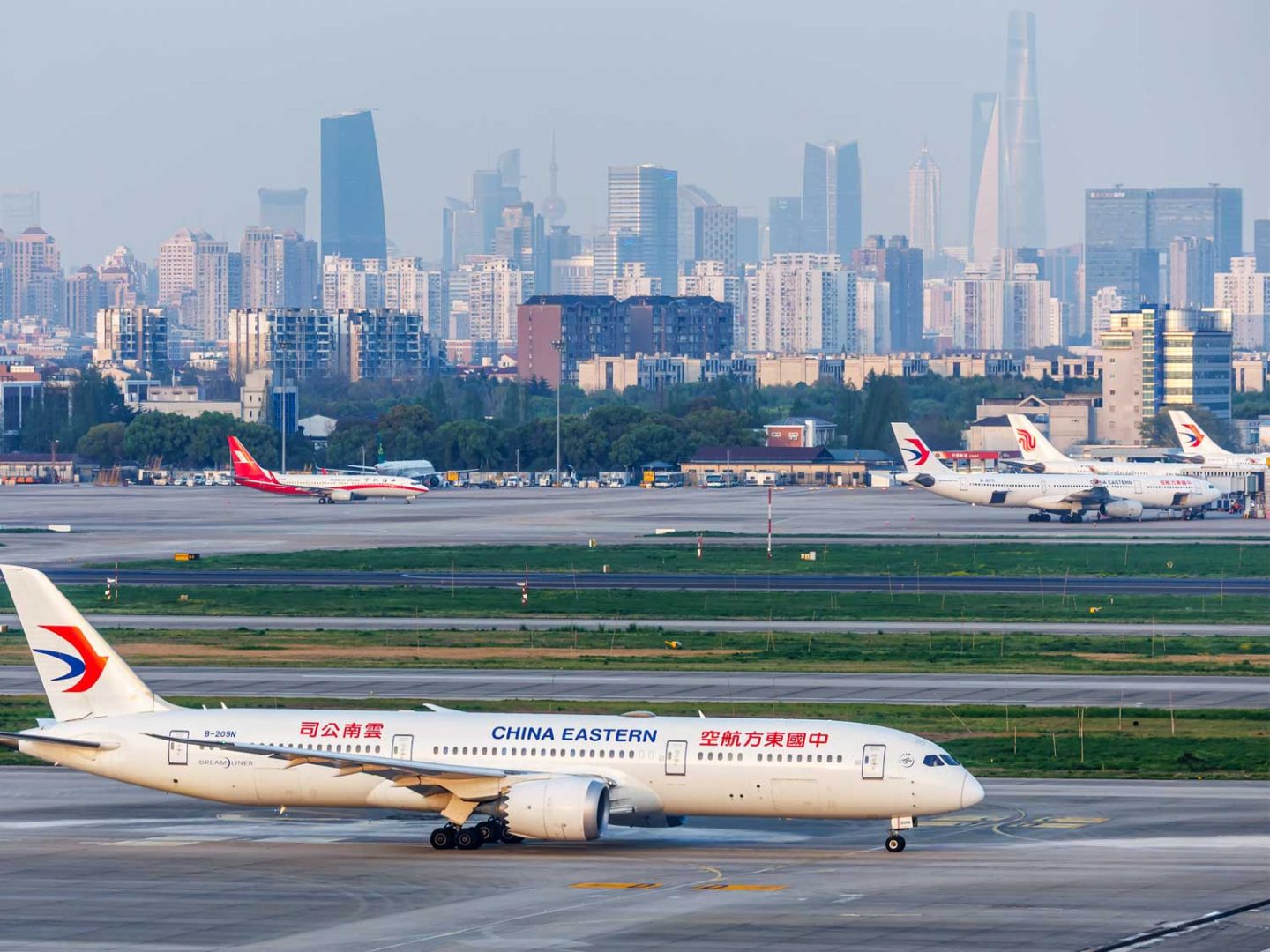
Air freight markets have entered the new year on firmer footing than many expected, with volumes rebounding sharply through January as shippers accelerate movements ahead of earlier-than-usual Chinese New Year factory shutdowns. 

While underlying demand remains uneven, front-loading has concentrated uplift into a narrower time window, particularly on East–West and transpacific trade lanes.

Global air cargo volumes increased by around 5% year on year in the second and third weeks of January, with chargeable weight recovering rapidly from the post-Christmas slowdown. Volumes remain approximately 10% below mid-December peak levels, but are now close to pre-holiday norms and materially stronger than the same period last year, helped by a softer start to 2025.

Asia–Europe demand has accelerated faster than Asia–North America, reflecting front-loaded demand across North and Southeast Asia. Volumes from Asia Pacific to Europe rose by close to 20% year on year in mid-January, with particularly strong growth from Southeast Asian origins alongside solid demand from China and Hong Kong.

The transpacific market is also improving, but with more uneven performance. Asia–US volumes were up by around 6% year on year, masking significant divergence beneath the headline number. Shipments from Southeast Asia to the US have continued to post double-digit growth, while volumes from China and Hong Kong remain below last year’s levels. This pattern reflects ongoing supply-chain diversification rather than a uniform demand recovery.

Front-loading adds to traditional peak

This year’s Chinese New Year dynamic differs markedly from historical norms. Rather than a late-January surge, earlier factory shutdowns have pulled production and uplift forward into the first half of the month. Manufacturing windows are tighter, shipping schedules more compressed and cargo flows more concentrated.

Unlike previous years, ocean freight’s pre-holiday volume spike has been somewhat muted, pushing a greater share of time-critical shipments into the air. Air volumes are firm, but not at the extreme peak levels seen in prior cycles.

Capacity behaviour is now the dominant market influence. Freighter operators have reinstated aircraft quickly following the year-end peak, with freighter capacity rising by more than 15% week on week in early January. Overall global air cargo capacity remains around 7% below mid-December highs, but has rebounded faster than demand in several markets.

This rapid capacity return prevented the sharp rate escalation typically associated with Chinese New Year. Average global air freight rates sitting roughly 10% below mid-December levels, but still slightly above the same period last year. On transpacific lanes, pricing to the US West Coast has largely stabilised, with East Coast rates modestly higher.

Concentrated production cycles, e-commerce demand and high-value cargo flows are sustaining baseline volumes. At the same time, uncertainty around ocean routing and the unlikely return of container services through the Red Sea in H1 continues to underpin air demand on selected lanes.

Securing space at the right time, and at the right cost, requires proactive planning and real-time market insight.

Metro works closely with shippers and carrier partners to manage uplift around peak periods, optimise routing and balance speed against cost as market conditions shift. Our teams monitor capacity, rates and network changes daily to help customers move time-critical cargo with confidence.

EMAIL Andrew Smith, Metro’s Managing Director, today to review your air freight strategy and ensure your supply chain stays resilient through the first half of 2026.

Global trade powers towards a record 2025 with 2026 looking stronger

Global trade powers towards a record 2025 with 2026 looking stronger

With the flow of goods providing the real momentum, global trade closed 2025 at record levels, with the outlook for an even more robust 2026. 

Despite geopolitical tension, shifting trade policy and lingering supply-chain risk, the movement of physical goods continues to expand, reinforcing the central role of logistics, freight forwarding and international distribution in the global economy.

Latest analysis from UNCTAD shows that global trade values reached unprecedented highs in 2025, driven primarily by growth in merchandise trade rather than services. Manufacturing output, consumer goods and industrial products have all contributed to the uplift, underlining how resilient goods-led supply chains have become after years of disruption.

Strong demand for manufactured products and critical raw materials has supported higher trade volumes across Asia, Europe and North America. Supply chains have adapted to volatility, with shippers diversifying sourcing, rebalancing inventories and building more flexible transport strategies.

A more constructive outlook for 2026

Forecasts point to continued expansion in global goods trade, supported by easing inflationary pressure, stabilising interest rates and renewed confidence among manufacturers and retailers.

For shippers, this means planning for growth rather than contraction. For logistics providers, it reinforces the need to invest ahead of demand: in people, systems, networks and international coverage.

As trade volumes rise, so does the need for globally connected logistics partners. End-to-end visibility, local market expertise and seamless coordination across borders are becoming prerequisites rather than differentiators. Businesses need partners that can support expansion into new markets without adding complexity or risk.

This is where international network strength becomes critical. Not just in headline trade lanes, but across secondary markets and emerging corridors where growth is accelerating fastest.

Supporting growth through global expansion

Metro’s own international expansion reflects these structural shifts in global trade. As goods flows increase and supply chains become more geographically diverse, Metro continues to invest in new offices both nationally and internationally, strengthening its ability to support customers wherever their trade takes them.

By expanding its global footprint, Metro is aligning its services with the realities of modern goods trade: faster decision-making, stronger local execution and closer proximity to customers and suppliers.

Whether you are entering new markets, reshaping sourcing strategies or scaling established flows, our teams combine local expertise with global reach to keep your goods moving reliably and competitively.

EMAIL Andrew Smith our Managing Director today to see how our expanding international footprint can support your global trade ambitions.

Carriers pause plans to restore Suez routes

Carriers pause plans to restore Suez routes

Hopes of a return to Red Sea and Suez Canal transits are fading again as renewed security threats from the potential resumption of Houthi attacks inject fresh uncertainty into global container shipping. 

While some carriers had begun cautiously testing the shorter route between Asia, Europe and the US East Coast, renewed threats from Yemen’s Iran-aligned Houthi group on 26 January — alongside the movement of a US aircraft carrier into the region — have raised tensions again, suggesting that any widespread reinstatement is likely to remain on hold.

Most commercial shipping diverted away from the Red Sea more than two years ago after attacks on merchant vessels made the route untenable. A ceasefire in Gaza late last year temporarily eased tensions, prompting limited transits through the Suez Canal and renewed discussion around normalising networks.

Several container lines had started to experiment with Red Sea transits, viewing the route as a way to reduce sailing times, fuel costs and schedule complexity. CMA CGM and Maersk both completed recent canal passages, signalling tentative confidence that conditions were improving.

That confidence has since weakened and escalating tensions have reintroduced risk at a time when carriers remain highly sensitive to crew safety, insurance exposure and service disruption. As a result, carriers will continue to favour longer routings around the Cape of Good Hope, prioritising predictability over speed.

Capacity management shapes carrier behaviour

The prolonged diversion around southern Africa has absorbed a meaningful share of global container capacity, helping carriers manage oversupply and support freight rates.

It is now looking extremely unlikely that we will see any sudden, full-scale return to the Suez. Instead, carriers will adopt a phased approach, selectively reinstating services while retaining contingency plans. This gradual reintroduction will allow their networks to stabilise while minimising rate volatility or widespread congestion across ports and inland infrastructure.

The Asia–Europe trade stands to feel the greatest impact from any shift. Before the Red Sea crisis, close to a third of global container volumes passed through the Suez Canal, compared with a smaller share of US-bound cargo. As a result, European importers and exporters remain most exposed to changes in routing strategy.

Market uncertainty around Red Sea access continues to influence pricing behaviour. Spot rates have already fluctuated ahead of the Lunar New Year slowdown, with carriers competing to secure volumes. While extended diversions can support rates by tightening effective capacity, that support may be critical if demand weakens seasonally.

For now, the Red Sea remains a route under review  and contingency planning remains central to carrier network design. Until the security environment stabilises decisively, most operators are expected to maintain flexible routing strategies, balancing risk, cost and capacity discipline until H2.

With ongoing uncertainty in the Red Sea, shippers need flexible routing options, up-to-date market insight and a logistics partner that can adapt quickly as conditions change.

Metro works closely with customers to assess risk, plan alternative routings and maintain supply-chain continuity, whether services transit the Suez or divert via the Cape of Good Hope.

EMAIL Managing Director, Andrew Smith, today to review your current routing strategy and ensure your supply chain remains resilient in a volatile operating environment.