US EU flags on desk 1440x1080 1

US–EU Trade Deal Signals New Trade Era

The US and EU have agreed a landmark trade framework taking effect 1 August, with a 15% baseline tariff, replacing many higher existing rates.

In addition to lowering tariffs the new trade deal opens markets, and pledges huge investment flows, with significant opportunities for UK traders able to leverage the EU’s expanded access to the U.S. market.

Headline tariff changes:

  • Cars & parts – Cut from 27.5% to 15%
  • Pharmaceuticals & semiconductors – 0% tariff until review; max. 15% after
  • Steel & aluminium – Stay at 50% pending quota deal
  • Zero‑for‑zero tariffs – On aircraft, some chemicals, generic drugs, semiconductor equipment, selected agri‑products, raw materials
  • Still under negotiation – Wine and spirits tariffs

Strategic commitments:

  • EU to buy $750bn in US oil, LNG and nuclear technology
  • EU firms to invest $600bn in the US over Trump’s second term
  • Defence procurement from US suppliers planned

Opportunities for US, EU & UK Traders

The agreement creates multiple areas of advantage for transatlantic trade:

For EU exporters to the U.S.:

  • Reduced tariffs on high-value sectors such as cars, pharmaceuticals, and technology components.
  • Greater certainty in supply chain planning with capped tariff rates post-investigation.

For U.S. exporters to the EU:

  • Immediate tariff elimination for priority goods, expanding competitiveness in aerospace, chemicals, and agri-products.
  • Increased market access supported by European government procurement in energy and defence.

For UK exporters and importers:

  • Ability to leverage EU supply chains for tariff-advantaged U.S. market access.
  • Opportunities to integrate into transatlantic supply networks in sectors such as automotive, chemicals, and renewable energy.

Leverage Metro’s EU network, in‑house customs brokerage, and on‑the‑ground teams in the United States to navigate this new trade landscape. Whether you’re reassessing sourcing strategies, managing new tariffs, or planning market entry, our experts can deliver compliant, cost‑effective solutions across every mode and market.

Email Managing Director, Andrew Smith, to explore how we can optimise your US/EU trade strategy.

Houthis 1440x1080 1

Red Sea Return Scuttled by Houthi Vessel Sinking

The deadly July 7 attack on the Eternity C cargo vessel by Yemen’s Houthi rebels marks one of the most severe escalations yet in the Red Sea shipping crisis, reinforcing the view that this vital trade artery will remain off-limits for carriers through 2025. 

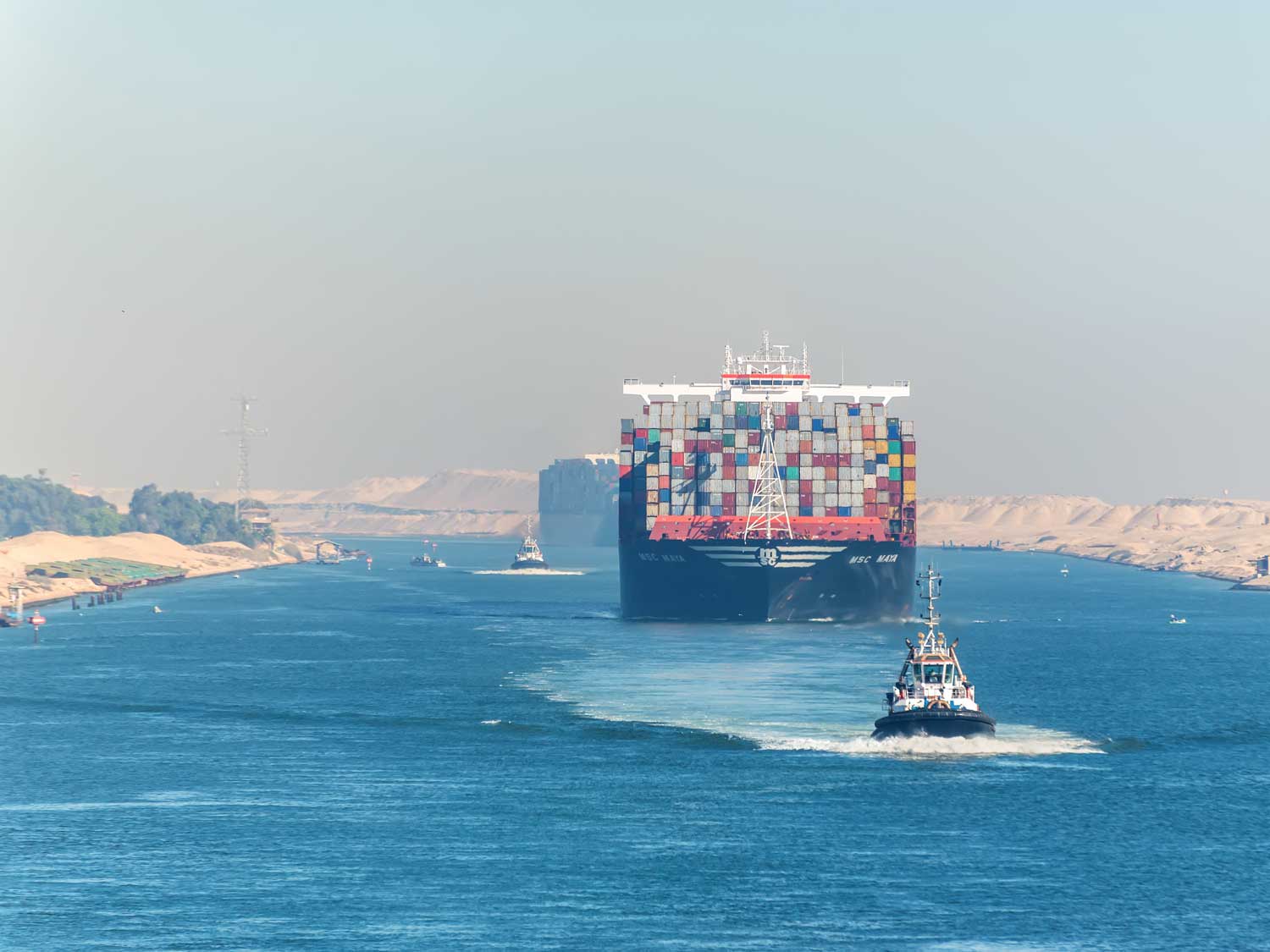
The Red Sea, via the Suez Canal, typically handles 30% of global container trade, linking not only Asia and Europe but also acting as a vital transit point for goods moving between Asia and North America, the Mediterranean, and even parts of Africa and Latin America. 

With most container ships now rerouting via Africa’s Cape of Good Hope, what began in late 2023 as a regional security issue has become a global supply chain disruptor, sending shockwaves far beyond the Asia-Europe corridor.

The Global Supply Chain Butterfly Effect

Asia–North America East Coast
Goods from China, Southeast Asia, and India bound for the U.S. East Coast often transit the Suez Canal. Rerouting extends voyages by up to 14 days, tightening container availability, raising costs, and pressuring ports on both coasts to manage capacity mismatches.

Africa–Europe and Africa–Asia
African exporters, including agricultural and mineral suppliers, face longer, costlier routes to reach European and Asian markets, challenging businesses from cocoa traders in West Africa to cobalt miners in the DRC.

Middle East–Europe Energy
Beyond containerised cargo, 20% of global LNG trade and 30% of global oil flows pass through the Red Sea and Strait of Hormuz. Disruptions here drive up global energy prices, affecting industries and consumers worldwide, from European factories to Latin American fuel markets.

Global Shipping Networks
With more ships tied up on extended routes, the global pool of available vessels is effectively reduced, tightening capacity on other trades, including the transpacific (Asia–U.S. West Coast) and transatlantic (U.S.–Europe), even though they don’t pass through the Red Sea.

Industry Effect

Automotive: Impacting not just Europe, but also in North America, as Tier 1 suppliers depend on globally sourced components.

Retail & Fashion: Global brands with cross-regional supply chains face timing, cost, and margin pressures.

Food & Agriculture: Grain, rice, coffee, and fruit trades are experiencing higher freight costs, threatening price inflation in developing markets.

Electronics: Longer lead times impact consumer electronics and critical components like semiconductors.

What’s clear is that the Red Sea crisis is not just a regional challenge. It’s a global supply chain stress test, that will continue to demand resilience, agility, and innovation for some time.

Metro’s supply chain management expertise and advanced MVT technology help shippers adapt on the fly; rerouting cargo, shifting transport modes, and even switching suppliers with agility and precision. From high-level network redesign to SKU-level control, we empower you to overcome disruption with confidence. EMAIL Managing Director, Andy Smith, to learn more.

Trump on graph 1440x1080 1

Tariff Pause Triggers Surge in Ocean Freight Rates – But Legal Roadblocks Lie Ahead

Container shipping lines are driving spot rates sharply higher, with the 2025 transpacific peak season likely to begin earlier than usual, fuelled by a surge in US imports from Asia.

Spot rates on key routes are rising faster than during the pandemic-era boom. Carriers implemented general rate increases (GRIs) on 1 June and plan further hikes for mid-June and 1 July, seizing the moment while demand is high.

According to the WCI, Shanghai–Los Angeles rates surged 57% week-on-week, while Shanghai–New York climbed 39%. Since mid-April, West Coast rates are up 173%, and East Coast rates have more than doubled. For comparison, rates rose just 20% over the same period in 2021. Asia–Europe lanes are also rallying, with the Shanghai–Rotterdam index up 32% and Shanghai–Genoa rising 38%, the highest weekly increases in many months.

But this momentum may be short-lived, as a wave of new capacity is entering the market. On Asia–West Coast routes, supply will grow by 13% in June and 16% in July. This additional capacity is expected to blunt the impact of further rate hikes, and limit the length of the current rally.

At the same time, the legal outlook for Trump ‘reciprocal’ tariffs remains highly uncertain. On 29 May, a federal appeals court temporarily reinstated the tariffs, just one day after the US Court of International Trade ruled that the former president had exceeded his authority and ordered an immediate block. The Court of Appeals for the Federal Circuit in Washington paused that decision to consider the government’s appeal, with final briefs due by 9 June.

However, legal experts suggest that the original court ruling is on strong footing. Under the current framework, principally the International Emergency Economic Powers Act (IEEPA), presidential authority to impose broad-based tariffs is limited. The Court of International Trade ruled that Trump’s use of IEEPA to impose tariffs on non-emergency, peacetime imports likely overstepped constitutional bounds.

If the appeal fails, Trump’s tariffs will face two remaining paths: either a legislative push to expand presidential tariff authority through Congress, or a ruling from the Supreme Court. The latter remains a real possibility if the administration persists and seeks to test the constitutional limits of executive trade powers.

In the meantime, the legal limbo is prompting importers to accelerate orders while the tariffs remain suspended, adding further pressure to ocean freight markets. But with front-loading already well advanced, this year’s peak season is expected to be earlier and shorter than the usual August–October window. While carriers are determined to ride the wave of high rates, fundamentals suggest the next one or two GRIs may be the last before rates begin to level off.

With legal uncertainty surrounding US tariffs and ocean freight markets under intense pressure, early planning and expert guidance are more critical than ever.

Metro’s experienced sea freight and customs brokerage teams are here to support your transpacific and Asia–Europe supply chains, with in-market expertise and local operations in the US.

Whether you’re juggling critical shipments, reviewing tariff exposure, or seeking end-to-end compliance support, Metro has the insight and capability to keep your cargo moving.

EMAIL our managing director, Andrew Smith, today to stay ahead of disruption and secure your space at the best possible rates.

Long Beach2

Tariff Pause Triggers Early Transpacific Peak Season

The 90-day suspension of US-China tariffs has delivered a sharp jolt to transpacific ocean freight, triggering an unseasonal spike in demand and pushing spot rates up significantly.

This unexpected policy reprieve has not only created a narrow window of predictability for US importers, but also accelerated peak season behaviours months ahead of the traditional schedule.

With booking volumes surging and available capacity still constrained, shippers are entering a period of extreme competition for space and elevated freight costs, especially on Asia–US West Coast lanes.

Since the announcement of the tariff pause, transpacific spot rates have climbed steeply. The Shanghai Containerised Freight Index (SCFI) rose by 14% last week, with further gains expected. This marks the largest weekly increase of 2025 so far and reflects mounting pressure on space and capacity across eastbound transpacific routes.

  • Shanghai–Los Angeles FEU rates have climbed 16% in just one week.
  • Shanghai–New York DEU rates jumped 19%.

While these levels remain well below pandemic highs, they are trending upward quickly, particularly as US importers race to bring in goods during the tariff pause window, which expires on 14 August.

Sudden and Significant Capacity Crunch
The spike in demand has exposed a capacity shortfall that many believed had stabilised. Carriers had withdrawn substantial tonnage from Far East–US West Coast services in April and May, anticipating a slower season. Now, those services are being rapidly reinstated in full as bookings rebound sharply.

Carriers have responded with unusual speed, with suspended loops returning across multiple alliances, vessels are being upsized to handle growing volumes, additional services are being announced and blanked sailings reversed.

Despite these adjustments, near-term capacity remains tight, especially due to ongoing vessel redeployments, congestion at Chinese ports, and bottlenecks at container freight stations (CFS) in China.

Adding to the live bookings, is a wave of previously manufactured cargo stored in bonded warehouses, which is expected to enter the market imminently.

If this stored cargo flows into the system during the remainder of May, demand could spike by 16% to 48% on top of normal levels. If shipments are delayed until June, the increase would ease to a more manageable 5% to 16%, but that assumes no further acceleration from early peak season orders.

Importantly, this analysis does not yet account for traditional peak season volumes, which are expected to surge in the coming weeks as US importers seek to front-load shipments ahead of the 14 August tariff deadline.

Challenges and Considerations
The rapid resurgence in volumes is pushing logistics networks to their limits. Shippers can expect tight space availability, higher rates, with ongoing volatility through June and July, possible rollovers, even on confirmed bookings, and longer dwell times, with delays at origin due to congestion

While carriers are acting quickly to rebalance networks, the sheer speed and scale of the demand rebound mean constraints are likely to persist through Q3.

As always, Metro is working closely with clients to minimise disruption and capitalise on available capacity. With robust freight forwarding capabilities, deep ocean carrier relationships, and on-the-ground presence in the United States, we’re helping customers:

  • Secure space and locked-in rates on core transpacific lanes
  • Prioritise high-value or time-sensitive cargo
  • Adjust routing strategies to reduce risk and maintain delivery schedules

With early peak season now well under way, proactive planning is essential. Space is already tightening, and costs will likely continue to climb in the lead-up to August.

If your business relies on Asia–US trade flows, EMAIL Andrew Smith today and learn how we will keep your supply chain running smoothly, despite the disruption.