FTSE 100 firms identify supply chain threats as a principal risk

FTSE 100 firms identify supply chain threats as a principal risk

A recent study by the Boston Consulting Group, reveals that 72% of FTSE 100 companies now identify supply chain threats as a principal risk to their operations.

This heightened concern follows significant disruptions such as the Suez Canal blockage, the COVID-19 pandemic, and the Red Sea shipping crisis, which have exposed vulnerabilities in global supply chains.

Despite widespread acknowledgment of these risks, only 54 of the FTSE 100 companies have provided shareholders with detailed information on their mitigation strategies. This lack of transparency underscores the need for more robust communication regarding risk management practices.

To address these challenges, companies are implementing various strategies:

  • Supplier engagement: Regular meetings with suppliers to monitor and share potential risks.
  • Risk documentation: Compiling and updating ‘risk registers’ to document supplier-specific risks.
  • Inventory management: Maintaining higher levels of ‘buffer’ stock to mitigate short-term crises.
  • Diversification: Expanding supply chain streams to prevent business interruptions.

Technological solutions are also being leveraged to enhance resilience. Companies are implementing robust cybersecurity measures, utilising artificial intelligence for supply chain design and monitoring, deploying algorithms to identify high-risk raw materials, and conducting comprehensive assessments of suppliers’ financial resilience and infrastructure.

Supply chain risks have now reached the boardroom, with discussions taking place within executive and audit committees. This elevation in priority reflects the critical importance of supply chain stability to overall business operations.

The findings emphasise the necessity for businesses to prioritise transparency, technological innovation, and strategic planning in their supply chain management. As risks continue to evolve, proactive risk management has become a vital component of corporate governance.

Metro’s advanced supply chain technology

Metro’s proprietary cutting-edge supply chain technology has been conceived and designed to enhance visibility, control, and efficiency. The AI-driven solutions provide real-time insights into supply chain operations, enabling companies to anticipate disruptions and respond swiftly. Features include comprehensive purchase order management, multi-modal track and trace capabilities, and consignment management tools. Additionally, the MVT ECO platform allows shippers to forecast, measure, and offset global supply chain emissions, supporting sustainability goals. By integrating these technologies, businesses can strengthen their supply chain resilience and maintain operational continuity in an increasingly complex global environment.

Metro is leading the industry in developing the technologies and platforms that simplify and support the development of resilient, agile and adaptable supply chains.

Visibility, control, environmental, and customs modules, blend together with integrations of critical digital trade documents, to provide an unparalleled supply chain platform.

EMAIL Ian Powell for further Information on our digital capabilities and how we can protect and enhance your global trade and business growth ambitions.

Supply chains brace for more disruption as storm season intensifies

Supply chains brace for more disruption as storm season intensifies

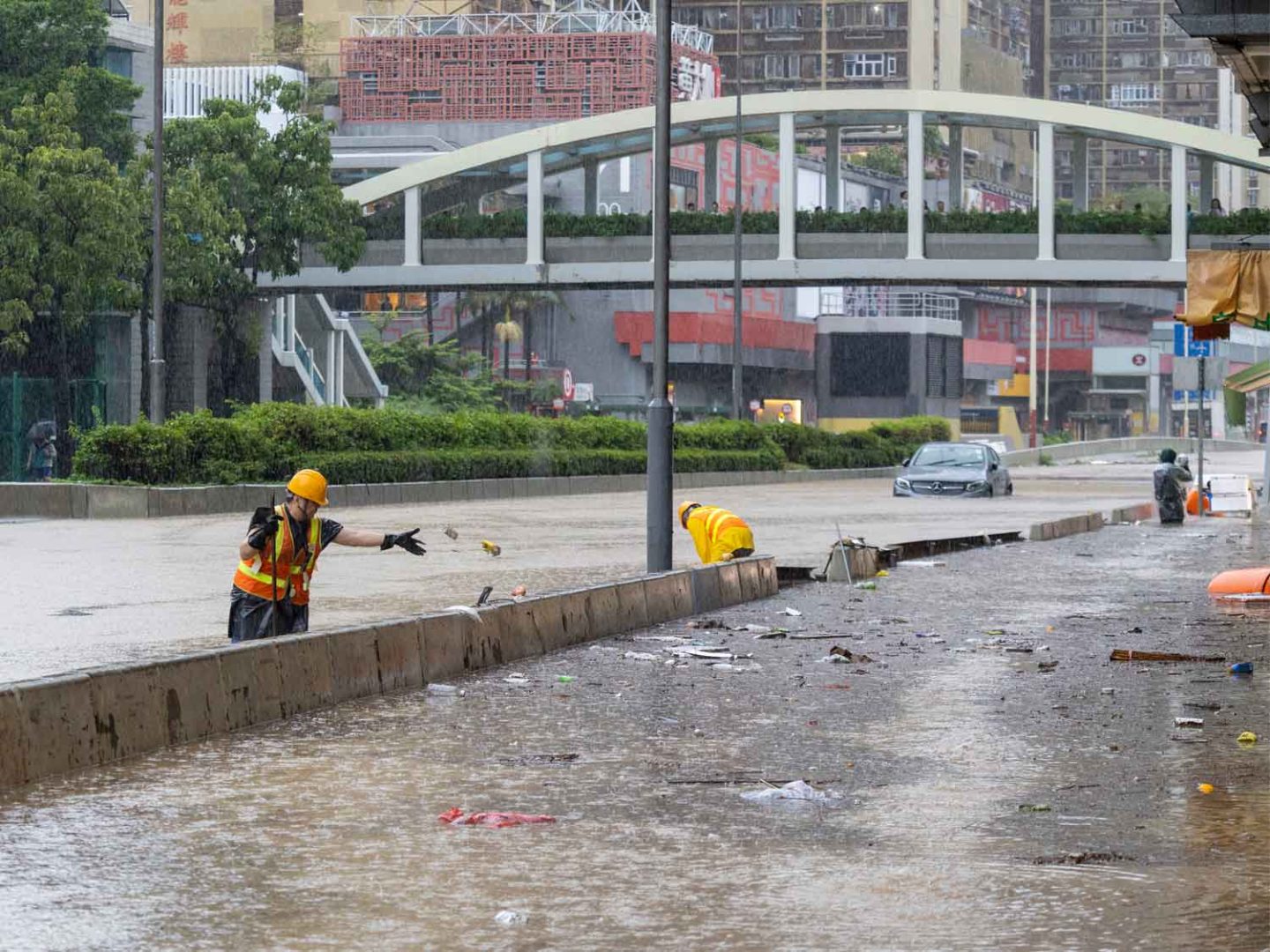
From wildfires and floods to scorching heatwaves, the consequences of climate change are becoming more pronounced, and as we enter the peak shipping season, businesses are scrambling to prepare for what is predicted to be one of the most disruptive storm seasons in recent memory.

So far in 2024 supply chain disruptions caused by extreme weather are estimated to have cost companies billions of pounds, and the storm season is far from over. Hurricanes, wildfires, and floods have already stretched global supply lines thin, and the arrival of storms like Typhoon Bebinca, which threatened Shanghai this week, adds a fresh layer of concern.

Increased visibility allows managers to pinpoint disruptions and adjust supply chains accordingly, and the key to weathering these events lies in preparation. Shippers are diversifying their carrier bases and building inventory buffers to keep goods moving in the face of challenges. Strategic planning, such as maintaining safety stock for high-demand items, has become essential in managing supply chain risks.

The heightened storm season comes as companies are already reeling from the effects of wildfires in California and Australia, as well as floods that have caused widespread damage to transportation networks in Asia.

While technology and data-driven insights have made supply chains more resilient, this year’s relentless barrage of natural disasters is proving particularly difficult to navigate. While technology can help predict and respond to the impact of storms, it is only effective when paired with clear communication and regular updates on shipments.

The threat posed by Typhoon Bebinca is yet another reminder of the supply chain vulnerabilities that remain, with Shanghai closing ports, cancelling, and halting transportation links to ensure safety. With more storms likely in the coming months, companies must remain agile and vigilant, ready to adapt to further disruptions.

The need for resilience and adaptability is more pressing than ever, as companies navigate the challenges ahead. This season may prove to be one of the toughest in recent memory, but for those prepared, there are still opportunities to maintain operational continuity in the face of adversity.

Extreme weather events consistently highlight the vulnerability of supply chains and the importance of robust contingency plans and marine insurance to protect against risk.

We have been maintaining supply chain resilience in the face of unforeseen challenges for decades. To learn how we can develop and support your supply chain resilience EMAIL our Chief Commercial Officer, Andy Smith.

IT platform developments: Enhancing customer experience

IT platform developments: Enhancing customer experience

We are committed to continuously improving the services we deliver to our customers, with significant IT developments, which will give them greater visibility, faster access to critical information, and a more seamless experience in managing their supply chains.

Our current roadmap focuses on enhancing our customer-facing platform, MVT, which serves as the backbone of customer visibility into their supply chains. By prioritising agility, integration, and data-driven insights, we aim to create a more seamless and efficient experience for our customers.

Agility and efficiency
To ensure our systems remain adaptable and ready for the future, we have moved from a single, all-in-one system to a more flexible, modular approach. This change allows us to update and improve specific parts of our platform quicker, making it easier to respond to customer needs and industry changes. It also sets the foundation for growth, ensuring our platform can continue to evolve as customer demands and technology progress.

Integration and collaboration
We are focused on ensuring seamless integration between our core operating system, third-party applications, customer systems, and our MVT platform. This integration provides a unified view of the supply chain, allowing customers to collaborate more effectively and make faster, better-informed decisions.

Data-driven insights
Data is at the heart of our strategy. We have invested heavily in improving our data infrastructure to ensure accuracy, consistency, and compliance across all data assets. These enhancements allow us to transform raw data into actionable insights, empowering customers with advanced reporting and analytics.

Looking ahead
Looking ahead, our future development pipeline includes the launch of several new applications designed to further enhance customer interaction and data accessibility, including the integration of in-App reporting and analytics.

In September, we will hold our annual Blue Sky Thinking Development Day, where we will define the roadmap for 2025 and beyond. The core focus will be on identifying key supply chain challenges and translating them into technical solutions that enhance the capabilities of our existing MVT application, delivering even greater customer value..

As we roll out these updates and continue to build upon our platform, we are confident that these advancements will significantly enhance the value we deliver to our customers.

Key application developments

Application | Upgrade | Status

MVT Portal | Enhanced user interface | Now Live
Track & Trace | Upgraded with new features | Now Live
POMs (Customer) | Fully migrated to new technology stack | Now Live
POMs Notifications | Brand new application | Now Live
ECO Part 1 | Refreshed design and functionality | Now Live
POMs (Supplier) | Transitioning to advanced technology | Launching October
DCM | Revamped with new internal tools | Launching September
EBSA | New technology with enhanced features | Launching December
Booking App | Introducing a new application | Launching January
Digital Customer Tariff App | New digital solution | Pending
ECO Part 2 | Powerful new data insights tool | Pending

For further information on how our technology platforms can help enhance and simplify your supply chain EMAIL Ian Powell, Customer and Technical Solutions Director.

Global IT outage disrupts supply chains

Global IT outage disrupts supply chains

On Friday, a faulty update to Microsoft software by cyber-security firm Crowdstrike, saw global supply chain operations significantly disrupted, with the fallout expected to take weeks to fully resolve.

Thousands of flights were grounded or delayed at major air freight hubs in Europe, Asia, and North America, creating severe impacts on the complex air supply chains.

Experts warn that planes and cargo are not where they should be, leading to extended recovery times and depending on the scale of the IT failure and current market conditions, these disruptions could take much longer to resolve than the duration of the outage itself.

This situation is further exacerbated by limited airfreight capacity, with global demand increasing by 13% in June compared to 2023, with the surge in demand largely driven by traffic from China to Europe and the US, putting additional strain on already limited available capacity.

While sea port operations were less affected, initial disruptions were reported in several European container terminals, including Poland’s Baltic Hub, Felixstowe and Rotterdam. These ports have since recovered, but the main issues could lie inland with truck and rail services, potentially increasing congestion if containers cannot be moved in or out of the ports efficiently.

Some air cargo operations are gradually returning to normal, with ground handler Swissport and Lufthansa Cargo reporting only minor impacts. However, Schiphol Airport and US airlines such as Delta, United, and American Airlines faced significant disruptions, with hundreds of flights cancelled or delayed, including 700 cancellations by Delta on Monday.

While most airlines have resumed operations, residual delays are anticipated due to the sheer number of disrupted flights.

Supply chain experts are concerned about the long-term effects of the Crowdstrike outage on global deliveries. The Chartered Institute of Export & International Trade warned that the disruption could create further problems in planning and scheduling for importers, exporters, and consumers globally. Time-sensitive air freight is particularly affected, with one thousand flights cancelled worldwide, by mid-morning on Friday.

Although a fix has been deployed by Crowdstrike, the full resolution of the outage issue may take some time, as IT staff may need to access individual machines to remove the faulty update.

The fallout from the outage has once-again highlighted the vulnerability of global supply chains and as the industry works to recover, the importance of robust contingency plans and marine insurance cannot be overstated, ensuring protection against financial risks and maintaining supply chain resilience in the face of unforeseen challenges.

To learn how we can develop and support your supply chain resilience or for more information about our Marine Insurance products, please EMAIL our Chief Commercial Officer, Andy Smith.