Bank of England

Holding the Line: Interest Rates, Inflation and the Middle East Shock

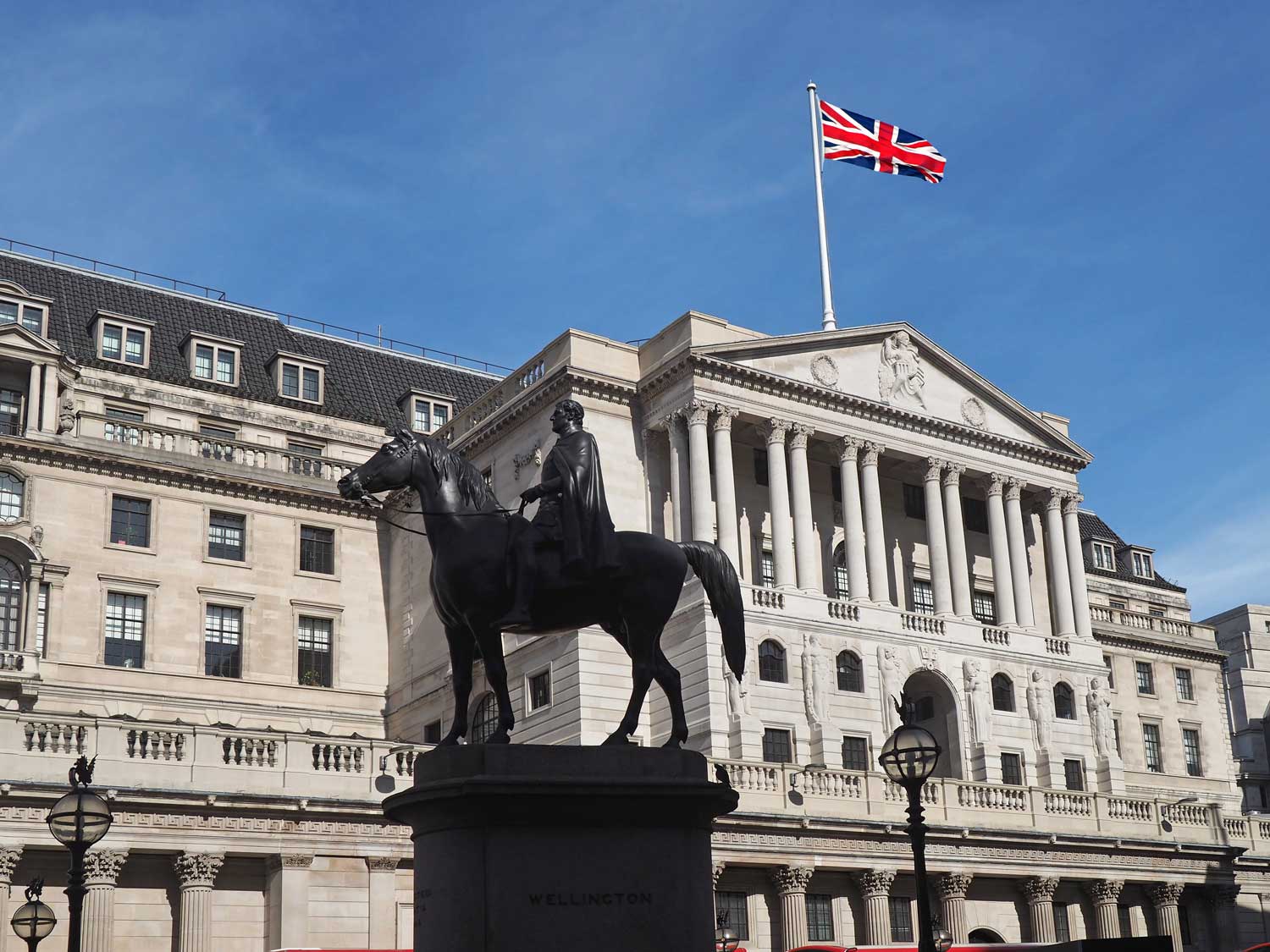
The Bank of England’s latest decision to hold interest rates at 3.75% reflects a delicate balancing act—one increasingly shaped not by domestic demand, but by geopolitical risk. While UK inflation has eased to around 2.8%, it remains above the Bank’s 2% target, and policymakers are now navigating a more complex threat: externally driven inflation linked to the ongoing conflict in the Middle East.

A “Pause” Rather Than a Pivot

At first glance, the decision to hold rates suggests stability. In reality, it signals uncertainty.

The Monetary Policy Committee (MPC) is caught between two competing forces:

  • Cooling domestic inflation and a weakening economy, which would typically justify rate cuts
  • Persistent and unpredictable energy-driven inflation, which could require tightening

The result is a “wait and see” approach. Even within the MPC, there is division, with some members voting for further increases—highlighting concern that inflation may not yet be contained.  

Crucially, the Bank recognises that monetary policy is already restrictive. Acting too aggressively risks tipping the UK into a period of stagnation at a time when growth remains fragile.

The Middle East Effect: A Supply-Side Shock

Unlike demand-led inflation, the current risk is being driven externally—through energy markets and supply chains.

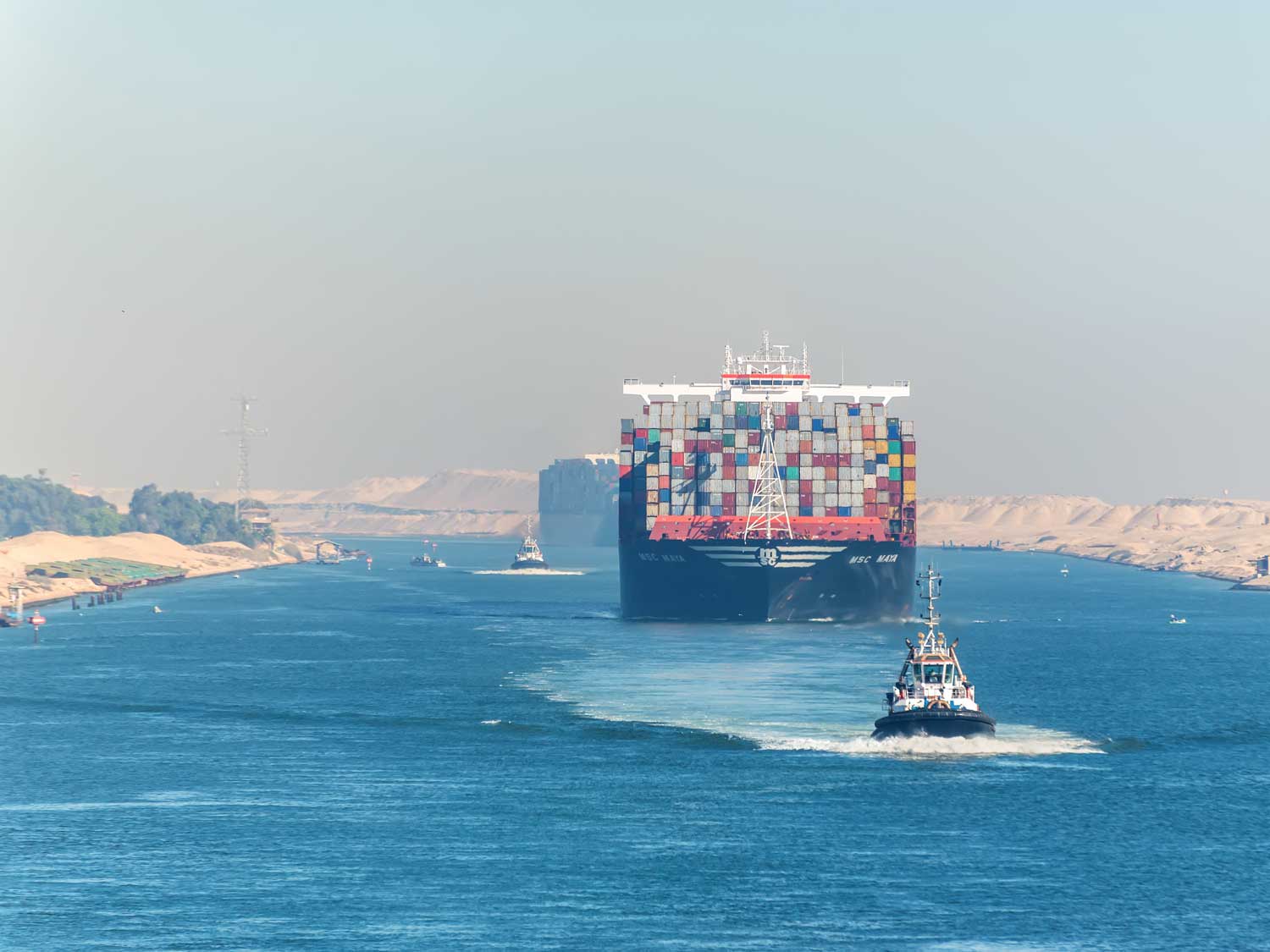
The conflict in the Middle East has disrupted global oil and gas flows, particularly through critical routes such as the Strait of Hormuz, which carries around 20% of global oil supply.

This has already translated into:

  • A sharp rise in oil prices (exceeding $100 per barrel during peak disruption)
  • Significant increases in gas prices and transport costs  
  • Higher fuel and utility bills for UK households and businesses

For the UK—an energy importer—this creates immediate inflationary pressure.

From Energy Prices to Inflation: The Transmission Channels

The inflation risk is not limited to fuel bills. The transmission mechanism is broader and more persistent:

1. Direct Impact

Higher oil and gas prices feed directly into:

  • Petrol and diesel costs
  • Household energy bills

These are already expected to rise further through regulated price caps in 2026.

2. Indirect (Second-Round) Effects

More significant—and more dangerous—are the “second-round” impacts:

  • Increased logistics and transport costs
  • Rising input costs across manufacturing and food supply chains
  • Wage pressure as households seek to offset higher living costs

The Bank of England has explicitly warned that these second-round effects represent the key risk to inflation becoming embedded.

3. Supply Chain Disruption

Conflict-driven disruption is not limited to energy:

  • Shipping routes and insurance costs are affected
  • Freight costs rise as vessels reroute or avoid risk zones
  • Input costs increase across traded goods

This dynamic mirrors previous inflation shocks but with a more direct geopolitical trigger.

Why the Bank Is Holding Rates (For Now)

Given this backdrop, the Bank’s decision to hold rates becomes clearer. There are three core reasons:

1. Energy Inflation Cannot Be Controlled Directly

Interest rates cannot lower oil prices. Tightening policy aggressively in response to a supply shock risks damaging growth without addressing the root cause.

2. Inflation Is Expected to Rise Again

Despite recent moderation, the Bank expects inflation to increase in the near term as higher energy costs feed through the system.

3. Economic Weakness Acts as a Counterbalance

The UK economy remains soft:

  • Labour demand is easing
  • Growth is subdued

This reduces the likelihood of sustained wage-price spirals—at least in the short term.

The Key Risk: Persistence

The central question is no longer whether inflation will rise—but whether it will persist.

Scenario analysis from policymakers suggests:

  • A temporary energy shock may lift inflation modestly (e.g. +0.3 percentage points)
  • A prolonged disruption could push inflation significantly higher and delay its return to target by up to a year

In more severe cases, inflation could rise materially above expectations, forcing the Bank to reverse course and increase rates again.

Conclusion: A Central Bank in a Holding Pattern

The Bank of England is not signalling victory over inflation—it is signalling caution.

The decision to hold interest rates at 3.75% reflects a recognition that the inflation battle has shifted:

  • From domestic overheating
  • To global geopolitical risk and energy market disruption

In this environment, monetary policy alone cannot drive outcomes. Instead, the path of inflation—and interest rates—will largely depend on events far beyond Threadneedle Street.

For now, the Bank is holding the line. But the direction of travel remains highly contingent on the trajectory of the Middle East conflict—and the energy markets it continues to disrupt.

To discuss how current economic and supply chain conditions could impact your business, EMAIL Laurence Burford, Chief Financial Officer.

ship aerial 1440x1080 1

Carriers tighten capacity and push through fresh increases

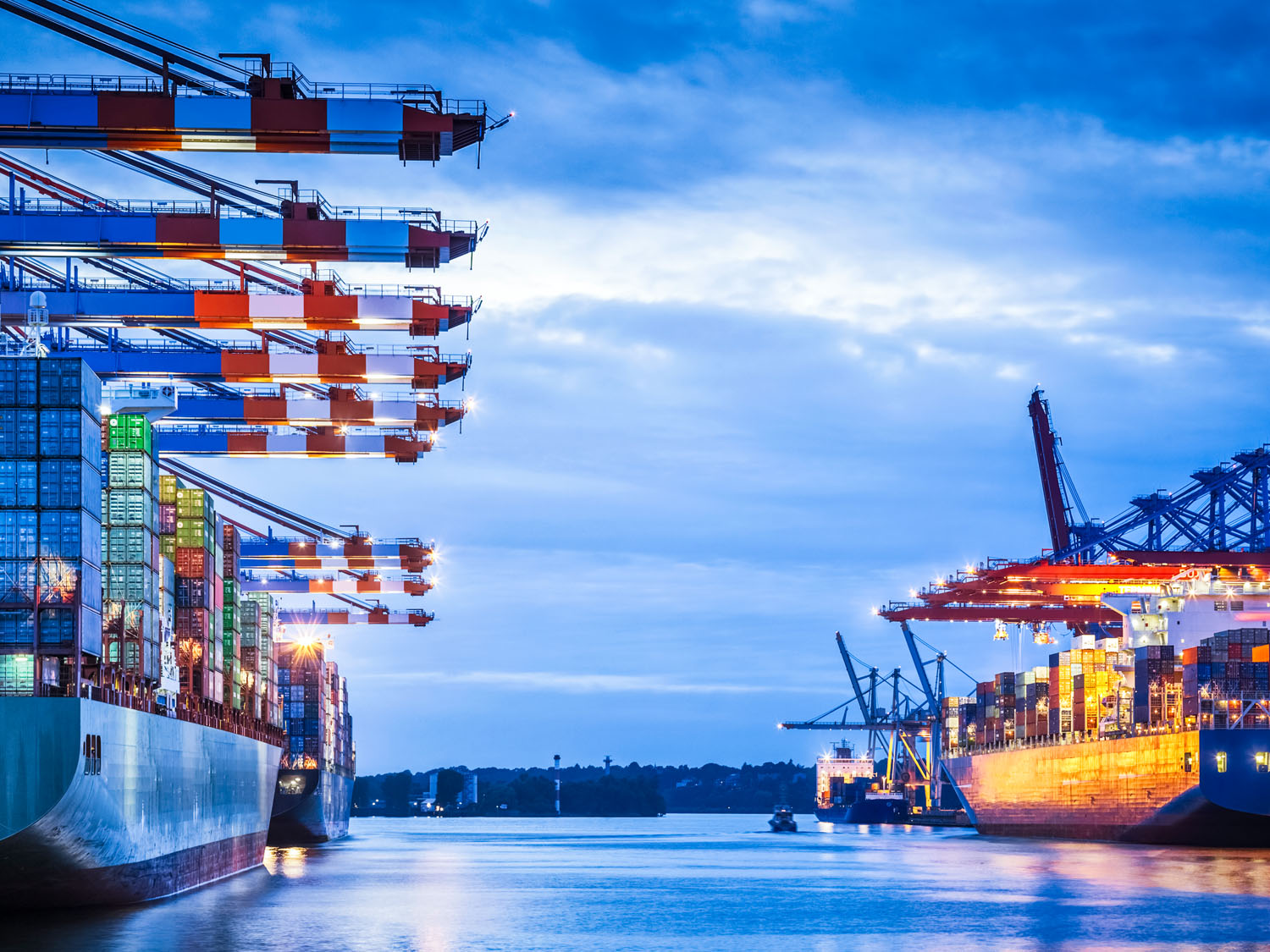
Instead of easing, market pressure is intensifying as carriers implement another round of July increases and vessel space remains scarce across major east-west trades.

The combination of front-loaded orders, fuel-related adjustments and ongoing uncertainty has extended this year's peak season well beyond its traditional boundaries. Rather than a short-lived spike, supply chains are facing a prolonged period of elevated demand and restricted capacity.

Fresh carrier increases introduced during June triggered another round of double-digit spot market gains on Asia-Europe and transpacific services. Spot rates into Northern Europe rose by around 15% over the past week, while Mediterranean routes increased by approximately 12%.

The transpacific market has seen similar momentum. Rates to the US West Coast have climbed by almost 30% over the past week, while US East Coast pricing has increased by roughly a quarter. Broader market indices show more moderate gains, but still recorded weekly increases of around 10-15%.

The latest increases have been supported by strong booking activity as importers continue bringing cargo forward ahead of July fuel adjustments and amid concerns over available space. 

New carrier pricing announcements for July indicate that further upward pressure is likely during the first half of the month, with market conditions expected to remain firm before gradually softening later in the summer.

Space matters more than price

Shippers across Asia-Europe and transpacific trades are increasingly finding that securing capacity is becoming more important than negotiating the lowest rate.

Many vessels are already heavily booked several weeks ahead, while lead times continue to lengthen. Rolled cargo and delayed departures are becoming more common as carriers carefully manage allocations to maintain vessel utilisation.

Despite tight conditions, carriers have introduced relatively few blank sailings on Asia-Europe routes, suggesting that strong underlying demand is supporting current capacity levels. On the transpacific, however, additional blank sailings indicate carriers are already positioning themselves to protect pricing should demand begin to weaken later in the year.

The result is a market where availability, rather than rates alone, is increasingly determining supply chain performance.

Peak season has become a moving target

Traditional seasonal patterns are becoming harder to identify.

Geopolitical uncertainty, changing tariff regimes, fuel costs and shifting inventory strategies are creating multiple demand waves throughout the year. Strong booking levels through July are expected to keep pressure on vessel utilisation well into August, while later seasonal events could create further spikes in demand during the second half.

Even where capacity additions have been made, their impact may prove temporary as carriers continue adjusting networks and reallocating vessels to follow demand.

For supply chains, this means fixed peak season planning is becoming less relevant. Flexibility, earlier booking and greater visibility are replacing traditional calendar-based approaches.

Planning ahead has never mattered more

Businesses that continue to rely on last-minute bookings risk finding themselves at the back of the queue when markets tighten.

Successful supply chains are increasingly securing space earlier, diversifying routing options and building greater resilience into inventory strategies. In today's market, the cheapest rate can quickly become the most expensive option if cargo misses a sailing or fails to reach customers on time.

Metro monitors market developments across all major trade lanes and works proactively with customers to secure capacity before disruption becomes a problem. 

If rising costs, restricted space or changing market conditions are affecting your supply chain, EMAIL our Managing Director, Andrew Smith, directly. Sometimes the most valuable conversations happen before a shipment becomes urgent.

refinery

Fuel shocks across ocean, air and road freight

With the Strait of Hormuz effectively closed, crude oil can still exist within the region, but refined products, which includes marine fuel, jet fuel and diesel, can no longer move freely to key consumption markets, which has triggered a sharp divergence in pricing and availability across all modes. 

For shippers, this creates a higher cost floor, as transport fuels are no longer moving in line with crude. Marine bunker, jet fuel and diesel each have their own supply chains and crack spreads (the margin between crude and refined products), and are now behaving independently of Brent. This is driving bunker-led cost pressure in ocean, jet fuel-driven inflation in air, and diesel-driven cost escalation in road. 

Ocean freight: bunker costs reset the pricing floor

In ocean freight, bunker fuel has become the dominant cost driver. Asian fuel hubs, particularly Singapore, are experiencing significant pressure as rerouted vessels increase demand while supply remains constrained.

This has created a disconnect between traditional pricing mechanisms and real-time costs. 

Emergency bunker surcharges are being applied across major trade lanes, while standard adjustment factors lag behind market conditions and may only catch up with current fuel inflation later in the year.

The result is a structurally higher cost base, with ocean rates now reflecting fuel volatility rather than underlying demand alone. 

Air freight: jet fuel shortage tightens capacity

Air freight is facing the most acute fuel-driven pressure. Gulf refineries, which typically supply jet fuel to Europe and Asia, are unable to export at normal levels, creating a shortage of refined product.

This has driven a sharp increase in jet fuel prices, with crack spreads widening dramatically from around $16 per barrel pre-crisis to approximately $100 in some regions. 

This regional price divergence means that Asia and Middle East jet fuel benchmarks sit substantially above North American levels, meaning that every kilo of freight uplifted is starting from a materially higher fuel cost base. 

As a result, airlines are adjusting networks, reducing marginal capacity and prioritising fuel efficiency, tightening available uplift and sustaining elevated airfreight rates.

Road freight: diesel inflation feeds through to transport costs

Road freight is also seeing significant cost pressure, with diesel prices rising independently of crude due to refinery constraints and regional supply dynamics.

Fuel accounts for roughly 30% of total truck operating costs, meaning sustained diesel inflation is already feeding through into pricing. 

At the same time, increased reliance on overland routes across the Middle East is adding further demand pressure, compounding both cost and capacity challenges.

What this means for shippers

  • Expect fuel-driven cost volatility across all modes
  • Plan for longer and less predictable transit times
  • Build flexibility into routing and inventory strategies
  • Monitor surcharge mechanisms

Fuel disruption, routing constraints and capacity pressure are now closely linked. Managing one without the others is no longer effective.

Metro works with customers to model alternative routes, balance mode selection and manage cost exposure in real time. If you are seeing rising costs, delays or uncertainty in your supply chain, EMAIL managing director, Andrew Smith, to secure the most effective solution for your cargo.

survey

Customer feedback highlights strong service performance

Customer feedback from the last bulletin’s survey confirms Metro’s position as a trusted and increasingly strategic logistics partner, with strong scores across relationship quality, accessibility and overall service delivery.

The ability to reach the right people quickly continues to stand out, with 86% of customers rating this as good or excellent and a weighted score of 4.0 out of 5. This reflects the importance Metro places on responsiveness and direct access to experienced teams, particularly in fast-moving or disrupted conditions.

Customers are clear in how they view the relationship. 71% describe Metro as a strategic logistics partner, with no respondents positioning the business as purely transactional. 

This is supported by consistently positive scores across capability and understanding. 

Customers report a strong grasp of Metro’s service offering, confidence in handling complex shipments, and recognition that value extends beyond simply moving freight, with all key measures scoring above 3.2 out of 5.

Solid operational performance in a challenging market

Operational delivery remains resilient despite ongoing global disruption. Feedback shows that 86% rate delivery as good, with a balanced spread reflecting the realities of a complex operating environment and a weighted score of 3.0 out of 5.

Communication throughout the shipment lifecycle is also performing well overall, with 57% rating it as good or excellent (weighted 3.14 out of 5). This is particularly notable given the continued impact of external events, including Middle East disruption, which is affecting routing, lead times and planning across supply chains. 

Issue resolution is viewed as steady and dependable, with the majority of responses falling within neutral to positive territory and a weighted score of 3.29 out of 5, reflecting consistent support even in complex scenarios.

Confidence remains high as customers look ahead

Customer confidence in Metro remains strong. The overall recommendation score sits at 4.14 out of 5, with 67% of customers likely to recommend Metro to colleagues or industry peers. 

Looking ahead, most customers expect freight volumes to remain stable or increase slightly over the next 12 months, reinforcing the need for reliable and adaptable logistics support.

Feedback also highlights the ongoing impact of Middle East disruption, particularly on ocean freight and inventory planning, while air freight is seen as less directly affected. 

Continuous improvement shaped by customer insight

Alongside these positive results, customers have identified clear opportunities to enhance service further. The focus is on improving visibility, increasing the speed of information flow and continuing to refine operational execution.

Metro is actively using this feedback to guide service development, ensuring improvements are aligned with real customer priorities and evolving market conditions.

Have your say

If you have not yet taken part in the Metro customer survey, we would encourage you to do so.

Your feedback helps shape how we invest, improve and support your supply chain. 

Take a few minutes to share your views and be part of the next phase of service development.

.