truck stop

Road freight resilience amid industry turbulence

Despite rising costs, political uncertainties, and sluggish economic growth presenting formidable obstacles for road freight operators, Metro remains a standout performer, driving forward with an optimistic outlook, bolstered by sustained expansion and strategic investments.

The UK’s haulage sector is bracing for what could be its most difficult year since the Covid-19 pandemic. Businesses are contending with increased operational expenses, stemming from policy changes such as National Insurance contribution adjustments and minimum wage hikes. These factors place additional financial strain on operators already struggling with freight volumes and inflationary pressures.

Across Europe, the freight industry has struggled with stagnating demand, particularly in Germany, where truck mileage—a key indicator of transport activity—has continued to decline. While a modest economic recovery is forecast, growth in the road freight volumes are expected to remain tight, reflecting broader economic uncertainties.

Challenging yet recovering market

The European road freight market is set to experience a gradual recovery in 2025, with overall activity expected to increase by 2%. This is largely driven by a projected improvement in GDP growth across the eurozone and a stabilisation of inflation. The international freight segment is forecast to grow at a slightly higher rate, indicating renewed confidence in cross-border trade.

However, challenges persist. The UK’s fiscal expansion is anticipated to temporarily boost domestic demand, yet higher operational costs are expected to maintain inflation at elevated levels. The market-wide outlook remains cautious, with operators needing to navigate a delicate balance between cost pressures and service efficiency.

Positioned for success

Despite the challenging conditions affecting the broader industry, Metro’s road freight division continues to defy trends, delivering exceptional year-on-year growth. While many competitors have struggled to maintain volumes, Metro has expanded significantly, with a marked increase in team size and service capabilities.

Key to this success is the company’s strategic focus on expanding its European network. Recently introduced groupage services to the Netherlands, Poland, and Iberia are set to drive further growth, complementing well-established French and German routes. 

Additionally, Metro’s investment in less-than-truckload (LTL) and full-truckload (FTL) services positions it for continued success, ensuring efficient and scalable transport solutions across Europe.

By prioritising service expansion, operational efficiency, and customer-driven innovation, the company continues to outpace market trends. Metro’s proactive approach ensures its customers benefit from reliable, cost-effective, and resilient transport solutions in an otherwise volatile market.

To explore the potential and benefits of our road freight services EMAIL Richard Gibbs to begin a conversation.

Rachel Reeves 1440x1080 1

UK trade expansion, investment, and regulatory shifts

While challenges remain, including rising costs and global economic uncertainties, the UK’s export trade environment is set for significant transformation, driven by infrastructure investments, regulatory updates, and evolving international partnerships.

Chancellor Rachel Reeves has outlined ambitious plans to boost growth, focusing on airport expansions, international trade missions, and economic cooperation with key partners. These initiatives come as Europe faces economic headwinds, underscored by a recent interest rate cut by the European Central Bank.

Infrastructure expansion to boost trade

Reeves has signalled strong government support for expanding the UK’s aviation infrastructure, including at Heathrow, recognising its critical role in trade and connectivity. 

The government is considering further development at Luton and Gatwick airports, in addition to backing expansion at London City and Stansted. The proposed reopening of Doncaster Sheffield Airport and the establishment of an advanced manufacturing and logistics park at Manchester Airport are expected to generate significant investment and job creation.

“A third runway at Heathrow should be a priority,” said Marco Forgione, director general of the Chartered Institute of Export & International Trade. “We also urge the government to invest in the UK’s broader infrastructure network, including road, rail, and ports, to remain competitive in the global market.”

Strengthening global trade ties

The UK government is ramping up efforts to strengthen international trade relationships. Business and trade secretary Jonathan Reynolds will lead a trade delegation to India next month, aiming to secure new partnerships and investment opportunities. Reeves also reaffirmed the UK’s commitment to leveraging its “special relationship” with the US, particularly under the administration of President Trump.

Meanwhile, China is solidifying its dominance in clean energy mineral supply chains, issuing loans worth billions to developing countries. This move highlights the urgency for the UK to secure its own critical mineral supply chains to support green energy initiatives.

Customs and regulatory updates

Changes in trade regulations continue to impact UK exporters. HMRC has announced the closure of the Modernising Authorisations project following a spending review. However, ongoing improvements to customs guidance and technical handbooks will still be delivered, ensuring businesses receive the necessary support for compliance.

Additionally, new safety and security requirements have been implemented, alongside updates to the Customs Declaration Service. These regulatory shifts reinforce the importance of businesses staying informed and adapting to evolving trade procedures.

UK-EU economic cooperation

The UK is pursuing deeper economic cooperation with the EU, with a proposal to link the UK and EU Emissions Trading Schemes (ETS). This alignment could help streamline cross-border trade and reduce compliance burdens when both parties fully implement their respective Carbon Border Adjustment Mechanisms (CBAMs). These mechanisms, designed to tax high-emission imports, aim to prevent carbon leakage by discouraging companies from relocating polluting activities to regions with looser environmental regulations.

EU officials have confirmed that the UK has requested ETS linkage and CBAM discussions to be included in an upcoming UK-EU summit. Minister for EU relations Nick Thomas-Symonds described this as an “absolute priority” for ensuring regulatory alignment and minimising trade disruptions.

Navigating the complexities of international trade requires real-time insights and expert guidance. At Metro, we continuously monitor market influences, including currency fluctuations, macroeconomic trends, and evolving regulations, to help you de-risk your supply chain and maximise opportunities.

Our MVT supply chain platform offers in-depth reporting, tracking global CO2 emissions and providing essential environmental compliance templates. Whether you’re entering new export markets, sourcing from fresh suppliers, or responding to regulatory changes, we provide tailored solutions to keep your business competitive.

With over 40 years of expertise in multimodal transport and customs brokerage, we lead the way with CuDoS, our automated customs declaration platform, ensuring swift compliance with UK and EU trade regimes.

Make informed decisions with Metro’s strategic support. For trade insights and risk management advice, EMAIL Laurence Burford, Chief Financial Officer. For customs and regulatory solutions, EMAIL Andrew Smith, Managing Director.

Dover blur

Safety and security declarations for EU imports

From 31st January, businesses importing goods from the European Union (EU) to Great Britain (GB) must comply with new UK safety and security declaration requirements.

While some businesses are already prepared – voluntarily submitting around three million declarations annually – many others need to act quickly to ensure compliance.

New requirements explained

Following the UK’s exit from the EU, imports from the EU have been exempt from safety and security declarations. However, this waiver ends on 31st January, bringing EU imports in line with the requirements already applied to goods from the rest of the world.

Safety and security declarations provide pre-arrival information for goods entering GB. These are submitted via the Safety and Security Great Britain (S&S GB) IT platform. By collecting this data, authorities can conduct more intelligent risk assessments, minimising delays for legitimate goods while preventing illegal or dangerous items from entering the country.

Declarations must be completed accurately and submitted before goods reach the GB border. Failure to comply may result in delays, unnecessary checks, or penalties. Businesses are urged to prepare now to avoid disruptions.

All businesses importing from the EU to GB must be aware of these regulations. Hauliers and carriers are legally responsible for submitting declarations, although third parties, such as agents or intermediaries, can submit them on their behalf with consent. Responsibility varies by mode of transport.

Submitting safety and security declarations

Declarations are made via the S&S GB platform. Businesses already set up for importing from outside the EU can continue using their existing systems and datasets. However, they may opt for the reduced dataset for EU imports.

Specialist software is required to submit declarations, as S&S GB does not have a user interface. Businesses can either develop their own software, purchase compatible software, or use the services of a system provider.

HMRC’s advice for shippers is to use customs agents like Metro, that have instructed their hauliers and confirm that they have primary and contingency methods in place.

If changes occur, declarations can be amended at any point before the goods reach the GB border. Once accepted, a Movement Reference Number (MRN) will be issued. This number is essential for goods moving through ports using the Goods Vehicle Movement Service.

Metro’s role in supporting customers

Metro will handle these new requirements on behalf of its customers, ensuring compliance and minimising disruption. With expertise in customs processes and advanced systems like its proprietary CuDoS platform, Metro simplifies declaration submissions while maintaining 99% accuracy and rapid processing times.

This proactive approach ensures goods continue to move smoothly, enabling businesses to focus on growth while Metro manages the complexities of import declarations. For businesses navigating these changes, Metro provides the expertise and technology to stay compliant and avoid unnecessary delays.

Webinar

Metro’s customs team ran a webinar on Friday 31st January – “Navigate 2025: Customs Challenges and Changes with Confidence” – to explain these and other customs changes.

Hosted by Andy Fitchett, Head of Customs & Compliance and Matt Weight, Director of Key Accounts, the webinar reviewed new regulations, processes, and challenges for businesses across the UK and Europe, including:

– Mastering Safety and Security Declarations for EU imports.
– Updates on the New Computerised Transit System (NCTS) Phase 5.
– Understanding the Carbon Border Adjustment Mechanism (CBAM) and its impact.
– DEFRA updates, market news, and more!

You can download the presentation material from the Webinar, or watch a recording of the webinar.

CLICK to download content

CLICK to view webinar

Metro are at the forefront of customs brokerage solutions, with our automated CuDoS declaration platform and dedicated team of customs experts, reacting swiftly to any changes in the UK and EU’s trading regimes.

To learn more about safety and security declarations, OR to see how we can simplify and automate customs declarations – please EMAIL Andy Fitchett, Brokerage Manager.

Suez map

Container shipping braces for volatility as Red Sea routes beckon

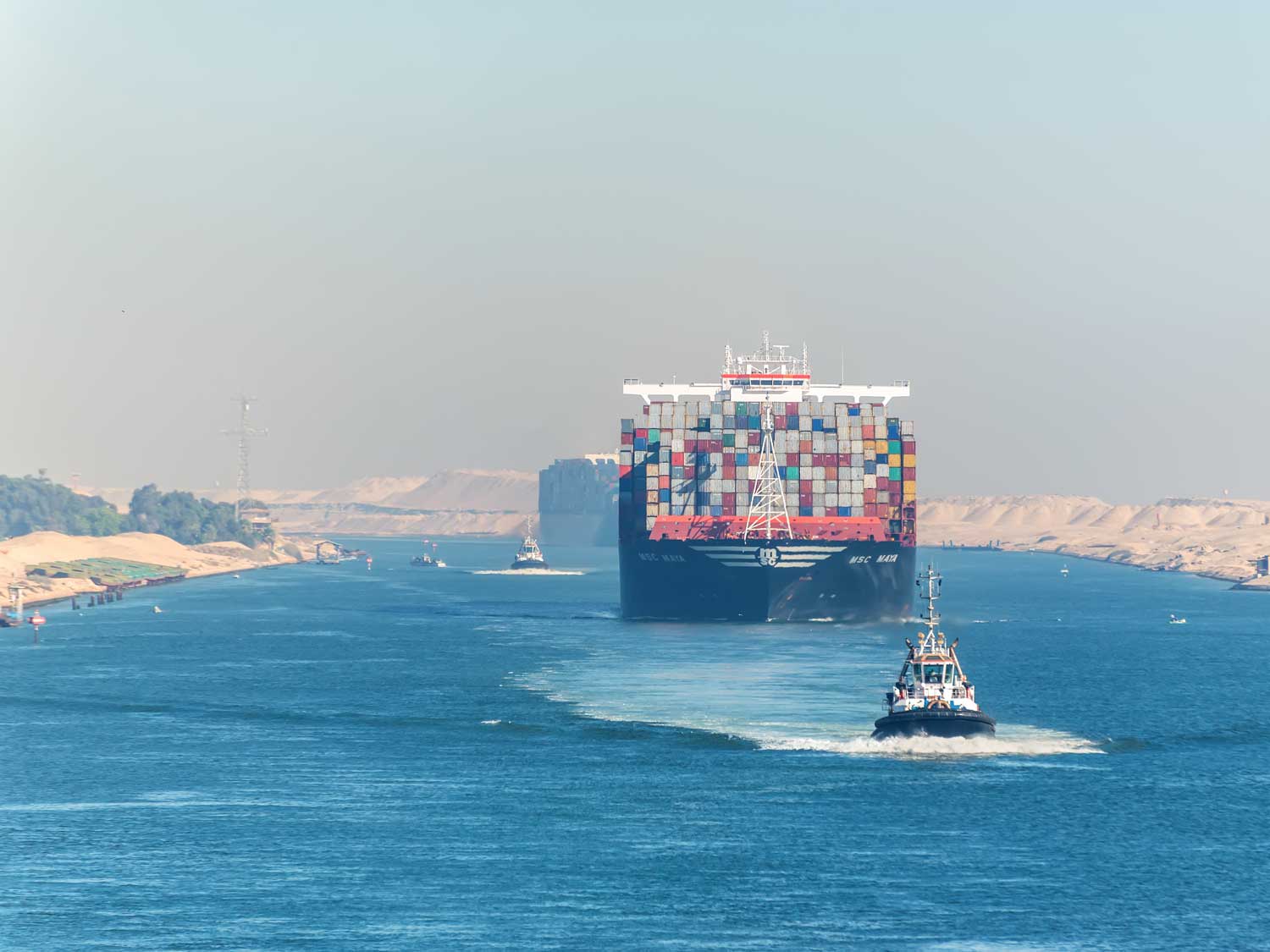
For over a year attacks on merchant vessels by Houthi militants has forced container carriers to reroute around the Cape of Good Hope. However, a newly established ceasefire and assurances from Houthi forces to limit attacks on non-Israeli vessels signal the possibility of a return to the Suez Canal route.

The ceasefire in Gaza and Houthi pledges to cease attacks on most vessels offer cautious optimism for carriers, who have stated that they will only return to Red Sea transits “when it is safe to do so”.

The assurance that ships will not be targeted, alongside a reduction in hostility towards vessels calling at Israeli ports, should pave the way for safer Red Sea transits.

However, the situation remains fragile. The Houthis have reserved the right to resume attacks should aggression occur in Yemen, and their targeting of Israeli-flagged or wholly Israeli-owned vessels persists. Furthermore, full implementation of the ceasefire agreement’s later stages is crucial for long-term stability.

Capacity oversupply threatens
While the reopening of the Red Sea route presents an opportunity to streamline shipping operations, it also introduces significant challenges.

Currently, close to 100% of container vessels avoid the Suez Canal, diverting around Africa and effectively removing over 12% of fleet capacity. This artificial tightening of capacity has driven freight rates to significantly higher levels in 2024, with spot rates more than tripling on some trades.

The return to shorter voyages through the Suez Canal will flood the market with capacity, dramatically altering the supply-demand balance. Analysts predict carriers will struggle to absorb the 1.8m TEU excess, with scrapping and slow steaming unlikely to offset the impact.

Operational challenges
Resuming Red Sea transits will also bring logistical hurdles. Carriers face the complex task of realigning schedules disrupted by the year-long diversions. Ships arriving earlier or later than expected at ports could lead to congestion and delays, adding to the strain on global supply chains.

Port congestion, particularly in Europe, is a key concern. A surge in vessel arrivals could overwhelm infrastructure, causing temporary backlogs that disrupt the smooth flow of goods. The shipping industry must also contend with record deliveries of new vessels, further compounding capacity issues.

While the reopening of the Red Sea route offers opportunities to reduce transit times and operational costs, the transition is unlikely to be smooth. The combination of excess capacity, volatile freight rates, and logistical challenges will create uncertainty in the short term.

With geopolitical risks casting uncertainty over the industry, building resilient supply chains, securing comprehensive cargo insurance, and managing budgets effectively will be essential for navigating the 2025 sea freight landscape.

In this volatile market, our marine insurance cover and fixed-rate agreements on key shipping routes help minimise risk and provide budgetary stability.

To discover how Metro’s insurance solutions and fixed-rate options can support your business in 2025, please EMAIL Managing Director Andy Smith.