MSC and Maersk 1440x1080 1

New shipping alliances for 2025

With the dissolution of the 2M partnership between MSC and Maersk in February 2025, new partnerships and slot-sharing agreements are emerging, positioning shipping companies in a transformed global market.

One of the key developments is the formation of the Premier Alliance, which will replace THE Alliance. This new partnership brings together Ocean Network Express (ONE), HMM, and Yang Ming, with MSC also entering into a vessel-sharing agreement (VSA) with the group.

The Premier Alliance will focus on key East-West trade lanes, including Asia-Europe, Asia-North America, and Asia-Mediterranean routes. The agreement will offer customers more direct coverage and frequent sailings, with plans for six Asia-North Europe services, including five in cooperation with MSC.

Now the world’s largest container shipping company, MSC has moved quickly to capitalise on its scale. Following its departure from the 2M alliance with Maersk, MSC will operate largely independently while maintaining slot-sharing agreements with the Premier Alliance and Zim.

MSC will manage 34 loops across five major trade routes, covering Asia-North America, Asia-Europe, the Mediterranean, and the trans-Atlantic. It will offer customers direct port-to-port services, providing over 1,900 direct port pairings through the Suez Canal (when it is accessible) and more than 1,800 via the Cape of Good Hope.

The formation of the Gemini Cooperation, a new alliance between Maersk and Hapag-Lloyd, adds another layer of competition. Unlike MSC’s direct coverage approach, Gemini Cooperation will focus on a hub-and-spoke service network. This divergence in strategy highlights how alliances are tailoring their operations to meet the specific needs of global trade.

As these alliances come into play, the shipping landscape will continue to evolve. The Premier Alliance and MSC, with their extensive network of direct services, will provide enhanced port coverage and flexibility, while Gemini Cooperation’s hub-based model may appeal to shippers seeking more consolidated routes.

Together, these developments signal a reshaping of global shipping routes, aimed at increasing efficiency and meeting the growing demands of international trade. With direct access to over 80 ports and expanded service options, the new alliances are set to redefine global logistics for the years to come.

We will keep you advised and updated on important developments within the container ocean freight market as they materialise.

If you have any questions or concerns about the Premier Alliance agreement, or would like to discuss the wider implications of the shipping alliance changes, please EMAIL our Chief Commercial Officer, Andy Smith.

container ship and naval escort

SECURITY UPDATE: Red Sea

The recent sinking of the Prestige Falcon oil tanker, following a Houthi attack, marks the deadliest incident involving these strikes to date.

The vessel capsized near the Omani coastal city of Duqm, and while the Indian Navy rescued nine of the 16 crew members, one was found deceased, and six remain unaccounted for, feared to have gone down with the ship.

The Prestige Falcon, flagged under the Comoros, was targeted approximately 5 nautical miles southeast of Ras Madrakah, Oman, closer to the Persian Gulf than the typical Red Sea and Bab al-Mandeb strait attack zones. With at least 100 Houthi attacks on merchant ships so far, resulting in the deaths of four seafarers, this incident could significantly increase that toll.

These Red Sea attacks have contributed to elevated containership charter and freight rates. Industry experts predict continued Cape of Good Hope diversions until at least 2025, keeping rates high.

Recent escalations include Israel’s attack on the Hodeidah port in Yemen, following a Houthi drone strike on Tel Aviv. The method of the Houthi drone attack remains unclear, raising concerns about potential threats to shipping in the Eastern Mediterranean.

Speculation suggests the drone may have been launched with the aid of militants closer to Israel, highlighting the risk of supply chain disruptions if drones can be deployed from nearer locations or if groups like Hezbollah become involved.

The Houthi’s have already warned that they plan to expand their campaign of attacks on commercial shipping, to include vessels in the Mediterranean. While the Pentagon has stated that the US has seen no sign of the Iran-armed rebels attempting to do so yet, it has admitted to being worried about the possibility.

“The Houthis have an advanced array of weaponry and they have weapons that could reach the Mediterranean. It definitely is of concern that they have that capability.”

According to some projections, the current Houthi attack campaign will continue for at least the rest of this year, and many commercial vessels will keep avoiding the Gulf of Aden and southern Red Sea until 2025 or beyond. In fact, it could get much worse with some of the new developments this week between Israel and The Lebanon also. We will endeavour to keep you updated as frequently as news is issued and on the impact associated with your supply chain and logistics requirements.

Experts warn that until the Houthis are deprived of the weapons they are using to conduct these attacks at source, we should expect more attacks and damage to international trade.

If you have concerns or questions about the issues covered here, please EMAIL our Chief Commercial Officer, Andy Smith.

Dubai

New Silk Road will link the Gulf to Europe

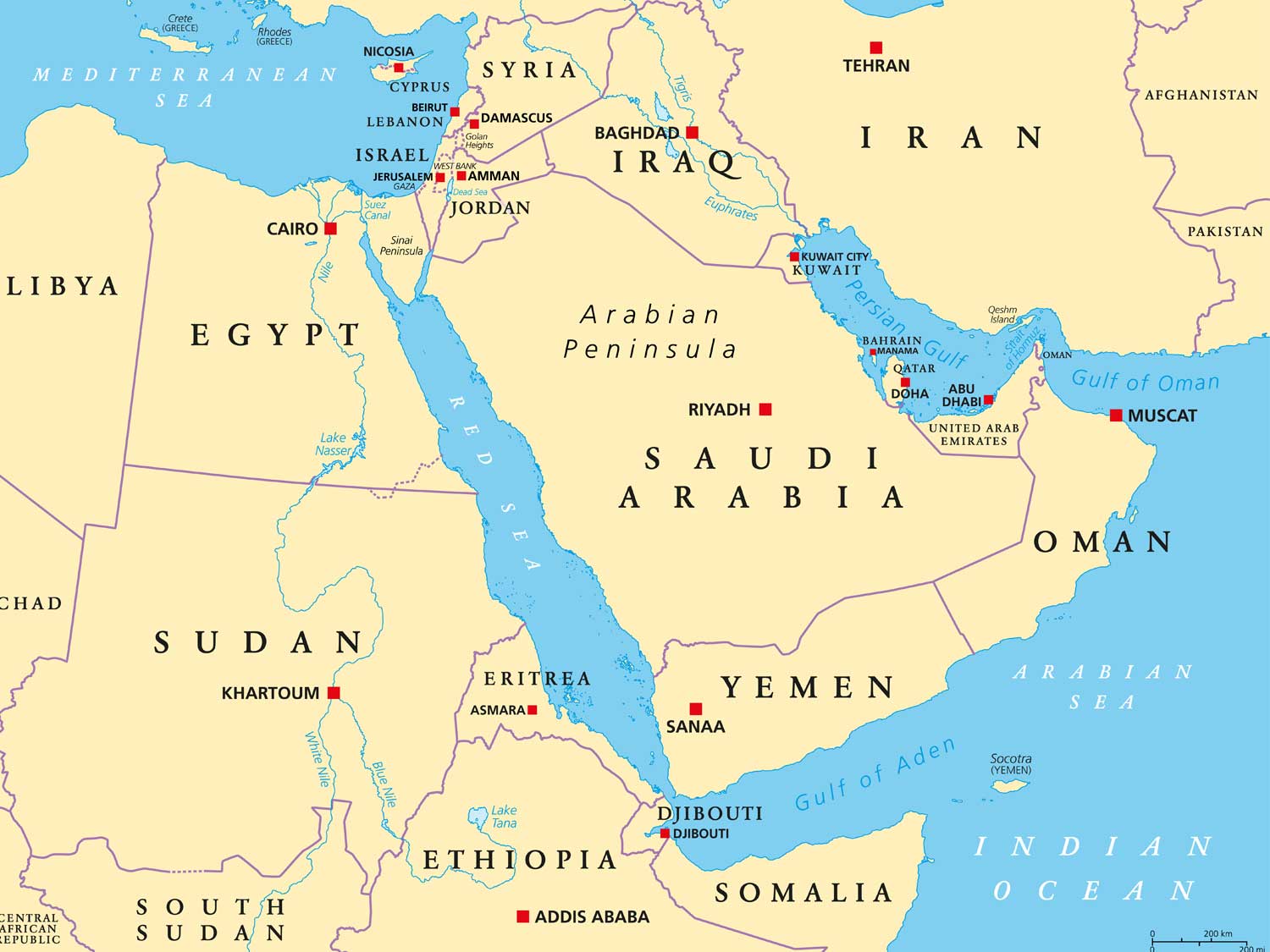
Turkey, Qatar, and the UAE are joining with Iraq to develop a new land corridor – Development Road Project – which will connect the Gulf to Europe.

The Development Road Project is a multi-billion dollar land corridor that will stretch 750 miles from the Persian Gulf to the Mediterranean Sea, establishing a network with railways, roads, ports and cities, to significantly reduce travel time between Asia and Europe via Turkey.

Estimates for the costs of the Development Road Project range from $8 billion to $15 billion, and possibly up to $20 billion, which may be financed by the UAE, Qatar, or another country, with the entire project expected to be completed within five years, once the funding is secured.

In May 2023, Baghdad hosted a summit which brought together transport ministers and officials from the European Union, the World Bank, GCC, Iran, Turkey, Syria and Jordan to discuss the establishment of the Development Road initiative.

The Development Road, dubbed the “Iraqi Silk Road”, gained further attention during the G20 Summit in New Delhi last September, when the project was discussed as an alternative route to the Suez Canal, to aid faster and more efficient trade between Asia and Europe.

The project is expected to turn Iraq into a transit hub and compete with Egypt’s Suez Canal, strengthening Iraq’s geopolitical position in the region and the world, while supporting security and stability in the region.

In April 2024, a quadrilateral memorandum of understanding, regarding cooperation in the Development Road project was signed by the transportation ministers of Iraq, Turkey, Qatar and UAE, with railways and highways connecting to Iraq’s Great Faw Port, aimed to be the largest port in the Middle East.

The project is planned to be completed in three stages by 2028, 2033 and 2050 and will open Iraq to the world through Turkey. It will generate $4 billion annually and create at least 100,000 jobs.

We will keep you advised and updated as this initiative proceeds, sharing any important developments and seeking market opportunities as they materialise.

If you have any questions or concerns about the ‘new Silk Road’, or would like to discuss the potential implications and benefits of this initiative, please EMAIL our Chief Commercial Officer, Andy Smith.

Sea Air aerial

State of the air freight market

The effective closure of the Red Sea and the Suez Canal to container ships is adding around two weeks to supply chain transit times and creating a backlog of manufacturing components, late shipments and inventory replenishment, with critical consignments reliant on air solutions. While Iran’s attack on Israel has led to major carriers rerouting or cancelling flights and causing potential bottlenecks and price hikes.

Traffic ex-South Asia has been particularly driven by the Red Sea push to air, with spot rates climbing significantly. 

Contributing significantly to demand has been a massive spike in eCommerce volumes out of China, which is pushing prices well above typical levels for non-peak periods.

Average spot prices to North America have nearly doubled since mid-December, while Europe rates have climbed over 120%.

The eCommerce spike has seen Heathrow (LHR) imposing restrictions on ad-hoc freighters and charters from Shanghai, which has resulted in diversions to alternative gateways, including Birmingham International, with at least one charter operator transferring their slots away from LHR to Birmingham (BHX).

Traffic ex-South Asia has been particularly driven by the Red Sea push to air, with spot rates climbing significantly. Average spot prices to North America have nearly doubled since mid-December, while Europe rates have climbed over 120%.

The recent loosening of US restrictions on the number of weekly flights to the US allotted to Chinese carriers will increase China to US air capacity and could ease some pressure on rates.

The closure of Iranian airspace, due to safety concerns, following Iran’s attack on Israel has led to major carriers rerouting or cancelling flights and causing potential bottlenecks and price hikes for shipments from India.

Carriers operating to Europe are using alternative routes; primarily through Turkey and Azerbaijan, for Middle-East and Chinese carriers or via Egypt and Saudi Arabia for European/Western carriers. While major carriers, including Air India, Emirates, Qatar Airways and Lufthansa Cargo are temporarily suspending flights to Israel and other affected destinations.

The need to carry (and buy) additional fuel for the extended flights means that there will be a payload impact to passenger flights operating from India to Europe and vice versa, as they will need to significantly restrict the cargo payload, which reduces capacity and increases cost.

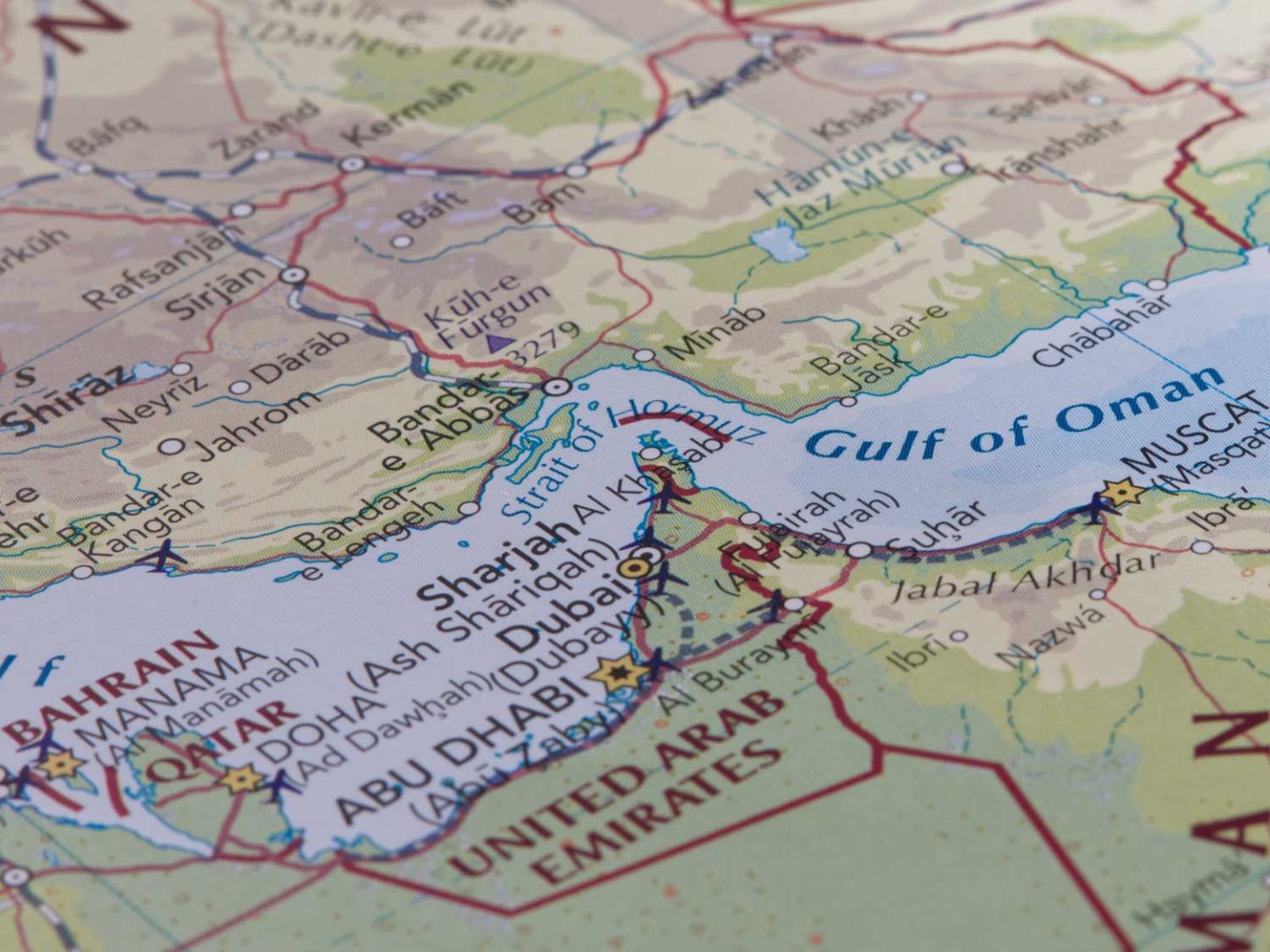
The seizure of the MSC Aries by Iran in the Strait of Hormuz raises concerns about the accessibility of the Dubai port, a crucial hub for sea-air transshipments, because if Hormuz is considered a high-risk area, it could mean sea-air shipments being diverted to alternative hubs like Colombo or Bangkok.

Whether rates will soften, or supply vs demand become an issue in the next quarter and beyond depends on world geopolitical events improving, the Red Sea re-opening up and no other global crisis occurring.

If there are no further global events then the market is very likely to soften, however, if the Israeli/Iran situation deteriorates airspace could be closed for the foreseeable future and that will cause huge issues to all logistics activities including airfreight, sea/air, ocean and rail.

For urgent, valuable and sensitive shipments we have a range of airfreight and sea/air solutions, with block space agreements (BSA) and capacity purchase agreements (CPA) that protect space and capacity on the busiest routes.

Regardless of your cargo type, size and requirements, we have extremely competitive rate and service combinations, to meet every deadline and budget.

EMAIL Elliot Carlile, Operations Director, for insights, prices and advice.