Ex-China Airfreight: Turbulence and Transformation

Ex-China Airfreight: Turbulence and Transformation

For shippers moving goods by air into Europe and the US, the peak season has arrived with a complexity not seen in recent years. As flights are cancelled and rates trend sharply upward, a fundamental reshaping of the marketplace is underway.

In September, a powerful typhoon swept through southern China just as the annual Golden Week holiday loomed. Traditionally, Golden Week brings a slowdown as manufacturing pauses and workers take leave, creating ripples in cargo flow.

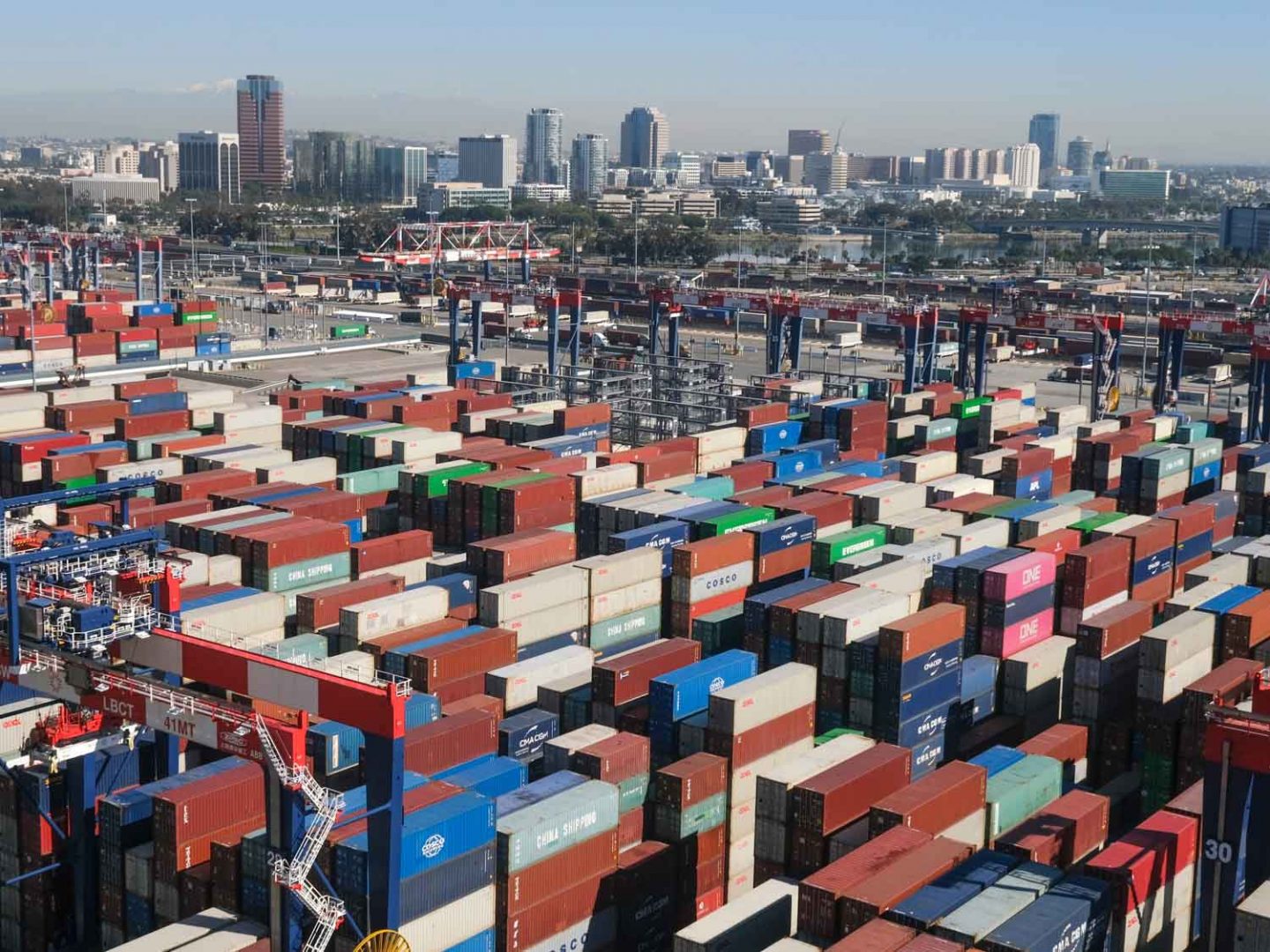
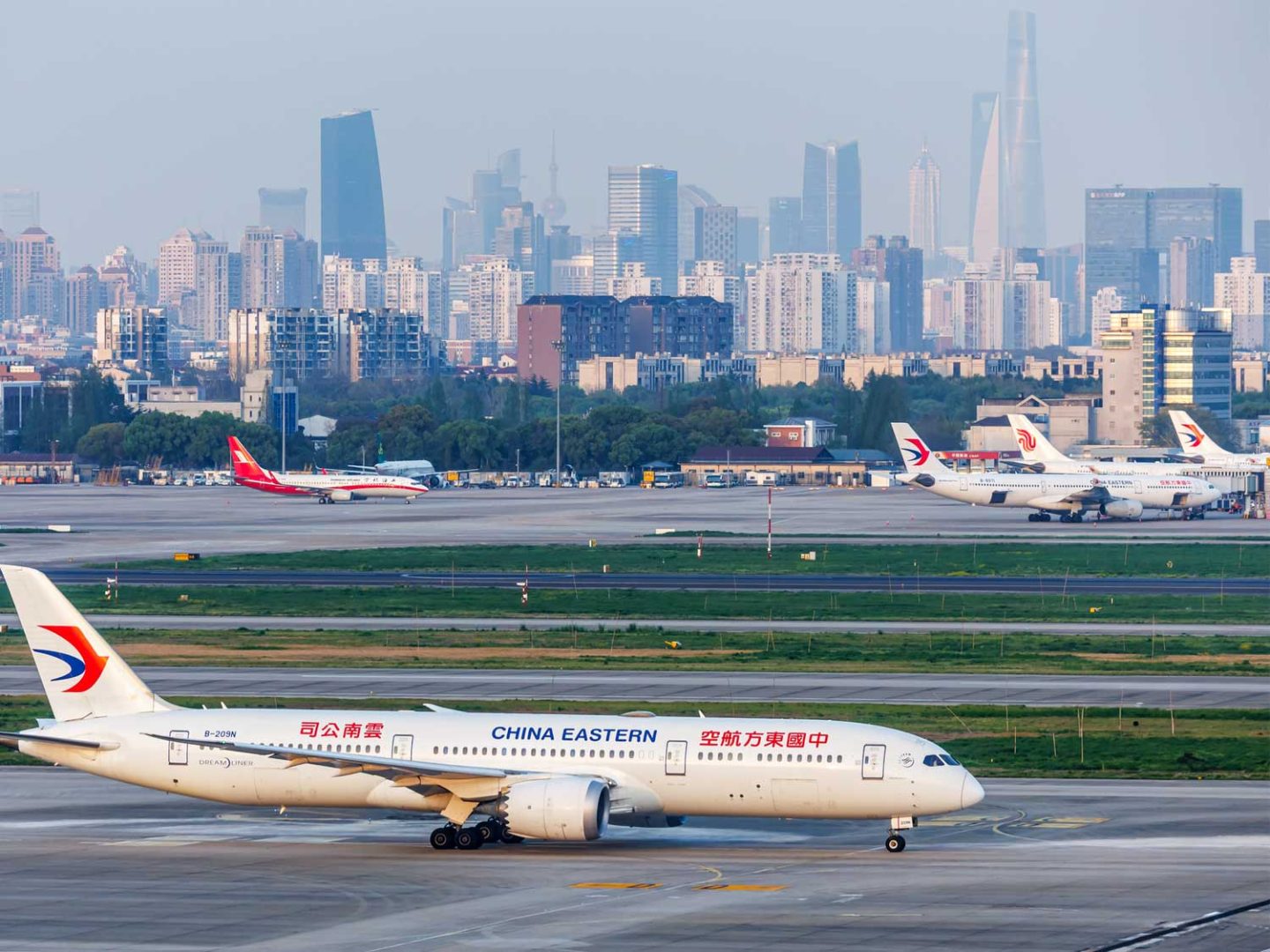
This year, the typhoon compounded the crisis: hundreds of flights were suspended and key export ports shuttered, abruptly tightening airfreight supply. Airport terminals saw mounting backlogs, with some shipments delayed by nearly a week before normal operations could resume.

The squeeze led to dramatic, double-digit percentage increases in airfreight rates for shipments from China to Europe, climbing between 30% and 50% compared to average off-season levels. Routes to the United States also saw significant jumps, though the impact was mitigated by shifting demand patterns and new import restrictions in the US.

Europe Bound: A Market in Flux

While every major trade lane felt the impact of these disruptions, the China-to-Europe corridor has emerged as both the most stressed and the most resilient. Demand for space surged as volumes, particularly of high-tech and eCommerce goods, outpaced declining US-bound shipments.

This pattern reflects a broader structural change: capacity typically serving transpacific markets is now being redirected to European routes, reinforcing the upward pressure on rates.

The European Union’s relative trade stability and ongoing restocking by retailers have kept import flows buoyant. In contrast, the US market is seeing smaller volume growth and increasingly complex customs checks, which have led to sporadic diversions of supply chains to alternative gateway countries and slower overall throughput.

US Adjustments and Alternative Strategies

The US airfreight market from China, though still sizeable, has shifted course under the weight of new regulatory developments. The end of duty-free de minimis rules has decreased the viability of direct eCommerce shipments for small parcels.

As a result, shippers have begun to favour indirect strategies, routing goods through third countries to manage duties, or utilising other North American hubs to avoid new tariff thresholds.

This has prompted a measurable contraction in direct air cargo volumes to the US from China, even as some businesses attempt to hedge risk by booking additional capacity in advance for the holiday season. Leading carriers report rates holding steady or growing only modestly compared to Europe-bound lanes.

The Road (Skies) Ahead

Looking through 2025’s peak season and into the coming year, the airfreight market faces continued unpredictability. Recovery from typhoon-related disruptions is expected to be gradual, with many factories extending their Golden Week closures and logistical bottlenecks possibly persisting into mid-October.

Industry analysts project that rates on China-Europe flights are likely to rise further by up to 10% before normalising, while transpacific pricing will remain highly sensitive to evolving US trade policy and inventory cycles.

At the same time, underlying trends, such as the shift of high-value tech goods via air and the migration of eCommerce flows through alternative channels, suggest that unpredictability will remain a defining feature.

Early communication is becoming indispensable for urgent shipments. We would encourage shippers to forecast and book well in advance, providing transparent communication about possible route or schedule changes, and retain contingency plans for the likely rolling pockets of disruption.

Metro gives you the visibility, agility, and expertise to overcome turbulence and transformation, strengthening your supply chain and securing your airfreight movements from China to the US and Europe.

With demand surging and carrier schedules in flux, securing space and certainty has never been more critical. Metro is actively monitoring capacity, adjusting routings, and working with trusted carrier partners to protect booking allocations.

Our latest innovation takes visibility and control to new levels, with real-time flight telemetry tracking to provide:

– Live aircraft position and route mapping
– Accurate departure and arrival confirmation
– Time-stamped milestone events, updated in real time

This level of transparency means you can plan confidently, optimise inventory, and protect service levels even in unpredictable conditions.

Partner with Metro for smarter, faster, and more resilient air freight solutions, powered by live data and long-standing carrier relationships.

EMAIL Andrew Smith, Managing Director, today to explore how we can support your success.

US Targets Tariff Evasion

US Targets Tariff Evasion

The White House has launched a revitalised Trade Fraud Task Force to clamp down on tariff evasion and customs violations. This coordinated cross-agency initiative is set to bring sharper enforcement tools and greater scrutiny to a trading environment already complicated by regulatory uncertainty and shifting tariffs.

The new Task Force brings together agents and specialists from Customs and Border Protection (CBP), DOJ, and Immigration and Customs Enforcement (ICE), with the explicit aim to aggressively pursue importers and affiliates who attempt to evade tariffs, duties, and import restrictions.

Exporters, as well as importers, should note that enforcement now targets not only mis-declaration of country of origin and tariff classification but also complex global fulfilment models and transhipment tactics commonly used to optimise duty payments.

Recent enforcement cases have involved importers penalised for inaccurately reporting the origin of goods or misrepresenting tariff categories, with multimillion-dollar fines levied under the False Claims Act.

As these measures ramp up, UK exporters must be prepared to demonstrate robust compliance processes, maintain meticulous records, and ensure transparency in customs documentation.

Civil and Criminal Measures

The launch builds on recent DOJ activity, where multiple settlements involving trade fraud have been reached since President Trump returned to office.

Recent cases include both failure to declare correct country of origin and deliberate misrepresentation of goods, with penalties reaching into the millions. The False Claims Act, traditionally used for government contractor and healthcare fraud, is now increasingly deployed to investigate and penalise customs violations, expanding the law’s scope within the trade sector.

A major element of this strategy is the expansion of whistleblower programmes, rewarding those who provide actionable leads on tariff, customs, and trade fraud. The DOJ has made clear that it intends to continue scaling these enforcement efforts and leverage whistleblower-driven intelligence to bolster the detection and prosecution of evasion schemes.

Uncertainty for Importers

Importers face growing compliance pressure as a direct consequence of these changes. The rapid rollout of enforcement comes as legal battles rage over tariff legitimacy and definitions, compounded by lingering ambiguity on what constitutes transshipment or qualifying country-of-origin. Shifting tariff rates by trading partner and category further complicates import cost management and supply chain transparency.

Companies manufacturing overseas, utilising complex fulfilment or multi-country storage, and those unfamiliar with recent regulatory changes risk exposure to sanctions and penalties.

With Customs and Border Protection continuing to flag difficulties in identifying and assessing duty on goods moved through indirect or deceptive routes, the new Task Force signals a more determined and well-resourced effort to close these enforcement gaps.

Takeaways for Global Traders

For businesses engaged in cross-border trade with the US, renewed vigilance is now essential. Meticulous record-keeping, robust compliance audits, and transparent reporting are key steps to minimise risk under the heightened enforcement regime.

As the Task Force expands its remit to cover a broad array of customs and tariff breaches, organisations must prepare to meet more demanding legal standards and guard against evolving investigation tactics.

In this fast-changing regulatory climate, proactive compliance and expert guidance offer the best defence, and securing a competitive foothold in US markets means staying one step ahead of enforcement trends.

For Metro clients, this trend creates new challenges in export planning and risk management. Those sending goods to the US must ensure their paperwork, origin declarations, and valuation methods strictly align with current customs codes.

Metro’s sector experience enables British exporters and US importers to navigate these requirements with confidence and reduce exposure to unexpected penalties.

EMAIL Andrew Smith, Managing Director, today to explore how we can support regulatory compliance and success in the United States.

Growth Sustained, But Reliability and Policy Risks Loom for Air Freight

Growth Sustained, But Reliability and Policy Risks Loom for Air Freight

Air cargo volumes surprised on the upside again in August, rising by around 5% year on year, the second consecutive month of growth at this pace. Capacity also increased by 4%, though yields came under pressure as rates softened.

Despite the stronger demand, the outlook for Asia–Europe and Asia–US markets in particular remains uncertain, with policy changes and operational constraints threatening to erode recent gains.

Average spot rates from Southeast Asia to North America and Europe declined by around 20% compared with last year, reflecting easing capacity pressure, while North East Asia to North America fell by just 8%. Rates on North East Asia–Europe routes were broadly stable year on year, though down slightly month on month. Transatlantic markets saw rates edge up by 5% annually, but momentum slowed as the summer holiday period cut into demand.

These shifts underline the fragility of recovery. Purchasing Managers’ indices in key exporting economies fell again in August, and American consumer sentiment softened. Growth on Asia–Europe and Asia–US trades has been sustained largely by front-loading and tariff avoidance, rather than stronger consumption.

Regulatory pressures and cost dynamics

The removal of the de minimis exemption for low-value shipments entering the US at the end of August is reshaping flows. While originally targeted at Chinese eCommerce, the new rules apply across all origins. For European and Asian exporters, this adds new administrative steps and costs, particularly for SMEs. Observers expect lower eCommerce volumes into the US, with some share shifting back towards China due to lower production costs.

Average spot rates across global markets fell by about 3% year on year in August, with sharper declines once currency depreciation is factored in. Capacity expansion has kept pressure on yields, even as jet fuel costs dropped by 7% year on year, providing some relief to carriers. The balance between steady demand and competitive pricing remains delicate, with the sustainability of current growth dependent on careful capacity management.

Reliability challenges deepen

Operational reliability has become a significant concern. On-time performance among major carriers slipped from 81% in May to 80% in June, and down again to 77% in July. For context, anything below 90% is considered mediocre, and mid-70s is cause for concern. Among the 22 airlines surveyed, the gap was wide, with punctuality as low as 57%, to a high of 94%.

For shippers, this can translates into missed connections, additional storage costs, and strained deadlines. Contributing factors include congested airports, ground-handling labour shortages, outdated facilities, and limited data integration across the air cargo chain. Without structural improvements, reliability risks may become systemic, undermining the demand growth achieved in recent months.

Outlook

The near-term outlook for air freight is mixed, with improving but weak economic fundamentals and policy changes that add friction. Key routes from Asia to Europe and the US continue to anchor growth, yet they are the lanes under constant pressure from regulatory shifts and declining schedule reliability. Unless carriers can address operational shortcomings and adjust capacity effectively, current momentum may prove short-lived.

Demand is shifting and schedule reliability is a moving target, but Metro continues to secure space and certainty by actively managing capacity, optimising routings, and leveraging trusted carrier partnerships.

On our MVT platform, real-time flight telemetry provides:
– Live aircraft position and route mapping
– Accurate departure/arrival confirmations
– Time-stamped milestones updated in real time
Plan with confidence, optimise inventory, and protect deadlines, even as conditions change.

EMAIL Andrew Smith, Managing Director, to learn how our data-driven air freight keeps your supply chain moving.

Road freight prices edge higher in August

Road freight prices edge higher in August

Stronger August demand lifted UK road transport prices, with both haulage and courier markets firming despite fresh capacity entering the system.

The latest TEG Price Index shows overall prices rising nearly 2% month on month and sitting 2.4% above August 2024 levels. Haulage led the gains, up just over 2.5% on July and 3.6% year on year, while courier prices advanced 1.2% in the month to stand 1.3% higher than a year ago.

Seasonal spending around the late-summer Bank Holiday and warm weather drove a sharp 6.26% jump in transport demand, tilting the balance of the market. Additional supply helped restrain steeper inflation, but not enough to neutralise the upward pressure on rates.

Demand outpaces tight supply

Articulated vehicle demand surged more than 13% in August and was closely matched by an almost 15% increase in supply. Even so, articulated prices climbed over 3% month on month, reflecting continued operational constraints from annual leave and persistent driver shortages.

Recruitment challenges are feeding into wage trends: average HGV driver pay reached £42,121 in August, marking a second consecutive month above the UK national average. Fleet renewal is also lagging; SMMT data points to an 11% year-on-year decline in new HGV registrations, suggesting articulated supply could remain constrained even if demand stays elevated.

A recent cut in the Bank of England’s base rate to 4% supported consumer confidence and spending through the peak summer period, adding a further tailwind to freight demand.

Our network of national and pan-European operators provide solutions for every cargo type, shipment size and deadline, giving us the control and flexibility to shield customers from freight market price swings.

By planning the most efficient domestic and European routes, we keep your road transport moving reliably and competitively.

EMAIL our Managing Director Andy Smith to discover how our road freight solutions can strengthen and protect your supply chain.