Expanding Intermodal Capability Across Europe with KLOG

Expanding Intermodal Capability Across Europe with KLOG

With fellow group member KLOG, the Portuguese logistics specialist, our customers can now access a significantly enhanced intermodal network across Iberia and continental Europe, offering greater flexibility, sustainability, and control through an effective, environmentally friendly transport solution.

KLOG is one of Iberia’s leading providers of intermodal, groupage, and full-load transport, offering a well-established rail and short-sea service network that connects Portugal and Spain to key European markets—including Germany, Poland, France, and the UK in partnership with Metro.

Their network includes multiple weekly block train departures across strategic corridors, supported by last-mile delivery options and an advanced 24/7 Control Tower.

Unlocking smarter, greener European supply chains
KLOG’s intermodal services are tailored for shippers seeking reliable, cost-effective and lower-emission alternatives to road-only transport. With a wide range of 45’ equipment; curtain-sided, dry, reefer, and ISO tanks, KLOG can support a broad mix of cargo types, from consumer goods to chemicals, fresh produce and furniture.

Core rail corridors include:

  • Portugal–Poland & Germany: Two weekly block trains between Entroncamento and both Poznan and Duisburg, routing via Spain and France, with a third frequency planned.
  • Portugal–Spain: Four weekly trains between Entroncamento and Tarragona, plus 2–3 weekly services from Tarragona to Bilbao, Valladolid and Sevilla.
  • Portugal–Germany: Two weekly trains linking Lousado and Duisburg, via Mouguerre, France.
  • Short-sea and rail from Poland: Intermodal connections via Gdansk to Bilbao and onward rail to Tarragona.

Intermodal transit times are highly competitive, many comparable with full truckload delivery times, but with significantly lower road dependency and greater environmental benefit.

KLOG’s services delivers average CO₂ reductions of 85–90% compared to road freight. Rail is more fuel-efficient, produces fewer emissions, and removes trucks from congested European roads, contributing to cleaner air, fewer road accidents, and less strain on driver resources.

With sustainability now embedded in corporate and regulatory priorities, intermodal freight offers a practical path for reducing emissions without sacrificing reliability or control. And as rail corridors increasingly move towards electrification, the carbon savings will only grow.

Your direct route to smarter European logistics
With KLOG, Metro’s customers gain access to a powerful intermodal network fully supported by:

  • Metro’s MVT supply chain platform for complete vendor-to-destination visibility across modes
  • Dedicated European team for regional expertise and support
  • High-frequency intermodal services, linking directly with Metro’s road network for final and last-mile delivery.

EMAIL Andrew Smith, managing director, today to learn how KLOG’s intermodal network could reduce your carbon footprint, without compromising on speed, service, or cost.

Court Ruling Challenges Trump’s Trade Strategy Amid Global Uncertainty

Court Ruling Challenges Trump’s Trade Strategy Amid Global Uncertainty

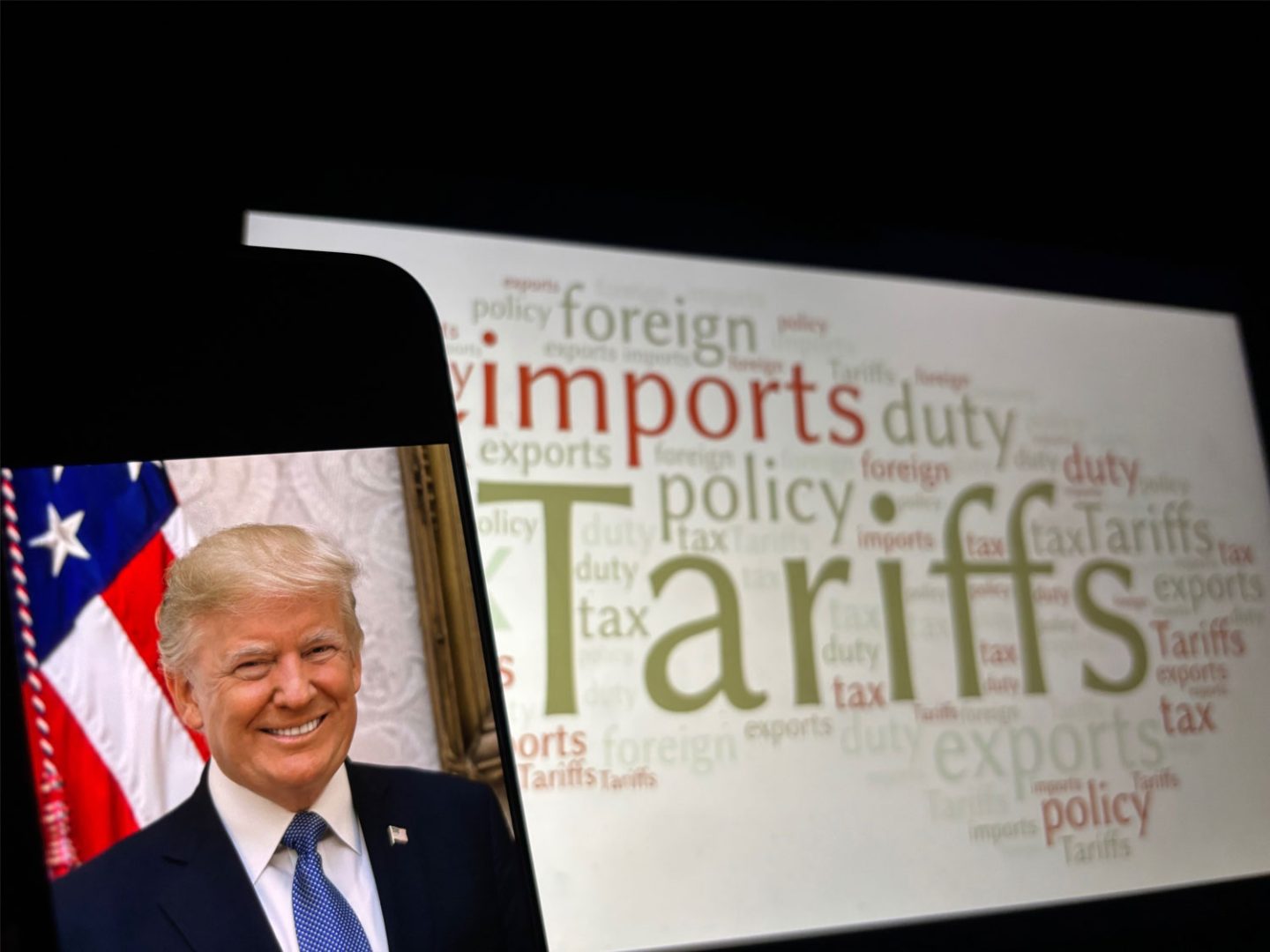
A U.S. federal court has ruled that President Donald Trump’s sweeping “Liberation Day” tariffs are illegal — delivering what may prove to be a major blow to his trade policy agenda, or simply a temporary setback.

On May 28, 2025, the United States Court of International Trade determined that President Trump exceeded his authority under the International Emergency Economic Powers Act (IEEPA) by imposing broad tariffs on imports from numerous countries. The court found that the administration’s justification did not meet the IEEPA’s requirement of an “unusual and extraordinary threat,” rendering the tariffs an improper use of executive power.

The three-judge panel unanimously held that the IEEPA does not authorise the president to unilaterally impose such sweeping tariffs, stressing the need for a clear mandate from Congress when it comes to major economic decisions. As a result, the court issued a permanent injunction against the tariffs and ordered U.S. Customs and Border Protection to stop collecting them.

The ruling requires that the tariffs be halted within 10 days. The Trump administration has announced plans to appeal, which could take the case to the U.S. Court of Appeals for the Federal Circuit.

Implications for Trade Policy
This decision directly challenges a key pillar of Trump’s trade strategy, which has leaned heavily on tariffs to address trade imbalances and shield U.S. industries. It may also influence ongoing negotiations with key partners such as the European Union and the United Kingdom by casting doubt on the legal basis for unilateral U.S. tariff actions.

While the court invalidated the sweeping global tariffs introduced on April 2 — including the baseline 10% levy and “reciprocal” duties — it did not strike down the administration’s sector-specific tariffs on imports like steel and cars, which remain in force.

The ruling is expected to embolden critics of Trump’s tariff policy across corporate America, foreign capitals, and Capitol Hill. It also comes at a sensitive moment for the administration, which is working to finalise new trade deals after suspending many of the planned tariff hikes.

The legal setback introduces fresh uncertainty into an already volatile global trade landscape — and may ultimately reshape how domestic and international actors engage with U.S. trade policy in the months ahead.

Stay informed as the US tariff and trade landscape evolves. Go to our home page to subscribe to our eBulletin updates for expert insight on the rulings, appeals, and what it all means for your supply chain strategy.

UK Strikes Trio of Trade Deals in May

UK Strikes Trio of Trade Deals in May

The UK government has made major strides in strengthening its international trade relationships this May, concluding three key agreements with India (6 May), the United States (8 May), and the European Union (19 May).

These agreements could reshape trade routes and sourcing decisions, reduce costs, and create new opportunities for exporters and importers alike. With further negotiations under way with Gulf nations, the UK is expanding its global footprint.

UK-EU Agreement Reduces Border Friction
The updated UK-EU agreement, the first substantial step forward in post-Brexit cooperation, sets out revised terms for trade, fishing rights and defence collaboration. Of particular note is the reduction in bureaucracy around food shipments, with most routine checks on animal and plant products travelling between the UK and EU scrapped.

This could significantly ease the administrative burden and reduce delays for companies dealing in perishable goods. However, details on how the agreement affects the movement of non-food goods, including machinery, textiles and other industrial or consumer products, remain to be clarified.

While the deal does not represent a return to the frictionless trade of the pre-Brexit era, it is an encouraging signal that practical cooperation is possible. For businesses that rely on predictable cross-border movements, this agreement may help restore a degree of confidence.

US Agreement Offers Narrow, Targeted Relief
Despite being framed as a “trade deal”, the UK-US agreement is a limited, sector-specific tariff arrangement rather than a full-scale free trade agreement. That said, it delivers tangible relief in several key areas.

For UK exporters of vehicles, the US has cut its tariff from 25% to 10%, but only for up to 100,000 vehicles annually. This mirrors the volume of UK exports in 2024, but it places a hard ceiling on further growth, with exports above that threshold subject to a 27.5% tariff.

The removal of 25% tariffs on UK steel and aluminium also brings welcome relief to manufacturers. However, these benefits come with conditions, including expected quotas and continued duties on certain products made with these metals, such as gym equipment and industrial machinery.

While the UK has dropped some tariffs on US food and agricultural products, reciprocal benefits for UK exporters beyond the automotive and metal sectors remain limited. A blanket 10% US tariff still applies to most other UK goods, and a 25% tariff on UK automotive parts remains in place. Details on additional product categories, including consumer goods and manufactured components, are expected in due course.

The deal is a step forward, but it leaves a patchwork of tariffs and quotas that will require careful navigation. Legal and regulatory uncertainties will persist in the months ahead as negotiations continue and further details emerge.

India Deal Signals Long-Term Growth Potential
The UK’s agreement with India stands out as the most comprehensive and forward-looking of the three deals. It includes significant tariff reductions and market access improvements across a wide range of products, and is forecast to increase bilateral trade by £25.5 billion annually by 2040.

UK exports set to benefit include whisky, gin, aerospace components, medical devices, cosmetics, and high-end vehicles. In return, the UK will lower tariffs on Indian exports such as clothing, footwear, frozen foodstuffs, jewellery, and processed goods.

For importers, the deal offers more competitive access to one of the world’s fastest-growing economies. For exporters, it opens the door to India’s expanding middle class, which is already larger than the entire population of the EU and is hungry for high-quality, internationally branded products.

Beyond tariffs, the agreement promises to streamline customs procedures and reduce non-tariff barriers, improvements that will be welcomed by any business frustrated by red tape or unpredictable clearance processes. However, the full legal text is yet to be published, and the final impact will depend on detailed implementation rules, particularly around rules of origin and product classifications.

Looking at Gulf Nations Opportunities
Speaking to the BBC on 20 May, Chancellor Rachel Reeves confirmed that the UK’s next strategic focus is on securing trade agreements with countries in the Gulf, including Saudi Arabia, the UAE and Qatar. Ongoing discussions aim to boost UK exports of food and drink, renewable energy technologies, and manufactured goods, while encouraging more inward investment.

Reeves also clarified that the government is “not looking to have trade negotiations” with China, which draws a line under speculation about future UK-China trade relations for the foreseeable future.

Implications for UK Businesses
For UK businesses, whether they import raw materials or finished goods, or export to overseas markets, these deals bring both opportunity and complexity. While tariff reductions and customs streamlining can offer immediate cost savings and efficiency gains, the sector-specific and quota-based nature of the agreements means that success will depend on careful planning and informed decision-making.

The three deals signal a broader shift in the UK’s trade strategy, one that favours targeted, bilateral agreements over sweeping free trade pacts. They also reflect a pragmatic effort to strengthen links with fast-growing economies and key strategic allies.

As implementation details unfold and further negotiations continue, UK businesses will need to stay agile, review their supply chains, and consider how to best take advantage of the new landscape.

Metro’s established freight services, in-house customs brokerage, and on-the-ground teams in both India and the United States mean we’re uniquely placed to help UK businesses respond to this new trade landscape.

Whether you’re reviewing sourcing strategies, navigating new tariffs, or planning market entry, our experts can support you with compliant, cost-effective solutions across every mode and market.

EMAIL Managing Director, Andrew Smith to explore how we can optimise your global trade strategy.

Northern Europe’s Ports Struggle with Congestion Amid Network Shifts

Northern Europe’s Ports Struggle with Congestion Amid Network Shifts

Ports across Northern Europe are grappling with rising congestion, causing widespread delays and operational disruption. A confluence of industrial action, infrastructure strain, inland transport bottlenecks and the rollout of new shipping alliances is overwhelming terminals, with no immediate relief in sight.

Container volumes have surged at key gateways such as Antwerp-Bruges, Bremerhaven, Rotterdam, and Felixstowe, with waiting times and yard occupancy levels climbing.

Antwerp is experiencing yard utilisation at 96%, with reefer plugs over capacity at 112%.

Nearly half the vessels arriving are waiting for berths, and 52 more containerships are en route. Berthing delays are being exacerbated by residual backlogs following strikes at the end of March, and the port has reduced its export delivery window to five days to help ease pressure.

In Germany, Bremerhaven is seeing similar strain, with nearly 30% of vessels waiting for berths and inland rail disruptions further complicating the situation. Landslides and line closures near Hannover forced lengthy rail detours, impacting traffic to and from major ports including Hamburg, Rotterdam and Duisburg. These rail delays are causing a cascading effect across Northern Europe’s inland logistics.

The Netherlands is also under pressure, with unresolved automation disputes in Rotterdam contributing to labour-related delays. In France, strikes at Le Havre have eased for now during ongoing negotiations, but the risk of renewed action remains high.

The UK is not immune. Felixstowe, London Gateway, and Southampton are all dealing with congestion as vessel diversions from continental ports push volumes higher.

Multiple factors are compounding the problem. The phasing in and out of new alliance schedules—particularly by Maersk, MSC, and Hapag-Lloyd—is disrupting established flows and increasing port calls. Simultaneously, low water levels on the Rhine are limiting barge capacity, shifting more freight to already stretched rail and road networks. Labour shortages, especially during public holidays, have further constrained operations.

With delays mounting, carriers are urging shippers to collect containers promptly and to avoid early delivery of exports. Some terminals, like PSA Antwerp, have shortened delivery windows to reduce yard congestion. Carriers are implementing contingency plans on a vessel-by-vessel basis and may introduce congestion surcharges to offset rising operational costs.

Industry forecasts suggest that congestion could persist for another three to four months, until alliance network changes bed in and volumes normalise. In the meantime, importers and exporters should prepare for longer lead times, increased costs, and fluctuating capacity at Europe’s busiest container ports.

With congestion disrupting major European gateways, our flexible contingency plans are keeping cargo moving, rerouting through alternative ports and opening up new entry points.

To reduce delays and protect your supply chain, share your shipping forecasts early so we can act fast and proactively manage risks.

For expert advice and tailored solutions, EMAIL Andrew Smith, Managing Director, today.