
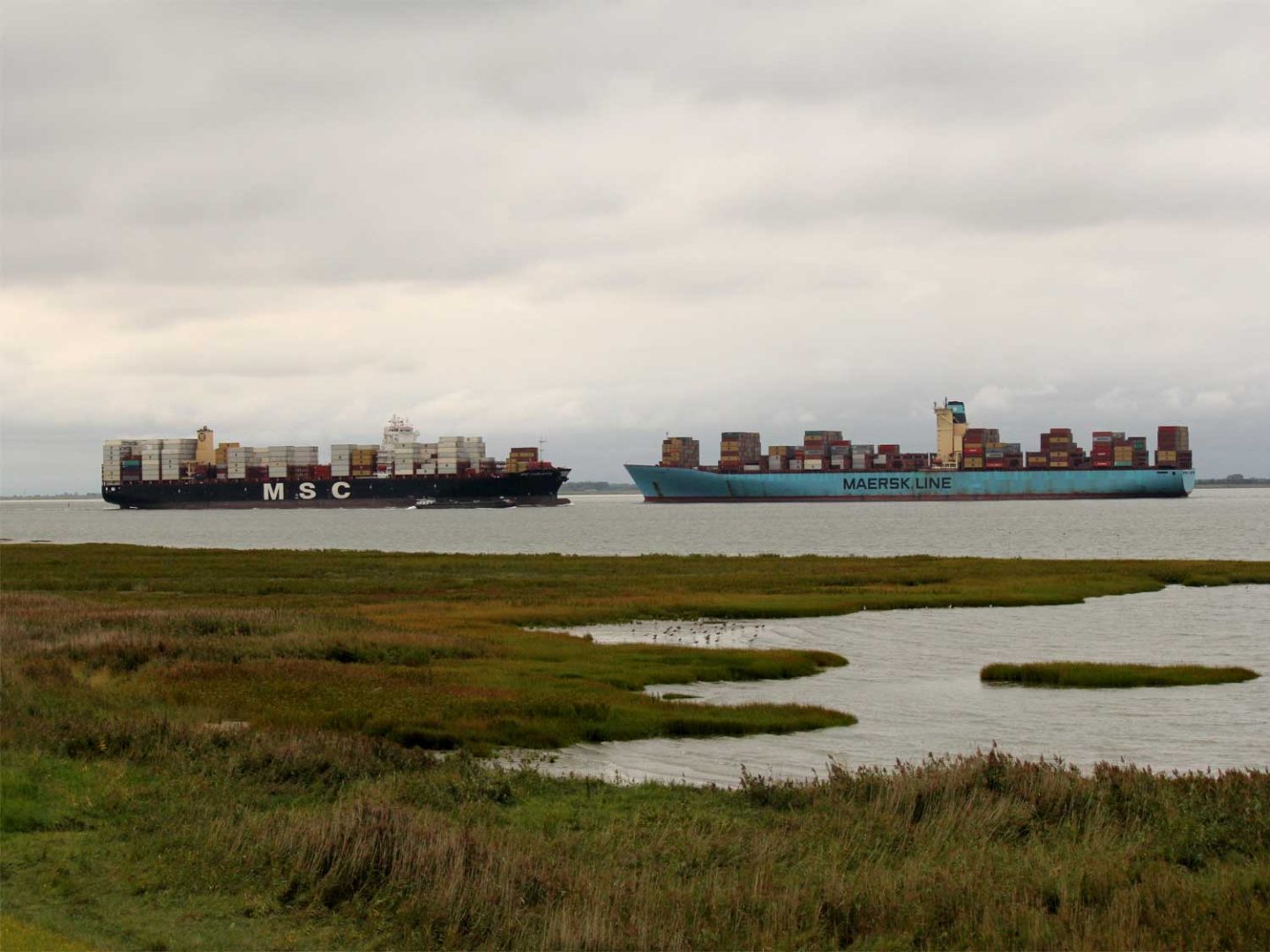
Singapore boats at anchor 1440x1080 1

Challenges in ocean freight: Capacity, congestion, and resilience

The ongoing disruption in the Red Sea and Gulf of Aden, which started with the hijacking of a vessel nearly ten months ago, has led to a substantial reduction in available container vessel capacity, driving up freight rates, intensifying port congestion, and exacerbating equipment shortages.

The impact of this crisis, second only to the pandemic, has caused widespread disruptions, with global ocean freight continuing to grapple with significant challenges.

Blanked sailings
To counter the drop in demand and falling container spot rates, ocean carriers are implementing a high number of blanked sailings, particularly ahead of China’s Golden Week holiday. The cancellation rate for scheduled sailings in September is currently 10% across major trade routes, with the transpacific accounting for 51%, Asia-Europe 28%, and the transatlantic 21%.

Despite the recent softening, freight rates remain significantly higher than last year – +350% on the Asia-North Europe route and +150-180% on Transpacific routes. Events such as the looming threat of port strikes, the introduction of new import tariffs and an early Chinese New Year could keep rates elevated, even in the face of softer demand.

US West coast volume surge
As the peak shipping season approaches, the US West Coast ports of Los Angeles and Long Beach are preparing for a surge in import volumes.
Ocean carriers are deploying 28 additional “extra-loader” vessels to handle the expected influx, driven by strong consumer demand and the diversion of cargo from the US East and Gulf coasts due to potential labour disruptions.

Economic resilience is likely to sustain high import levels through the end of the year, further increasing activity at these key ports.

Ongoing Port congestion
Global port congestion remains challenging with hot spots in Asia and India in particular. The delivery of new container ships and fewer overall blank sailings in recent weeks, along with the Red Sea diversions, are absorbing the added capacity and demand remains high, resulting in vessel bunching and berthing delays at major ports in China, the USA and South America.

The risk of further supply chain disruptions persists, with potential threats from labour strikes and the increasing impact of severe weather events linked to climate change.

Red Sea diversions soak up equipment
Container equipment situation in Asia, and China in particular, remains challenging but is improving with India now becoming the main hotspot.
Ocean carriers and container leasing companies have booked all available container production slots at Chinese manufacturers until mid-October, following record-high deliveries earlier in the year. In the first seven months of 2024 alone, container deliveries increased tenfold compared to the same period in 2023.

The availability of 40ft high-cube containers has tightened significantly, putting additional pressure on carriers and manufacturers to meet delivery schedules amid strong export growth from Asia and ongoing port congestion.

As the industry navigates these complex challenges, the focus remains on managing capacity, stabilising operations, and mitigating the risks posed by economic and environmental factors.

Ongoing demand for ocean freight and challenges in capacity suggest a complex and potentially turbulent peak season ahead.

We recommend talking to us now, if you have high-priority orders and sharing your shipping forecasts, so that we can secure your space, on the services that meet your deadlines, at the best possible rates.
To learn how we can safeguard and enhance your ocean supply chain, please EMAIL our Chief Commercial Officer, Andy Smith. 
Bank of England

Economic momentum for UK businesses in 2024

With increasing confidence, improving trade prospects, and a focus on stability, the environment is ripe for businesses to capitalise on opportunities. Data from multiple sources shows positive trends, underscoring the resilience and potential of the UK economy.

Business confidence reaches new highs
The Lloyds Business Barometer for July 2024 reports that, buoyed by positive trading prospects, business sentiment remains above the long-term average, continuing a 14-month streak of positivity. Output expectations have reached a seven-year high, with 62% of businesses reporting stronger activity. This optimism is reflected across regions, with confidence increases in the East Midlands, Wales, and the East of England.

The retail sector, in particular, has seen a resurgence, with output expectations hitting their highest level since the pandemic. This is supported by an improvement in consumer confidence, driving investment and expansion.

Director confidence at a three-year peak
A similar wave of optimism is seen among business leaders, as revealed by the Institute of Directors (IoD). Economic confidence among directors reached a three-year high in July, with the IoD’s Directors’ Economic Confidence Index rebounding to +7 from -14 in June. This marks the first positive reading in three years, driven by the government’s focus on industrial strategy, skills, and infrastructure development, which are crucial for unlocking further growth potential.

Strong performance in trade and exports
Trade figures further reinforce the favourable outlook. The Office for National Statistics has highlighted that 21% of UK businesses have exported over the past 12 months, with 16% reporting increased exports. Additionally, the British Chambers of Commerce noted strong goods export performance, particularly to the EU, with key sectors such as machinery, transport equipment, and pharmaceuticals leading the way.

Outlook: Positive future for growth
With 58% of firms expecting increased turnover in the next 12 months, the momentum is set to continue. Inflation concerns are easing, offering further stability for growth plans. Now is the time for businesses to seize these favourable conditions and pursue new opportunities for expansion.

We are proactively expanding our services and technical capability, to offer tailored solutions that help our customers capitalise on the increasing demand in domestic and international markets.

By enhancing our supply chain support, improving logistics efficiency, and providing timely insights, we are ensuring that our customers are well-positioned to seize new opportunities for growth and navigate the evolving economic landscape with confidence.

If you have any concerns or would like to discuss our contingency services, please reach out to our Chief Commercial Officer, Andy Smith, via EMAIL.

Bangladesh label

Bangladesh supply chain disruptions

Bangladesh’s Prime Minister, Sheikh Hasina, arrived in India this week following the army’s seizure of power after violent riots. This development adds another challenge to global supply chains, with the world’s third-largest garment exporter now experiencing the world’s longest vessel berthing delays. 

Around 50 ships are queuing outside Chittagong port following weeks of protests, curfews and internet outages, all of which culminated on the 5th August with the resignation and flight of the Prime Minister, as protesters stormed her palace in Dhaka.

Chittagong, which handles over 90% of the country’s international trade, now has the worst berthing delays in the world, with many ships forced to wait in the Bay of Bengal for a week or longer.

The port is overwhelmed with tens of thousands of containers filled with imports and exports, with import boxes incurring substantial demurrage charges after four days, which the Federation of Bangladesh Chambers of Commerce and Industry has urged the government to waive.

The massive stockpile of containers now occupies about 80% of available yard space and typically, congestion begins to impede port operations when yard space usage reaches 60%, but with customs clearances at the port falling by 85%, the backlog is not being cleared.

Disruptions in rail transport have also impeded the flow of imported products, while cross-border links with neighbours including India and Bhutan have been closed for the past couple of days.

Bangladesh exports approximately $47 billion worth of garments annually to global clients. Any potential sanctions or trade restrictions could severely impact the economy. Therefore, maintaining diplomatic balance with Western countries is essential for Bangladesh’s interim leaders.

Meanwhile, airfreight rates from Bangladesh to major Western destinations have skyrocketed over the past two weeks, as 3,000 tonnes of export cargo have accumulated at Dhaka, the country’s main airfreight gateway. 

Exporters claim that carriers are exploiting the demand surge, increasing rates by up to 20% to various destinations. With airfreight rates at Dhaka significantly higher than those at Kolkata.

Despite the delays, no additional freighters have yet been deployed at Dhaka to help clear the backlog, and relying solely on the belly-hold capacity of passenger planes means only 600 to 700 tonnes of cargo are being transported each day.

It is clearly going to take a little time to clear the cargo bottleneck and shippers may want to consider alternative services to direct air in the short-term, including air/air via Colombo, Singapore or Dubai. Road/air via Delhi, or sea/air via Colombo and Dubai.

We are closely collaborating with clients affected by the evolving situation in Bangladesh to ensure minimal disruption to their air and sea traffic. 

Our dedicated operations teams and local partners are navigating the complex challenges at Chittagong and Dhaka, maintaining the integrity of our customers’ supply chains amidst ongoing regional tensions.

If you have any concerns about the issues discussed or would like to explore our range of contingency services, please EMAIL our Chief Commercial Officer, Andy Smith.
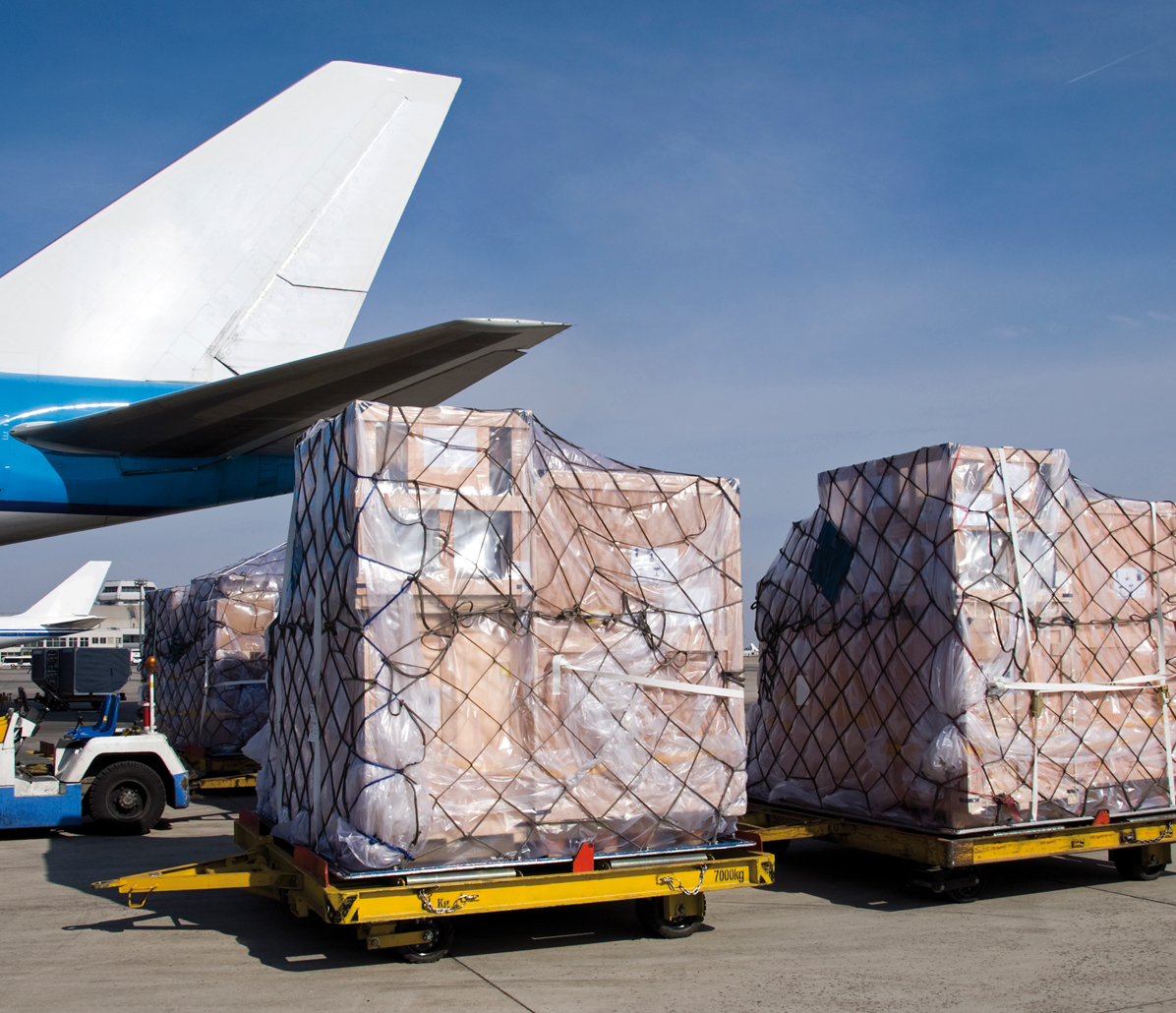
Sea Air aerial

Asia westbound market update

Air and sea freight from Asia continues to demonstrate remarkable resilience and growth, fuelled by robust demand, strategic capacity management, and dynamic trade routes, with India recording significant increases, driven by pro-industry government initiatives, eCommerce, and manufacturing growth.

Air Freight
The latest data from the International Air Transport Association (IATA) for June highlights significant demand for airfreight out of Asia, which has continued, potentially extending well into 2025, fuelled by sustained eCommerce demand.

For exports from the Asia-Pacific region, the World ACD index reported a 25% year-on-year increase, with Asia-Pacific to US shipments up by 67%. However, China-US tonnage declined by 8%, with China-Los Angeles experiencing a 23% drop, marking a three-month trend of decline.

Despite the LA drop, airfreight has largely remained impervious to political and economic challenges, with US customs crackdowns on eCommerce deliveries from China not dampening the market.

India’s air cargo market is particularly bullish. Total volumes at Indian airports in Q2 2024 rose by 14% year-on-year, with international flows up 20%. This growth can be partly attributed to a modal shift from widely disrupted ocean services due to the Red Sea crisis, especially for urgent or time-sensitive shipments. 

Sea Freight
As we progress through the traditional container shipping peak season, analysing demand, prices, planned levels of blank sailings and capacity deployment provides valuable insights into carriers’ confidence in the 2024 peak season.

Ex Asia freight rates are anticipated to stay high until the end of the peak season, at least until the Golden Week, while strong increases in outbound demand from India have led to increased rates and equipment shortages.

For the Asia-North America West Coast route, carriers have planned to blank 4% of capacity, similar to pre-pandemic averages and 2020 levels. This is significantly lower than during the pandemic years when blank sailings were forced due to port congestion.

Capacity growth for the same period in 2024 is set to be 25% higher than in 2023, and 10% higher than in 2020, which saw peak capacity deployed in terms of TEUs. This strong capacity growth and relatively low level of blank sailings suggest that carriers are optimistic about the peak season.

On the Asia-North Europe route, the planned blanked capacity is 6% for the next 10 weeks, slightly higher than in 2020 and pre-pandemic averages, but not by much. There is no year-on-year growth in deployed capacity for 2024. However, in 2023, the trade saw a 13% year-on-year capacity growth, which was high compared to historical averages and exceeded the demand levels at that time.

The willingness of carriers to maintain this elevated capacity level in 2024, along with the relatively low number of blank sailings, indicates a strong and confident outlook.

However, with ocean supply chains still under significant pressure, concerns remain about a capacity crunch in the coming months, especially if disruptions such as the ILA East Coast strikes and China tariffs occur. Carriers flor now have opted to keep capacity elevated.

Port Congestion
The latest port congestion data reveals extensive dwell times as the Red Sea crisis continues to impact operations. The top five congested ports globally include Durban with an average 8 day wait time, Ningbo with 6 days, Vancouver with 4 days, Los Angeles with 4 days, and Chittagong which worsens each day.

Over 60% of the South-east Asian ports analysed saw rising congestion over the quarter, while in Europe, 12 of 18 analysed ports reported increases.

Singapore congestion is improving as ships are skipping the port, though Barcelona and Valencia are still congested and there is an ongoing risk of strikes in Hamburg and Bremerhaven.

With ongoing shortages in empty equipment, high vessel utilisation and port congestion, further exacerbated by shippers front-loading to avoid delays, rates are likely to stabilise at high level in the coming months.

The unprecedented demand for ocean freight, combined with ongoing challenges in equipment, capacity, and costs, suggests that the next few months will be complex and potentially turbulent. 

We encourage you to contact us now if you have any urgent or high-priority orders on the horizon. Sharing your shipping forecasts with us will enable us to secure space on the best services to meet your deadlines and at the most competitive rates.

To discover how we can enhance your ocean freight solutions, please EMAIL our Chief Commercial Officer, Andy Smith.