White House 1440x1080 1

Major US Tariff Changes

On 2 April , President Trump unveiled sweeping new tariffs that will have global implications for international trade. 

These measures mark the most significant restructuring of U.S. tariff policy in decades and they will impact many businesses, irrespective of whether they trade with the United States.

Key Tariff Measures

  • Universal Tariff: A baseline 10% tariff will now apply to all imported goods entering the United States, effective immediately. The UK has been hit with this baseline.
  • Targeted Tariffs: Elevated tariffs have been introduced for a wide range of countries, including:
    • China: 34% (bringing total duties to 54%)
    • Vietnam: 46%
    • Cambodia: 49%
    • Bangladesh: 37%
    • European Union: 20%
    • Japan: 24%
    • South Korea: 25%
    • India, Indonesia, Taiwan and others: 26–36%
  • End of de minimis: The $800 duty-free threshold for China imports into the U.S. will be eliminated from May 2, disrupting cross-border eCommerce flows.

Implications for UK Importers and Exporters

Many production hubs like Vietnam, Cambodia, and Bangladesh now face tariffs approaching or exceeding 40%. UK brands that re-export to the U.S. from Asia could see significant cost hikes and supply chain disruptions.

U.S. importers are expected to face increased landed costs and margin pressure. Brands may be forced to raise prices or renegotiate terms with suppliers, especially as cost-conscious consumers in both the U.S. and UK continue to feel inflationary pressures.

Even UK-based businesses that manufacture domestically could be affected due to their reliance on imported raw materials, which could now become more expensive due to universal tariffs on U.S. imports.

While automotive was less explicitly detailed in last night’s announcement, the baseline tariff applies to all goods and a separate 25% duty on imported automobiles (previously announced) remains in place. This could impact UK automotive component manufacturers that export to the U.S. and face increased costs on U.S.-sourced parts for use in European production.

The sector is also exposed to the broader risk of retaliatory tariffs, particularly from the EU and Asian economies, which may further complicate trade flows and cost structures.

European Response

While the UK is pausing reaction, the European Commission has already indicated a strong and coordinated response is likely. While details of retaliatory measures are still unfolding, the EU is expected to pursue countermeasures, which could further disrupt transatlantic supply chains, including UK firms trading with both blocs.

There’s also growing concern about goods being diverted into UK and European markets as exporters from Asia and other regions look for alternative markets in response to the new U.S. tariffs. This could lead to ‘dumping’ and potential price pressure, especially in fashion and fast-moving consumer goods.

Putting the Tariffs in Perspective

  • Not always an additive cost:
  • The new tariffs replace existing duties rather than stacking on top of them. For example, if a product currently has a 5% duty and the new universal rate is 10%, the increase is 5%, not an additional 10%. This makes the change less severe than it might first appear.
  • Customs regimes can help: Tools such as Outward Processing Relief (OPR) and Inward Processing Relief (IPR) can help businesses avoid customs duties on goods that cross borders multiple times for processing.
  • Low-cost countries still competitive: Despite increased tariffs, production in countries like Vietnam and Bangladesh may still be more cost-effective than U.S. manufacturing—though consumers are likely to see price increases.
  • No substitute for specialised goods: Products under copyright, or those requiring specialised manufacturing, cannot easily be relocated. In these cases, additional costs will be passed directly to consumers.
  • Opportunities for the UK: Low-duty countries such as the UK could become more attractive as manufacturing bases for goods destined for the U.S. This may stimulate local manufacturing activity.
  • Are these changes permanent? It’s too early to tell. The tariffs could be temporary, as demonstrated by reversals in January 2025 involving Canada and Mexico. The long-term outcome will depend on how events unfold following this decision by the Trump administration.

What This Means for Your Business

We recommend that clients in affected sectors:

  • Reassess Supply Chains: Identify exposure to high-tariff countries, especially if goods transit through the U.S. or rely on U.S.-based components or partners.
  • Prepare for Cost Changes: Anticipate adjustments to landed costs and pricing strategies. Engage early with suppliers to explore cost-sharing or alternative sourcing.
  • Monitor for Retaliation: Be alert to EU and UK policy shifts that could either mirror or respond to the U.S. measures.
  • Watch for Dumping Risks: Be aware of the potential for market saturation as exporters redirect goods, especially in fashion, household goods, and footwear.

We are closely monitoring the situation and will keep you updated as further developments emerge—particularly in relation to EU countermeasures and UK trade policy adjustments.

Please don’t hesitate to reach out if you’d like to discuss your specific supply chain, explore alternative strategies, or assess your risk exposure.

Metro is well positioned to support you, especially through our recent U.S. expansion and our strong North American trade focus. Expect further updates in the days and weeks ahead as more details become available.

Stressed businessman 1440x1080 1

Seven supply chain shocks in seven weeks

Just seven weeks into 2025, global supply chains have already faced a whirlwind of challenges.

From industrial action to trade barriers and shifting alliances, businesses must stay agile to navigate ongoing disruptions. Here are seven of the most impactful developments so far this year.

1. US east coast port strike averted (8th January)
A major disruption was narrowly avoided as the International Longshoremen’s Association (ILA) and United States Maritime Alliance (USMX) reached a tentative six-year agreement. The deal, approved on 7 February, prevented a strike that could have crippled US east coast ports for months. A final vote on 25 February will confirm its ratification.

2. Uncertainty over Suez Canal return (19th January)
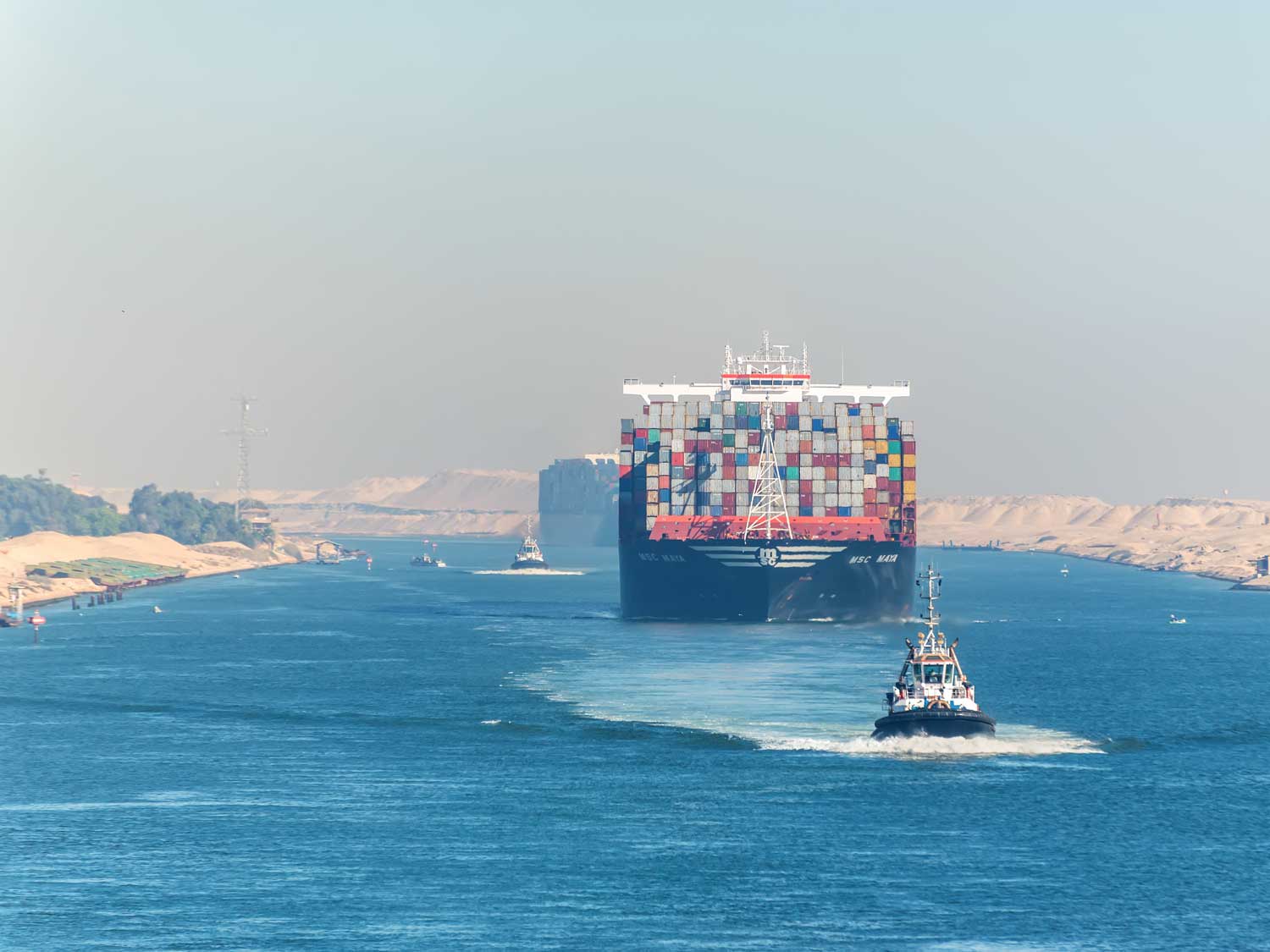
Despite a fragile ceasefire in Gaza, container ships will not be returning to the Red Sea anytime soon. Carriers remain cautious, fearing renewed instability and prioritising the established Cape of Good Hope diversions. Even if ships do resume transit, severe disruption is expected, with schedules taking up to two months to stabilise.

3. Trump’s trade policies spark concerns (20th January)
Following his inauguration, President Trump swiftly reignited trade tensions, threatening tariffs on Colombia, China, Canada, and Mexico. Proposals include a 25% levy on steel and aluminium from Canada and Mexico, with reciprocal tariffs also being considered for UK imports. The potential trade war could have widespread consequences for global supply chains.

4. US air cargo demand under threat (1st February)
Trump’s decision to impose a 10% tariff on all Chinese imports and temporarily suspend the de minimis exemption for low-value Chinese shipments has sent shockwaves through the air freight sector. While the exemption was reinstated, changes to eCommerce regulations could significantly disrupt air cargo flows into the US, which is expected to receive 1.4 billion eCommerce packages this year.

5. New Asia shipping alliances reshape trade (2nd February)
The long-anticipated shift from three major container alliances (Ocean, THEA, 2M) to four key players (Ocean, Premier, Gemini, MSC) is now in effect. Asia-North Europe scheduled liner capacity will shrink by 11%, yet the number of weekly sailings will increase from 26 to 28. These changes will reshape global shipping networks for years to come.

6. European road freight rates stabilising (4th February)
After three years of decline, European road freight spot rates may have hit their lowest point. According to the European Road Freight Rate Benchmark, spot rates fell just 1% year-on-year in Q4 2024. While demand remains weak, cost pressures have kept rates 15% above pre-pandemic levels, with short-term volatility expected.

7. Carriers cut sailings to stabilise rates (14th February)
Shipping lines are aggressively blanking sailings to ease the transition to new alliance schedules and sustain freight rates. Between 17 February and 23 March, 51 sailings have been cancelled across key east-west trade routes, with February’s cancellations rising to 133 from 104 in January. Further capacity withdrawals and a general rate increase (GRI) could follow if demand fails to recover.

With trade disputes, shipping realignments, and geopolitical instability shaping global supply chains, the first quarter of 2025 has already presented significant challenges.

Staying ahead requires proactive strategy adjustments to mitigate risks and build resilience. That’s why we share these insights and why your Metro account management team is always by your side, ready to provide expert advice, share knowledge, and develop bespoke solutions tailored to your supply chain needs.

For high-level support, EMAIL Andrew Smith, Managing Director.

White House 1440x1080 1

Uncertainty grows as US tariffs target China

While last-minute negotiations resulted in a temporary reprieve for Canadian and Mexican imports, President Trump’s new tariffs on Chinese goods from the 4th February have already triggered retaliation, adding further pressure to international supply chains.

US tariffs on Canadian and Mexican imports have been put on hold for at least 30 days following security commitments from both nations. This delay offers temporary relief for critical trade lanes, including automotive components, electronics, and pharmaceuticals.

Canada has pledged increased border enforcement measures, including new personnel and surveillance technology, while Mexico has committed to deploying additional forces to its border. These actions have led to a pause in tariffs, but shippers should remain cautious as negotiations continue, with the risk of duties being reinstated if agreements are not finalised by March.

The US administration has implemented an additional 10% tariff on Chinese imports and in response China has introduced tariffs of up to 15% on selected US goods and imposed export controls, affecting critical technologies such as solar cell production. While these measures appear targeted, they contribute to an increasingly volatile trade environment, forcing businesses to reconsider sourcing strategies and logistics solutions.

US prepares further trade restrictions

Beyond tariffs, the US is tightening its stance on eCommerce imports by getting ready to suspend the de minimis exemption for shipments from China, as soon as adequate systems are in place to fully and expediently process and collect tariff revenue. Previously, goods valued under $800 could enter the US duty-free, but the removal of this exemption would be expected to severely impact cross-border eCommerce air cargo volumes.

In addition, new regulations, announced by US Customs and Border Protection, introduce additional filing requirements, increasing administrative burdens on online retailers and logistics providers. However, analysts suggest that while higher costs may impact some importers, consumer demand is unlikely to diminish significantly, given the relatively low average value of eCommerce purchases.

With ongoing negotiations between the US, Canada, and Mexico, and China’s measured response to tariffs, industry leaders remain cautiously optimistic. However, agility will be essential in navigating evolving trade policies and regulatory changes. As new agreements are brokered and tensions shift, shippers must remain adaptable to mitigate risks and capitalise on emerging opportunities.

As global trade policies shift and new tariffs reshape supply chains, proactive planning is more critical than ever. At Metro, we leverage award-winning services and deep industry expertise to help businesses navigate evolving trade barriers, regulatory changes, and supply chain disruptions.

Whether you need to mitigate the impact of tariffs, ensure compliance with new regulations, or adapt sourcing/export strategies, our tailored solutions keep your supply chain resilient and competitive.

EMAIL Andy Smith, Managing Director, today to explore how Metro can safeguard your supply chain and support your business in 2025 and beyond.

Trump tariffs on mobile 1440x1080 1

The risks of President Trump’s trade policies

President Donald Trump’s inauguration speech and subsequent executive orders have provided further insights into his proposed trade policies. 

His emphasis on protectionism, territorial expansion, and the establishment of an “External Revenue Service” marks a significant shift in the approach to international trade, raising concerns among stakeholders in global supply chains.

While intended to prioritise domestic economic growth, these policies could have far-reaching consequences for international trade, supply chains, and geopolitical stability.

In his inauguration speech, President Trump stated a commitment to reversing what he views as exploitative trade practices. Key elements of his vision include:

Tariffs and Revenue Generation: Trump announced the establishment of an “External Revenue Service” to manage tariffs, duties, and revenues, asserting that this would generate “massive amounts of money pouring into our treasury coming from foreign sources.” He also hinted at potential tariffs of 25% on imports from Mexico and Canada, with implementation possibly starting as early as February.

Territorial Expansion and Strategic Assets: In a surprising claim, Trump indicated intentions to “take back” the Panama Canal, erroneously stating that China operates it. He further noted ambitions to expand US territory, with implications for regions like Panama, Greenland, and Canada. These statements have added to geopolitical uncertainties.

Inflation Concerns: Despite his stated goal of reducing inflation, Trump’s emphasis on tariffs directly contradicts this aim. As economic experts have pointed out, tariffs tend to increase costs for businesses and consumers, creating inflationary pressures.

Implications for Global Trade and Supply Chains

Tariffs and Retaliation
The proposed tariffs, including the suggested 25% levies on Mexico and Canada, pose a risk of retaliation from trading partners. Such measures could disrupt the smooth flow of goods, increase trade barriers, and lead to a cycle of reciprocal tariffs. Industries like automotive, manufacturing, and electronics, which rely heavily on global supply chains, would be particularly affected.

These policies also threaten to undermine trade relationships between the US and its partners, creating uncertainty for businesses dependent on predictable supply chain operations.

Inflationary Impact
Trump’s claim that tariffs would enrich the US by taxing foreign countries misrepresents how tariffs function. In reality, these costs are borne by importers and ultimately passed on to consumers in the form of higher prices. This would likely lead to inflation, contradicting the administration’s stated goal of reducing costs and combating record inflation.

Geopolitical Tensions
Trump’s assertion regarding the Panama Canal and broader territorial ambitions increases geopolitical uncertainties. Control of key trade corridors like the Panama Canal is crucial for global shipping routes, and such rhetoric risks destabilising international relations. The suggestion of US territorial expansion further complicates trade dynamics, with potential repercussions for trade routes and global commerce.

Impacts on the UK and Europe
For the UK, the indirect effects of Trump’s policies are concerning. Europe, a key trading partner for the UK, may face economic disruptions due to strained US-EU trade relations. The UK’s automotive, machinery, and chemicals sectors, which rely on seamless integration with European supply chains, could experience higher costs, delays, and reduced demand.

Additionally, retaliatory measures by China and other US trading partners may flood global markets with cheaper goods, increasing competition for European industries and indirectly affecting UK exporters.

At Metro, we leverage award-winning services and deep market expertise to help businesses navigate the challenges posed by new tariffs, rising trade barriers, and supply chain disruptions. Whether it’s mitigating the impact of rising trade barriers, reconfiguring supply chains to address changing energy policies, or responding to broader global and UK economic developments, Metro provides tailored insights and solutions to ensure your success.

In times of uncertainty, preparation is key. With Metro as your trusted partner, you can adapt and thrive in this evolving landscape.

Contact Managing Director Andy Smith today to explore how we can safeguard your supply chain and help you navigate the complexities of 2025.