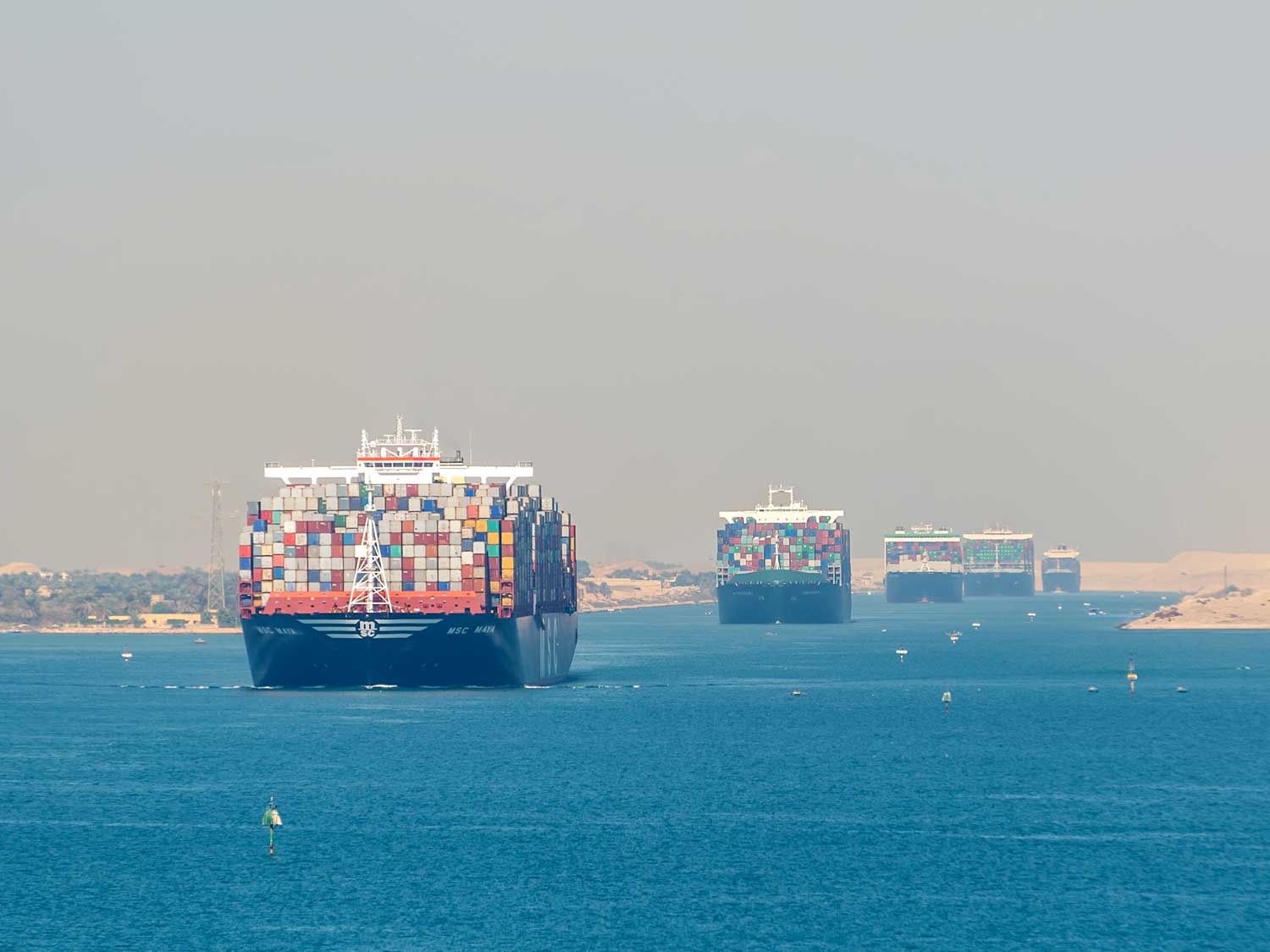
Growth Sustained, But Reliability and Policy Risks Loom for Air Freight

Growth Sustained, But Reliability and Policy Risks Loom for Air Freight

Air cargo volumes surprised on the upside again in August, rising by around 5% year on year, the second consecutive month of growth at this pace. Capacity also increased by 4%, though yields came under pressure as rates softened.

Despite the stronger demand, the outlook for Asia–Europe and Asia–US markets in particular remains uncertain, with policy changes and operational constraints threatening to erode recent gains.

Average spot rates from Southeast Asia to North America and Europe declined by around 20% compared with last year, reflecting easing capacity pressure, while North East Asia to North America fell by just 8%. Rates on North East Asia–Europe routes were broadly stable year on year, though down slightly month on month. Transatlantic markets saw rates edge up by 5% annually, but momentum slowed as the summer holiday period cut into demand.

These shifts underline the fragility of recovery. Purchasing Managers’ indices in key exporting economies fell again in August, and American consumer sentiment softened. Growth on Asia–Europe and Asia–US trades has been sustained largely by front-loading and tariff avoidance, rather than stronger consumption.

Regulatory pressures and cost dynamics

The removal of the de minimis exemption for low-value shipments entering the US at the end of August is reshaping flows. While originally targeted at Chinese eCommerce, the new rules apply across all origins. For European and Asian exporters, this adds new administrative steps and costs, particularly for SMEs. Observers expect lower eCommerce volumes into the US, with some share shifting back towards China due to lower production costs.

Average spot rates across global markets fell by about 3% year on year in August, with sharper declines once currency depreciation is factored in. Capacity expansion has kept pressure on yields, even as jet fuel costs dropped by 7% year on year, providing some relief to carriers. The balance between steady demand and competitive pricing remains delicate, with the sustainability of current growth dependent on careful capacity management.

Reliability challenges deepen

Operational reliability has become a significant concern. On-time performance among major carriers slipped from 81% in May to 80% in June, and down again to 77% in July. For context, anything below 90% is considered mediocre, and mid-70s is cause for concern. Among the 22 airlines surveyed, the gap was wide, with punctuality as low as 57%, to a high of 94%.

For shippers, this can translates into missed connections, additional storage costs, and strained deadlines. Contributing factors include congested airports, ground-handling labour shortages, outdated facilities, and limited data integration across the air cargo chain. Without structural improvements, reliability risks may become systemic, undermining the demand growth achieved in recent months.

Outlook

The near-term outlook for air freight is mixed, with improving but weak economic fundamentals and policy changes that add friction. Key routes from Asia to Europe and the US continue to anchor growth, yet they are the lanes under constant pressure from regulatory shifts and declining schedule reliability. Unless carriers can address operational shortcomings and adjust capacity effectively, current momentum may prove short-lived.

Demand is shifting and schedule reliability is a moving target, but Metro continues to secure space and certainty by actively managing capacity, optimising routings, and leveraging trusted carrier partnerships.

On our MVT platform, real-time flight telemetry provides:
– Live aircraft position and route mapping
– Accurate departure/arrival confirmations
– Time-stamped milestones updated in real time
Plan with confidence, optimise inventory, and protect deadlines, even as conditions change.

EMAIL Andrew Smith, Managing Director, to learn how our data-driven air freight keeps your supply chain moving.

Road freight prices edge higher in August

Road freight prices edge higher in August

Stronger August demand lifted UK road transport prices, with both haulage and courier markets firming despite fresh capacity entering the system.

The latest TEG Price Index shows overall prices rising nearly 2% month on month and sitting 2.4% above August 2024 levels. Haulage led the gains, up just over 2.5% on July and 3.6% year on year, while courier prices advanced 1.2% in the month to stand 1.3% higher than a year ago.

Seasonal spending around the late-summer Bank Holiday and warm weather drove a sharp 6.26% jump in transport demand, tilting the balance of the market. Additional supply helped restrain steeper inflation, but not enough to neutralise the upward pressure on rates.

Demand outpaces tight supply

Articulated vehicle demand surged more than 13% in August and was closely matched by an almost 15% increase in supply. Even so, articulated prices climbed over 3% month on month, reflecting continued operational constraints from annual leave and persistent driver shortages.

Recruitment challenges are feeding into wage trends: average HGV driver pay reached £42,121 in August, marking a second consecutive month above the UK national average. Fleet renewal is also lagging; SMMT data points to an 11% year-on-year decline in new HGV registrations, suggesting articulated supply could remain constrained even if demand stays elevated.

A recent cut in the Bank of England’s base rate to 4% supported consumer confidence and spending through the peak summer period, adding a further tailwind to freight demand.

Our network of national and pan-European operators provide solutions for every cargo type, shipment size and deadline, giving us the control and flexibility to shield customers from freight market price swings.

By planning the most efficient domestic and European routes, we keep your road transport moving reliably and competitively.

EMAIL our Managing Director Andy Smith to discover how our road freight solutions can strengthen and protect your supply chain.

Resetting UK–EU trade

Resetting UK–EU trade

Five years on from the Trade and Cooperation Agreement (TCA) and with the 2026 review fast approaching, the UK and EU have a chance to move beyond firefighting and design a trading relationship that works in today’s economy.

A new Parliamentary report from the Chartered Institute of Export & International Trade sets out a practical roadmap to turn trade friction into advantage, by prioritising digital connectivity, trusted cooperation and real-world fixes for businesses, especially SMEs.

Exports in services have grown, but goods trade, and particularly for smaller exporters, still hits too many barriers. The Institute proposes a coherent package of measures that reduces cost and complexity at the border, unlocks mobility and skills, and aligns climate and industrial policies so supply chains can invest with confidence.

h4b>The Institute’s eight recommendations

1) Streamline borders and customs

  • Build interoperable UK–EU digital trade corridors to remove duplication and delays.
  • Create a Common Security Zone to simplify newer safety and security requirements.
  • Align the UK’s Trade Strategy with the EU Customs Reform programme to deliver a seamless user experience.

2) Make SPS trade predictable

  • Implement the Common Sanitary and Phytosanitary (SPS) Area via a joint SPS committee (as trailed at the 2025 summit).
  • Work directly with industry to fix recurring pain points in food, plant and animal movements.

3) Modernise rules of origin

  • Simplify and harmonise product-specific rules in the TCA.
  • Enable diagonal cumulation with shared FTA partners.
  • Consider UK participation in the Pan-Euro-Mediterranean (PEM) Convention to increase sourcing flexibility.

4) Deepen regulatory cooperation

  • Use outcome-based equivalence and dynamic alignment where it matters most.
  • Strike targeted “side deals”, including mutual recognition for conformity assessment, and collaborate on emerging areas such as AI and digital trade.

5) Link carbon and energy frameworks

  • Link UK and EU emissions trading schemes and align CBAM approaches.
  • Broaden energy cooperation to support secure, affordable decarbonisation.

6) Back Northern Ireland’s dual-market role

  • Build on the Windsor Framework to deepen trade, energy and mobility links.
  • Position Northern Ireland as a practical model of friction-reduction that benefits both sides.

7) Enable skills and mobility

  • Launch a reciprocal youth mobility scheme and explore re-entry to Erasmus+.
  • Accelerate mutual recognition of professional qualifications in high-impact sectors.

8) Align industrial and digital policy

  • Establish a UK–EU Industrial Cooperation Council to coordinate investment, innovation and regulation.
  • Add a dedicated digital trade chapter to future-proof the partnership.

The last five years have shown that technical workarounds are not enough. SMEs need consistent rules, fewer duplicative checks and clearer pathways. By sequencing border simplification, SPS certainty and origin reform, policymakers can cut costs quickly while building a platform for long-term competitiveness.

What success would look like

  • Lower cost-to-export for SMEs through simplified formalities and interoperable systems.
  • Faster, more predictable food flows via an SPS framework that solves problems at source.
  • More resilient supply chains thanks to compatible rules and modernised origin provisions.
  • A digital-ready TCA that reflects how firms actually trade in 2026 and beyond.

From rules-of-origin compliance to fast-changing customs requirements, our experts deliver integrated and automated solutions that simplify compliance, cut costs and keep your trade moving.

To learn about our automated CuDoS platform and how we can help you navigate the evolving UK–EU trade environment with confidence, please EMAIL our Managing Director Andrew Smith today.

Asia Pacific Freight Markets Reshape as Tariffs Shift Trade Flows

Asia Pacific Freight Markets Reshape as Tariffs Shift Trade Flows

Air and sea freight in the Asia Pacific region is at the centre of global freight realignments, as eCommerce and feeder shipping operations are reshaped by recent policy changes in the US. 

Adjustments to tariff rules and the elimination of duty exemptions have pushed shippers to reconsider sourcing strategies, shifting some flows from China to other Asia Pacific markets while amplifying pressure on already-congested sea and air networks.

Air cargo: eCommerce realignment

The removal of de minimis exemptions on China–US eCommerce shipments has sharply reduced volumes from mainland China and Hong Kong to the US, while boosting flows from alternative Asia Pacific origins and into Europe.

Airlines across the region reported strong growth in July, as exporters diverted shipments to avoid tariff penalties and took advantage of front-loading opportunities during temporary pauses in tariff implementation.

This shift highlights the growing role of Asia Pacific beyond China in meeting US and European demand, with trade lanes from Southeast Asia and emerging eCommerce hubs gaining traction. While China remains dominant in cross-border online trade, its reduced share of US-bound volumes has accelerated diversification across the region.

Sea freight: Feeder bottlenecks

At the same time, feeder shortages in Southeast Asia are disrupting supply chains, delaying transshipments and creating congestion at major hubs including Singapore (operating near 90% yard capacity), Shanghai, Ningbo and Port Klang.

Shippers are being forced to secure space weeks in advance, with rolled cargo and high yard density compounding the disruption.

The surge in demand from Southeast Asia, partly driven by tariff-related cargo diversions, has stretched feeder capacity, with carriers prioritising direct lanes over transshipment-heavy routings. For US exporters, this has meant greater scrutiny over which cargoes are accepted, adding uncertainty to already fragile trade flows.

Implications for US and European businesses

For US and European importers, these developments underline the risks of over-reliance on single-source markets, as both regulatory shifts and operational pressures can disrupt established flows. For exporters, feeder constraints and selective carrier acceptance policies may limit market access and slow supply chains out of Asia.

Diversification of sourcing, earlier booking strategies, and closer collaboration with supply chain stakeholders is essential in navigating these disruptions. With eCommerce volumes continuing to grow and Asia Pacific playing a more pivotal role, freight strategies must evolve to maintain resilience and competitiveness.

Metro gives you the visibility, agility, and expertise to adapt to shifting trade flows and capacity constraints. EMAIL managing director, Andy Smith, today to strengthen your supply chain and secure your freight movements across Asia Pacific, the US and Europe.