Trucks Middle East

Middle East overland networks under strain

Overland transport across the Middle East has moved from a contingency option to a critical component of regional supply chains, as disruption to ocean and air networks forces cargo onto road-based alternatives. The result is a rapidly tightening environment, where capacity, infrastructure and cross-border processes are all under increasing pressure.

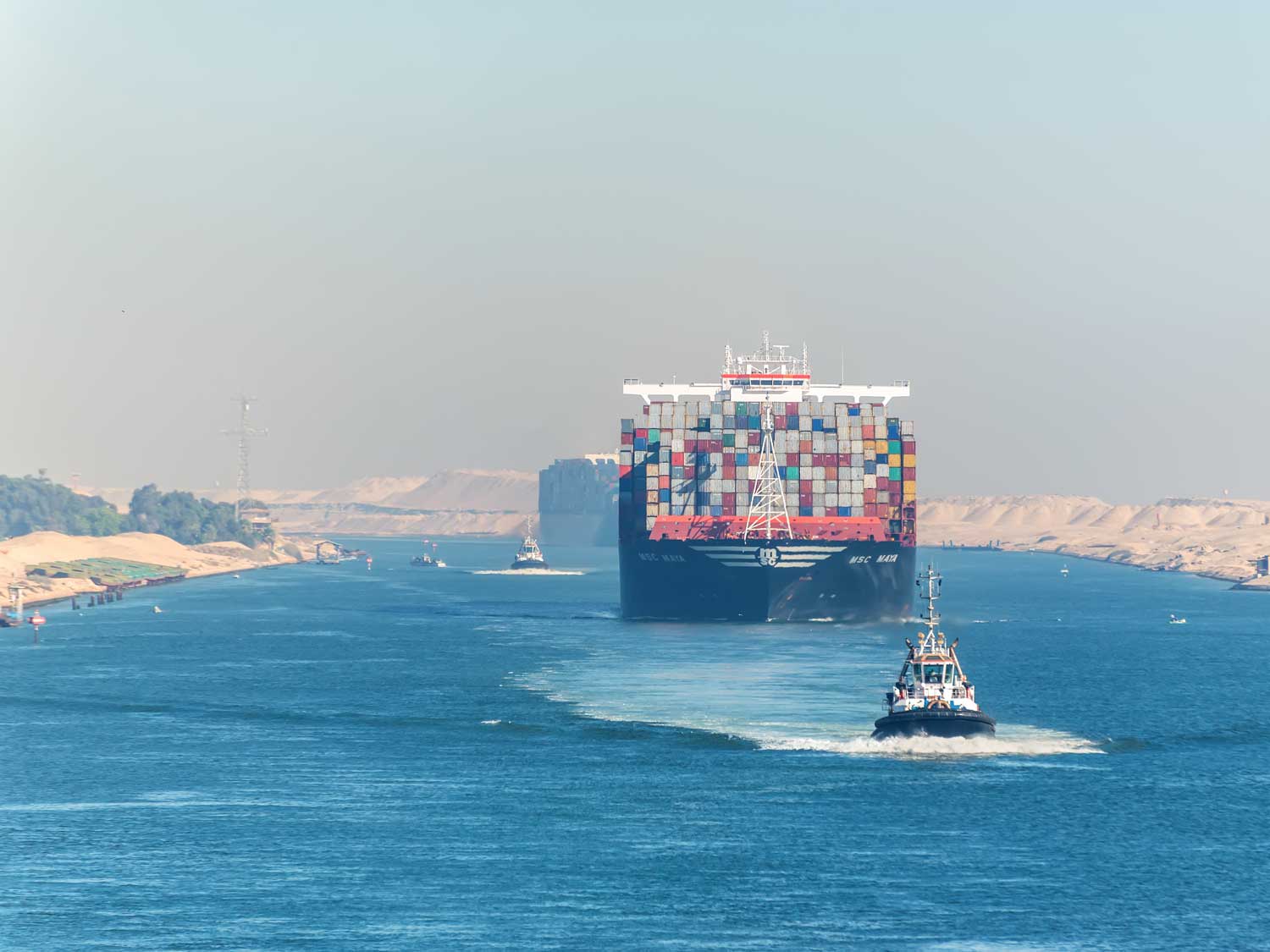
With ocean access into the Gulf restricted, containers are being discharged at ports outside the region and redirected inland via road networks. Oman, alongside locations such as Khor Fakkan, Sohar and Jeddah, has become a central staging point for cargo moving into Gulf Cooperation Council (GCC) markets.

In practice, this means cargo originally destined for major hubs such as Jebel Ali or Hamad is now entering the region through a variety of entry points, with no standardised routing approach. As a result, overland transport is playing a far greater role in bridging gaps between discharge locations and final delivery points.

However, the infrastructure supporting this shift was not designed for sustained, high-volume container flows over long distances, and pressure is building quickly.

Trucking capacity shortages and border constraints

The rapid increase in inland volumes is exposing structural limitations across regional road networks. Trucking capacity is tightening across key corridors linking Oman, Fujairah and Saudi Arabia, with shortages extending transit times and delaying cargo recovery.

Congestion is intensifying at key nodes. In some locations, terminals are operating at full capacity, with vessel queues and dwell times extending beyond 10 days, while long truck queues are forming as cargo competes for onward movement.

At the same time, cross-border complexity is increasing. Driver availability is constrained by visa processing delays, with queues extending for hours and reducing the number of journeys each vehicle can complete. Additional restrictions on driver nationality are further limiting capacity on certain routes.

Operational constraints are also emerging at a regulatory level. Cross-border trucking is not always seamless, with limitations on where vehicles can operate and additional charges being introduced in some markets, increasing both cost and administrative complexity.

As a result, transit times are becoming less predictable and costs are rising sharply. In extreme cases, urgent shipments have seen trucking rates escalate significantly above typical market levels, reflecting both scarcity of capacity and the urgency of demand.

The weekend drone strike on the Port of Salalah has highlighted how exposed overland networks are to disruption at key staging points. The temporary closure of the terminal interrupted a critical gateway for cargo being discharged and moved inland to Gulf markets.

Although operations are set to resume from Tuesday 31st March, constraints are expected to continue, limiting throughput and adding further pressure to already congested road corridors.

Overland not scalable at current volumes

As disruption continues, overland transport is becoming a core part of regional supply chains rather than a temporary workaround. Road, rail and multimodal solutions are being deployed extensively to maintain flow into the Gulf, supported by a growing network of alternative corridors.

However, these solutions are not scalable at the level required to fully replace traditional ocean routes. Capacity limitations, border delays and infrastructure constraints are creating a bottleneck that is likely to persist as long as disruption continues.

For shippers, the challenge is operational as much as strategic — managing cargo already in transit, navigating changing routing decisions and securing inland capacity in a highly constrained environment.

Keep cargo moving with integrated solutions

By combining regional expertise and coverage with established multimodal networks, Metro is coordinating road, air-road and alternative routing strategies to bridge gaps created by disrupted ocean and air services.

Metro works proactively to secure trucking capacity, manage cross-border movements and identify the most effective corridors based on real-time conditions, reducing delays and maintaining control in a highly fluid environment.

With full visibility through the MVT platform, customers can track cargo across inland networks, monitor congestion and adapt quickly as routes and constraints evolve.

If your cargo is impacted or at risk of delay, EMAIL Andrew Smith, Managing Director, to secure capacity and define a clear route forward.

City of London 1440x1080 1

Economy slows as supply chain disruption and energy costs hit

The UK economy is showing clear signs of slowing, with growing pressure on importers and exporters, as supply chain disruption and rising energy costs begin to feed through. 

While headline indicators suggest marginal growth, underlying conditions point to a more fragile environment, which is shifting the focus towards control and adaptability, with forward planning, flexible routing and improved visibility becoming key to maintaining performance.

Demand moderates but remains supported by structural activity

The latest PMI data is still expanding, with the composite index at 51.0 marking eleven consecutive months of growth. However, the pace has slowed, and business confidence has eased to a nine-month low.

UK GDP was flat in January, with three-month growth of 0.2%, reflecting a slowdown rather than a contraction. More recent data suggests goods sectors are losing momentum, but activity remains in expansion territory.

Manufacturing output in March edged close to stagnation (50.1), while overall activity continues to expand, marking an extended period of growth. Demand patterns are becoming more selective, with some buyers delaying orders due to cost pressures, while others are maintaining or even accelerating purchasing to secure supply.

Export demand remains mixed, but still present. Some manufacturers reported modest increases in overseas orders, supported in part by customers bringing forward purchases and building inventory to mitigate future disruption.

This points to a market that is not weakening uniformly, but instead becoming more dynamic, with pockets of resilience alongside more cautious spending.

Input costs rise sharply, reinforcing the need for supply chain control

Cost pressures are accelerating across goods sectors, driven by higher fuel costs, transportation charges and energy-intensive inputs.

Manufacturing input prices recorded their sharpest increase in over three decades, with around 47% of firms reporting rising costs. This is feeding through into output pricing, with manufacturers increasing selling prices at the fastest rate since April 2025.

At the same time, supply chains are becoming less predictable. Around 25% of manufacturers reported longer supplier delivery times in March, reflecting extended transit times from Asia and disruption linked to rerouting and network congestion.

While these pressures are significant, they are also increasingly visible and measurable. For many businesses, this creates an opportunity to take earlier action, whether securing capacity in advance, adjusting routing strategies or reviewing supplier and inventory models to reduce exposure.

Interest rate outlook shifts as inflation risks re-emerge

At its latest meeting on 19 March, the Bank of England’s Monetary Policy Committee voted unanimously to hold the base rate at 3.75%, in line with expectations.

While acknowledging signs of weaker economic activity, policymakers highlighted the risk that rising energy costs could feed into wages and domestic pricing. The Committee signalled a more cautious stance, removing earlier guidance that pointed towards rate cuts and instead emphasising a readiness to act if inflationary pressures strengthen.

Markets interpreted the shift as a more hawkish tone, suggesting that borrowing costs may remain higher for longer if energy-driven inflation persists.

For goods-focused businesses, this reinforces the need to manage both cost inflation and financing conditions, particularly where inventory and working capital requirements are increasing.

Inventory strategies shift as businesses balance risk and demand

Changing conditions are driving a more proactive approach to inventory management. Some businesses are increasing stock levels and bringing forward orders to protect against future disruption, while others are taking a more cautious approach in response to cost pressures.

This is creating more uneven demand patterns, but also supporting short-term volume in key sectors. At the same time, inventory levels remain relatively tight overall, reflecting the ongoing impact of supply chain delays.

For supply chains, this reinforces the importance of flexibility — balancing stock availability against cost, while maintaining the ability to respond quickly as conditions change.

US and EU markets provide stability, but cost pressures remain a factor

The United States and EU continue to provide relatively stable demand conditions, supporting UK trade flows.

US inflation remains moderate at 2.4%, with interest rates held at 3.50%–3.75%, while the EU is close to target at 1.9%. These conditions are helping to sustain demand, even as global uncertainty increases.

However, both markets remain exposed to rising energy costs, which could influence pricing and demand if sustained. For UK exporters, this means opportunities remain, but with increasing sensitivity to cost and lead time.

Stay ahead of changing conditions with Metro

Metro helps importers and exporters turn market complexity into a controllable, manageable process.

Whether adapting to rising costs, mitigating supply chain delays or optimising inventory flow, Metro provides the insight and operational support needed to maintain performance in a changing market.

To discuss how current economic and supply chain conditions could impact your business, EMAIL Laurence Burford, Chief Financial Officer.

NYC 1440x1080 1

Trade growth in a fragile environment

The latest Global Trade Observatory Outlook, based on insights from more than 3,500 senior supply chain executives, highlights a contradictory confidence in trade growth, while the conditions that support growth are increasingly fragile.

Global goods trade reached record levels in 2025, exceeding $26 trillion, but growth is expected to in 2026 slow as cost pressures and operational complexity increase.

Recent developments underline how fluid the global trade environment has become.

The European Union has approved a trade agreement with the United States, but only with strict safeguards in place. Conditional clauses and review mechanisms have been built in to protect against policy shifts and ensure compliance.

At the same time, the UK’s own trade position with the US remains under review, creating uncertainty around tariffs, market access and regulatory alignment.

For businesses, this introduces a more complex planning environment, because trade agreements are no longer fixed frameworks, but are increasingly conditional and subject to change.

Disruption Is now continuous

Alongside policy uncertainty, operational disruption continues to reshape supply chains.

The Middle East situation has already tightened capacity, extended transit times and increased reliance on alternative routing. Air freight availability has reduced in certain markets, while multimodal and inland solutions are absorbing diverted volumes.

At the same time, cost pressure is building across the supply chain, though nearly half of supply chain executives had been expecting moderate or sharp cost increases, with transport, labour and customs compliance costs rising.

These pressures are no longer isolated. They are systemic.

Inventory strategies are also shifting. With 44% of businesses increasing stock levels, delays today risk translating into availability gaps in the coming weeks. 

Buying cycles are tightening, with orders placed later but expected to arrive faster. The tolerance for delay is reducing, because there is less margin for error.

Confidence Is now built on capability

Despite these challenges, businesses remain confident.

This confidence is not reliant on improving conditions. It is based on improved capability, with 46% of businesses planning to use new trade routes, and a further 23% actively evaluating alternatives. 

It is this ability to adapt, rather than the expectation of stability, which will drive growth, with success depending on:

  • Rapid route adjustment
  • Cost control under pressure
  • Maintaining flow during disruption
  • Navigating changing regulatory conditions

Logistics is no longer a support function. It is a performance driver.

Supporting Trade in Volatile Conditions

The companies that succeed will be those that can absorb disruption, adapt quickly and maintain control across increasingly complex supply chains.

Metro works with UK importers and exporters to maintain control in exactly this environment.

Multimodal Flexibility
Integrated sea, air, road and rail solutions allow rapid adjustment to changing capacity and cost dynamics.

Route Optimisation & Corridor Expertise
Dynamic routing strategies avoid congestion, mitigate risk and maintain transit reliability as conditions shift.

Carrier Relationships & Capacity Access
Established partnerships help secure space and maintain flow when availability tightens.

Cost & Performance Control
Consolidation, mode optimisation and advisory support help manage inflationary pressure while protecting service levels.

Visibility & Decision-Making
Real-time tracking and performance insight enable faster, more informed decisions when disruption occurs.

If your supply chain is being impacted by regulatory change, rising costs or network disruption, EMAIL Andrew Smith, Managing Director to learn how we can help you adapt and continue to grow with confidence.

Jebel Ali

Middle East disruption continues to reshape global supply chains

Middle East linked disruption extends well beyond the region, with growing implications for global supply chains. 

As capacity tightens, routes are reconfigured and costs come under pressure, supply chains are entering a more complex and less predictable phase.

Air freight capacity tightens

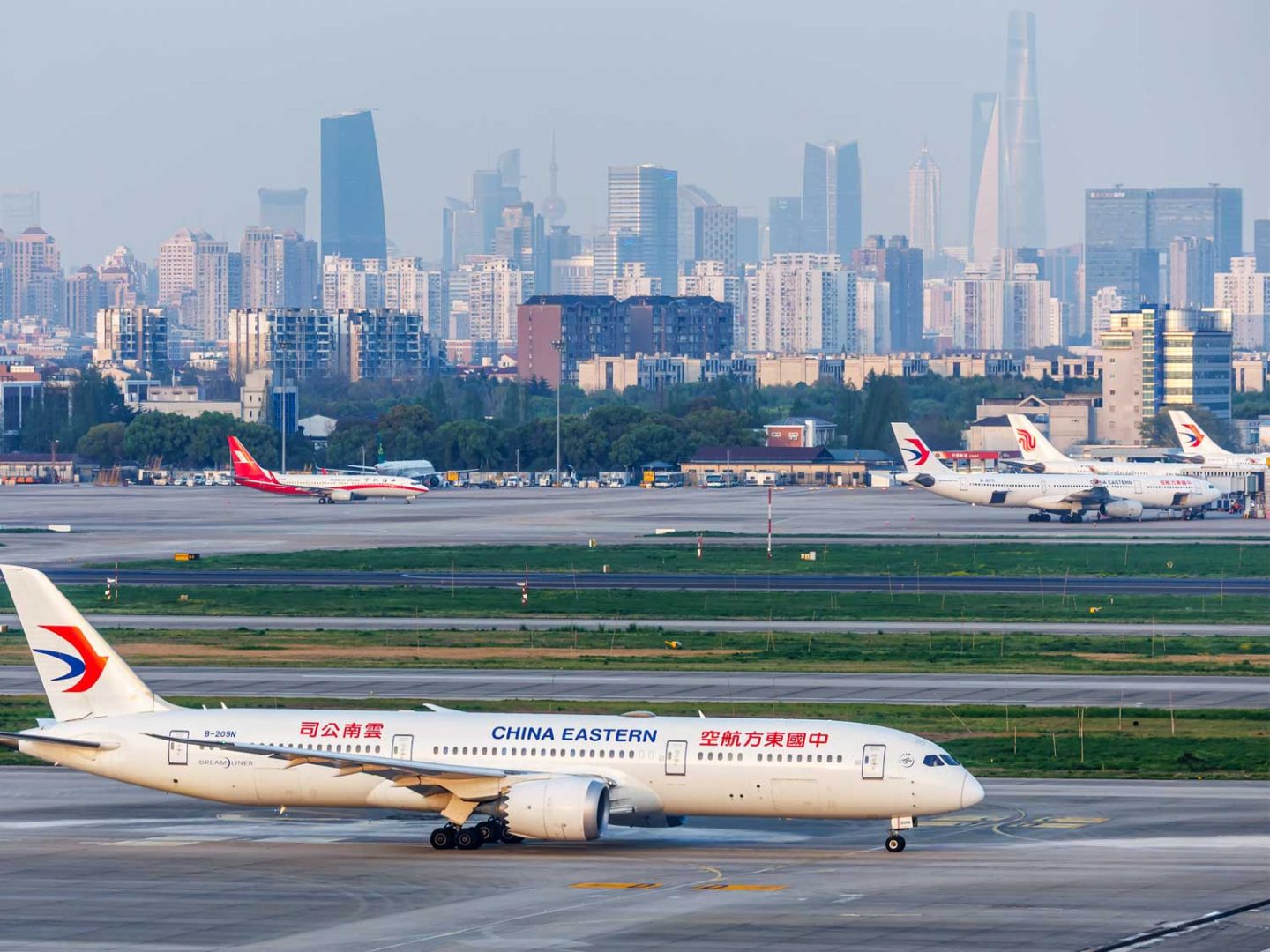
Air freight markets are among the most immediately affected. Reduced capacity through key Gulf hubs — which typically handle a significant share of global cargo flows and particularly Asia — has forced airlines to reroute services and limit network coverage.

Market data indicates that capacity reductions in parts of the Middle East and South Asia have been significantly steeper than the decline in volumes, creating a sharp imbalance between supply and demand. As a result, rates on some key east–west corridors have risen by more than 50% week on week, with spot pricing increasing at an even faster pace.

Cargo is increasingly being redirected via alternative gateways such as China and Hong Kong, placing additional pressure on corridors that were previously less affected. This is tightening capacity across Asia–Europe routes and contributing to delays, space shortages and short-notice schedule changes.

At the same time, rising fuel costs and the introduction of war risk-related surcharges are adding further upward pressure, while rate validity is shortening as carriers respond to rapidly changing conditions.

Ocean disruption drives congestion, diversion and equipment imbalances

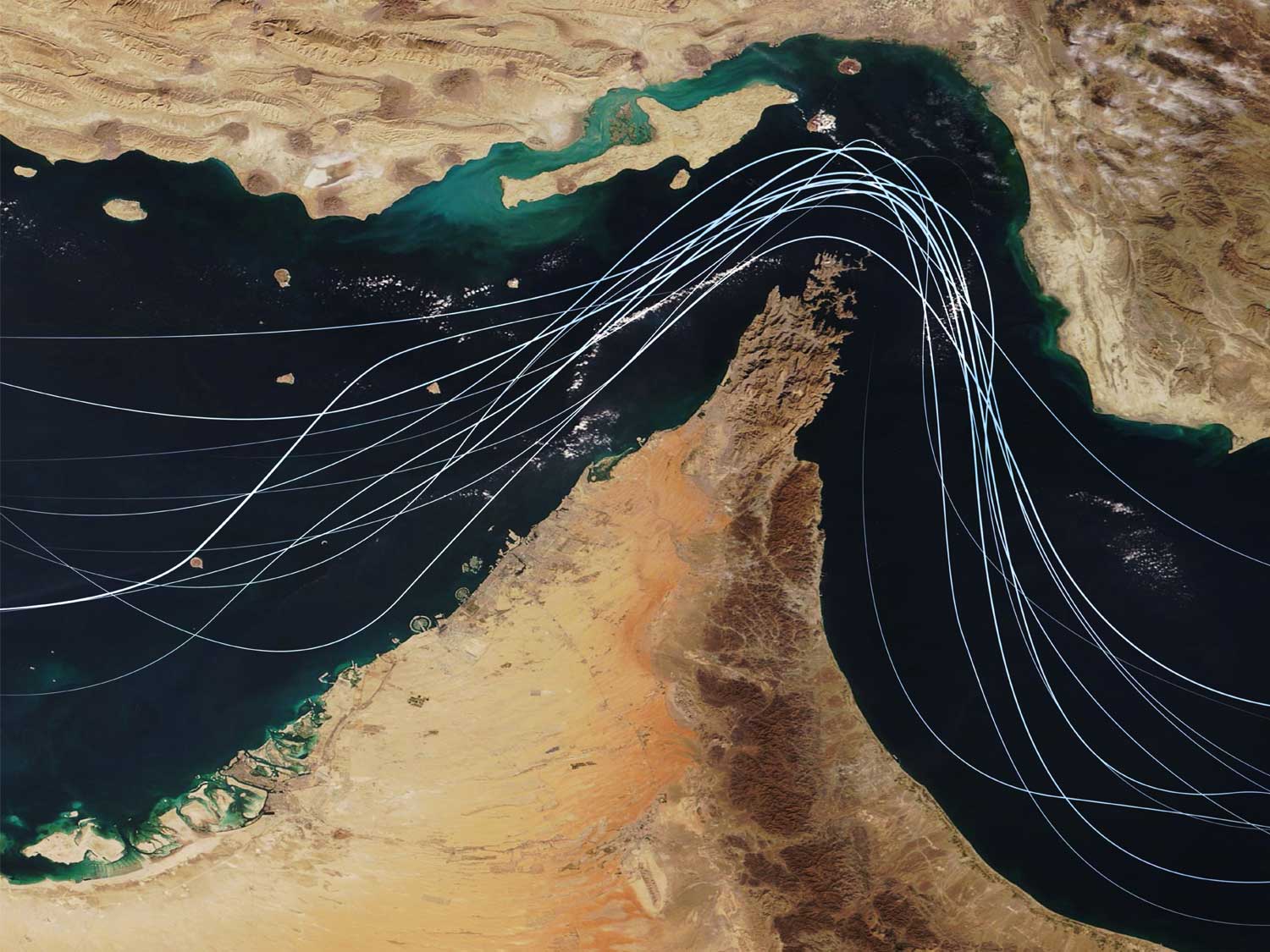
Ocean freight is facing a different but equally significant set of challenges. The effective closure of the Strait of Hormuz — a corridor that typically handles a substantial share of global energy flows — has led to a dramatic reduction in vessel transits, with movements down by around 95% compared to normal levels.

Shipping lines have suspended services into the Arabian Gulf and are diverting vessels to alternative ports, where cargo is being discharged and held for onward movement. This is creating a knock-on effect across surrounding regions.

Ports outside the Gulf are now absorbing unexpected volumes. Congestion levels at key contingency hubs have reached critical levels, with some locations operating at or near full capacity and vessel waiting times extending well beyond normal ranges.

At the same time, an estimated 200,000+ TEU of capacity remains effectively trapped within the Gulf, contributing to equipment shortages in Asia as empty containers are unable to return to origin markets. This imbalance is expected to place further pressure on export flows in the coming weeks.

Rising bunker costs are also beginning to influence vessel operations, with some operators reducing sailing speeds to manage fuel consumption, adding further variability to transit times.

Costs rise as surcharges and fuel pressures build

Across both air and ocean freight, cost pressure is becoming more pronounced. Emergency surcharges linked to fuel volatility, war risk and network disruption are being introduced or expanded across multiple trade lanes.

Air freight rates have already increased sharply on key routes, while ocean carriers are implementing additional charges to reflect higher operating costs and longer routing distances. In parallel, regulatory scrutiny is increasing, particularly around how surcharges are applied and communicated.

For shippers, this is creating a more complex cost environment, where pricing can change quickly and visibility is reduced.

The past few weeks have highlighted how quickly supply chain assumptions can change and how important it is to have flexible, well-informed contingency options in place.

Metro is supporting customers by identifying alternative routings, securing capacity across air and ocean networks, and maintaining close operational control as conditions evolve.

To discuss how this situation could impact your supply chain, or to review practical routing and cost options, EMAIL Andrew Smith, Managing Director at Metro, for a direct and informed response.