us china tradewar

US Tariff Developments and Global Trade Reactions

Further to our recent update on the major changes to US tariffs (link), the global trade landscape remains highly fluid, with the situation evolving rapidly.

Last Wednesday, 2nd April, President Donald Trump announced a comprehensive tariff strategy, imposing a universal 10% tariff on all imported goods, effective from the 5th April.

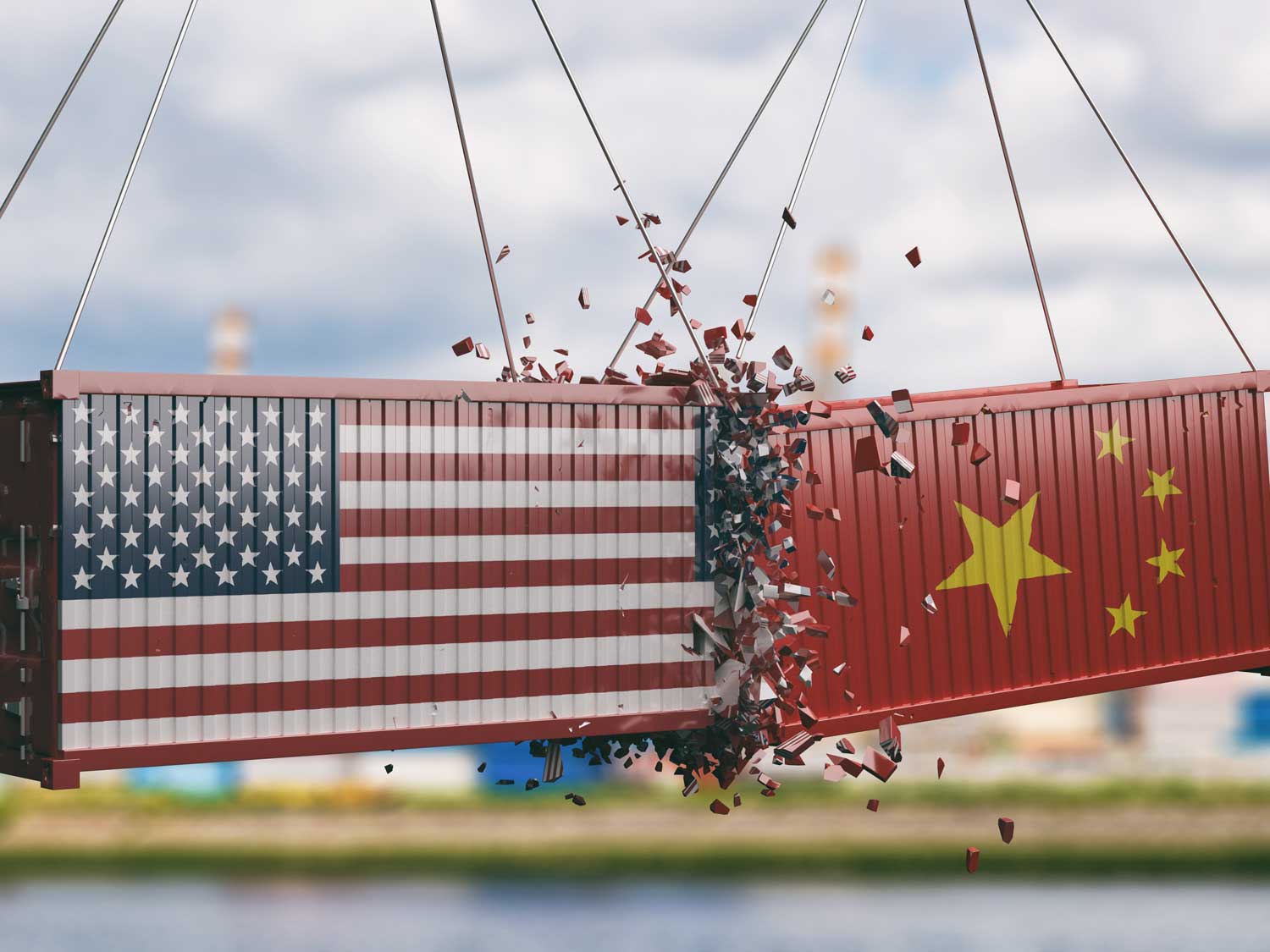
Additionally, as of today, 9th April, a second wave of higher “reciprocal” tariffs has been implemented, targeting specific countries with rates ranging from 11% to 50%, based on perceived trade imbalances and barriers. Notably, China which now faces a tariff rate of 104% on its exports to the US, combining previous and new duties.

The UK, Australia, Indonesia, Singapore, Vietnam, and Taiwan have confirmed they will not introduce countermeasures at this stage. Notably, both Vietnam and Taiwan have expressed willingness to negotiate with the US and explore zero-tariff agreements.

In contrast, China responded with retaliatory tariffs of up to 34% on US goods, which has seen President Trump follow through with his threatened escalation of an additional 50% duty on Chinese imports. As a result, US importers now face an unprecedented degree of uncertainty around landed costs.

The European Union has proposed a zero-tariff arrangement on autos and industrial goods, which was rejected by the US. So far, the EU’s potential response appears limited to steel and aluminium, though speculation persists around broader negotiations and potential shifts in trade policy.

This environment puts US importers in a difficult position: ship now and risk overpaying if tariffs are reversed, or delay and risk facing even higher costs if further duties are imposed. Many are opting to pause shipments where possible, disrupting vessel utilisation, bookings, and spot market rates.

Early indicators suggest the impact on global logistics is already being felt. Sea freight container bookings into the US from China have dropped a massive 67% in the past 7 days compared to the week prior, with export bookings also down 40%. If these figures are anywhere near accurate, this marks an extremely large and immediate disruption to trade flows into the US.

If this slowdown continues, significant blank sailings from the carriers are inevitable, and signs of this are already emerging. Yesterday, Ocean Network Express (ONE) announced that the Premier Alliance PN4 Pacific service, scheduled to begin in May, has been suspended until further notice—an early indication of broader cancellations to come.

There are several mechanisms that can be utilised to temporarily avoid duties for exports into the USA including Free/ Foreign Trade Zones, customs regimes, bonded facilities, temporary import bonds (TIB’s), carnets and more. There are options to carry on shipping goods to USA and not clear them until it is absolutely clear whether commodity tariff rates will be reduced or withdrawn as, or if, deals are agreed between countries.

From an objective standpoint, it remains unclear what concessions the US is seeking in exchange for easing these tariffs, particularly since the justification of “tariffs imposed on the US” lacks clarity in many cases.

For shippers and carriers the coming days and weeks will require vigilance and adaptability. The tariff landscape may shift dramatically and without warning, both upward and downward.

We continue to monitor developments closely and will issue further updates as more information becomes available, particularly concerning potential EU countermeasures and UK trade policy responses.

If you would like to review your specific supply chain impact, assess your exposure, or explore strategic alternatives, please don’t hesitate to get in touch. Metro is well-positioned to support you, bolstered by our expanded US presence and strong focus on North American trade flows.

Expect further insights in the coming days as the situation unfolds and if you have any questions please give me a call, or drop a message, and we will ensure that you receive immediate attention and advice.


metro people4

Total Logistics Care – A Commitment, Not a Concept

At Metro, our commitment to customer experience is at the heart of everything we do. We’re continuously evolving our TLC (Total Logistics Care) programme to ensure that every client benefits from our proactive approach.

Whether that’s through sharing real-time market insights, anticipating global supply chain challenges, or identifying new opportunities to reduce costs and drive efficiency.

To strengthen this, we’ve expanded the number of customer-facing team members, drawing on the deep experience of our people – many of whom have been with Metro for several decades. Their knowledge ensures consistency and a uniquely Metronised approach that is agile, responsive, and never “magnolia.” Our services are built to stand out, and to move as fast as your business does.

Insights, Intelligence and Local Knowledge
We’ve developed a dedicated team of highly trained professionals who stay on top of every development in global trade, logistics platforms, and supply chain dynamics. Their priority is to keep you informed about anything that affects your products and their movement, providing clarity and guidance in an often turbulent market.

Our CRM programme includes eight full-time key account directors and managers who maintain constant contact with every link in your supply chain—both here in the UK and across your and our global network. We’ve recently expanded the TLC programme in India and are now building our presence in the US through active recruitment and investment, ensuring we stay ahead of changing market dynamics in North America and other major trading regions that are relevant to your own global growth aspirations.

Supporting our client relationships is a specialist team dedicated to tailored logistics solutions. These supply chain engineers work closely with all stakeholders to create transparent, compliant, and bespoke platforms—designed to meet specific business needs and deliver measurable results. Their expertise spans the industries we operate in, from retail and automotive to manufacturing and food, having directly worked within each of the sectors providing a balanced understanding of your needs and expectations.

Metro designs services with purpose—whether by air, sea, road, rail, or any combination. We ensure that every customer interaction is meaningful and every solution is aligned to individual business goals.

Technology, Sustainability, and the Bigger Picture
Customer engagement and continuous improvement have always been cornerstones of our ethos.

In today’s volatile environment, our 20+ strong UK customer team, supported by over 4,000 colleagues globally, remains laser-focused on delivering service excellence.

From environmental initiatives and customs health checks (offered at no cost to established clients), to cutting-edge digital solutions, we’re driving transformation across every aspect of freight.

If you’d like to share feedback, or explore how we can further enhance your customer experience, I’d welcome the opportunity to speak with you directly.

Grant Liddell
Chief Executive Officer, Metro

Aerospace 1440x1080 1

JOSCAR Accreditation: A Milestone for Excellence

Metro has been awarded JOSCAR accreditation, a key industry benchmark that demonstrates our commitment to continuously meeting the rigorous standards required by key sectors, including aerospace, defence, and security.

JOSCAR (the Joint Supply Chain Accreditation Register) is a highly respected, collaborative accreditation system used by major players across aerospace, defence, and security. It validates suppliers against a comprehensive set of criteria — from operational capability and supply chain risk, to ethical practices and regulatory compliance.

Achieving JOSCAR accreditation involved a rigorous evaluation of our internal systems and processes to ensure alignment with JOSCAR’s stringent requirements. Our dedicated compliance team worked tirelessly to implement necessary changes and enhancements.

For our customers, this accreditation isn’t just a badge — it’s proof of our readiness, reliability, and resilience in complex, high-compliance supply chains.

What This Means for You

By achieving this accreditation, we’ve:

  • Reduced procurement friction for customers who rely on JOSCAR to streamline supplier selection
  • Demonstrated our operational transparency and readiness to support sensitive and high-risk projects
  • Reinforced our commitment to continuous improvement, in line with our ISO 9001 and ISO 14001 accreditations

In practical terms, this means that existing and future clients can onboard us faster to work on projects, with full confidence that we meet the industry’s highest standards.

Continual Investment in Excellence

JOSCAR is one of several initiatives we’ve undertaken to align our systems, people, and culture with the expectations of the sectors we serve. Whether you’re managing a global defence project, a secure aerospace supply chain, or a high-compliance logistics program, we’re positioned to support you with the professionalism and precision you require.

If you’d like to learn more about what our JOSCAR accreditation means for your business or supply chain, EMAIL Laurence Burford.

Bridge on ship

Sea Freight Market Review

The global ocean freight market is undergoing a period of transition in 2025, influenced by regulatory changes, shifting trade patterns, and evolving carrier alliances. While demand remains strong in key regions, rate volatility persists due to supply chain disruptions and excess capacity.

The ocean freight sector is experiencing considerable adjustments as carriers adapt to regulatory and economic shifts. The EU ETS expansion now covers 70% of maritime emissions, leading to higher surcharges and operational costs for carriers.

Supply/Demand
Capacity growth is projected to slow to 5% in 2025 after record vessel deliveries in 2024. However, supply chain disruptions persist due to global port congestion and ongoing Red Sea diversions are soaking up excess capacity.

The restructuring of major shipping alliances is further shaping the industry landscape, with the dissolution of 2M, the formation of the Premier Alliance by THE Alliance, and the launch of Gemini Cooperation in February 2025.

Proforma scheduled liner capacity on the Asia-North Europe trade is set to be reduced by around 11% once the transition to the new shipping alliance set-up is complete. The combined weekly capacity drop of some 28,000 TEU equates to a total reduction of 221,000 TEU across all services. However, the number of individual weekly sailings between Asia and North Europe is expected to increase from 26 (under the previous alliances and standalone services) to 28, potentially improving frequency and flexibility for shippers.

Global port congestion remains a pressing issue, particularly in China and vessel utilisation remains high, with only 0.2% of the global liner fleet currently idle. The industry is also witnessing an increase in blank sailings, with 47 announced through mid-April, affecting Transpacific and Asia-Europe trade routes. The Transpacific market, in particular, is experiencing notable disruptions, with 43% of blank sailings concentrated in this corridor.

Expectations that Red Sea diversions would ease, returning an estimated 2 million TEU to global circulation, were dampened over the weekend following missile exchanges between the US and Yemen’s Houthi rebels. MSC CEO Soren Toft stated, “Suez simply isn’t safe to transit at the moment, and there’s no immediate prospect of a return.” This continued instability may prolong disruptions and return pressure on rates.

Market
Meanwhile, the Shanghai Containerised Freight Index (SCFI) has dropped 17% since January and despite strong cargo demand in select regions, the market remains vulnerable to downward pricing pressures.

Demand remains resilient but uneven, with North America and India seeing stronger performance, whereas Europe’s slower economic growth is weighing on export activity. Chinese exports have exceeded expectations, driven in part by early shipments ahead of potential tariff adjustments.

The Drewry World Container Index (WCI) has reached its lowest level since January 2024 and while rates are below their pandemic-era peaks they are still 79% higher than pre-pandemic averages from 2019.

At Metro, our fixed-rate agreements on popular shipping routes provide a practical safeguard against rate volatility, offering predictable costs for effective budgeting. Whether you’re managing high-volume trade lanes or seeking greater stability for your supply chain, our tailored solutions can help you thrive in 2025.

To discover how Metro can strengthen your business and provide peace of mind, EMAIL our Managing Director, Andy Smith, today.