

strike-signs

Port Labour Disputes Ease as Carriers Adjust Capacity

North European ports are recovering from a turbulent October marked by strikes, slowdowns, and strategic capacity withdrawals that continue to test vessel schedule reliability across major trade lanes.

In Rotterdam, port operations normalised following the end of a strike on 17 October, after lashers accepted a new contract providing a 20% wage increase over three years. The settlement allowed the port to clear a backlog of around 30 container vessels, restoring regular quay operations and inland connections.

In Antwerp, however, tensions remain unresolved. Harbour pilots suspended strike action after a ten-day protest over proposed pension reforms, but are now operating under “maximum rest” conditions, a form of weaponised compliance that has slowed vessel movements and cargo flows. The Flemish government has granted a temporary reprieve while talks continue, but a full agreement must be reached by the end of November to avoid renewed disruption. The lingering uncertainty adds pressure to already stretched supply chains reliant on North European gateways.

Vessel Schedule Reliability Plateaus

According to Sea-Intelligence data, global schedule reliability has plateaued at around 65%, well below pre-pandemic norms but relatively stable compared with mid-year levels.

The improvement seen through early 2025 appears to have levelled off, as labour disputes and weather-related delays offset gains from improved fleet deployment. Carriers within alliances are maintaining higher consistency, yet reliability remains uneven across regions, with Northern Europe continuing to feel the impact of port congestion and labour constraints.

Blank Sailings Maintain Market Discipline

The U.S.–China trade truce at the end of October brought a degree of calm to ocean freight markets, but carriers are continuing to manage supply through selective blank sailings.

Between weeks 46 and 50 (10 November–14 December), approximately 7% of scheduled sailings (52 out of 721) have been withdrawn, primarily on transpacific eastbound (48%), Asia–Europe/Med (35%), and transatlantic westbound (17%) routes.

Despite these adjustments, 93% of departures are expected to proceed as planned, with the GEMINI Cooperation achieving full schedule reliability (100%) and MSC close behind at 95%. The Ocean Alliance, Premier Alliance, and independent carriers are operating between 89–91%.

Container rates edged up in early November following 1 November GRIs, with Drewry’s World Container Index reporting an 8% week-on-week rise, led by Asia–Europe and transpacific routes. With fewer cancellations and around 7% more capacity month-on-month, December is expected to see marginally higher space availability but continued volatility.

For shippers, the months ahead will demand agility and foresight, from early bookings to flexible scheduling, as carriers balance capacity discipline against weakening demand in the slack season.

We work closely with our network and carrier partners to keep cargo flowing through strikes, slowdowns and blank sailings. From time-critical moves to planned flows, our sea freight team secures the space and schedules your supply chain needs, on time and on budget.

EMAIL Andrew Smith, Managing Director, to explore how we can protect your ocean supply chains and help insulate you from market volatility.
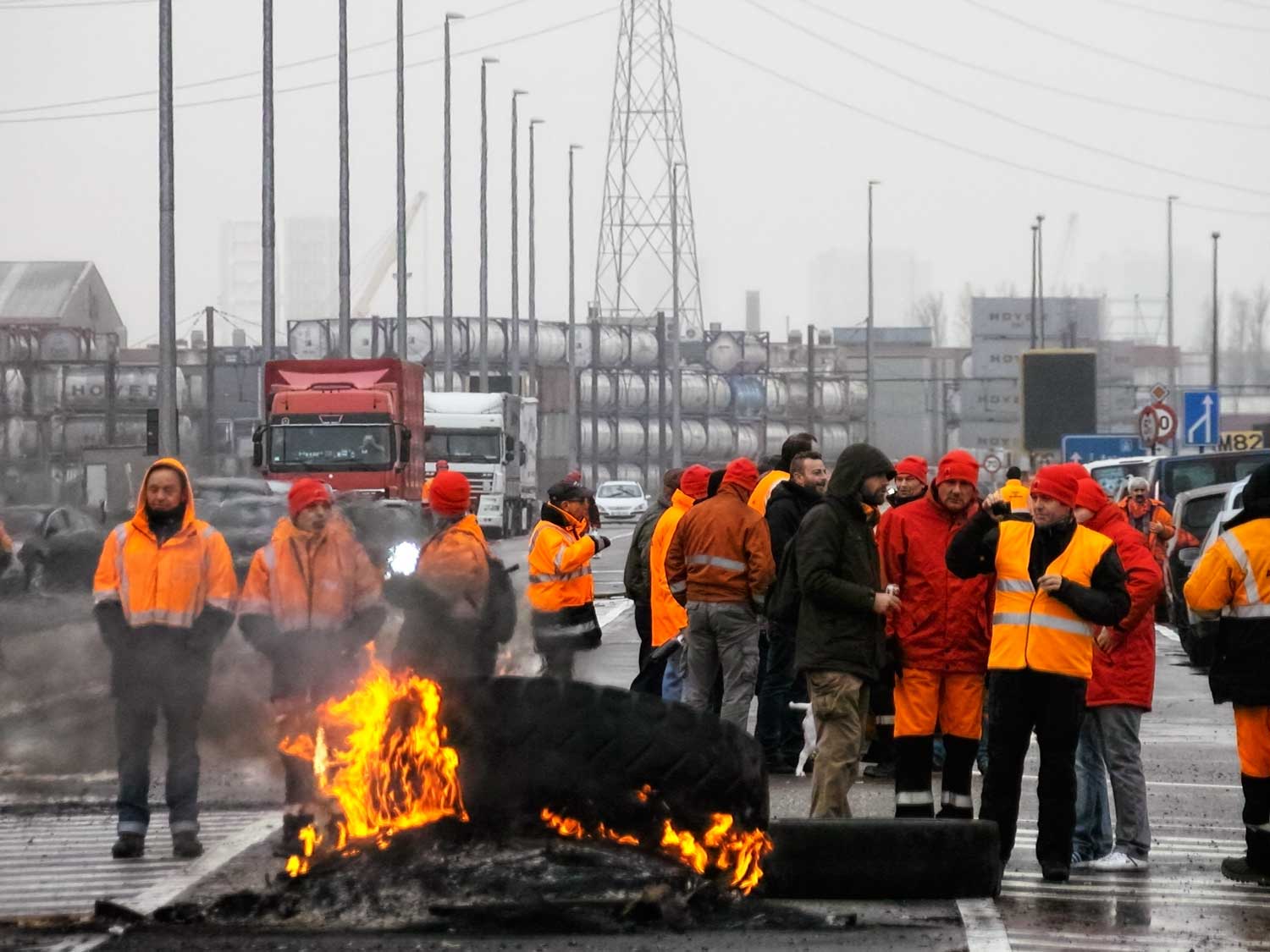

Rotterdam Strike Suspended as Europe’s Port Disputes Worsen

Rotterdam Strike Suspended as Europe’s Port Disputes Worsen

Europe’s container ports may see a short reprieve following a court-mediated agreement to pause a major strike at the Port of Rotterdam, but broader port disruption continues to threaten sea  freight flows across the continent.

Hundreds of lashers at Europe’s busiest container terminal suspended their walkout for five days on Monday 13 October to Friday 17 October, under terms agreed after legal intervention and fresh negotiations between unions and employer associations. The temporary halt offers a breathing space for business operators and shippers facing backlog pressure.

The strike, which began last Wednesday, had brought loading and unloading at all Rotterdam container berths to a standstill, accumulating a significant queue of vessels anchored offshore. The lashers, who are responsible for securing containers on ships, had demanded a pay increase and better conditions, asserting that the port could not function without their services.

Under last Saturday’s court ruling, unions and employers pledged to resume talks on Sunday morning. The agreement allows the walkout to pause while negotiations continue, but warns that striking may resume if no deal materialises by Friday morning.

Wider Toll on European Ports

Rotterdam’s crisis is hardly isolated. Industrial unrest has swelled across Northern Europe, compounding congestion that was already mounting due to vessel re-deployments, yard overcapacity, and adverse weather.

At the Port of Antwerp-Bruges, harbour pilots have initiated work-to-rule protests over proposed pension reforms. Their action has aggravated scheduling delays and snarled traffic entering and leaving the Belgian ports. Antwerp authorities reported dozens of vessels without confirmed berths. With Antwerp already facing backlog pressure, it has limited ability to absorb overflow from Rotterdam.

The strikes and bottlenecks they are creating have triggered ripple effects through Europe’s logistics networks, with delayed container loading, longer turnaround times, and route reassignments.

The Outlook

The five-day pause in Rotterdam will help clear some of the backlog, but if wage talks fail, strikes could quickly resume, deepening disruption across Europe’s ports. However, shippers remain exposed to bottlenecks, rising costs, and delivery uncertainty as supply chains strain under the pressure. Antwerp’s limited spare capacity offers little relief, and other ports may struggle to absorb diverted traffic amid already congested terminals.

At the heart of the dispute lie wage and labour tensions, with lashers demanding a 7% pay rise plus inflation adjustment, a cost many operators claim the industry can not afford in a tightening logistics labour market, raising the spectre of prolonged labour disputes.

Metro’s sea freight team are monitoring the evolving situation and working closely with customs, ports, and European logistics colleagues to minimise disruption and keep customers’ supply chains moving.

EMAIL Andrew Smith, Managing Director, today.

Labour disputes at European ports disrupt container shipping

Labour disputes at European ports disrupt container shipping

Trade union action across major European ports, particularly in Rotterdam and France, are causing significant disruptions to container shipping, exacerbating existing supply chain challenges.

Strikes at Rotterdam’s Delta II terminal and ongoing industrial action at French ports have created congestion, delays, and logistical bottlenecks, prompting carriers to reroute vessels and seek alternative solutions.

Rotterdam turmoil and ripple effects
Contract negotiations that began in November have stalled, while the FNV Havens and CNV unions have been locked in dispute with employers since the second half of last year over port automation concerns. Dockworkers have been staging intermittent strikes that have severely impacted deep-sea vessel operations, feeder ship schedules, and inland-bound cargo movements. The situation has escalated with calls for solidarity action across Europe, urging other ports not to handle diverted vessels. While no widespread solidarity strikes have been reported, shipping lines remain on high alert, monitoring developments and adjusting vessel rotations as necessary.

Congestion at Rotterdam has intensified due to a combination of adverse weather, holiday-related backlogs, and surging cargo volumes from Asia. As a result, vessels are facing extended waiting times, with some opting to bypass the port altogether. The container yard capacity is nearing full utilisation, and precautionary measures, such as limiting empty container acceptance, have been implemented to manage the strain.

French port strikes deepen crisis
Meanwhile, industrial action at French ports is compounding the disruption. Dockworkers are protesting against pension reforms, with frequent work stoppages and a series of strikes planned throughout March. These actions have significantly impacted cargo handling operations at key ports, including Le Havre and Marseille-Fos, leading to increased transport costs and supply chain strain for businesses dependent on timely shipments.

The business community has voiced concerns over the economic fallout, citing rising supply chain costs, shipment delays, and a decline in sales due to the port closures. Calls for government intervention and a coordinated public-private response have been made in an effort to mitigate the impact and prevent further damage to trade and industry.

Wider European impact
As Rotterdam and French ports struggle with ongoing disruptions, other European hubs, such as Antwerp-Bruges, are facing additional pressure. With cargo diversions increasing, terminal congestion at Antwerp has reached critical levels, forcing operators to implement emergency measures. 

Import deliveries are being prioritised over exports, and yard space constraints are leading to restrictions on transshipment volumes. Barge and feeder operations are experiencing significant delays, further straining inland logistics networks.

With no immediate resolution in sight for either the Rotterdam or French port disputes, container carriers are bracing for continued volatility.

With escalating labour disputes at key European ports, including Rotterdam and France, container shipping is facing increasing delays, congestion, and logistical challenges. At Metro, we have contingency plans in place to bypass affected ports, leveraging alternative routes and entry points to keep your cargo moving.

To minimise disruptions, we encourage you to share your shipping forecasts as early as possible so we can proactively mitigate potential issues.

For tailored solutions and expert guidance on protecting your supply chain, 

EMAIL Andrew Smith, Managing Director, today.

Seven supply chain shocks in seven weeks

Seven supply chain shocks in seven weeks

Just seven weeks into 2025, global supply chains have already faced a whirlwind of challenges.

From industrial action to trade barriers and shifting alliances, businesses must stay agile to navigate ongoing disruptions. Here are seven of the most impactful developments so far this year.

1. US east coast port strike averted (8th January)
A major disruption was narrowly avoided as the International Longshoremen’s Association (ILA) and United States Maritime Alliance (USMX) reached a tentative six-year agreement. The deal, approved on 7 February, prevented a strike that could have crippled US east coast ports for months. A final vote on 25 February will confirm its ratification.

2. Uncertainty over Suez Canal return (19th January)
Despite a fragile ceasefire in Gaza, container ships will not be returning to the Red Sea anytime soon. Carriers remain cautious, fearing renewed instability and prioritising the established Cape of Good Hope diversions. Even if ships do resume transit, severe disruption is expected, with schedules taking up to two months to stabilise.

3. Trump’s trade policies spark concerns (20th January)
Following his inauguration, President Trump swiftly reignited trade tensions, threatening tariffs on Colombia, China, Canada, and Mexico. Proposals include a 25% levy on steel and aluminium from Canada and Mexico, with reciprocal tariffs also being considered for UK imports. The potential trade war could have widespread consequences for global supply chains.

4. US air cargo demand under threat (1st February)
Trump’s decision to impose a 10% tariff on all Chinese imports and temporarily suspend the de minimis exemption for low-value Chinese shipments has sent shockwaves through the air freight sector. While the exemption was reinstated, changes to eCommerce regulations could significantly disrupt air cargo flows into the US, which is expected to receive 1.4 billion eCommerce packages this year.

5. New Asia shipping alliances reshape trade (2nd February)
The long-anticipated shift from three major container alliances (Ocean, THEA, 2M) to four key players (Ocean, Premier, Gemini, MSC) is now in effect. Asia-North Europe scheduled liner capacity will shrink by 11%, yet the number of weekly sailings will increase from 26 to 28. These changes will reshape global shipping networks for years to come.

6. European road freight rates stabilising (4th February)
After three years of decline, European road freight spot rates may have hit their lowest point. According to the European Road Freight Rate Benchmark, spot rates fell just 1% year-on-year in Q4 2024. While demand remains weak, cost pressures have kept rates 15% above pre-pandemic levels, with short-term volatility expected.

7. Carriers cut sailings to stabilise rates (14th February)
Shipping lines are aggressively blanking sailings to ease the transition to new alliance schedules and sustain freight rates. Between 17 February and 23 March, 51 sailings have been cancelled across key east-west trade routes, with February’s cancellations rising to 133 from 104 in January. Further capacity withdrawals and a general rate increase (GRI) could follow if demand fails to recover.

With trade disputes, shipping realignments, and geopolitical instability shaping global supply chains, the first quarter of 2025 has already presented significant challenges.

Staying ahead requires proactive strategy adjustments to mitigate risks and build resilience. That’s why we share these insights and why your Metro account management team is always by your side, ready to provide expert advice, share knowledge, and develop bespoke solutions tailored to your supply chain needs.

For high-level support, EMAIL Andrew Smith, Managing Director.