Blanking is biting

Blanked Sailings Amid Geopolitical Shifts

Global sea freight is navigating a complex landscape marked by geopolitical tensions, fluctuating demand, and strategic capacity adjustments and while a temporary US-China tariff truce offers a glimmer of hope, challenges persist across major trade lanes.

In response to weakening demand, particularly on transpacific routes, ocean carriers have taken aggressive steps to manage overcapacity. Year-on-year capacity reductions of around 4% to 5% have been recorded on Asia-North America trades for April and May. The Asia to US East Coast route has been especially impacted, with reports suggesting shippers face as much as a 40% cut in weekly slot availability due to a sharp rise in blanked sailings. Some weeks have seen up to 10 scheduled services withdrawn.

The trend of blank sailings is not uniform across all alliances. Major players have taken divergent approaches, with some choosing to maintain network stability while others have opted for deep cuts to protect rate levels. MSC, the world’s largest shipping line, has launched a sweeping revamp of its east-west network, consolidating services and shifting vessels between routes in an effort to optimise capacity and mitigate the financial impacts of underutilised sailings.

The effect of these service cancellations has been most visible in spot rate volatility. Container spot rates between Asia and Europe have been pressured as additional capacity and lower-than-expected booking levels weigh on prices. In contrast, rates from Asia to the US, particularly the US West Coast, have remained relatively firm due to tighter supply caused by blank sailings and ongoing retailer inventory replenishments.

The scale of blanked sailings is contributing to a growing sense of uncertainty in booking reliability. With last-minute sailing cancellations and frequent schedule changes becoming increasingly common, an emerging trend has been to split bookings across multiple carriers to hedge against cancellations.

US-China Tariff Truce: A Temporary Respite
Amid this volatile environment, the recent US-China agreement to temporarily reduce tariffs for 90 days from May 14 offers some hope. The US has lowered tariffs on Chinese goods from 145% to 30%, while China has eased tariffs on US imports from 125% to 10%.

The impact of the tariff pause has yet to fully filter through to shipping demand. However, many in the industry hope it could reignite volumes, especially in the transpacific trade, which has been hardest hit by tariff-driven disruptions and reduced consumer demand. The long-term benefits depend on whether this truce leads to a broader and more lasting trade agreement.

Looking Ahead: A Market in Flux
Even with the tariff reprieve, the global sea freight market faces lingering challenges. The combination of excessive vessel deliveries into a market of uncertain demand is expected to maintain downward pressure on rates in the months ahead. Ocean carriers are likely to continue balancing network adjustments, including further blank sailings and service restructures, to keep load factors at sustainable levels.

Some industry observers note that capacity cascading is already underway, with surplus vessels being redeployed to secondary trades such as Asia-Europe or intra-Asia, although these markets cannot fully absorb the overflow from the transpacific.

The situation remains fluid, with geopolitical risks, shifting consumer spending patterns, and global economic uncertainty all contributing to ongoing volatility. While the short-term outlook is mixed, we remain focused on managing risk and seeking stability in what continues to be a highly dynamic and unpredictable market.

The global sea freight market continues to adjust to shifting demand and capacity changes. With significant change underway, now is the ideal time to review your ocean freight strategy to ensure continuity and flexibility. EMAIL Andy Smith, Managing Director, to discuss how we can support your business with tailored solutions that keep your supply chain resilient and competitive.

India Pakistan map 1440x1080 1

India and Pakistan Impose Cargo Bans

The fragile balance of South Asia’s supply chain network has been thrown into disarray after India and Pakistan imposed tit-for-tat bans on each other’s cargo.

The diplomatic standoff, triggered by recent violence in Kashmir and subsequent military exchanges, has sent shockwaves through ocean freight and air cargo networks, with the full extent of disruption still unfolding.

The restrictions have led to widespread delays and rerouting of vessels. India’s decision to prohibit ships carrying Pakistani cargo from docking at its ports has forced carriers to divert to transhipment hubs such as Colombo, creating congestion and adding time and cost.

Pakistan’s blanket ban on Indian goods in response has only compounded the uncertainty. Vessels already en route have been left scrambling for alternative discharge options, while planned schedules are being hastily redrawn.

Space shortages are emerging on regional sailings as shipping lines juggle altered rotations. Delays have rippled into feeder services and inland supply chains, resulting in longer transit times and missed delivery windows. Importers with urgent supply chain needs, such as fast fashion and electronics, face particular challenges as they attempt to secure scarce space at short notice.

The congestion has already pushed freight rates higher, with emergency surcharges now being levied on Pakistan-bound cargo by some carriers. We expect other shipping lines to follow suit as the cost of rerouting and delays continues to mount. Rates out of India, which had been steadily rising in the weeks prior to the crisis, are now expected to surge further.

The disruption has also spilled into the air cargo sector. Major airlines have started diverting flights to avoid Pakistan’s airspace, leading to longer flight times, higher fuel costs, and mounting pressure on capacity across Asia-Europe and Asia-US routes.

While two-way trade between India and Pakistan is relatively small, the standoff has had far wider implications. Third-country shipments caught between the two jurisdictions have been caught up in the diplomatic crossfire, with containers stranded or forced to take circuitous routes at significant extra cost.

With no immediate diplomatic solution in sight, supply chain stakeholders are preparing for ongoing uncertainty. Carriers are assessing whether to restructure service loops or add additional calls to alternative ports such as Jebel Ali to minimise customer disruption. However, the fallout comes on top of existing challenges, including ongoing Red Sea-related delays and persistent global port congestion.

The bans underline how geopolitical flashpoints can rapidly cascade into global supply chain instability. For cargo owners and logistics providers, the India-Pakistan crisis is a stark reminder of the need for flexible routing strategies and contingency planning in an era of growing geopolitical risk.

Geopolitical tensions and unexpected port bans can severely disrupt supply chains, as the India-Pakistan cargo restrictions have shown. In these uncertain times, it is critical for cargo owners to ensure that their marine insurance policies are robust and offer continuity of cover under all circumstances. We strongly advise all shippers to review the fine print and clauses of their insurance to avoid costly gaps in protection.

At Metro, we can help you safeguard your supply chain and navigate today’s complex global shipping environment with confidence. EMAIL Andy Smith, Managing Director, to discuss how we can support your business with risk management strategies, secure freight solutions, and expert guidance on marine insurance best practices.

ship aerial 1440x1080 1

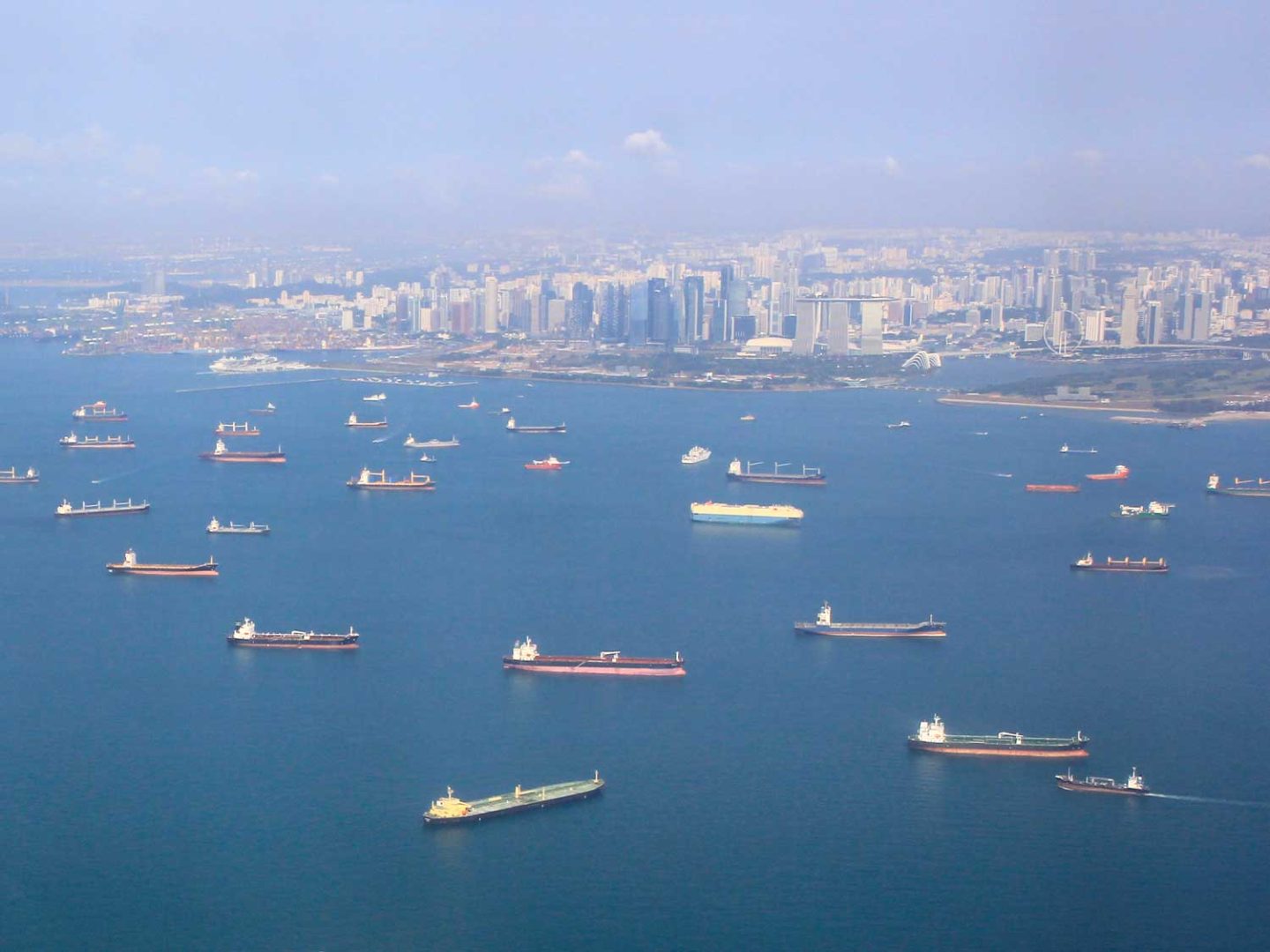
Uncertain Waters: Securing Ocean Freight Rates

While there’s talk in the market about further pressure on rates, the reality is more complex, with container spot rate indices showing mixed signals last week, suggesting that any softening on key east-west routes might not last.

The global supply chain remains unpredictable, and several factors are still keeping the container market tight, which means any short-term dip in rates could quickly reverse, making it risky to assume that prices will continue to ease.

Carriers Act to Support Rates
Shipping lines are actively removing capacity from major east-west trades to reduce supply and put upward pressure on pricing. According to Drewry’s, 68 sailings across the Pacific, Asia-Europe, and Transatlantic trades have been blanked between this week and the end of April, while Sea-Intelligence data reports 47 blank sailings in the same period.

While methods of tracking blank sailings may vary, particularly as the major alliances transition between old and new service structures, the trend is clear; carriers are taking deliberate action to support General Rate Increases (GRIs) and stabilise the market in their favour.

Charter Market Dynamics Are Holding Rates Firm
While spot pricing may hint at a softer market, the time-charter sector continues to show strength. Many non-operating shipowners are keeping older, fully paid vessels in service, since they remain profitable even at lower margins.

This keeps theoretical capacity high but delays any significant correction in long-term charter rates, providing a buffer of rate stability for carriers. Basically the return is greater to ship owners to work the aging vessels in the current market than to scrap them. However once the charter rates diminish as freight rates are not at sustainable levels to support higher charter rates then scrapping vessels becomes more profitable and the supply of capacity will be eroded.

This willingness to keep tonnage in play – rather than scrap it – creates a layer of structural overcapacity. But crucially, it also delays any meaningful correction in longer-term charter costs, which in turn supports rate stability for shipping lines.

Shippers on the Asia-Europe trade lane should be particularly alert. With the traditional peak season approaching and transit times still extended due to Red Sea routing changes, demand could pick up sooner than expected, just as it did in 2024, when European importers advanced bookings to avoid delays.

Utilisation remains relatively high, and the market is only one or two strong booking weeks away from tightening significantly. Once that happens, space could quickly become constrained and prices may respond accordingly.

Congestion, Reliability and GRIs
At the same time, much of the market’s theoretical capacity isn’t actually accessible. Port congestion continues across Europe, including Antwerp, Hamburg, Rotterdam, and Le Havre, with yard occupancy levels of 75–90%, disrupting container flows and delaying vessel turnarounds.

Conditions are similar in Asia. Shanghai is experiencing delays due to fog and vessel bunching, while Singapore and Port Klang are seeing large backlogs and productivity slowdowns. Globally, schedule reliability remains under 55%, and with new carrier alliances still in rollout mode until July, disruption is likely to persist.

This operational friction reduces effective supply, keeping pressure on rates and creating risk for those waiting to move goods last-minute.

The container shipping lines have begun applying General Rate Increases (GRIs) and surcharges in recent weeks to stabilise rate levels in key corridors. While results may vary, these moves signal a clear intent to maintain pricing discipline, particularly as demand indicators begin to shift.

In an environment where schedule reliability is poor, congestion is high, and demand could rebound with little notice, waiting for rate relief may come with unintended consequences.

Certainty Beats Volatility
Shippers looking to avoid surprises would be well advised to fix rates where possible—because securing capacity and cost visibility offers valuable protection in a market that remains anything but predictable.

Freight markets can shift quickly, and when they do, the cost of waiting may outweigh any potential benefit. Fixing rates now delivers stability, security, and peace of mind in today’s volatile environment.

Our fixed-rate agreements act as a practical safeguard against market swings, offering predictable costs to support confident budgeting and planning.

Whether you’re managing high-volume trade lanes or simply seeking greater control over your supply chain, we’re here to help you stay ahead in 2025.

EMAIL our Managing Director, Andy Smith, to learn how we can support your business today.

LAX 1440x1080 1

Air Freight Market Review

The global air freight market in February and early March reflected moderate year-on-year (YoY) growth, with total worldwide tonnages up 5% in February and 2% higher YoY in early March.

However, market dynamics remain volatile, influenced by shifting trade policies, geopolitical factors, and eCommerce trends.

Asia-Europe air cargo showed strong demand recovery in March, with tonnages rising 4% week-on-week (WoW) and while average spot rates softened they remain 20% higher YoY. Meanwhile, transatlantic routes saw weaker demand from Europe, with London Heathrow and Frankfurt spot rates declining amid softer outbound trade.

Market Situation
Global air cargo tonnages rose 5% YoY in February, supported by an 8% surge from Asia Pacific and a 4% rise in North America and Europe. However, Middle East & South Asia (MESA) volumes declined by 6%, reflecting last year’s Red Sea-driven demand spike.

By early March (Week 10), Asia-Europe trade saw significant WoW volume gains:

  • China to Europe tonnages increased by 5%
  • Hong Kong to Europe volumes grew by 6%
  • Japan & Taiwan to Europe rose by 7%
  • Thailand & Singapore to Europe surged by 9%

Despite these volume increases, average spot price indices on Asia-Europe lanes declined by 3%. However, YoY spot rates remain significantly higher (+20%), supported by China (+14%), Hong Kong (+22%), Japan (+19%), and Thailand (+38%).

Global air cargo markets remained relatively stable through February and early March, with weekly demand fluctuations balancing out across key regions.

  • Asia-Europe: Despite a 4% WoW tonnage rebound in Week 10, rates dipped as supply-demand balances shifted.
  • Transatlantic (Europe to USA): Weaker outbound demand put spot rates under pressure at London Heathrow and Frankfurt.
  • Middle East to Europe: Demand weakened with Dubai-to-Europe tonnages falling 15% WoW.

Global air freight rates remained 6% higher YoY, though Asia-Europe pricing showed a mixed trend, with falls on all the major trade lanes, though rates remain significantly higher than last year.

  • Asia-Europe remains 20% higher YoY.
  • China to Europe still stands 14% higher YoY.
  • Hong Kong to Europe are up 22% YoY.

The Asia-Europe air cargo market rebounded in early March, with tonnage gains but slightly softer rates as market conditions adjusted. Meanwhile, transatlantic routes saw demand weakness, leading to rate declines from major European hubs. Moving forward, trade policies, geopolitical shifts, and capacity adjustments will continue to influence global air cargo pricing and volumes.

In a volatile air cargo market, securing capacity and competitive rates is critical. Metro’s air freight, charter, and sea/air solutions ensure your shipments move efficiently, even on the busiest trade lanes. With block space agreements (BSA) and capacity purchase agreements (CPA) in place, we guarantee space and stable pricing when you need it most.

Whether you’re shipping urgent, high-value, or sensitive cargo, our global expertise and strategic carrier partnerships keep your supply chain running on time and within budget.

EMAIL Elliot Carlile, Operations Director, today to explore how Metro’s air freight solutions can optimise your logistics.