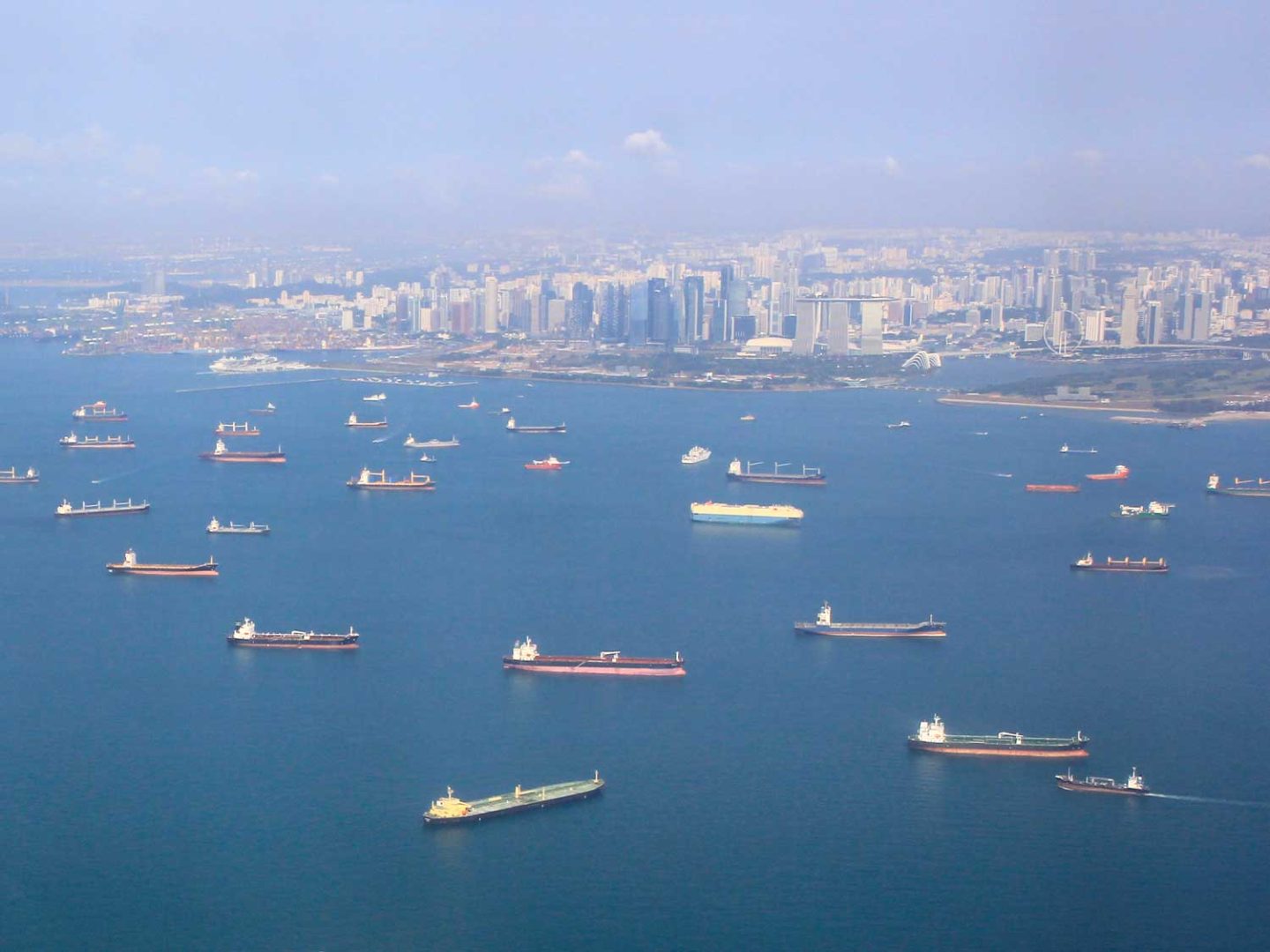
Singapore boats at anchor 1440x1080 1

Challenges in ocean freight: Capacity, congestion, and resilience

The ongoing disruption in the Red Sea and Gulf of Aden, which started with the hijacking of a vessel nearly ten months ago, has led to a substantial reduction in available container vessel capacity, driving up freight rates, intensifying port congestion, and exacerbating equipment shortages.

The impact of this crisis, second only to the pandemic, has caused widespread disruptions, with global ocean freight continuing to grapple with significant challenges.

Blanked sailings
To counter the drop in demand and falling container spot rates, ocean carriers are implementing a high number of blanked sailings, particularly ahead of China’s Golden Week holiday. The cancellation rate for scheduled sailings in September is currently 10% across major trade routes, with the transpacific accounting for 51%, Asia-Europe 28%, and the transatlantic 21%.

Despite the recent softening, freight rates remain significantly higher than last year – +350% on the Asia-North Europe route and +150-180% on Transpacific routes. Events such as the looming threat of port strikes, the introduction of new import tariffs and an early Chinese New Year could keep rates elevated, even in the face of softer demand.

US West coast volume surge
As the peak shipping season approaches, the US West Coast ports of Los Angeles and Long Beach are preparing for a surge in import volumes.
Ocean carriers are deploying 28 additional “extra-loader” vessels to handle the expected influx, driven by strong consumer demand and the diversion of cargo from the US East and Gulf coasts due to potential labour disruptions.

Economic resilience is likely to sustain high import levels through the end of the year, further increasing activity at these key ports.

Ongoing Port congestion
Global port congestion remains challenging with hot spots in Asia and India in particular. The delivery of new container ships and fewer overall blank sailings in recent weeks, along with the Red Sea diversions, are absorbing the added capacity and demand remains high, resulting in vessel bunching and berthing delays at major ports in China, the USA and South America.

The risk of further supply chain disruptions persists, with potential threats from labour strikes and the increasing impact of severe weather events linked to climate change.

Red Sea diversions soak up equipment
Container equipment situation in Asia, and China in particular, remains challenging but is improving with India now becoming the main hotspot.
Ocean carriers and container leasing companies have booked all available container production slots at Chinese manufacturers until mid-October, following record-high deliveries earlier in the year. In the first seven months of 2024 alone, container deliveries increased tenfold compared to the same period in 2023.

The availability of 40ft high-cube containers has tightened significantly, putting additional pressure on carriers and manufacturers to meet delivery schedules amid strong export growth from Asia and ongoing port congestion.

As the industry navigates these complex challenges, the focus remains on managing capacity, stabilising operations, and mitigating the risks posed by economic and environmental factors.

Ongoing demand for ocean freight and challenges in capacity suggest a complex and potentially turbulent peak season ahead.

We recommend talking to us now, if you have high-priority orders and sharing your shipping forecasts, so that we can secure your space, on the services that meet your deadlines, at the best possible rates.
To learn how we can safeguard and enhance your ocean supply chain, please EMAIL our Chief Commercial Officer, Andy Smith. 

Sea Air aerial

Asia westbound market update

Air and sea freight from Asia continues to demonstrate remarkable resilience and growth, fuelled by robust demand, strategic capacity management, and dynamic trade routes, with India recording significant increases, driven by pro-industry government initiatives, eCommerce, and manufacturing growth.

Air Freight
The latest data from the International Air Transport Association (IATA) for June highlights significant demand for airfreight out of Asia, which has continued, potentially extending well into 2025, fuelled by sustained eCommerce demand.

For exports from the Asia-Pacific region, the World ACD index reported a 25% year-on-year increase, with Asia-Pacific to US shipments up by 67%. However, China-US tonnage declined by 8%, with China-Los Angeles experiencing a 23% drop, marking a three-month trend of decline.

Despite the LA drop, airfreight has largely remained impervious to political and economic challenges, with US customs crackdowns on eCommerce deliveries from China not dampening the market.

India’s air cargo market is particularly bullish. Total volumes at Indian airports in Q2 2024 rose by 14% year-on-year, with international flows up 20%. This growth can be partly attributed to a modal shift from widely disrupted ocean services due to the Red Sea crisis, especially for urgent or time-sensitive shipments. 

Sea Freight
As we progress through the traditional container shipping peak season, analysing demand, prices, planned levels of blank sailings and capacity deployment provides valuable insights into carriers’ confidence in the 2024 peak season.

Ex Asia freight rates are anticipated to stay high until the end of the peak season, at least until the Golden Week, while strong increases in outbound demand from India have led to increased rates and equipment shortages.

For the Asia-North America West Coast route, carriers have planned to blank 4% of capacity, similar to pre-pandemic averages and 2020 levels. This is significantly lower than during the pandemic years when blank sailings were forced due to port congestion.

Capacity growth for the same period in 2024 is set to be 25% higher than in 2023, and 10% higher than in 2020, which saw peak capacity deployed in terms of TEUs. This strong capacity growth and relatively low level of blank sailings suggest that carriers are optimistic about the peak season.

On the Asia-North Europe route, the planned blanked capacity is 6% for the next 10 weeks, slightly higher than in 2020 and pre-pandemic averages, but not by much. There is no year-on-year growth in deployed capacity for 2024. However, in 2023, the trade saw a 13% year-on-year capacity growth, which was high compared to historical averages and exceeded the demand levels at that time.

The willingness of carriers to maintain this elevated capacity level in 2024, along with the relatively low number of blank sailings, indicates a strong and confident outlook.

However, with ocean supply chains still under significant pressure, concerns remain about a capacity crunch in the coming months, especially if disruptions such as the ILA East Coast strikes and China tariffs occur. Carriers flor now have opted to keep capacity elevated.

Port Congestion
The latest port congestion data reveals extensive dwell times as the Red Sea crisis continues to impact operations. The top five congested ports globally include Durban with an average 8 day wait time, Ningbo with 6 days, Vancouver with 4 days, Los Angeles with 4 days, and Chittagong which worsens each day.

Over 60% of the South-east Asian ports analysed saw rising congestion over the quarter, while in Europe, 12 of 18 analysed ports reported increases.

Singapore congestion is improving as ships are skipping the port, though Barcelona and Valencia are still congested and there is an ongoing risk of strikes in Hamburg and Bremerhaven.

With ongoing shortages in empty equipment, high vessel utilisation and port congestion, further exacerbated by shippers front-loading to avoid delays, rates are likely to stabilise at high level in the coming months.

The unprecedented demand for ocean freight, combined with ongoing challenges in equipment, capacity, and costs, suggests that the next few months will be complex and potentially turbulent. 

We encourage you to contact us now if you have any urgent or high-priority orders on the horizon. Sharing your shipping forecasts with us will enable us to secure space on the best services to meet your deadlines and at the most competitive rates.

To discover how we can enhance your ocean freight solutions, please EMAIL our Chief Commercial Officer, Andy Smith.

CMA CGM Montmarte

Record volumes raise concerns for peak season

Global demand for ocean freight container shipping has surged to unprecedented levels, surpassing even the peak during the Covid pandemic and comes when available capacity is already strained due to diversions around Africa, leading to concerns that any peak season demand could be calamitous.

Chinese exports reached a record high of 6.2 million TEU in May and while there is hope that early shipments will reduce volumes during the traditional peak season in the third quarter, other factors could keep demand high. 

Nervous shippers are re-stocking and seeking to avoid potential future tariffs on imports from China, which could sustain high demand in the coming months.

Approximately 19% of US shippers and 26% of European customers are advancing their shipping schedules due to fears of supply chain disruptions.

Planned US tariff increases on goods, including electric vehicle-related materials, battery parts, and solar cells, could further elevate freight costs as exporters rush to front-load shipments. The Hong Kong Small and Medium Enterprises Association noted that many manufacturers are struggling with tighter deadlines and increased overtime pay in mainland China, jeopardising profitability.

With importing customers asking for orders to be shipped earlier than usual, Chinese manufacturers are increasingly struggling to meet the shortened schedules necessary for timely festive season deliveries. The average cost of moving a 40ft container between Asia and northern Europe has more than doubled in two months, with a roughly fivefold increase from the same period last year.

Recent spot rate indexes for sea freight have shown the smallest gains in months, with some main east-west routes seeing a pause in growth. The slowdown suggests the market might be reaching an equilibrium of supply and demand. However, it remains unclear whether this is a temporary early peak season or if demand from front-loading shippers will persist, particularly with potential US tariff increases looming.

While Asia-to-Market routes have stabilised, others continue to show week-on-week rises, with the WCI’s Shanghai-Rotterdam leg and XSI’s Asia-Europe component both increasing. Monitoring space availability closely, there are reports that vessel utilisation might be slipping, potentially making bookings easier to acquire. However, rates are expected to remain high throughout the peak season, especially for shipments ex-China.

Equipment shortages
Please be aware that we are seeing more reports from carriers that intra-Asia routes are experiencing equipment shortages, particularly out of China. This is an industry-wide issue that initially affected long-haul shipping but now has extended to intra-Asia routes. The demand for export containers in China means that carriers have to decide whether to prioritise carrying empty containers back to China or carrying laden containers to other destinations.

We are monitoring the station closely, as it could possibly push rates up, potentially cascading into the backhaul trades to Asia and regional trades.

The unprecedented demand for ocean freight and ongoing challenges in capacity and costs suggest a complex and potentially turbulent peak season ahead.

We recommend talking to us now, if you have any urgent or high-priority orders forthcoming and sharing your shipping forecasts, so that we can secure your space, on the services that meet your deadlines, at the best possible rates.

To learn how we can enhance your ocean freight solutions, please EMAIL our Chief Commercial Officer, Andy Smith. 

computer down 1440x1080 1

Global IT outage disrupts supply chains

On Friday, a faulty update to Microsoft software by cyber-security firm Crowdstrike, saw global supply chain operations significantly disrupted, with the fallout expected to take weeks to fully resolve.

Thousands of flights were grounded or delayed at major air freight hubs in Europe, Asia, and North America, creating severe impacts on the complex air supply chains.

Experts warn that planes and cargo are not where they should be, leading to extended recovery times and depending on the scale of the IT failure and current market conditions, these disruptions could take much longer to resolve than the duration of the outage itself.

This situation is further exacerbated by limited airfreight capacity, with global demand increasing by 13% in June compared to 2023, with the surge in demand largely driven by traffic from China to Europe and the US, putting additional strain on already limited available capacity.

While sea port operations were less affected, initial disruptions were reported in several European container terminals, including Poland’s Baltic Hub, Felixstowe and Rotterdam. These ports have since recovered, but the main issues could lie inland with truck and rail services, potentially increasing congestion if containers cannot be moved in or out of the ports efficiently.

Some air cargo operations are gradually returning to normal, with ground handler Swissport and Lufthansa Cargo reporting only minor impacts. However, Schiphol Airport and US airlines such as Delta, United, and American Airlines faced significant disruptions, with hundreds of flights cancelled or delayed, including 700 cancellations by Delta on Monday.

While most airlines have resumed operations, residual delays are anticipated due to the sheer number of disrupted flights.

Supply chain experts are concerned about the long-term effects of the Crowdstrike outage on global deliveries. The Chartered Institute of Export & International Trade warned that the disruption could create further problems in planning and scheduling for importers, exporters, and consumers globally. Time-sensitive air freight is particularly affected, with one thousand flights cancelled worldwide, by mid-morning on Friday.

Although a fix has been deployed by Crowdstrike, the full resolution of the outage issue may take some time, as IT staff may need to access individual machines to remove the faulty update.

The fallout from the outage has once-again highlighted the vulnerability of global supply chains and as the industry works to recover, the importance of robust contingency plans and marine insurance cannot be overstated, ensuring protection against financial risks and maintaining supply chain resilience in the face of unforeseen challenges.

To learn how we can develop and support your supply chain resilience or for more information about our Marine Insurance products, please EMAIL our Chief Commercial Officer, Andy Smith.