Ben Gurion

Air cargo delays and ocean carriers announce Israel war risk surcharge

While sea freight traffic is largely operating without significant issues, the conflict in Israel is impacting airfreight to the country and the surrounding region, with many carriers’ services subject to cancellation and delay.

Many airlines have suspended direct flights to and from Israel, with many international aviation authorities avoiding the region’s airspace, and no bookings on the affected routes.

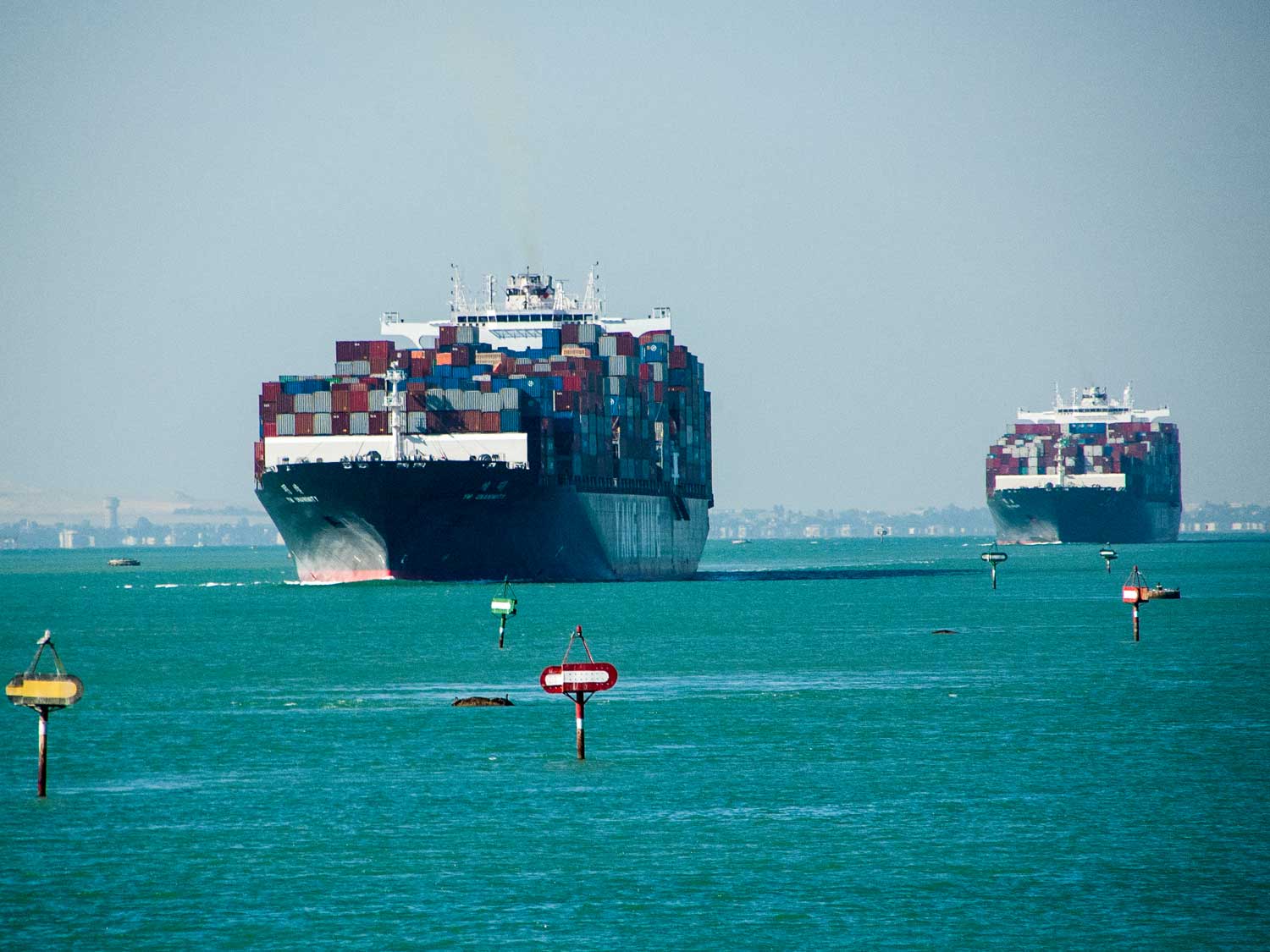
Israel represents a relatively small market for container shipping, and few vessels stop at its primary ports of Ashdod and Haifa, so the threat of disruption to container trade flow through the Mediterranean region remains limited.

Ashdod, one of the country’s largest ports, is continuing to operate normally 24/7, with employees working longer shifts, because the military has recruited 10% and the remaining staff must fill the gap.

While international airlines have temporarily suspended flights to and from Tel Aviv, the airport remains open, with domestic carriers still providing services and alternative cargo options, but these are very limited.

Etihad Airways is currently operating its daily flight schedule to and from Tel Aviv but they are monitoring the situation minute-by-minute. Turkish Airlines services from Istanbul to Tel Aviv appear to be operating normally and some integrators have resumed their flights.

No special measures or guidelines have been handed down to Israeli ports, which remain in contact with shipping companies and for now keep moving cargo and goods through the ports without any significant disruption.

Any expansion of hostilities beyond Israel's borders could introduce risks to the Suez Canal, a critical waterway for container ships, however, the extent of these effects would depend on the conflict's expansion and duration.

We have not seen any rate increases, surcharges or additional fees so far, but there are concerns about possible increased insurance costs, with national Israeli carrier ZIM and other major carriers now announcing a war risk surcharge (WRS) on Israel cargo ranging from US$50-100/teu.

If you have any concerns about the issues raised in this article, we can review your situation and explain your options, including alternative carriers, ports and routes, where appropriate.

Our aim is to consistently provide the most efficient and cost-effective solutions, to ensure that your supply chain remains optimised. EMAIL Andrew Smith, Metro’s Chief Commercial Officer. 

plane climbing

Air freight may have turned a corner

Airfreight rates, as measured on the Baltic Air Freight Indices*, ticked up through September on major Asia-outbound lanes, giving credence to the possibility of a peak season in 2023, with rates ex Hong Kong up 7% and ex Shanghai a whopping 34%.

According to the most recent reading of the BAI*, Hong Kong to Europe and Shanghai to Europe monthly rates rose 7% and 34% month on month (mom), though these increases follow what have been consistently low rates all year.

*The Baltic Air Freight Indices (BAI) reflect weekly transactional rates for general cargo and includes a headline index - the BAI Index - which is a weighted average of 17 underlying destination basket routes, as well as six outbound indices. 

The leading driver is the continuing rise of eCommerce business out of southern China, which was reflected in the index for outbound Hong Kong routes, which is still the biggest by volume in global air cargo - and despite the 7.3% rise over the month, year on year (yoy) it is down -32.3%. 

TransAtlantic rates were relatively flat, while rates from, Hong Kong to North America and Shanghai to North America increased 8% and 11%, in September versus the previous month. 

Out of Europe, the index of outbound Frankfurt rates rose only slightly, by 2.7% mom, leaving the yoy decline at -42.6%; and outbound London also edged up, but only a modest 4.5%, to leave its annual a long way lower, at -48%.

While recent increases are positive and could suggest a stabilising market, rates are still well-below where they were last year and where they started this year, and supply continues to enter the market. 

According to IATA, capacity (as measured by available cargo tonne kilometers, or ACTKs) was up more than 11% year on year in July, the last available reading and it does appear that passenger belly capacity is continuing to re-enter the market, which will put pressure on pricing. 

Average fuel prices are up in September and account for roughly half of the overall rate increases on certain lanes, with the sudden devastating middle-east developments, likely to drive prices up further, even if just in the short-term.

We do not see much likelihood for any significant peak season this year and with inflationary pressure and energy prices continuing to put a strain on consumer spending, the possibility of any significant recovery is unlikely. 

As capacity and inventories both come back into balance, core demand should once again become the primary determinant of air cargo rates, but for now, we expect a modest rise in pricing through the end of the year, although well-below last year.

For valuable, special and time-sensitive cargoes there has never been a better time to use air freight, with extremely competitive rates and really interesting service and route combinations.

As the market becomes more dynamic, we work ever closer with our network and carrier partners to monitor capacity and route opportunities, especially those which include regional airports and particularly our Birmingham International Hub, which offer significant time and cost benefits. 

We have solutions for every critical shipment. EMAIL Elliot Carlile for insights, advice, prices and solutions.

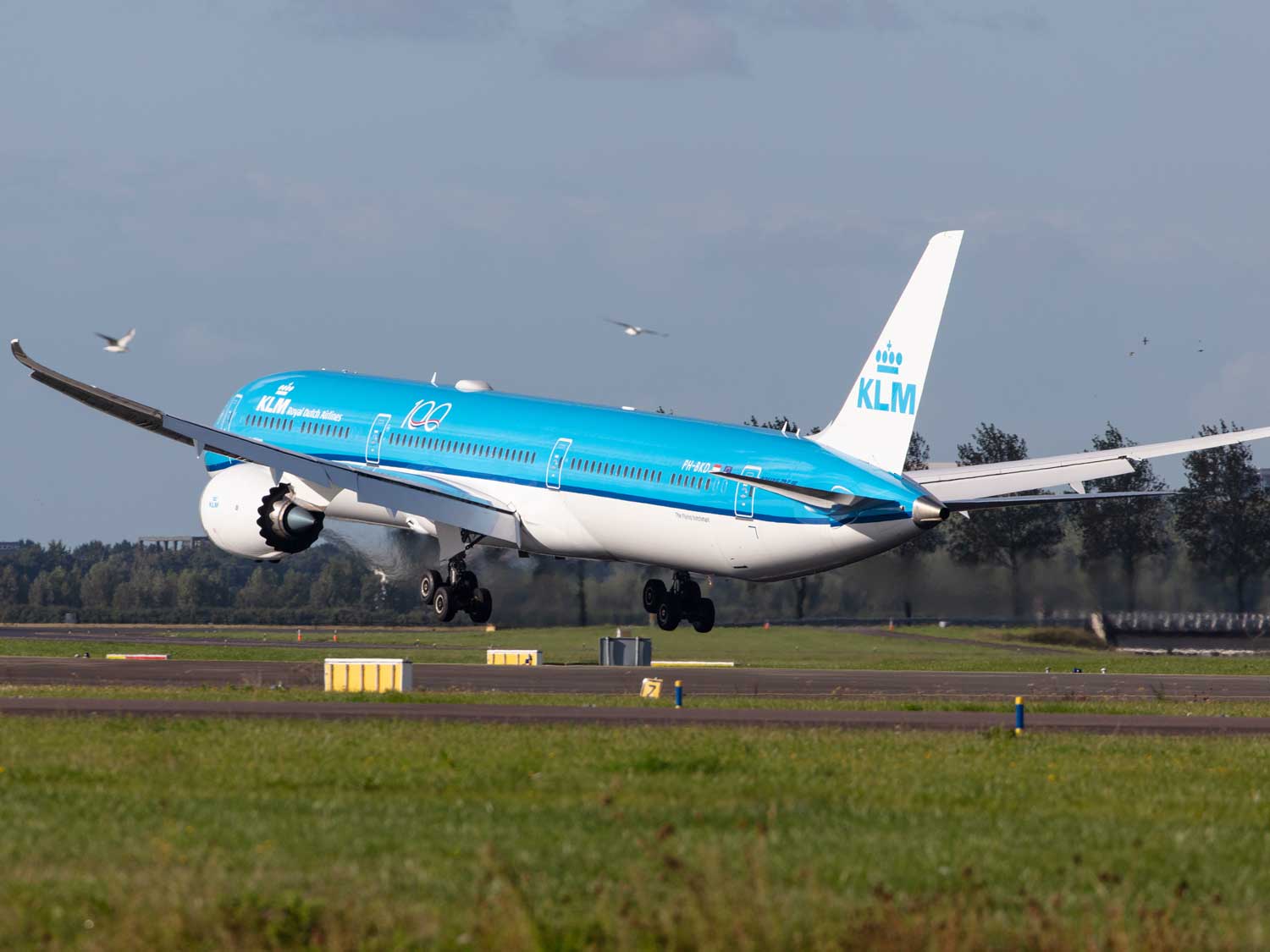
KLM Boeing 787 10 Dreamliner

Air freight demand recovery still a way off

Weak summer demand saw air freight chargeable weight move down 1% and while the fall was minor, it is the fourth consecutive month of falls, which suggests that we may require another few quarters before we see more demand pick up on a global level.

According to the latest market analysis from Xeneta, shippers continue to benefit from the soft air freight market, but rising jet fuel prices could be a concern in an already contracted market, with prices for US Gulf Coast jet fuel jumping 21% month-over-month.

August saw global air cargo capacity rise +7% year-on-year, while global dynamic load factors, based on volume and weight perspectives of cargo flown and capacity available, climbed 1% over the previous month to 56%. 

However, it is worth noting that the August global load factor continued to fall year-on-year, down 3% from last year’s level, due to soft demand and the capacity surge, driven by the summer’s passenger services.

The data from Xeneta dampens some industry reports of a slight spike in demand in August, and with it hopes of a rise in volumes going into the final quarter.

Like July, August was very quiet and we see no meaningful signals of any kind of peak arising this year and while there might be some early peak season charter requests in the market, they are not backed up any real demand and there are doubts about how serious they are.

The market does seem to have levelled out, but there is still a lot of uncertainty, and not just for air freight. There was also no peak for the ocean market, which typically precedes the air freight market by a couple of months, with blank sailings actually being scheduled ahead of the Golden Week period.

Despite the lacklustre situation we have seen some rates creeping up out of China, mainly due to eCommerce demand and it is likely that upward pressure will increase in the second half of October as capacity is taken out of the market, but the signals for the rest of the year are not good, without improvement in the macroeconomic outlook situation.

Of 10 major trade lanes assessed in the past month, only China-United States and Southeast Asia-United States recorded growth, with air cargo spot rates up 3% and 4% respectively on these corridors. This is attributed to a more resilient US economy and the delayed recovery of US-China passenger bellyhold capacity, which is growing at a much slower pace than Europe-China.

Even so, due to geopolitical capacity shortages, spot rates ex Northeast Asia to Middle East & Central Asia, Northeast Asia to Europe, China to the US and China to Europe remained highly elevated, and are still 55% above their pre-pandemic levels.

Going into the usually critical autumn and winter period, we will be looking to secure longer carrier commitments and rates that reflect the reality of today’s market and expectations moving into 2024.

For valuable, special and time-sensitive cargoes there has never been a better time to use air freight, with extremely competitive rates and really interesting service and route combinations.

We have solutions for every critical shipment. EMAIL Elliot Carlile for insights, advice, prices and solutions.

Emirates Dubai

Air freight’s troubles continue

July saw global air cargo demand fall by 3.4% and capacity grow +7% compared to a year ago, as airlines’ summer schedules stepped up to meet the holiday season’s heightened passenger traffic. 

Last month’s global average dynamic load factor, which measures the volume and weight perspectives of cargo flown and capacity available, was at 55%, which was on par with the previous month, but was -3% down on the level of a year ago.

Despite the greater capacity availability another month of falling demand saw volumes drop -2% on June, with the general global airfreight spot rate index falling for the fourth consecutive month.

July rarely provides any performance surprises in the global air cargo market, but carriers will be concerned by the month-on-month declines in average rates, and the accelerating pace of these falls since the start of the year. 

The global air cargo spot rate bottomed out in the second week of July, while in the final week, it ticked up 3%, possibly reflecting an easing decline in cargo volumes and slower paced growth in capacity versus previous months.

The recent rise in jet fuel prices might also have contributed to the increase, having already been seen in some rate revisions, but it is likely it will not provide any meaningful impact on freight rates, as demand and supply dynamics for the general air freight market remain unchanged. 

Northeast Asia (including China) trade lanes registered the biggest rate declines compared to last year. Both China to the US and US to China airfreight spot rates fell 60+% from a year ago with China to Europe and Europe to China falling significantly, but not by the same levels.

South America to the US and Europe to the Middle East and Central Asia registered the smallest rate declines of 19% and 27% respectively, compared to a year ago.

High yield cargo and commodities are contributing higher margins to carriers, despite a drop in volumes, which is compensating for the high competition in the general cargo market, where high competition means the spot rate (valid for up to one month) has fallen below the seasonal rate (valid for over one month) since May last year. 

Cargo requiring special handling continues to produce higher yields, with the spot rate above the seasonal rate since the onset of the pandemic.

For the remainder of this summer, the expectation is that airfreight volumes will remain muted. 

The latest manufacturing Purchasing Manager Index (PMI) from China ticked up to 49.3 in July from 49.0 in June, which indicates a slowdown in manufacturing for a fourth consecutive month, while its subindex for new export orders, a bellwether for air cargo demand, also dropped in July.

Going into the usually critical autumn and winter period, we will be looking to secure longer carrier commitments and rates which reflect the reality of today’s market amid expectations that the current environment could continue for the foreseeable future into 2024.

For valuable, special and time-sensitive cargoes there has never been a better time to use air freight, with extremely competitive rates and really interesting service and route combinations.

We have solutions for every critical shipment, please EMAIL Elliot Carlile for insights and advice.