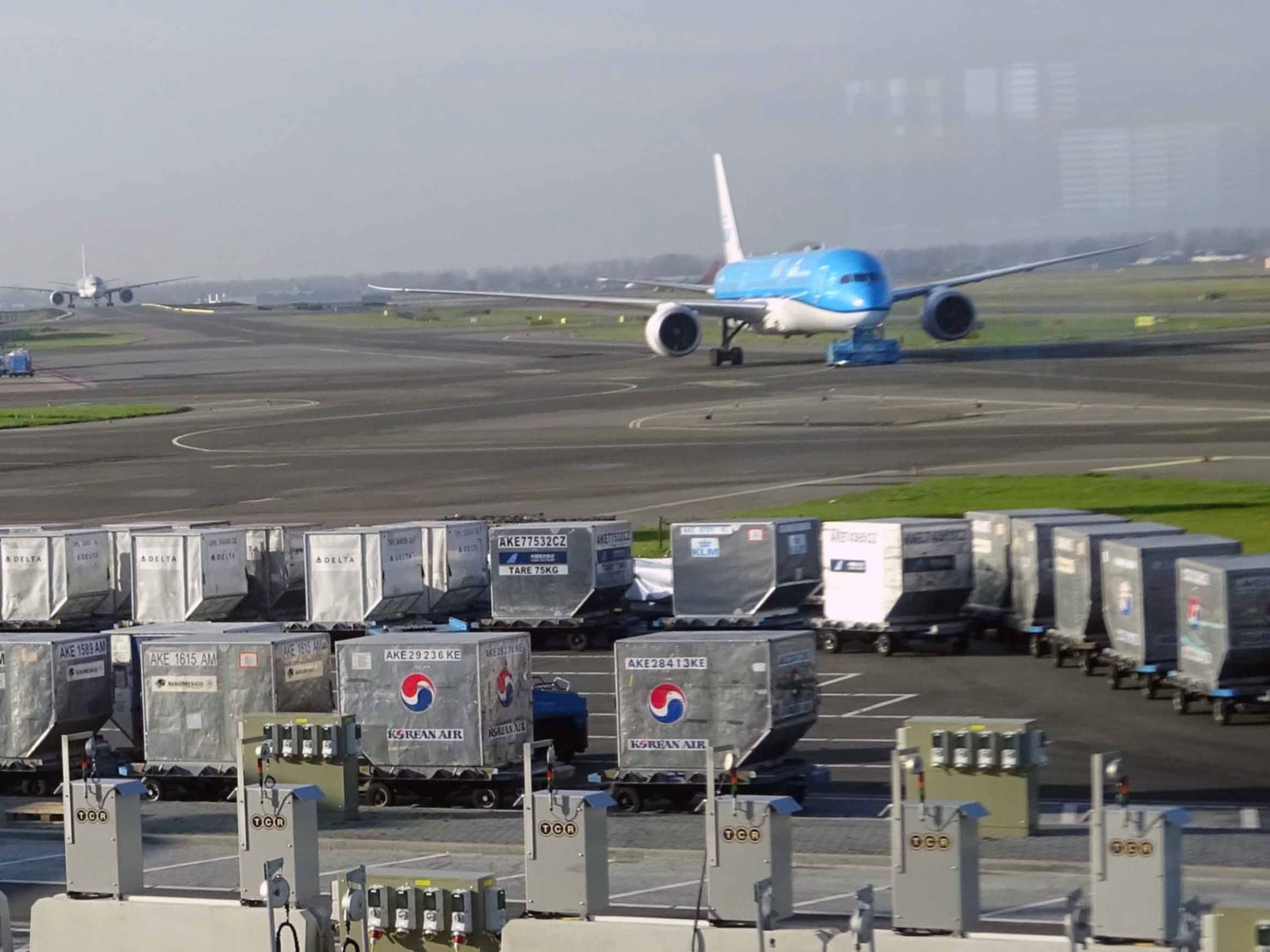
Shanghai Hongqiao Airport 1440x1080 1

Ex-China Airfreight: Turbulence and Transformation

For shippers moving goods by air into Europe and the US, the peak season has arrived with a complexity not seen in recent years. As flights are cancelled and rates trend sharply upward, a fundamental reshaping of the marketplace is underway.

In September, a powerful typhoon swept through southern China just as the annual Golden Week holiday loomed. Traditionally, Golden Week brings a slowdown as manufacturing pauses and workers take leave, creating ripples in cargo flow.

This year, the typhoon compounded the crisis: hundreds of flights were suspended and key export ports shuttered, abruptly tightening airfreight supply. Airport terminals saw mounting backlogs, with some shipments delayed by nearly a week before normal operations could resume.

The squeeze led to dramatic, double-digit percentage increases in airfreight rates for shipments from China to Europe, climbing between 30% and 50% compared to average off-season levels. Routes to the United States also saw significant jumps, though the impact was mitigated by shifting demand patterns and new import restrictions in the US.

Europe Bound: A Market in Flux

While every major trade lane felt the impact of these disruptions, the China-to-Europe corridor has emerged as both the most stressed and the most resilient. Demand for space surged as volumes, particularly of high-tech and eCommerce goods, outpaced declining US-bound shipments.

This pattern reflects a broader structural change: capacity typically serving transpacific markets is now being redirected to European routes, reinforcing the upward pressure on rates.

The European Union’s relative trade stability and ongoing restocking by retailers have kept import flows buoyant. In contrast, the US market is seeing smaller volume growth and increasingly complex customs checks, which have led to sporadic diversions of supply chains to alternative gateway countries and slower overall throughput.

US Adjustments and Alternative Strategies

The US airfreight market from China, though still sizeable, has shifted course under the weight of new regulatory developments. The end of duty-free de minimis rules has decreased the viability of direct eCommerce shipments for small parcels.

As a result, shippers have begun to favour indirect strategies, routing goods through third countries to manage duties, or utilising other North American hubs to avoid new tariff thresholds.

This has prompted a measurable contraction in direct air cargo volumes to the US from China, even as some businesses attempt to hedge risk by booking additional capacity in advance for the holiday season. Leading carriers report rates holding steady or growing only modestly compared to Europe-bound lanes.

The Road (Skies) Ahead

Looking through 2025’s peak season and into the coming year, the airfreight market faces continued unpredictability. Recovery from typhoon-related disruptions is expected to be gradual, with many factories extending their Golden Week closures and logistical bottlenecks possibly persisting into mid-October.

Industry analysts project that rates on China-Europe flights are likely to rise further by up to 10% before normalising, while transpacific pricing will remain highly sensitive to evolving US trade policy and inventory cycles.

At the same time, underlying trends, such as the shift of high-value tech goods via air and the migration of eCommerce flows through alternative channels, suggest that unpredictability will remain a defining feature.

Early communication is becoming indispensable for urgent shipments. We would encourage shippers to forecast and book well in advance, providing transparent communication about possible route or schedule changes, and retain contingency plans for the likely rolling pockets of disruption.

Metro gives you the visibility, agility, and expertise to overcome turbulence and transformation, strengthening your supply chain and securing your airfreight movements from China to the US and Europe.

With demand surging and carrier schedules in flux, securing space and certainty has never been more critical. Metro is actively monitoring capacity, adjusting routings, and working with trusted carrier partners to protect booking allocations.

Our latest innovation takes visibility and control to new levels, with real-time flight telemetry tracking to provide:

– Live aircraft position and route mapping
– Accurate departure and arrival confirmation
– Time-stamped milestone events, updated in real time

This level of transparency means you can plan confidently, optimise inventory, and protect service levels even in unpredictable conditions.

Partner with Metro for smarter, faster, and more resilient air freight solutions, powered by live data and long-standing carrier relationships.

EMAIL Andrew Smith, Managing Director, today to explore how we can support your success.

LA terminal 1440x1080 1

Carriers Sustain Transpacific Rate Momentum with Strategic Blanking

Transpacific carriers have achieved notable success this September in upholding spot freight rates despite softer volumes and ongoing market pressures. Through a mix of strategic blank sailings and well-timed general rate increases (GRIs), the main carriers have sustained a robust rate environment and prevented any steep downturn even as demand has moderated heading into Golden Week.

Even as US import volumes in the lead-up to Golden Week have remained below prior years, carriers have managed to stop spot rates from falling sharply, with major lines blanking about 10% of westbound and nearly 20% of eastbound transpacific sailings for September and October.

This level of discipline has limited rate erosion and positioned the market for further stability as more blank sailings are announced for October.

Recent Rate Developments

September’s rate surge was driven primarily by a combination of a general rate increase and capacity reductions. Spot rates saw weekly gains approaching 6% on key legs, and some increases were as much as 21% compared to late August. While these rate gains provided temporary lift, spot prices have started to moderate, trending back to levels seen before the September 1 GRI. Carriers have succeeded in keeping rates comfortably above the lows reached in August, typically sitting up to 20% above those levels.

Many carriers are now offering voyage-specific spot rates, targeting marketplace flexibility to fill remaining slots. This approach, alongside tactical blankings, enables lines to preserve market discipline and ensure spot prices do not undercut contracted rate benchmarks. The current spread between spot market and fixed contract rates reflects ongoing efforts to support yields while maintaining service options for shippers.

Outlook

In September, eastbound transpacific blankings removed approximately 10% of capacity on West Coast routes and nearly 13% on East Coast strings.

Forecasts for October foresee blankings of about 10% on the West Coast and almost 20% to the East Coast, reflecting a more aggressive stance in supporting additional GRIs post-Golden Week. 

Their active management has proven successful in supporting rates under challenging conditions, emphasising a preference for maintaining pricing power over chasing fleeting short-term volumes. As a result, the transpacific market continues to resist a downward spiral, demonstrating resilience and strategic discipline.

With strategic capacity management and long-established ocean carrier relationships, our team is helping clients secure space, optimise rates, and keep high-priority cargo moving on key transpacific lanes.

As blank sailings and new rate initiatives reshape the market, proactive planning and flexible routing have never been more important.

If your business depends on reliable Asia–US trade flows, EMAIL Andrew Smith, Managing Director, today to discover how expert guidance and tailored solutions can keep your supply chain agile and cost-effective, whatever the market brings.

Ho Chi Minh 1440x1080 1

Asia Pacific Freight Markets Reshape as Tariffs Shift Trade Flows

Air and sea freight in the Asia Pacific region is at the centre of global freight realignments, as eCommerce and feeder shipping operations are reshaped by recent policy changes in the US. 

Adjustments to tariff rules and the elimination of duty exemptions have pushed shippers to reconsider sourcing strategies, shifting some flows from China to other Asia Pacific markets while amplifying pressure on already-congested sea and air networks.

Air cargo: eCommerce realignment

The removal of de minimis exemptions on China–US eCommerce shipments has sharply reduced volumes from mainland China and Hong Kong to the US, while boosting flows from alternative Asia Pacific origins and into Europe.

Airlines across the region reported strong growth in July, as exporters diverted shipments to avoid tariff penalties and took advantage of front-loading opportunities during temporary pauses in tariff implementation.

This shift highlights the growing role of Asia Pacific beyond China in meeting US and European demand, with trade lanes from Southeast Asia and emerging eCommerce hubs gaining traction. While China remains dominant in cross-border online trade, its reduced share of US-bound volumes has accelerated diversification across the region.

Sea freight: Feeder bottlenecks

At the same time, feeder shortages in Southeast Asia are disrupting supply chains, delaying transshipments and creating congestion at major hubs including Singapore (operating near 90% yard capacity), Shanghai, Ningbo and Port Klang.

Shippers are being forced to secure space weeks in advance, with rolled cargo and high yard density compounding the disruption.

The surge in demand from Southeast Asia, partly driven by tariff-related cargo diversions, has stretched feeder capacity, with carriers prioritising direct lanes over transshipment-heavy routings. For US exporters, this has meant greater scrutiny over which cargoes are accepted, adding uncertainty to already fragile trade flows.

Implications for US and European businesses

For US and European importers, these developments underline the risks of over-reliance on single-source markets, as both regulatory shifts and operational pressures can disrupt established flows. For exporters, feeder constraints and selective carrier acceptance policies may limit market access and slow supply chains out of Asia.

Diversification of sourcing, earlier booking strategies, and closer collaboration with supply chain stakeholders is essential in navigating these disruptions. With eCommerce volumes continuing to grow and Asia Pacific playing a more pivotal role, freight strategies must evolve to maintain resilience and competitiveness.

Metro gives you the visibility, agility, and expertise to adapt to shifting trade flows and capacity constraints. EMAIL managing director, Andy Smith, today to strengthen your supply chain and secure your freight movements across Asia Pacific, the US and Europe.

Container ship empty 1440x1080 1

Managing an Oversupplied Sea Freight Market

Unpredictable scheduling, blank sailings and overcapacity continue to unsettle the major east–west, transatlantic and transpacific trade lanes. But with tools such as late-stage blanking, slow steaming and selective vessel deployment, carriers are actively managing capacity to protect pricing and profitability.

Since the pandemic, capacity volatility has soared on key east-west trades. On the Asia–North Europe route, for example, weekly vessel capacity now fluctuates by nearly 30%, which is more than double the average variation seen between 2011 and 2019. Similar patterns are visible on Asia–Mediterranean and transpacific lanes, albeit to a lesser extent.

This volatility, which is driven by inconsistent vessel sizes, blank sailings, and disrupted schedules, has created the erratic cargo flows that intensified congestion at major ports this year. Rather than a predictable weekly rhythm, terminals are now dealing with surges followed by lulls, complicating yard planning, berth availability, and inland logistics.

The Next Stress Tests

China’s Golden Week holiday each October is typically preceded by a demand spike followed by a sharp dip, with carriers aligning supply with reduced demand. However, despite weaker demand signals, scheduled vessel capacity on Asia–Europe and Asia–North America trades remains significantly above previous years.

On the Asia–North Europe lane, capacity is set to be 8% higher than last year and over 25% above pre-pandemic levels. Blanked sailings currently account for just 3.8% of planned volume—far below the 15.4% removed in 2024.

Unless carriers remove up to 21 additional sailings in the coming weeks, the market risks excess capacity during a period traditionally associated with reduced demand. Analysts widely expect last-minute blankings to be announced, following a recent pattern of reactive, rather than pre-emptive, adjustments.

The transatlantic trade lane illustrates the complexities of carrier strategy in an oversupplied market with muted demand. Despite westbound spot rates below breakeven, blank sailings remain minimal. This may reflect a longer-term view, with carriers preferring to hold share and absorb short-term losses while waiting for demand to stabilise under the new US–EU tariff regime.

Carriers, meanwhile, continue to adjust alliances and service patterns. This last-minute approach, while unsettling for shippers, reflects carriers’ preference for short-notice flexibility over long-term commitment. For shippers, the unpredictability increases the risk of missed connections and inland bottlenecks, especially when relying on a single carrier or alliance.

The Carriers’ Strategic Levers

In the absence of demand control, carriers are increasingly leaning on their main pricing lever: supply. While blank sailings provide some short-term relief, they are often insufficient in isolation, especially when record levels of new tonnage are still entering the market.

Parking full strings of vessels, particularly the new ultra-large container ships, is an effective solution with significant rate upside. Even sidelining one loop per consortium on Asia–Europe could raise average rates by hundreds of dollars per TEU. But this strategy comes with high opportunity costs and political challenges inside boardrooms.

Carriers are therefore exploring alternative methods:

  • Slow steaming: By reducing sailing speeds across multiple trade lanes, more ships are absorbed into the same network, effectively tightening capacity while improving fuel efficiency.
  • Two-tier pricing: On Asia–Europe, some carriers are reportedly floating premium rates for Red Sea transits and discounting longer Cape routes, subtly incentivising shippers to favour stability over speed.
  • Schedule management: Transatlantic services show how carriers use blank sailings not only to suppress overcapacity but also to recalibrate service reliability. Though capacity on North Europe–US East Coast routes rose slightly in September, the volume of withdrawn sailings remains limited—under 2%—even as rates continue to hover below breakeven.

Sea freight capacity is no longer a static variable. It is a dynamic lever that carriers actively manage in real time to defend profitability in an oversupplied and volatile market. Golden Week blankings and the transatlantic trade’s soft discipline on capacity illustrate two contrasting approaches: one reactive and seasonal, the other strategic and cautious.

Metro negotiates rate, volume and service agreements with all the leading container shipping lines and Alliances, offering flexible global solutions across full and less-than-container loads, reefers, Ro-Ro, and heavy lift cargo.

Our freight services integrate seamlessly with customs, multimodal transport and logistics to deliver true end-to-end supply chain value. With MVT, you gain SKU-level visibility and control, enabling you to optimise scheduling, cut through complexity, and respond quickly to shifting market demands.

Partner with Metro for powerful sea freight solutions designed to keep your business moving in today’s dynamic global trade environment.