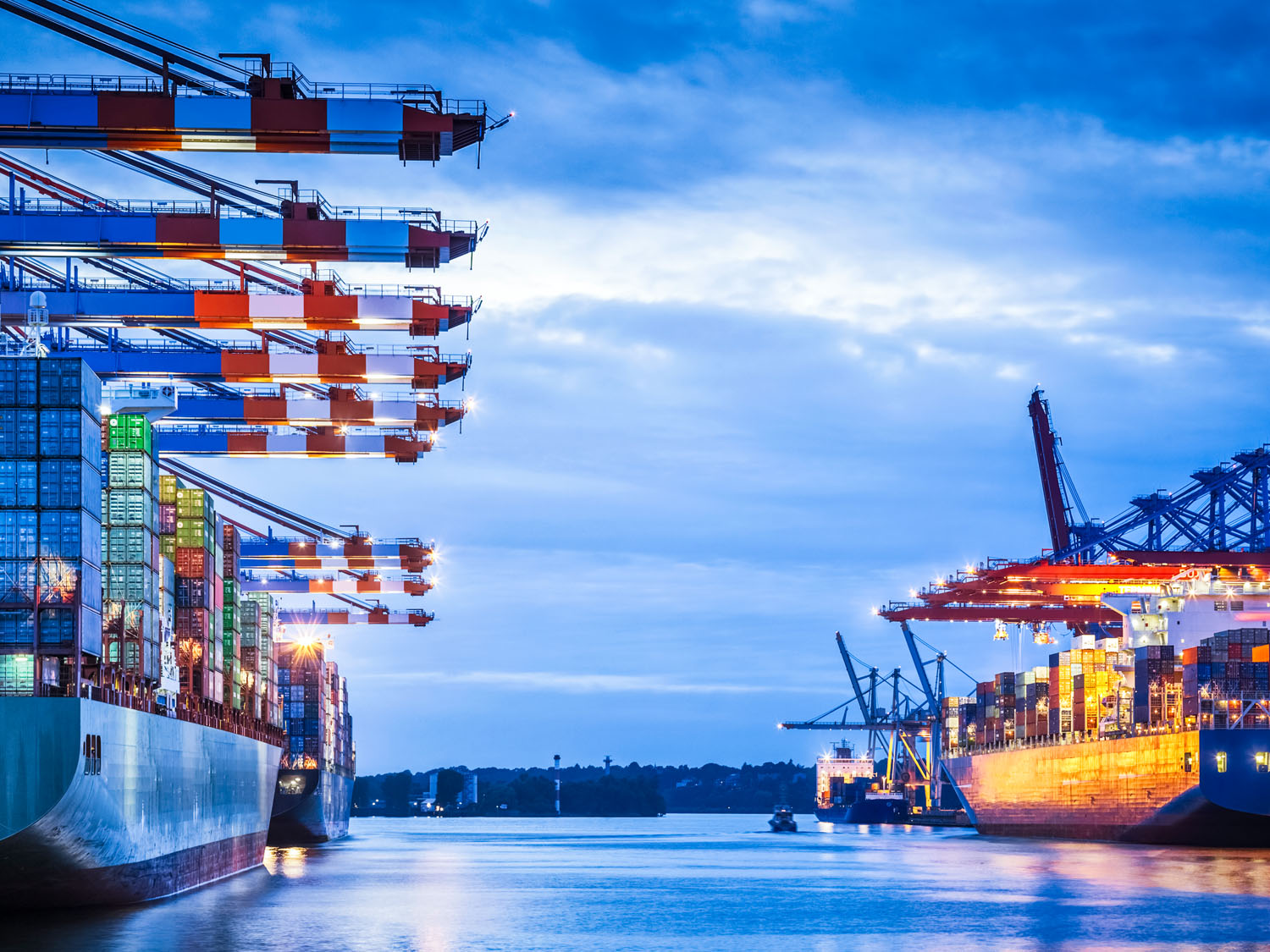
Panama COSCO ship

Panama Canal situation may trigger wider supply chain issues

Following the driest year and October on record, the Panama Canal Authority (ACP) has been steadily cutting daily vessel transit numbers and draught levels across the canal, with some restrictions possibly staying in force until 2028, with wider supply chain ramifications.

With each transit of the Panama Canal consuming a large amount of water, drought has forced the ACP to reduce draught limits on its larger locks by six foot as well as cutting daily transits from 40 to just 18 from February next year.

Container ships sailing from Asia to the U.S. East and Gulf Coast ports typically need more than the current limit of 44 feet of draught when fully loaded. 

Down from 50 feet at the beginning this year, the loss of six feet of draught is equivalent to 2,100 teus, which means that vessels sail with fewer containers, or unload containers and rail them across the isthmus for reloading to a vessel on the other side.

Maersk warned shippers to prepare for transit issues at the waterway, but said advanced planning was currently enough to mitigate potential delays, while CMA CGM looks set to become the first major carrier to apply a new Panama Canal surcharge, in response to the ongoing capacity reductions.

The French carrier’s latest customer advisory relayed the issues they faced, but gave no indication what level their surcharge would be set at. Expect other carriers to follow suit.

Limits on transits and draughts, will remain in place at least until after June 2024. However, the ACP says it sees no significant relief until 2028, and that’s if the government of Panama addresses years of underinvestment, stimulating some carriers to question the long-term viability of the waterway.

The Panama Canal’s operating restrictions that were first implemented in July, initially had a limited impact on container shipping operations as carriers had yet to get aggressive in blanking capacity to match weak demand. 

However, lighter loadings mean empty holds where 2,100 x 20’ containers should be and is pinching the bottom line of carriers, as inflation is pushing their operating costs up. 

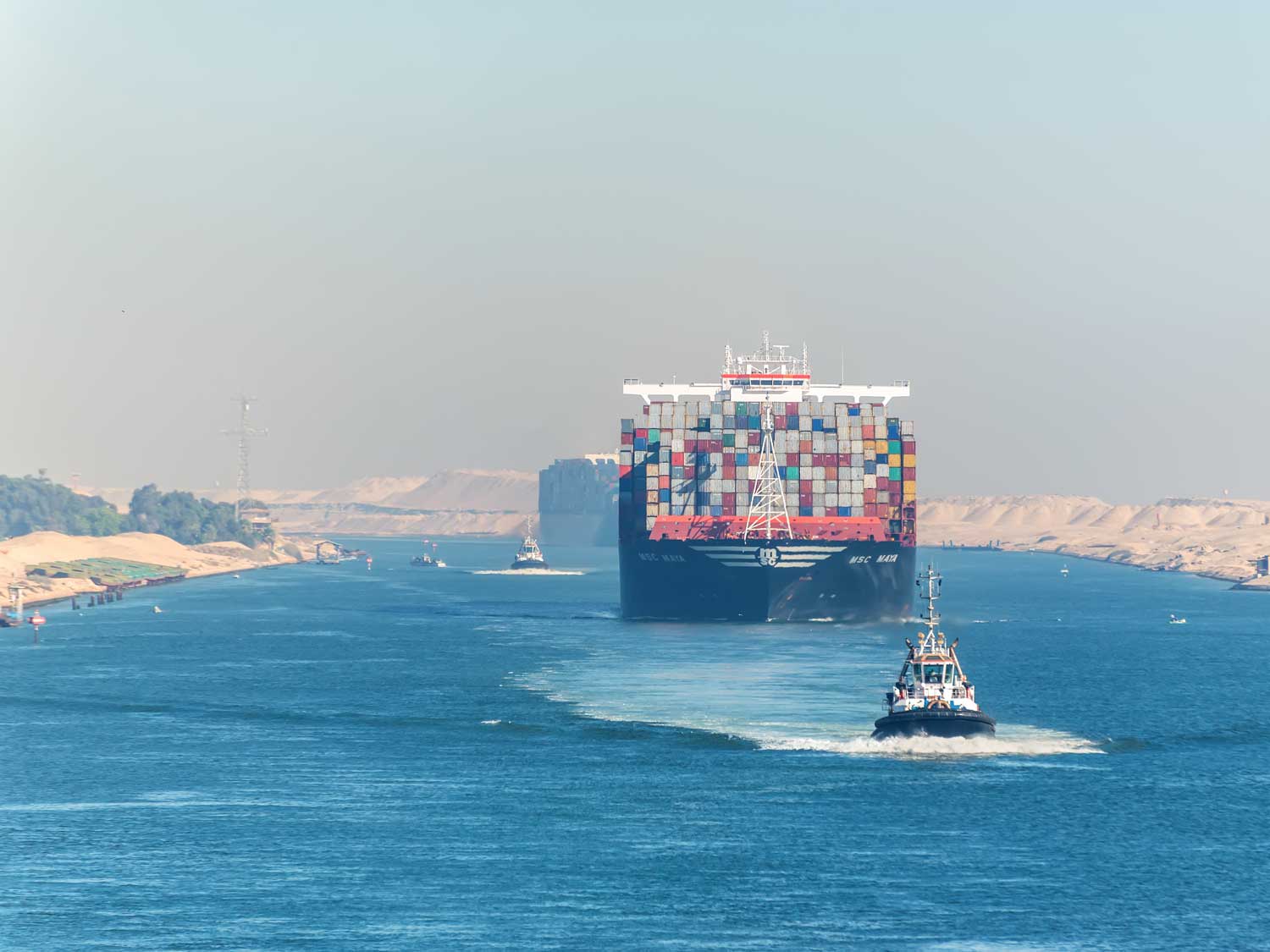
Unlike the Panama Canal the Suez Canal has no locks or changing water levels which means it can handle the largest ships all year round - subject to effective piloting, as evidenced by the Ever Given grounding in March 2021.

With the Panama Canal’s ongoing restrictions and the growth in trade to the U.S. East Coast from Southeast Asia and the Indian Subcontinent accelerating, we are likely to see more services diverted or restructured to route through the Suez Canal.

If you have concerns or questions about any of the issues raised in this article, we can review your situation and explain your options, including alternative carriers, ports and routes.

Whatever your challenges, we leverage long-term ocean carrier relationships to deliver cost-effective, resilient and reliable ocean solutions.

EMAIL Andrew Smith, Chief Commercial Officer to learn more.

Ben Gurion

Air cargo delays and ocean carriers announce Israel war risk surcharge

While sea freight traffic is largely operating without significant issues, the conflict in Israel is impacting airfreight to the country and the surrounding region, with many carriers’ services subject to cancellation and delay.

Many airlines have suspended direct flights to and from Israel, with many international aviation authorities avoiding the region’s airspace, and no bookings on the affected routes.

Israel represents a relatively small market for container shipping, and few vessels stop at its primary ports of Ashdod and Haifa, so the threat of disruption to container trade flow through the Mediterranean region remains limited.

Ashdod, one of the country’s largest ports, is continuing to operate normally 24/7, with employees working longer shifts, because the military has recruited 10% and the remaining staff must fill the gap.

While international airlines have temporarily suspended flights to and from Tel Aviv, the airport remains open, with domestic carriers still providing services and alternative cargo options, but these are very limited.

Etihad Airways is currently operating its daily flight schedule to and from Tel Aviv but they are monitoring the situation minute-by-minute. Turkish Airlines services from Istanbul to Tel Aviv appear to be operating normally and some integrators have resumed their flights.

No special measures or guidelines have been handed down to Israeli ports, which remain in contact with shipping companies and for now keep moving cargo and goods through the ports without any significant disruption.

Any expansion of hostilities beyond Israel's borders could introduce risks to the Suez Canal, a critical waterway for container ships, however, the extent of these effects would depend on the conflict's expansion and duration.

We have not seen any rate increases, surcharges or additional fees so far, but there are concerns about possible increased insurance costs, with national Israeli carrier ZIM and other major carriers now announcing a war risk surcharge (WRS) on Israel cargo ranging from US$50-100/teu.

If you have any concerns about the issues raised in this article, we can review your situation and explain your options, including alternative carriers, ports and routes, where appropriate.

Our aim is to consistently provide the most efficient and cost-effective solutions, to ensure that your supply chain remains optimised. EMAIL Andrew Smith, Metro’s Chief Commercial Officer. 

Golden Week

Carriers blank Golden Week sailings

The cancellation of multiple October sailings from Asia to Europe is an attempt by the carriers to push capacity down and raise rates, but if they fail, they may not have another opportunity to significantly raise prices before Chinese New Year, next February. 

Container shipping lines across the three alliances have announced additional blank sailings ex Asia to North Europe and the Mediterranean, around the Chinese Golden Week holiday in the first week of October, and through to the end of the month.

According to data from Sea-Intelligence, the capacity operated on the Asia-Europe trade in September is 10% higher than last year and on the Asia-Med service it is 27% more and while the carriers are planning significant capacity cuts after Golden Week, we are wary of unannounced blank sailings in the coming weeks.

Overall 14% of scheduled sailings have been cancelled from mid-September to mid-October and this we expect are announcements to counter balance the lower demand during China’s Golden Week holiday.

The current blanking represents Ocean Alliance (5%) and THE Alliance (7%) with MSC blanking SWAN service weeks 38-43 removing 45k TEU of capacity.

MSC has radically cut capacity on the Mediterranean lane between weeks 40 and 43, but it is not clear whether HMM will blank any sailings of its Asia, India to Mediterranean standalone loop that launched in August.

The aggressive blanking announced by all three alliances means it may be challenging to find space for exports from China to Europe next month, which is why we recommend that you share shipping forecasts as early as possible, so we can reserve the space you need.

There will also be the knock-on effect of limited export sailings from North Europe during November and December, which underlines again the importance of shipping forecasts.

Carriers will, of course, be looking to raise rates on backhaul trades, as prices for oil have surged to $90 a barrel, with December Brent Crude now priced at around $95, driven by OPEC’s supply cuts, which have been extended to the end of the year.

The price of Rotterdam-sourced industry-standard low-sulphur fuel (VLSFO) jumped on Friday by another $8 per ton to $643 and has now increased by 22% since the end of June.

We are watching closely…

Whatever the market challenges are, our sea freight team keep our customers’ cargo moving, finding capacity and alternative services in the event of unforeseen blankings. 

Providing us with regular forecasting, helps us to understand critical dates and intended volumes, so that we can secure the right amount of capacity to keep your supply chains running. 

If you have any questions or concerns about your Asia supply chain or the developments outlined here, please EMAIL our Chief Commercial Officer, Andy Smith.

Panama Canal

Risk of Panama Canal disruption rising

Unpredictable weather patterns and drought for most of 2023 have driven the Panama Canal Authority to impose numerous draft restrictions, reducing vessel transit numbers, and cutting vessel booking slots for lock usage, due to low water levels.

The Panama Canal consists of the man-made lakes of Miraflores and Gatun, with the panamax locks taking vessels with up to a 12.5 m draft and the neo-panamax locks for vessels up to a 15.2 m draft. 

The dual system is run on fresh water, with only the new system able to reuse some of the water used to transit the vessels, and with the lowest rainfall this century, the Panama Canal Authority’s limits on daily transit and vessel draft restrictions will stay in place for the rest of the year and throughout 2024.

While the ongoing restrictions have not impacted shippers yet, we are monitoring the canal situation closely, because extended delays for goods coming into the US for the coming autumn and winter seasons, could impact capacity, schedules and prices. 

The backlog of ships trying to enter the Panama Canal is growing, with current estimates putting the number at over 200 vessels. Containerships are the canal’s biggest users and are usually given preferential status, which means most have avoided the worst of the disruption, but neo-Panamax ships are waiting up to 18 days for northward transits, with similar delays for southbound transits.

Despite the wait, delays have not translated into noticeably late arrivals at US East and Gulf coast ports and with vessel capacity utilisation currently low, there has been capacity to absorb, and it will probably be a while yet before any delays are seen at the ports.

The number of daily transits through the canal has been capped at 32, compared with the 34 to 42 it can handle at peak capacity, in a bid to conserve water and some carriers are re-routing to avoid the backlog.

Ordinarily, neo-Panamax vessels move through the canal at an average 50 feet of draft but this has now been reduced to 44 feet to cope with the drought conditions, which means large container ships with good utilisation may have to offload containers, to make the vessel lighter and match the lower water draught.

In view of the draft restriction, some carriers have reduced maximum payloads, while others are still accepting heavyweight cargo and carriers have not yet been aggressive in imposing Panama Canal surcharges, though there is a suspicion that many have already rolled them into the ocean freight rate.

If you have any concerns about the issues raised in this article, we can review your situation and explain your options, including alternative carriers, ports and routes.

With a collaborative approach, we will provide the most efficient and cost-effective solutions, to ensure that your supply chain expectations are met.