
Shanghai port

Port congestion (amongst other things) continues to push rates up

With increasing amounts of ocean freight capacity soaked up by COGH (Cape of Good Hope) diversions and port congestion, spot rates are spiking, with indexes up significantly on 2023 and market led spot/FAK rates up by nearly 500%. Now, carriers desperate for ships and more capacity are setting new chartering records, to try and accommodate the shortfall in supply against demand.

Over 1.6milllion teu of capacity has been added to the global container fleet so far this year, as new vessels have been delivered, and all that new capacity has been fully absorbed by the market’s diversion round the Cape of Good Hope.

So, despite the record-breaking new vessel deliveries, there remains a shortage of capacity and container ships globally, with freight and charter rates continuing to surge ahead as the market enters the traditional summer peak season.

Port disruption and bottlenecks are tying up capacity, which is making already tight vessel availability worse. Analysts suggest that the recent increase in port congestion in Asia and the Mediterranean has taken a further 500,000 teu from circulation, reducing vessel schedule reliability and impacting equipment availability.

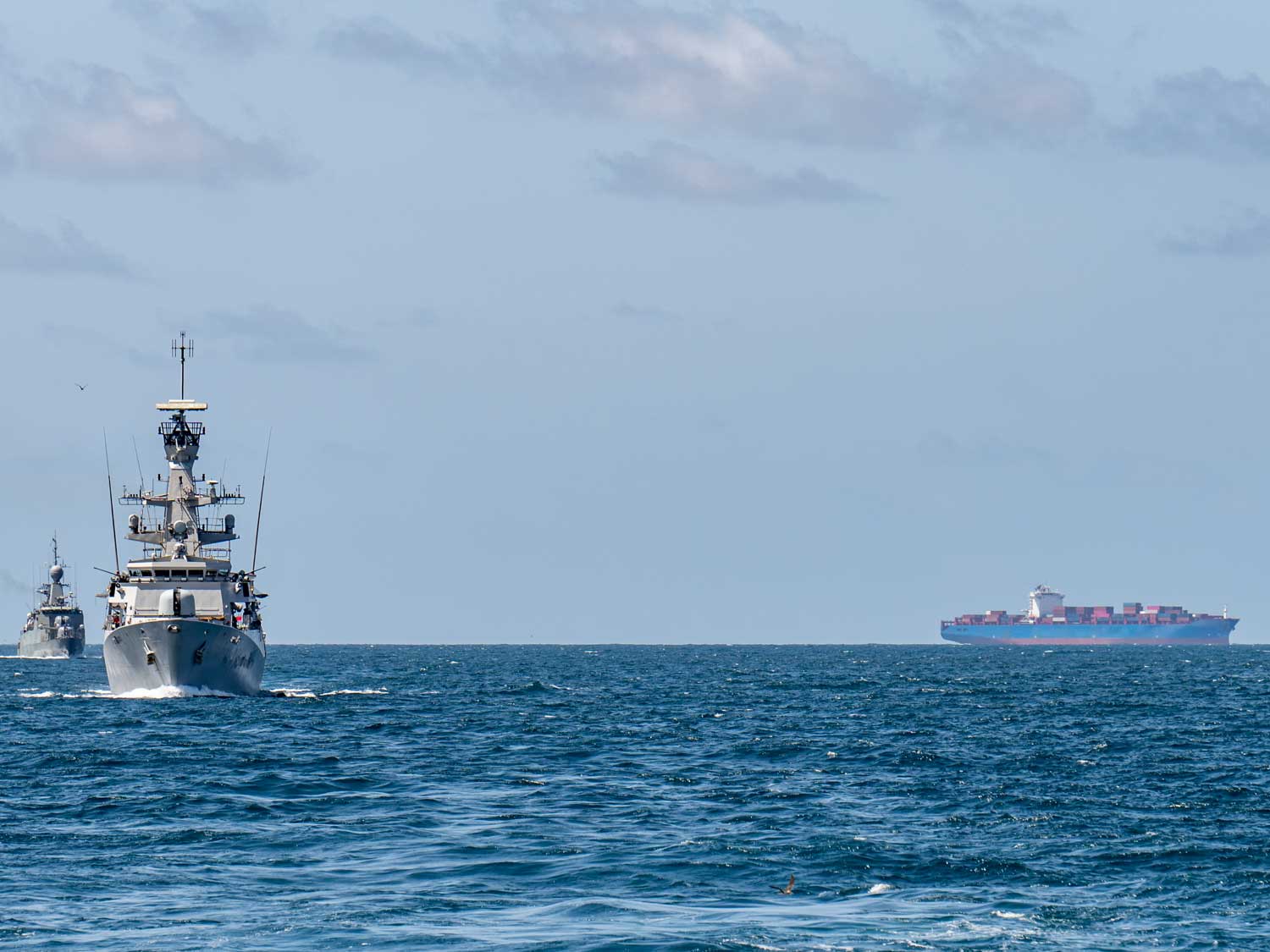
The Loadstar reports that 2.5m teu were on ships queueing for berths at ports worldwide last week, which is equivalent to nearly 9% of the global fleet, and the bunching of ships arriving from Asia is creating berthing delays in northern Europe, particularly Rotterdam.

Freight rates from Shanghai to Rotterdam increased 11% per feu, while rates from Shanghai to Los Angeles grew 7% and up 3% to New York.

Drewry expects that freight rates from China will continue to rise, due to congestion issues at Asian ports, the continued ongoing situation in the Red Sea and further port delays now occurring around the globe, as an impact of the market conditions.

Ship bunching and congestion has spread to ports in Asia including Port Klang, Shanghai, Qingdao, Guangzhou and Shenzhen, and while equipment availability has improved vessels have been waiting up to four days to berth at Shanghai, two days at Qingdao and up to three days at Port Klang.

Singapore’s berthing delays have improved, but there are longer dwell times as carriers discharge more containers to forgo subsequent voyages and catch up on sailing schedules.

Routing away from the Suez Canal means that cargo is now being dropped at western Mediterranean ports for transshipment to the east of the region, with ships having to wait longer for a berth.

In the north of Europe, ports and terminals are performing pretty well, though Rotterdam, Hamburg, and Aarhus have experienced increases in yard densities, with customers requesting to pick up import containers as soon as possible after discharge.

Strikes update
Port workers in Germany implemented a ‘warning’ strike which affected the ports of Hamburg, Bremerhaven, Bremen, Emden, and Brake, and the Verdi trade union has threatened more action if negotiations for a new collective labour agreement do not progress.

After 24 hour stoppages at the container ports of Le Havre and Marseille-Fos, French trade union members had been threatening a month of strikes at major ports, but the snap election called by president Macron means that the Fédération Nationale des Ports et Docks CGT (FNPD) has no-one with whom to negotiate and has therefore suspended action until late September.

We are monitoring all the issues outlined here, while working closely with our local partner office network and carrier partners to mitigate any impact on our customers.

We will keep you updated and provide alternative solutions where appropriate or necessary.

If you have any questions, concerns, or would like any further information regarding the situation outlined here, please EMAIL our Chief Commercial Officer, Andy Smith.
fxt derailment 1440x1080 1

Felixstowe train derailment

At 22:09 on Wednesday 19th June a GB railway locomotive and loaded wagons en-route to the Port of Felixstowe derailed on the branch line approaching the main Central and Northern railheads, causing significant damage to the track and closing both terminals to train movements.

The Central and Northern terminals, the main railheads at Felixstowe were closed, and while the Southern terminal continued operating, a large majority of import/export services were suspended, with rail throughput at 40% last Friday.

While access to all other areas of the container terminal remains unaffected, with shipping and haulage operations continuing as normal, the derailment impacted all train services serving the port, including those by Freightliner, GB Railfreight and Maritime Transport.

To help mitigate the impact, Felixstowe released additional vehicle booking slots for hauliers, which was welcome, but this does not entirely replace the lost collection/delivery capacity.

Network Rail engineers have been on site since the incident, clearing and repairing the damaged track, with the derailed wagons cleared at the weekend.

The Central terminal is now operating alongside the Southern terminal and rail throughput is back to 50%, but having undertaken a full assessment of required repairs the Network Rail engineers estimate that the port’s rail capacity may not be fully operational until next week.

Update 26th June 2024 – Port of Felixstowe confirm that normal rail service will resume on the 4th July 2024, from 12:00.

With rail companies cancelling services we are unfortunately being impacted by the consequential issues, for example exports missing booked trains as operators work around the situation.

Issues will continue to arise in the coming days, and potentially after normal service is resumed, as empty containers are left inland and not returned, as laden containers will be prioritised where space is limited.

These issues will work through and in the meantime we will continue with our contingency planning. If you have concerns about any consignments, or would like to discuss our transport strategy, please EMAIL Simon Balfe, our Multimodal Transport Manager.

Image courtesy of the Ipswich Star

Manhattan skyline 1440x1080 1

New US demurrage and detention regulations in force

The Federal Maritime Commission (FMC) final rule on demurrage and detention billing requirements came into force on the 28th May, except for two provisions that are delayed.

The rule applies to ocean common carriers trading to or from the US, including vessel-operating common carriers (VOCCs) and non-vessel-operating common carriers (NVOCCs), and to marine terminal operators (MTOs).

The rule mandates that common carriers and MTOs include specific minimum information on demurrage and detention invoices, with set timeframes for issuing invoices, disputing charges, and resolving disputes.

Financial Impact
The FMC reports that between 2020 and 2022, nine of the largest carriers serving US liner trades charged a total of approximately USD 9 billion in demurrage and detention fees and collected roughly USD 7 billion.

Background
Demurrage and detention refer to charges assessed by ocean carriers and terminals for the use of shipping containers and marine terminal space, in addition to agreed freight charges.

During pandemic-related supply chain delays, many cargo shippers were surprised by large bills, leading to numerous complaints to the FMC.

Final rule
The final rule follows a notice of proposed rule-making published in October 2022, and incorporates changes based on feedback from shipping industry stakeholders. The FMC has been considering these rules since at least 2021, when its Fact Finding Investigation No. 29 recommended industry input on minimum requirements for demurrage and detention billing.

The US Congress addressed this topic in the Ocean Shipping Reform Act of 2022 (OSRA 2022), which listed the minimum information that common carriers must include in a demurrage or detention invoice. OSRA 2022 authorised the FMC to revise these requirements and to define practices for assessing charges. The final rule announced on the 26th February 2024, implements these provisions.

New Regulation Details
The new regulation will appear in the Code of Federal Regulations at 46 CFR Part 541—Demurrage and Detention. For now, it is published in the Federal Register at 89 Fed. Reg. 14362-14363.

Compliance Highlights
Applies to invoices issued by VOCCs, MTOs, or NVOCCs for demurrage or detention charges, excluding the billing relationship between MTOs and VOCCs.

If an invoice fails to include all required information, the billed party does not have to pay it.

The detailed information that must be included in any invoice, such as identifying details, timing, rate, dispute procedures, and certifications, will be specified at a future date.

Invoices must be issued within 30 days of the last incurred charge; otherwise, the billed party is not required to pay.

NVOCCs receiving invoices from VOCCs or MTOs must issue their invoices within 30 days. 

The billed party has 30 days to contest charges, and the billing party must attempt to resolve disputes within 30 days.

Purpose
The primary purpose of the new regulation is transparency, allowing billed parties to understand and verify the accuracy of demurrage or detention invoices and the origins of the charges.

Detention and demurrage (D&D) cases handled by the Federal Maritime Commission (FMC) in the United States have trebled since the pandemic and are set to reach historical highs by the end of the year.

This briefing is not legal advice and does not address any specific situation. Should you have any questions about this topic or FMC regulations in general, please EMAIL our Chief Commercial Officer, Andy Smith.

India industrial revolution 1440x1080 1

India exporters face more challenges

Shipping lines are imposing surcharges and raising freight rates as capacity from India to Europe, North America and The Rest of The World tightens. Indicative of why this is, can be seen with exports to the US up 13% and significant ocean network changes expected on the India-North America trade lanes.

With demand strong and vessel capacity tightening – not helped by port congestion – Indian shippers face additional surcharges to secure confirmed bookings.

Rate increases
One carrier is charging an equipment imbalance surcharge (EIS) of $300 per container, while another leading carrier is imposing an emergency space surcharge (ESS) of $500 per container from 1st July, with other carriers expected to follow suit.

This looks to be a consequence of the Far East challenges, now impacting a wider spread of manufacturing regions across Asia.

As capacity problems grow and carriers are already able to fill most vessels through to the end of July and into August, freight rates are also moving significantly higher, with one carrier imposing a hefty increase of its freight-all-kinds (FAK) rates through July, with prices likely to mirror the elevated levels seen at the beginning of the year.

The India-US trades have also seen a stream of general rate increases and peak season surcharge (PSS) announcements, ranging from $500 to $2,400 per container and with service cuts to try and support “schedule recovery” capacity will get tighter still. This is without the current week’s spot rates, which are at even higher rates into the US and Europe and still rising.

Disruption
Vessel delays have been easing at key gateways in North and Southeast Asia, including Singapore, Ningbo, Qingdao and Klang in Malaysia and equipment availability is improving, but congestion is spreading to India.

India’s largest container gateway, Mundra, is hugely congested, which is affecting quay operations and the movement of containers between CFSs and terminals, with some carriers skipping the port to enable vessels to return to Asia faster.

About 50% of Mundra’s traffic moves by rail, but backlogs for railed freight have increased from the normal 7 to 9 days to 15 to 20 days, while a new process of issuing port entry permits appears to be a major source of frustration, with truckers facing longer waits to move containers in and out terminals due to their inability to secure entry permits promptly.

India to US
India and the United States last week committed to address barriers to trade, technology and industrial cooperation, in a bid to boost bilateral trade from the current $200 billion annually, to $500 billion in the coming years.

Ocean Network Express (ONE) injected additional capacity into the India-USEC trade lane last month via a standalone loop known as WIN and given that the India to US market is forecasted to keep growing, we would expect to see more container shipping service expansions, including upsizing in different forms.

Hapag-Lloyd is withdrawing from the Indamex service that it has operated in conjunction with CMA CGM for decades and from early August is launches a standalone service (TPI) on the route, which will rotate Port Qasim (Pakistan), Nhava Sheva and Mundra, and then New York, Norfolk, Savannah and Charleston before returning to Port Qasim.

CMA CGM is launching a revamped India-USEC routing, with additional stops at Savannah and Charleston, providing a 77-day round-trip via the Cape of Good Hope.

The changes unfolding on Indian trades may be setting the scene for the Gemini Cooperation alliance between Maersk and Hapag-Lloyd, starting early next year.

CMA CGM and Hapag-Lloyd have other ongoing joint service arrangements on trades out of India, either on a vessel or slot-sharing basis and it remains to be seen if and how those services will be repositioned.

Our commercial and operations teams work closely with our partners across India and the United States, processing air, ocean and sea/air shipments.

If you have any questions, rate requests or would like any further information on our capability in either country, please EMAIL our Chief Commercial Officer, Andy Smith.