ship aerial 1440x1080 1

Uncertain Waters: Securing Ocean Freight Rates

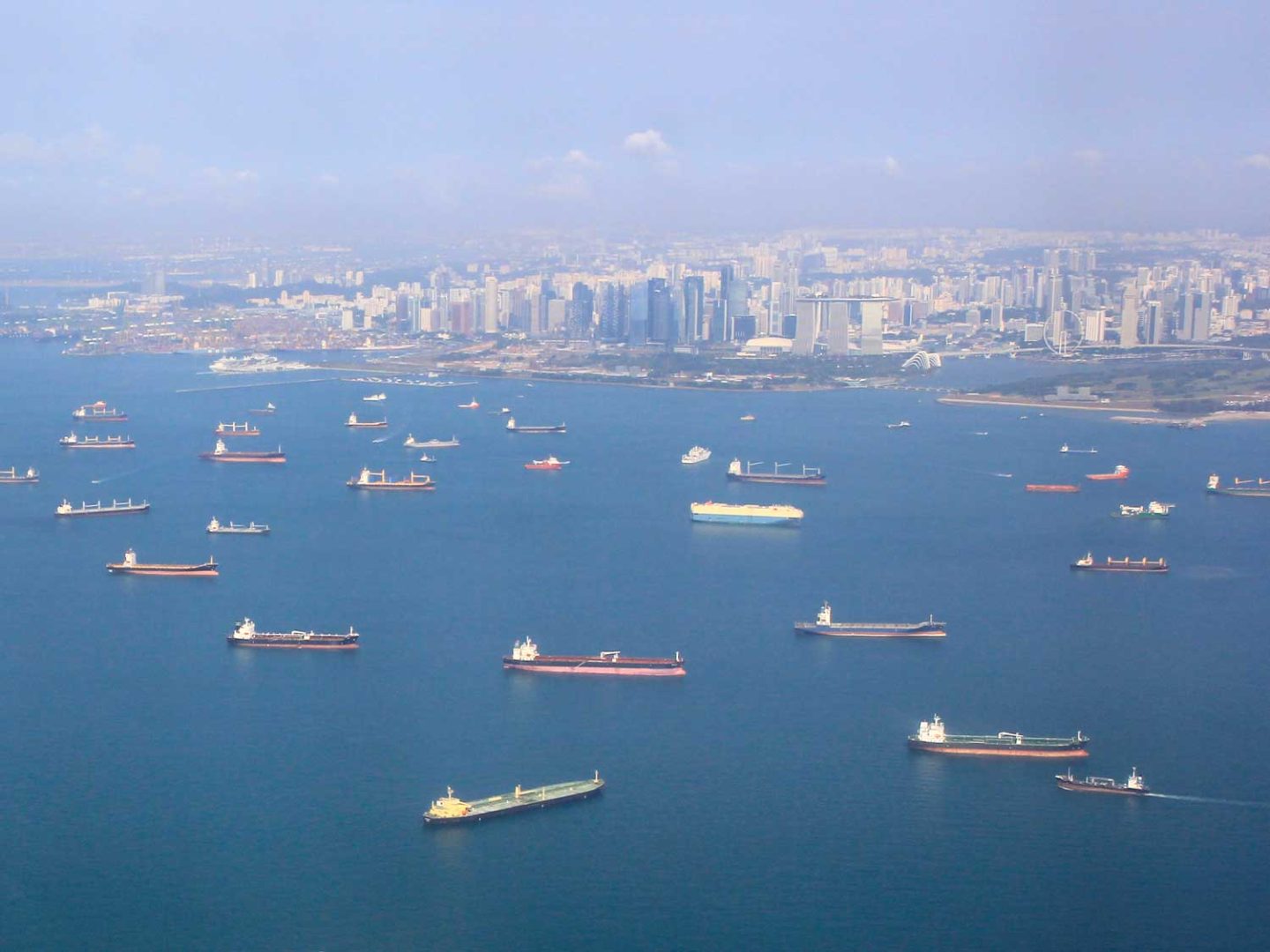
While there’s talk in the market about further pressure on rates, the reality is more complex, with container spot rate indices showing mixed signals last week, suggesting that any softening on key east-west routes might not last.

The global supply chain remains unpredictable, and several factors are still keeping the container market tight, which means any short-term dip in rates could quickly reverse, making it risky to assume that prices will continue to ease.

Carriers Act to Support Rates
Shipping lines are actively removing capacity from major east-west trades to reduce supply and put upward pressure on pricing. According to Drewry’s, 68 sailings across the Pacific, Asia-Europe, and Transatlantic trades have been blanked between this week and the end of April, while Sea-Intelligence data reports 47 blank sailings in the same period.

While methods of tracking blank sailings may vary, particularly as the major alliances transition between old and new service structures, the trend is clear; carriers are taking deliberate action to support General Rate Increases (GRIs) and stabilise the market in their favour.

Charter Market Dynamics Are Holding Rates Firm
While spot pricing may hint at a softer market, the time-charter sector continues to show strength. Many non-operating shipowners are keeping older, fully paid vessels in service, since they remain profitable even at lower margins.

This keeps theoretical capacity high but delays any significant correction in long-term charter rates, providing a buffer of rate stability for carriers. Basically the return is greater to ship owners to work the aging vessels in the current market than to scrap them. However once the charter rates diminish as freight rates are not at sustainable levels to support higher charter rates then scrapping vessels becomes more profitable and the supply of capacity will be eroded.

This willingness to keep tonnage in play – rather than scrap it – creates a layer of structural overcapacity. But crucially, it also delays any meaningful correction in longer-term charter costs, which in turn supports rate stability for shipping lines.

Shippers on the Asia-Europe trade lane should be particularly alert. With the traditional peak season approaching and transit times still extended due to Red Sea routing changes, demand could pick up sooner than expected, just as it did in 2024, when European importers advanced bookings to avoid delays.

Utilisation remains relatively high, and the market is only one or two strong booking weeks away from tightening significantly. Once that happens, space could quickly become constrained and prices may respond accordingly.

Congestion, Reliability and GRIs
At the same time, much of the market’s theoretical capacity isn’t actually accessible. Port congestion continues across Europe, including Antwerp, Hamburg, Rotterdam, and Le Havre, with yard occupancy levels of 75–90%, disrupting container flows and delaying vessel turnarounds.

Conditions are similar in Asia. Shanghai is experiencing delays due to fog and vessel bunching, while Singapore and Port Klang are seeing large backlogs and productivity slowdowns. Globally, schedule reliability remains under 55%, and with new carrier alliances still in rollout mode until July, disruption is likely to persist.

This operational friction reduces effective supply, keeping pressure on rates and creating risk for those waiting to move goods last-minute.

The container shipping lines have begun applying General Rate Increases (GRIs) and surcharges in recent weeks to stabilise rate levels in key corridors. While results may vary, these moves signal a clear intent to maintain pricing discipline, particularly as demand indicators begin to shift.

In an environment where schedule reliability is poor, congestion is high, and demand could rebound with little notice, waiting for rate relief may come with unintended consequences.

Certainty Beats Volatility
Shippers looking to avoid surprises would be well advised to fix rates where possible—because securing capacity and cost visibility offers valuable protection in a market that remains anything but predictable.

Freight markets can shift quickly, and when they do, the cost of waiting may outweigh any potential benefit. Fixing rates now delivers stability, security, and peace of mind in today’s volatile environment.

Our fixed-rate agreements act as a practical safeguard against market swings, offering predictable costs to support confident budgeting and planning.

Whether you’re managing high-volume trade lanes or simply seeking greater control over your supply chain, we’re here to help you stay ahead in 2025.

EMAIL our Managing Director, Andy Smith, to learn how we can support your business today.

China car factory parking lot

US Auto Tariffs Threaten European Carmakers

From the 2 April the US will impose a 25% tariff on all imported cars and light trucks. The tariffs, unveiled in a 26 March White House proclamation, are being implemented in phases, with vehicle components including engines and transmissions following on 3 May.

The decision to impose blanket tariffs on imports from long-standing trade partners like Canada, the EU and UK has already rattled brands, OEMs and suppliers worldwide. For European manufacturers, the new regime poses a direct threat to export volumes and profitability, particularly as the US remains a vital sales destination.

More than 20% of Europe’s vehicle production is exported to North America and these exports now face total levies of up to 40–50% when accounting for existing duties and the potential for retaliatory measures. The pressure on European OEMs is compounded by the possibility that preferential access through the United States-Mexico-Canada Agreement (USMCA) and other free trade agreements may not offer meaningful relief.

While automakers with established US production footprints may find temporary shelter from the storm, the longer-term implications are clear: export-led models are at risk, and global production strategies may need to be reengineered.

Unravelling the Supply Chain
The disruption extends well beyond finished vehicles. Starting in May, key components like transmissions and electrical systems will also attract the same 25% tariff. Even parts currently exempt under USMCA will soon face tighter scrutiny, as only components with certified US origin will remain duty-free.

This poses a particular challenge for tier-one and tier-two suppliers in Europe, many of whom rely on just-in-time delivery models and long-standing transatlantic flows. OEMs on both sides of the ocean are now under pressure to regionalise production, adjust sourcing strategies, and build resilience into their logistics networks.

European manufacturers will likely bear the brunt of rising costs, as shipping cars or components into the US becomes significantly more expensive. With retail prices potentially rising by $4,000–$12,000 per vehicle, demand is expected to falter, affecting everything from factory output to logistics flows and dealer inventory management.

In Europe, the implications extend beyond car exports. The wider automotive value chain, encompassing thousands of suppliers, technology firms, logistics providers and transport networks, is now being forced to confront a scenario where US market access becomes increasingly conditional, and long-standing production economics are thrown into question.

Short-term spikes in vehicle and parts shipments are expected before the tariffs take full effect, as manufacturers race to front-load deliveries.

As global trade policies shift and new tariffs reshape supply chains, proactive planning is more critical than ever. At Metro, we leverage award-winning services and deep industry expertise to help automotive brands, manufacturers and OEM’s navigate evolving trade barriers, regulatory changes, and supply chain disruptions.

Whether you need to mitigate the impact of tariffs, ensure compliance with new regulations, or adapt sourcing/export strategies, our tailored solutions keep your supply chain resilient and competitive.

EMAIL Andy Smith, Managing Director, today to explore how Metro can safeguard your supply chain and support your business in 2025 and beyond.

Savannah Port

Shipping at Risk from $1.5M Port Charge

To combat China’s dominance in shipbuilding and revive the US maritime sector, a sweeping proposal from the Trump administration to penalise container ships built in China has sent shockwaves through the global shipping industry. The policy would levy up to $1.5 million per port call on Chinese-built or Chinese-operated vessels entering American ports. 

The scale and scope of these potential fees have alarmed the world’s largest container shipping lines, who warn that the move could disrupt global supply chains and dramatically increase costs for shippers and ultimately consumers.

China has become the undisputed powerhouse of global shipbuilding, accounting for over 80% of all newly built container vessels. The largest ocean carriers — including MSC, Maersk, CMA CGM, and Hapag-Lloyd — have heavily invested in Chinese shipyards due to their cost-efficiency, financing advantages, and output capacity. For instance, MSC, the world’s largest carrier, has 24% of its fleet built in China, with 92% of its order-book also tied to Chinese yards. Maersk and CMA CGM show similar reliance, with well over half of their future tonnage scheduled from China.

The proposed fees would apply not only to Chinese-owned carriers like COSCO, but also to foreign lines that have Chinese-built vessels in their fleets or on order. This has drawn strong opposition from the industry, with MSC CEO Soren Toft warning that the policy could add between $600 and $800 to the cost of moving a single container.

That cost, he stressed, would either have to be absorbed by carriers, prompting a withdrawal from US trades, or passed down the supply chain to cargo owners and consumers.

To avoid the financial hit, carriers may consolidate services, eliminating calls at smaller ports and serve only major hubs. This will inevitably create congestion at the terminals and strain inland transport, as containers pile up in fewer locations lacking the right mix of trucks, chassis, and rail capacity.

Reduced carrier capacity, port consolidation, and higher operational costs will all converge to drive prices up. As Andrew Abbott, CEO of ACL, put it bluntly, the plan “would cause a freight rate explosion that would dwarf the COVID-era increase.”

US Trade Representative (USTR) Hearings
The policy has mobilised intense opposition, with over 500 submissions made to the USTR, and dozens of executives testifying at public hearings in recent weeks. Alternative mechanisms such as phased implementation, tiered fees based on vessel type or service region, or per-container charges instead of flat port call levies have been proposed, with the USTR’s final proposals due later in April.

The Trump administration argues that these measures are necessary to rebuild US maritime capacity and ensure national security. But critics note that the US lacks the infrastructure, workforce, and financing mechanisms to quickly scale up shipbuilding, and that domestic vessels are not only four times more expensive to build but also cost double to operate. Even if construction began tomorrow, new ships would not be delivered for years and US exports and imports would suffer in the meantime.

If implemented in its current form, the port fee proposal would reshape global liner networks, drive up transportation costs, and jeopardise the competitive position of US exporters. It may also lead to structural realignments in trade patterns, with cargo diverted to Canadian and Mexican ports, and long-term erosion of US port and logistics competitiveness.

We’re working closely with clients as we monitor regulatory developments, ready to react and adapt container shipping strategies in real time. If your supply chain depends on US port access, now is the time to assess your exposure and prepare contingencies.

EMAIL our Managing Director, Andrew Smith, to learn how we can protect your network, manage cost risks, and keep you competitive — no matter how the tide turns.

Aerospace 1440x1080 1

JOSCAR Accreditation: A Milestone for Excellence

Metro has been awarded JOSCAR accreditation, a key industry benchmark that demonstrates our commitment to continuously meeting the rigorous standards required by key sectors, including aerospace, defence, and security.

JOSCAR (the Joint Supply Chain Accreditation Register) is a highly respected, collaborative accreditation system used by major players across aerospace, defence, and security. It validates suppliers against a comprehensive set of criteria — from operational capability and supply chain risk, to ethical practices and regulatory compliance.

Achieving JOSCAR accreditation involved a rigorous evaluation of our internal systems and processes to ensure alignment with JOSCAR’s stringent requirements. Our dedicated compliance team worked tirelessly to implement necessary changes and enhancements.

For our customers, this accreditation isn’t just a badge — it’s proof of our readiness, reliability, and resilience in complex, high-compliance supply chains.

What This Means for You

By achieving this accreditation, we’ve:

  • Reduced procurement friction for customers who rely on JOSCAR to streamline supplier selection
  • Demonstrated our operational transparency and readiness to support sensitive and high-risk projects
  • Reinforced our commitment to continuous improvement, in line with our ISO 9001 and ISO 14001 accreditations

In practical terms, this means that existing and future clients can onboard us faster to work on projects, with full confidence that we meet the industry’s highest standards.

Continual Investment in Excellence

JOSCAR is one of several initiatives we’ve undertaken to align our systems, people, and culture with the expectations of the sectors we serve. Whether you’re managing a global defence project, a secure aerospace supply chain, or a high-compliance logistics program, we’re positioned to support you with the professionalism and precision you require.

If you’d like to learn more about what our JOSCAR accreditation means for your business or supply chain, EMAIL Laurence Burford.