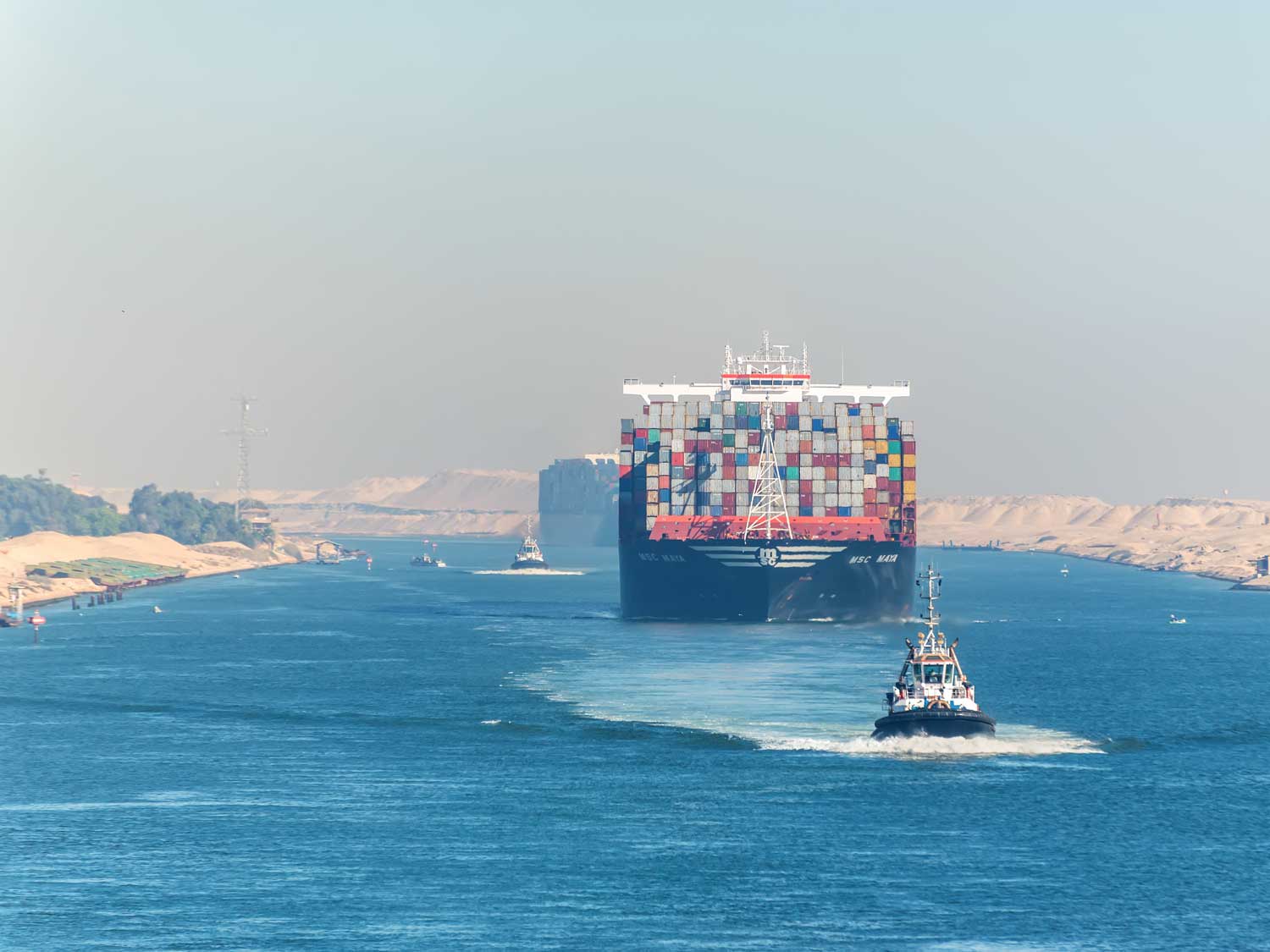
Bridge on ship

Sea Freight Market Review

The global ocean freight market is undergoing a period of transition in 2025, influenced by regulatory changes, shifting trade patterns, and evolving carrier alliances. While demand remains strong in key regions, rate volatility persists due to supply chain disruptions and excess capacity.

The ocean freight sector is experiencing considerable adjustments as carriers adapt to regulatory and economic shifts. The EU ETS expansion now covers 70% of maritime emissions, leading to higher surcharges and operational costs for carriers.

Supply/Demand
Capacity growth is projected to slow to 5% in 2025 after record vessel deliveries in 2024. However, supply chain disruptions persist due to global port congestion and ongoing Red Sea diversions are soaking up excess capacity.

The restructuring of major shipping alliances is further shaping the industry landscape, with the dissolution of 2M, the formation of the Premier Alliance by THE Alliance, and the launch of Gemini Cooperation in February 2025.

Proforma scheduled liner capacity on the Asia-North Europe trade is set to be reduced by around 11% once the transition to the new shipping alliance set-up is complete. The combined weekly capacity drop of some 28,000 TEU equates to a total reduction of 221,000 TEU across all services. However, the number of individual weekly sailings between Asia and North Europe is expected to increase from 26 (under the previous alliances and standalone services) to 28, potentially improving frequency and flexibility for shippers.

Global port congestion remains a pressing issue, particularly in China and vessel utilisation remains high, with only 0.2% of the global liner fleet currently idle. The industry is also witnessing an increase in blank sailings, with 47 announced through mid-April, affecting Transpacific and Asia-Europe trade routes. The Transpacific market, in particular, is experiencing notable disruptions, with 43% of blank sailings concentrated in this corridor.

Expectations that Red Sea diversions would ease, returning an estimated 2 million TEU to global circulation, were dampened over the weekend following missile exchanges between the US and Yemen’s Houthi rebels. MSC CEO Soren Toft stated, “Suez simply isn’t safe to transit at the moment, and there’s no immediate prospect of a return.” This continued instability may prolong disruptions and return pressure on rates.

Market
Meanwhile, the Shanghai Containerised Freight Index (SCFI) has dropped 17% since January and despite strong cargo demand in select regions, the market remains vulnerable to downward pricing pressures.

Demand remains resilient but uneven, with North America and India seeing stronger performance, whereas Europe’s slower economic growth is weighing on export activity. Chinese exports have exceeded expectations, driven in part by early shipments ahead of potential tariff adjustments.

The Drewry World Container Index (WCI) has reached its lowest level since January 2024 and while rates are below their pandemic-era peaks they are still 79% higher than pre-pandemic averages from 2019.

At Metro, our fixed-rate agreements on popular shipping routes provide a practical safeguard against rate volatility, offering predictable costs for effective budgeting. Whether you’re managing high-volume trade lanes or seeking greater stability for your supply chain, our tailored solutions can help you thrive in 2025.

To discover how Metro can strengthen your business and provide peace of mind, EMAIL our Managing Director, Andy Smith, today.

ECO globe

Metro expands sustainability initiative for global sea and airfreight services

Metro is taking a bold step forward in its sustainability journey by expanding its environmentally conscious initiatives for global Sea freight and Airfreight services, effective April 1st, 2025.

As part of this commitment, Metro will introduce a groundbreaking transparency measure: the total amount of CO2 emissions generated by each Sea freight and Airfreight shipment will be clearly printed on every invoice. This initiative allows shippers to better understand and quantify their carbon footprint, making sustainability efforts more accessible and measurable.

This latest enhancement builds on Metro’s existing MVT Eco application, a tool designed to provide customers with in-depth insights into their transportation-related emissions. By integrating CO2 emissions data directly into freight invoices, Metro is setting a new standard for environmental accountability within the logistics industry.

Metro’s CEO, Grant Liddell, emphasises the importance of this initiative: “The inclusion of Sea freight and Airfreight shipment CO2 data on freight invoices enhances the existing reporting available via MVT Eco and represents an evolutionary step in Metro’s commitment to raising visibility and awareness of the environmental impact within transportation.”

Metro ensures that its carbon calculations are rigorously accurate by leveraging the most comprehensive accreditation coverage available. The CO2 calculations provided through this initiative are GLEC accredited and fully aligned with ISO-14083 standards, reinforcing Metro’s dedication to environmental best practices and industry-leading sustainability measures.

For customers looking to gain deeper insights into their Scope 3 emissions and maximise their sustainability efforts, the MVT Eco application offers advanced reporting and analytics.

Those interested in utilising this tool can reach out to their Key Account Management contact or connect directly with Ian Powell, Customer & Technical Solutions Director (EMAIL), to explore how Metro’s sustainability initiatives can support their environmental objectives.

With this initiative, Metro continues to lead the way in sustainable global freight transportation, providing shippers with the necessary tools to make informed, eco-friendly decisions.

Ocean market report 1440x1080 1

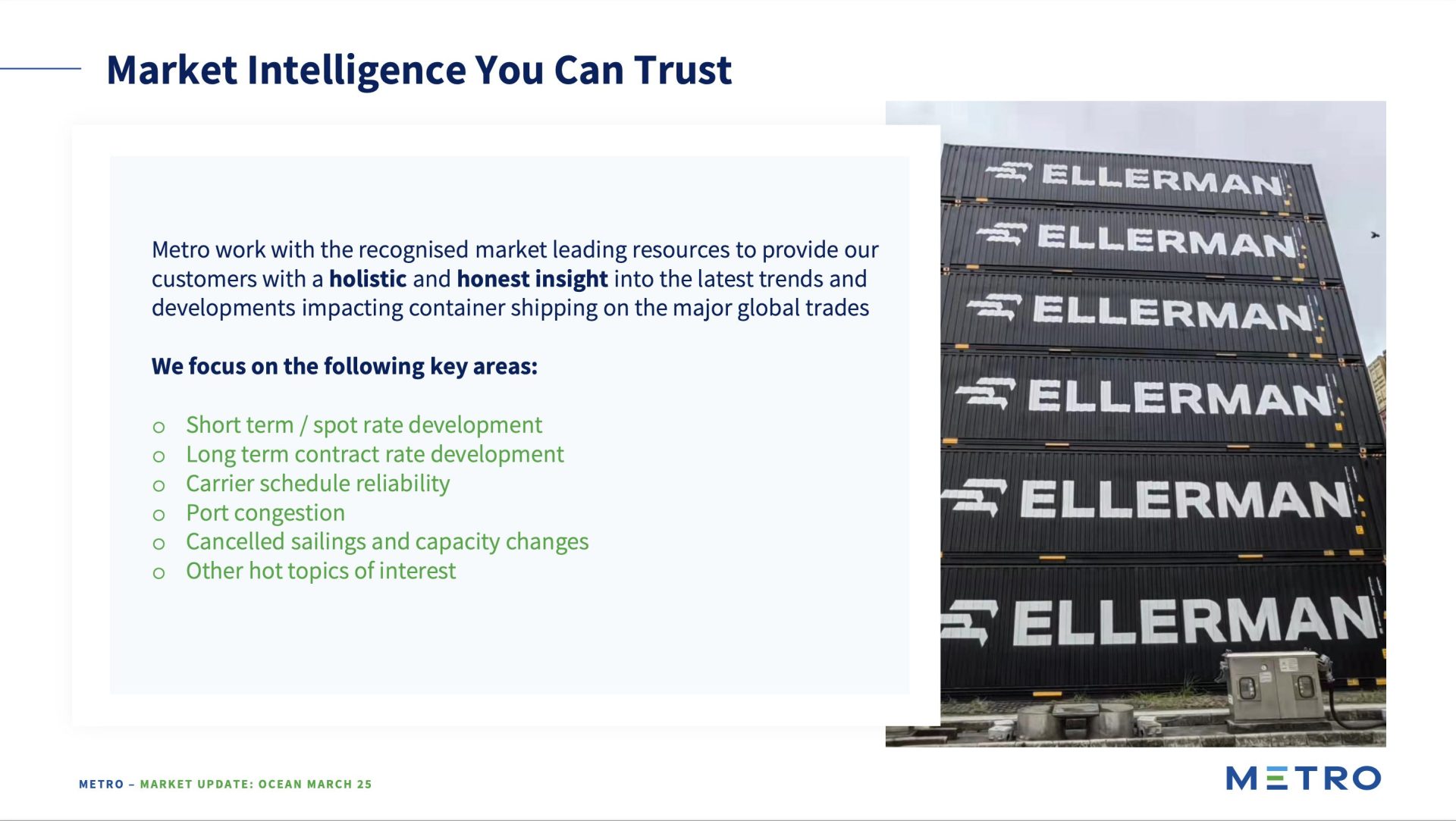
Stay Ahead with Metro’s Ocean Freight Market Update

In the ever-changing world of global trade, staying informed is not just an advantage, it’s a critical necessity. That’s why Metro provides the Ocean Freight Market Update, a comprehensive, data-driven report designed to help businesses navigate the complexities of container shipping.

Subscribers to this monthly report gain valuable insights into spot, short- and long-term rate trends, carrier reliability, port congestion, canceled sailings, sustainability initiatives, and more—ensuring they can make informed, strategic decisions in real-time.

Highlights from the March 2025 Ocean Freight Market Update

Rate Developments: Despite attempts to impose general rate increases (GRIs), rates on Far East Westbound trade lanes have softened. Volatility is expected through April, with Asia-Europe lanes facing capacity shortages.

Schedule Reliability & Port Congestion: Global vessel reliability dipped slightly to 50-55%, while major ports like Singapore, Busan, and Piraeus continue to experience significant congestion.

Bunker & Biofuels Transition: The shipping industry is accelerating its shift toward decarbonisation, but new EU carbon emissions surcharges are increasing costs.

Supply & Demand Outlook: An 8% increase in capacity versus just a 3% rise in demand suggests blank sailings will be necessary to balance market conditions.

Red Sea Transits: Major carriers continue to avoid the Suez Canal due to ongoing security concerns, maintaining Cape of Good Hope reroutes.

Why Subscribe?
Metro’s Ocean Freight Market Update is an unbiased, intelligence-driven resource backed by data from leading industry sources. In a landscape shaped by supply chain disruptions, regulatory shifts, and market fluctuations, having access to timely, expert insight is more critical than ever.

Subscribe now to receive monthly updates straight to your inbox and stay ahead in the dynamic world of ocean freight.

Contact your Key Account Director, or EMAIL Lucy Hulston to subscribe and receive the latest update.

Beyondly 1440x1080 1

Metro & Beyondly are driving sustainable supply chains

Sustainability in logistics isn’t just a challenge—it’s an opportunity. An opportunity to rethink the way goods move, to reduce emissions, and to turn compliance into a competitive advantage.

At Metro, we’ve embraced this challenge head-on, becoming carbon neutral for five years, monitoring emissions across 250,000 shipments, and pioneering sustainable solutions that help our customers meet their environmental goals.

But sustainability doesn’t stop at logistics. It stretches across the entire supply chain ecosystem—from packaging regulations to waste reduction, from carbon foot-printing to compliance with global sustainability laws. That’s where Beyondly comes in.

Metro and Beyondly, both members of the GB Global Group, share a common goal: helping businesses navigate the complexities of sustainability while staying ahead of industry regulations. Together, we offer a holistic approach to sustainability, ensuring that every aspect of a company’s supply chain—from transport emissions to packaging compliance—is not just managed, but optimised.

Measuring and reducing carbon emissions
Reducing carbon emissions isn’t just about switching transport modes—it’s about understanding where the biggest environmental impacts lie.

Metro’s MVT ECO platform gives businesses the power to forecast, measure, avoid, or offset global supply chain emissions, with detailed, accredited emissions tracking across all transport modes.

Beyondly takes this further, ensuring businesses aren’t just reducing transport emissions but aligning their entire supply chain with sustainability regulations—from Extended Producer Responsibility (EPR) compliance to waste reduction strategies.

It’s one thing to measure carbon emissions; it’s another to actively reduce them.

Metro was the first UK freight forwarder to commit to Sustainable Aviation Fuel (SAF) and is continuously working on reducing carbon output across road, sea, and air freight.

Beyondly empowers businesses to take action beyond logistics, providing carbon footprint assessments, ESG strategy development, and Net Zero roadmaps—ensuring that sustainability is built into every decision, not just an afterthought.

From compliance to competitive advantage
Environmental regulations are evolving faster than ever, and businesses that fail to keep up risk falling behind their competitors.

Metro simplifies compliance, ensuring that every shipment is tracked, measured, and meets environmental standards, while continuing to invest in emission reduction technologies, digital visibility tools, and collaborative industry initiatives.

Beyondly ensures businesses stay compliant across the board and helps them develop long-term strategies, guiding them through B Corp certification, sustainability reporting, and corporate ESG leadership.

Sustainability is no longer a tick-box exercise—it’s a business imperative. Companies that embrace it don’t just reduce risk; they unlock new opportunities, enhance brand reputation, and future-proof their operations.

By partnering with Metro and Beyondly, businesses can integrate sustainability across their entire supply chain, from logistics and transport to packaging, compliance, and beyond.

Learn more about Metro’s sustainable logistics solutions.

Explore how Beyondly can help your business.

Together, let’s move beyond compliance—toward a truly sustainable future.