US EU flags on desk 1440x1080 1

US–EU Trade Deal Signals New Trade Era

The US and EU have agreed a landmark trade framework taking effect 1 August, with a 15% baseline tariff, replacing many higher existing rates.

In addition to lowering tariffs the new trade deal opens markets, and pledges huge investment flows, with significant opportunities for UK traders able to leverage the EU’s expanded access to the U.S. market.

Headline tariff changes:

  • Cars & parts – Cut from 27.5% to 15%
  • Pharmaceuticals & semiconductors – 0% tariff until review; max. 15% after
  • Steel & aluminium – Stay at 50% pending quota deal
  • Zero‑for‑zero tariffs – On aircraft, some chemicals, generic drugs, semiconductor equipment, selected agri‑products, raw materials
  • Still under negotiation – Wine and spirits tariffs

Strategic commitments:

  • EU to buy $750bn in US oil, LNG and nuclear technology
  • EU firms to invest $600bn in the US over Trump’s second term
  • Defence procurement from US suppliers planned

Opportunities for US, EU & UK Traders

The agreement creates multiple areas of advantage for transatlantic trade:

For EU exporters to the U.S.:

  • Reduced tariffs on high-value sectors such as cars, pharmaceuticals, and technology components.
  • Greater certainty in supply chain planning with capped tariff rates post-investigation.

For U.S. exporters to the EU:

  • Immediate tariff elimination for priority goods, expanding competitiveness in aerospace, chemicals, and agri-products.
  • Increased market access supported by European government procurement in energy and defence.

For UK exporters and importers:

  • Ability to leverage EU supply chains for tariff-advantaged U.S. market access.
  • Opportunities to integrate into transatlantic supply networks in sectors such as automotive, chemicals, and renewable energy.

Leverage Metro’s EU network, in‑house customs brokerage, and on‑the‑ground teams in the United States to navigate this new trade landscape. Whether you’re reassessing sourcing strategies, managing new tariffs, or planning market entry, our experts can deliver compliant, cost‑effective solutions across every mode and market.

Email Managing Director, Andrew Smith, to explore how we can optimise your US/EU trade strategy.

Med satellite 1440x1080 1

UK Bid to Join Pan-Europe Trade Area Blocked

The UK government’s attempt to join the Pan-Euro-Mediterranean (PEM) Convention, a framework that simplifies supply chains and reduces tariffs across Europe, North Africa, and parts of the Middle East has been blocked by the EU.

Established in 2012 and modernised in 2025, the PEM Convention allows manufacturers in member countries to “cumulate” inputs, counting components sourced from any PEM country as local when determining a product’s origin for tariff purposes. 

So, if a Turkish manufacturer made a machine from EU-sourced parts, the item would be considered as “made in Turkey” when exported to France, benefiting from preferential trade agreements. This enables goods like cars, chemicals, and processed foods to move across borders with reduced  paperwork and lower tariffs.

The convention’s 25 members include the EU, Norway, Switzerland, Turkey, Ukraine, Egypt, Morocco, and Israel. The UK, notably, is one of the few European countries not included.

Joining PEM could ease post-Brexit trade friction, particularly for UK manufacturers relying on complex, multinational supply chains. It would:

– Reduce rules-of-origin paperwork
– Provide greater sourcing flexibility
– Support industries like automotive, chemicals, and food processing

While some experts say the impact would be moderate, others argue it’s a pragmatic step that offers clear benefits without requiring a return to the EU single market or customs union.

Why Is the UK Blocked?
Despite initially signalling openness, the European Commission has withheld support for UK accession, citing concerns that UK-made goods could unfairly qualify for low-tariff access to EU markets.

Technically, incorporating PEM provisions into the EU–UK Trade and Cooperation Agreement (TCA) would require reopening parts of the Brexit deal and EU officials have indicated they want to stick closely to the “common understanding” agreed at the May UK–EU summit, to avoid further complications.

This block has frustrated UK trade bodies, including the British Chambers of Commerce, which see PEM as a practical tool to improve trade flows.

The UK government has said it will continue to review the potential benefits of PEM and engage with the EU and other PEM members. However, with Brussels signalling little appetite to renegotiate TCA terms, short-term progress may be unlikely.

Metro’s customs specialists design tax-efficient supply chains using bonded warehousing, IPR/OPR, duty drawback, and other regimes to protect your cash flow, minimise duty exposure, and keep you fully compliant. EMAIL Managing Director, Andy Smith, to learn more

Trump on graph 1440x1080 1

Tariff Pause Triggers Surge in Ocean Freight Rates – But Legal Roadblocks Lie Ahead

Container shipping lines are driving spot rates sharply higher, with the 2025 transpacific peak season likely to begin earlier than usual, fuelled by a surge in US imports from Asia.

Spot rates on key routes are rising faster than during the pandemic-era boom. Carriers implemented general rate increases (GRIs) on 1 June and plan further hikes for mid-June and 1 July, seizing the moment while demand is high.

According to the WCI, Shanghai–Los Angeles rates surged 57% week-on-week, while Shanghai–New York climbed 39%. Since mid-April, West Coast rates are up 173%, and East Coast rates have more than doubled. For comparison, rates rose just 20% over the same period in 2021. Asia–Europe lanes are also rallying, with the Shanghai–Rotterdam index up 32% and Shanghai–Genoa rising 38%, the highest weekly increases in many months.

But this momentum may be short-lived, as a wave of new capacity is entering the market. On Asia–West Coast routes, supply will grow by 13% in June and 16% in July. This additional capacity is expected to blunt the impact of further rate hikes, and limit the length of the current rally.

At the same time, the legal outlook for Trump ‘reciprocal’ tariffs remains highly uncertain. On 29 May, a federal appeals court temporarily reinstated the tariffs, just one day after the US Court of International Trade ruled that the former president had exceeded his authority and ordered an immediate block. The Court of Appeals for the Federal Circuit in Washington paused that decision to consider the government’s appeal, with final briefs due by 9 June.

However, legal experts suggest that the original court ruling is on strong footing. Under the current framework, principally the International Emergency Economic Powers Act (IEEPA), presidential authority to impose broad-based tariffs is limited. The Court of International Trade ruled that Trump’s use of IEEPA to impose tariffs on non-emergency, peacetime imports likely overstepped constitutional bounds.

If the appeal fails, Trump’s tariffs will face two remaining paths: either a legislative push to expand presidential tariff authority through Congress, or a ruling from the Supreme Court. The latter remains a real possibility if the administration persists and seeks to test the constitutional limits of executive trade powers.

In the meantime, the legal limbo is prompting importers to accelerate orders while the tariffs remain suspended, adding further pressure to ocean freight markets. But with front-loading already well advanced, this year’s peak season is expected to be earlier and shorter than the usual August–October window. While carriers are determined to ride the wave of high rates, fundamentals suggest the next one or two GRIs may be the last before rates begin to level off.

With legal uncertainty surrounding US tariffs and ocean freight markets under intense pressure, early planning and expert guidance are more critical than ever.

Metro’s experienced sea freight and customs brokerage teams are here to support your transpacific and Asia–Europe supply chains, with in-market expertise and local operations in the US.

Whether you’re juggling critical shipments, reviewing tariff exposure, or seeking end-to-end compliance support, Metro has the insight and capability to keep your cargo moving.

EMAIL our managing director, Andrew Smith, today to stay ahead of disruption and secure your space at the best possible rates.

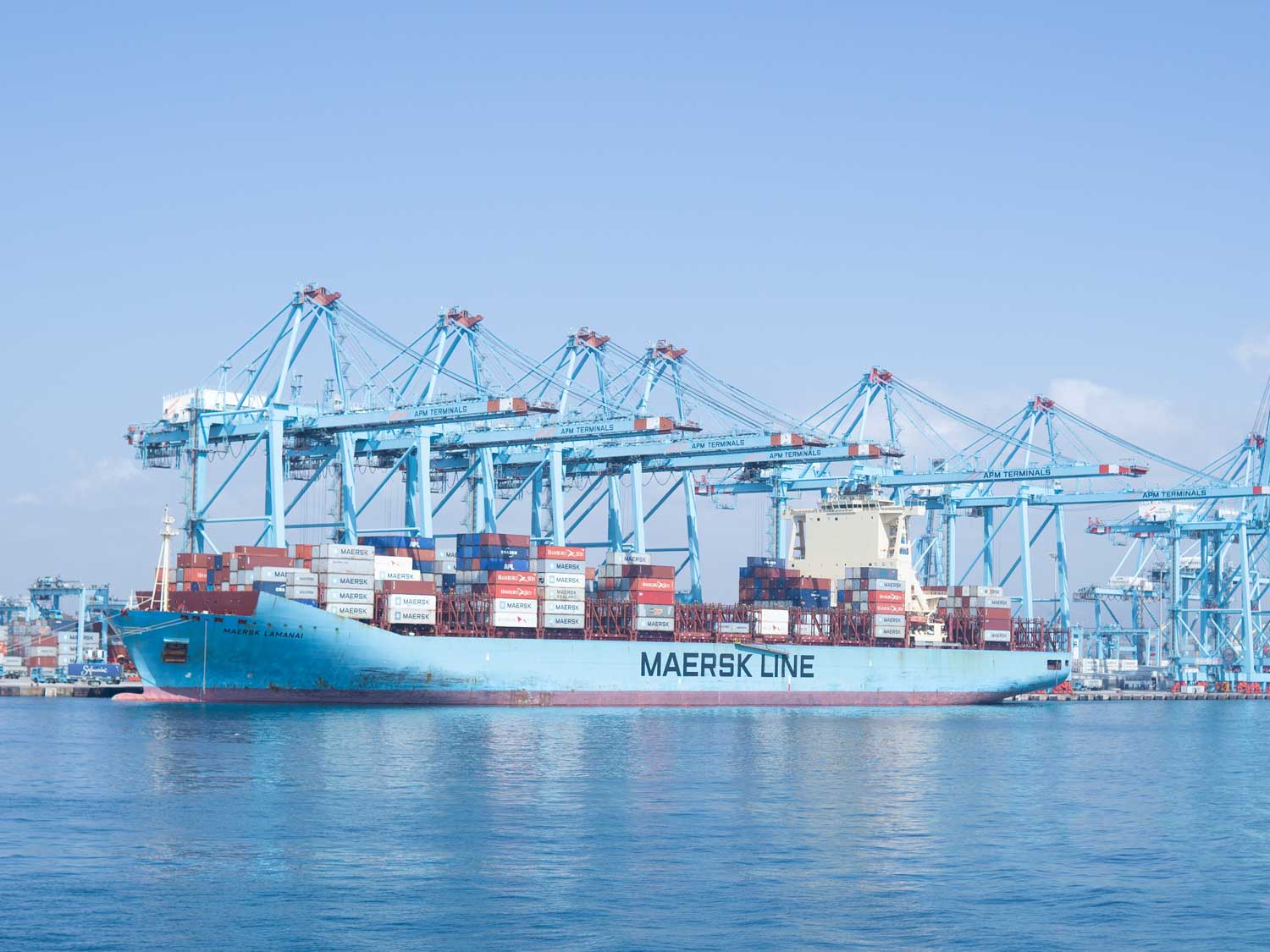
Maersk

Global Schedule Reliability Rises Again

Container shipping schedule reliability improved for the second consecutive month in April 2025, reaching its highest level since November 2023. According to the latest industry data, 59% of vessel arrivals were on time in April, up from 58% in March and 6% higher than April 2024.

While still far from pre-pandemic levels, the trend reflects a clear focus among carriers on restoring service integrity.

The standout performer remains the Gemini Cooperation, formed by Maersk and Hapag-Lloyd, which continued to dominate on-time performance metrics across key global trades. In April, Maersk posted the highest reliability among the top 13 carriers at 73%, followed closely by Hapag-Lloyd at 72%. MSC placed third with 61%.

Gemini achieved an average of 91% on-time reliability across all port calls and 87% when measured by final destination arrivals, well above its 90% performance target on several major lanes, including Asia–US West Coast and US East Coast–Europe services. On the Asia–North America West Coast route, Gemini achieved a perfect 100% score. Meanwhile, MSC led on the Asia–North America East Coast trade, recording 92%.

At the other end of the spectrum, the Premier Alliance and Ocean Alliance continued to struggle. Premier averaged 53% reliability, while Ocean Alliance fell to 51%. Among individual members, Evergreen recorded the lowest schedule performance at 47%.

Market impact of improving reliability
Improving schedule reliability is more than just operational, it’s strategic. Consistent service performance enables shippers to reduce safety stocks and better manage inventory, improving overall supply chain efficiency. Simply, reliability allows companies to remove weeks of buffer stock from their planning.

In contrast, low-reliability carriers may find themselves at a competitive disadvantage, particularly if freight buyers begin to prioritise predictability over price alone in an increasingly complex market environment.

Rates hold firm as carriers manage capacity
As we report in this week’s newsletter average global spot freight rates have also shown moderate upward movement. The Drewry World Container Index reported a 2% rise in global average rates in mid-May, bringing the benchmark to a level that is 60% above the pre-pandemic average, but still far below the 2021–22 peak.

Shanghai–Genoa and Shanghai–New York spot rates both increased by 4% week-on-week, while Shanghai–Los Angeles edged up 2%. Backhaul rates out of Europe remained stable, indicating strong front-haul demand and tight outbound capacity from Asia.

The rate resilience is partly attributed to carriers’ continued capacity discipline and their renewed focus on reliability. As cargo volumes from Asia increase, partly driven by front-loading ahead of potential tariff changes, shippers are placing greater value on stable schedules and transit times.

With the full rollout of the new alliances not expected until July, further improvements in reliability may still lie ahead. For now, Gemini’s strong performance is setting a new service benchmark, while the broader market appears to be shifting in favour of predictability and performance over sheer price competition.

With carrier reliability still fluctuating across trade lanes, dependable sea freight solutions requires more than just a booking, it requires real-time insight and agility. Metro’s MVT platform continuously tracks shipping line KPIs, comparing actual performance across alliances and enabling us to dynamically adjust your supply chain around real arrival data, not published schedules.

Combined with our expert sea freight team and strategic carrier partnerships, this data-driven approach helps reduce delays, optimise inventory planning, and protect your service levels.

Partner with Metro for smarter, more reliable ocean freight, powered by MVT and built around your business. EMAIL Andrew Smith, managing director, today.