Salalah

Drones strike Gulf hubs as air and sea freight networks tighten

Security incidents on 11 March have added further pressure to global freight networks already affected by disruption across the Middle East.

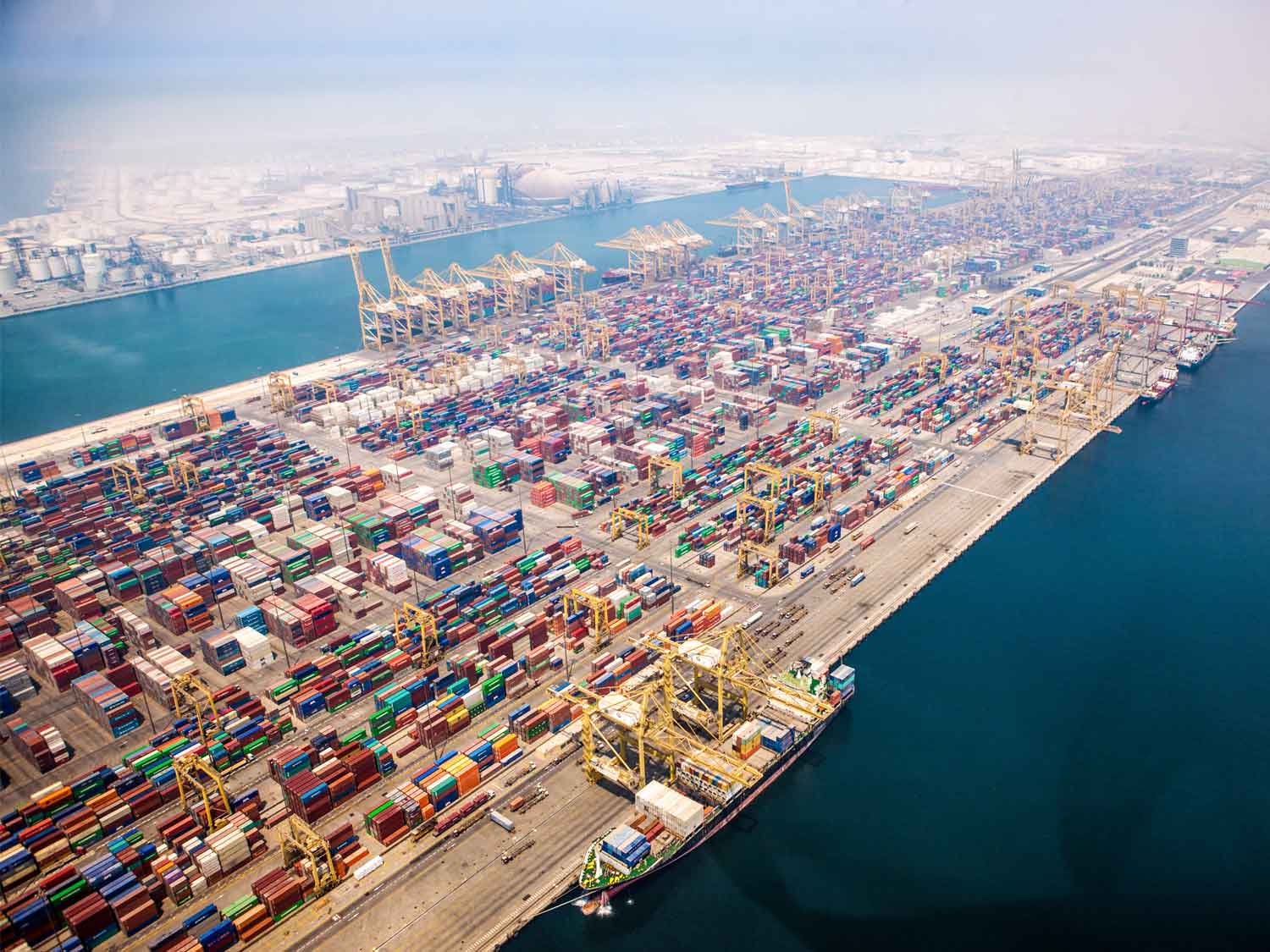
A drone strike at the Port of Salalah in Oman hit fuel storage tanks, forcing the suspension of port operations and bunkering activity at one of the region’s key container transhipment and fuel supply hubs. Salalah is a critical location for vessel refuelling and cargo transfers in the Arabian Sea, and any interruption to bunkering services can affect shipping schedules and vessel routing across multiple trade lanes.

Initial assessments indicate both port operations and bunker supply remain suspended while the extent of the damage is evaluated. The incident follows earlier security events near the port and additional reported attacks affecting nearby Duqm, increasing concern over the resilience of key logistics infrastructure in the region.

At the same time, Dubai International Airport temporarily halted operations after a drone strike nearby wounded four people on the morning of 11 March. Flights have since resumed, but the incident briefly disrupted one of the world’s busiest international aviation hubs and a critical gateway for global air cargo flows.

Port congestion risk rising

The operational disruption comes at a time when global container shipping networks remain highly sensitive to sudden shocks.

When vessels are diverted or delayed, shipping networks can rapidly move from normal operations to congestion. Cargo diverted from disrupted Gulf ports is already being redirected to other locations, with India’s west coast ports among the first to experience increased volumes.

Shipping networks remain vulnerable because delays compound quickly across vessel rotations.  In 2025, Red Sea re-routings took about 9% of capacity out of the system, while port congestion took out a further 10%. That’s capacity lost, not because the ships didn’t exist, but because delays made them non-functional.

The current situation’s risk comes in two parts. First, as carriers abandon Suez transits because of the new strikes, schedules shift unevenly back toward the Cape of Good Hope. And as carriers move at different cadences, it creates vessel bunching, port congestion and massive service instability.

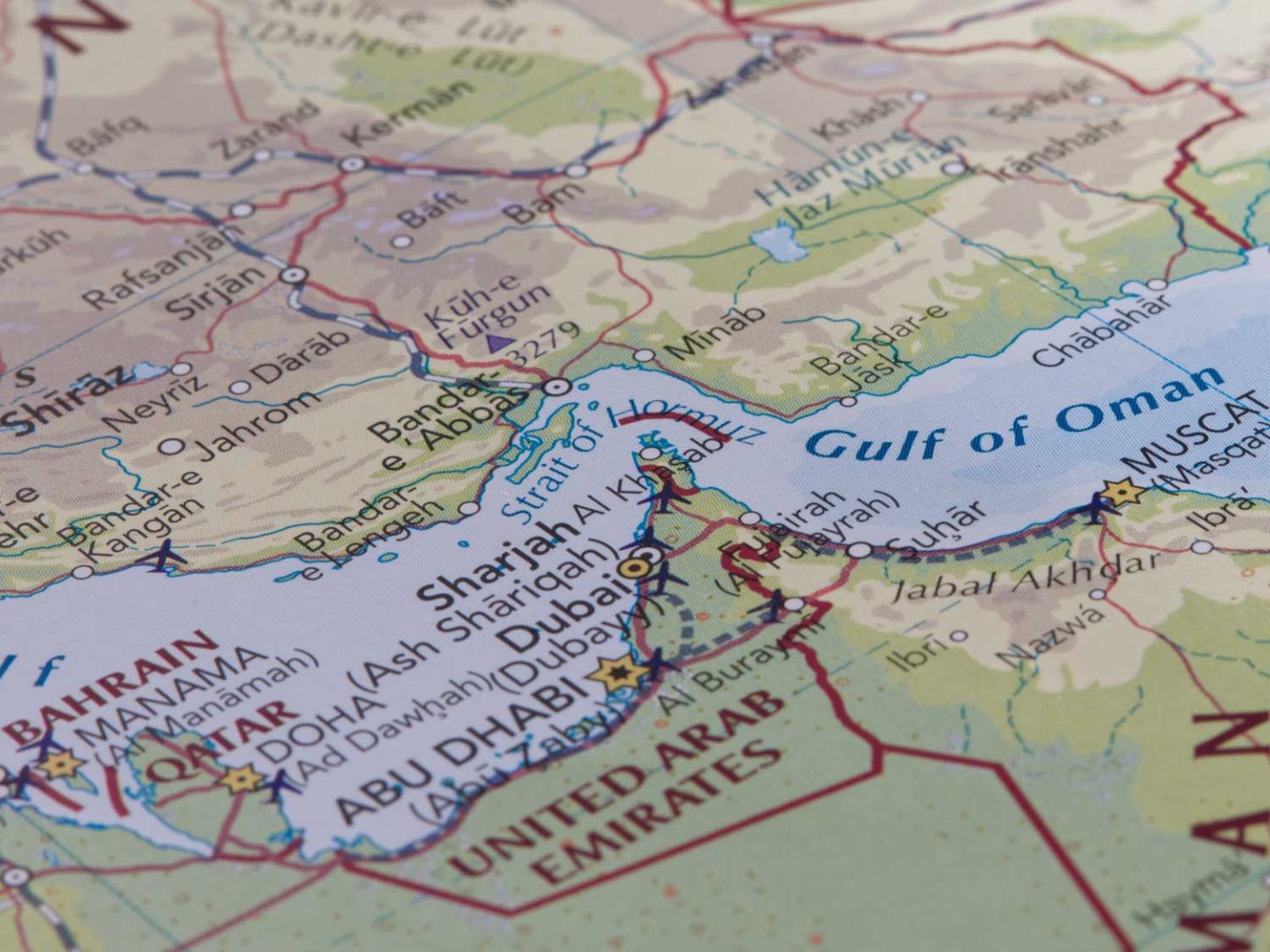
Secondly, the blockade of the Strait of Hormuz has trapped vessels and forced carriers to suspend transits, creating a sudden loss of capacity that is rippling through the whole supply chain.

Air cargo capacity tightening across global routes

Air freight markets are also tightening as disruption across Middle Eastern aviation hubs affects global cargo connectivity.

Many international air cargo supply chains rely on Gulf carriers and airports as transit points between Asia, Europe and North America. When these hubs face operational disruption or flight cancellations, cargo must be rerouted through alternative airports and airlines.

The impact is already visible in export markets heavily dependent on these connections. In Bangladesh, where around 60% of air cargo typically moves through Middle Eastern hubs, hundreds of flights have been cancelled since late February.

As a result, air freight rates to Europe have more than tripled, while rates to the United States have almost doubled, reflecting the sudden shortage of available capacity.

What this means for shippers

The attacks on Salalah and the temporary disruption at Dubai International Airport highlight how quickly events in the region can affect global logistics infrastructure.

For shippers, the immediate risks include reduced air cargo capacity, potential vessel delays linked to bunkering disruption, and increased pressure on alternative ports and airports as cargo flows are redirected.

Metro is monitoring developments across Middle Eastern ports, airports and carrier networks and will continue to provide updates as the situation evolves.

If your shipments move through affected trade lanes, contact your Metro account manager to review routing options and ensure your supply chain remains resilient as conditions develop.

Blanking is biting

Blanked sailings surge as congestion and reliability continue to constrain capacity

Container shipping capacity remains under pressure as carriers increase blanked sailings, schedule reliability weakens and port congestion ties up vessels across key gateways.

According to maritime researchers Drewry, 136 sailings were cancelled in February across the transpacific, Asia–Europe and transatlantic trades, a 122% increase compared with January. The surge coincides with the traditional Lunar New Year slowdown, as carriers anticipate a seasonal contraction in export volumes from Asia.

The majority of blanked sailings are concentrated on the transpacific eastbound route. While cancellations are expected to ease in March, with only 53 blank sailings currently announced, February’s reductions represent a material short-term withdrawal of capacity from the market.

Reliability slips back

Schedule reliability also deteriorated in December. Global on-time performance fell by 1.2 percentage points month-on-month to 62.8%, the second-lowest reading since May. 

Average vessel delay increased to 5.04 days, the second-highest level since April.

While reliability remains 9% higher year-on-year, performance across the major carrier groups remains uneven. Maersk recorded 76.7% schedule reliability in December, followed by Hapag-Lloyd at 75.2%. Eight of the top 13 carriers operated within the 50–60% range, while Wan Hai recorded 47.8%.

Alliance performance also diverged. In November and December, Gemini Cooperation achieved 92.3% reliability across all arrivals, compared with 73.5% for MSC and 58.8% for Ocean Alliance.

Lower reliability effectively reduces usable capacity. Late arrivals compress schedules, extend port stays and create knock-on disruption across subsequent rotations.

Northern Europe congestion continues

Port congestion continues to tie up vessels, particularly across Northern Europe. Winter weather has reduced terminal productivity in Antwerp, Hamburg and Rotterdam, with berth delays of three to five days reported. Le Havre is experiencing delays of up to eight days following temporary terminal closures.

Yard utilisation levels remain elevated across major European hubs, including UK ports. London Gateway and Southampton are reporting intermittent delays of one to two days, while Felixstowe has seen delays of up to five days.

Operational disruption is also reported in Poland, where snow and frozen equipment have affected both port and inland transport productivity.

Analysts estimate that congestion can effectively absorb around 6% of the global fleet at any given time, limiting available vessel supply.

Outlook remains challenging

Despite a global order-book equivalent to 34% of the existing fleet, the highest level since before the financial crisis, effective capacity remains sensitive to operational constraints.

Sea-Intelligence forecasts structural overcapacity could approach 10% by 2027, even when factoring in slow steaming, congestion, Red Sea diversions and scrapping of older tonnage.

In the near term, however, blanked sailings, reliability slippage and port congestion continue to determine how much capacity is actually available to shippers, regardless of headline fleet growth.

Metro’s sea freight team continuously model the potential impact of blank sailings, so we can secure space, optimise routings and build contingency plans around our customers’ specific flows.

By sharing your forecasts and critical SKUs early, we can ring-fence capacity, minimise disruption and shield you from service disruption and last-minute surcharges.

EMAIL Andrew Smith, Managing Director, today to arrange a strategic review and lock in the resilience you need for 2026 and beyond.

US winter storm

US winter disruption ripples through truck, rail and intermodal networks

Severe winter weather across the United States has triggered the sharpest short-term trucking spot rate spike in more than three years, with disruption now filtering upstream into inland rail and intermodal hubs.

Snow and ice blanketing large parts of the eastern US drove a 40% week-on-week increase in spot market load posts. Dry-van spot rates climbed 11 cents in seven days, the steepest weekly rise since early 2021, while temperature-controlled (reefer) capacity jumped 15 cents week over week as shippers scrambled for freeze protection.

Unlike previous disruption events, the system now has less “buffer” capacity. Market reaction to the latest storm has been more severe than that seen after Hurricane Helene in September 2024, when spot loads rose 17% and rates increased just 4 cents week over week.

With tighter latent capacity, even short-lived weather events are producing outsized pricing swings.

Structural factors could extend pressure

January manufacturing data from the Institute for Supply Management moved back above the 50 baseline into expansion territory for the first time in more than a year, fuelling speculation that the freight recession may be bottoming out.

At the same time, federal enforcement activity around non-domiciled commercial driver’s licences (CDLs) and English-language proficiency requirements is reportedly pushing shippers towards asset-based carriers with company drivers. That shift could reduce available independent capacity, adding structural support to contract and spot rate increases, particularly as the spring produce season approaches.

If reefer markets tighten sharply during produce season, rate pressure is likely to cascade into dry-van networks, making elevated pricing more durable through 2026.

Rail and intermodal congestion follows the storm

While Class I rail line-haul performance has largely normalised, disruption has migrated inland. Rail terminals including Memphis, Chicago and Cincinnati are now experiencing post-storm congestion.

At key inland hubs, container availability times have doubled from around one day to two days. Data from technology provider E-Dray shows that average availability at Union Pacific’s Memphis terminal rose from 0.7 days pre-storm to 2.9 days after the event.

Transit times between Kansas and Illinois spiked to nearly 80 hours before easing to around 35 hours. Mississippi–Illinois transits briefly doubled to 19 hours before settling closer to 10 hours.

Drivers report waiting up to five hours inside terminals, missing delivery windows and triggering demurrage exposure. The issue is not chassis shortages but crane and yard capacity constraints in freezing conditions.

Union Pacific’s decision to levy “flip fees” for lifting containers from stacks, a charge not typically applied by other North American Class I railroads or major US ports, has added further cost pressure for drayage providers, costs that are not being absorbed by cargo owners.

What this means for importers and exporters

For international shippers moving freight into and out of the US, the key risk lies in the inland leg:

  • Higher US trucking spot rates can quickly erode landed-cost assumptions.
  • Intermodal congestion extends container dwell time and increases demurrage and detention exposure.
  • Reefer market tightening during produce season could distort both temperature-controlled and dry-van pricing.
  • Inland rail volatility can delay export positioning, affecting vessel cut-offs and schedule integrity.

Weather-related disruption may ease, but reduced capacity buffers mean price and service volatility can persist longer than the storm itself.

How Metro supports shippers through US inland volatility

Metro works with importing and exporting customers to reduce exposure to short-term inland shocks through:

  • Pre-planned multimodal routing strategies
  • Secured trucking and intermodal capacity with vetted asset-based partners
  • Active dwell-time and demurrage monitoring
  • Early visibility of rail terminal congestion
  • Contingency planning ahead of seasonal inflection points such as produce season

In volatile inland markets, control and foresight matter as much as headline freight rates.

If your US supply chain is exposed to trucking or intermodal risk, EMAIL our managing director, Andrew Smith, to learn about building resilience into your routing strategy, before the next disruption hits.

stop trade

Customs is the bottleneck in global trade — Metro is removing it

The Global Trade Observatory Outlook 2026, based on insights from more than 3,500 senior supply chain executives globally, delivers a clear message: customs is now the single biggest operational constraint in global trade. 

According to the report:

  • 60% of executives cite customs clearance as the leading cause of disruption.
  • 36% rank trade facilitation among the top policy priorities for enabling growth.

At a time when 94% still expect trade growth, the implication is clear: growth is possible, but only if border friction is controlled.

For importers and exporters, speed through borders is now as important as speed of transit.

Border Friction Is No Longer a Back-Office Issue

Customs delays today are not just administrative inconveniences. They create:

  • Demurrage and storage costs
  • Production stoppages
  • Missed retail windows
  • Inventory distortion
  • Reputational risk

As supply chains diversify and multi-origin sourcing becomes more diverse, compliance complexity increases. Different rules of origin, changing tariff regimes, sanctions screening, high-risk product categories and new digital reporting requirements all increase exposure.

The Global Trade Observatory findings confirm what many businesses already feel: border friction is now the pressure point in supply chain resilience and execution at customs is no longer a milestone, it is a strategic necessity.

Metro’s Customs Brokerage: Built for Complexity

Metro’s Customs Compliance Services are designed specifically for this environment of volatility and regulatory intensity. 

Our AEO-accredited team manage the full spectrum of customs requirements, including:

  • Permanent and temporary imports
  • Transit (T1) procedures
  • Specialised food and high-risk product declarations
  • UK, EU and USA clearance at all ports
  • Sanctions-origin advisory and exemption cases

This is not simply about filing entries, it is about total compliance and controlling risk before it materialises.

For example:

  • 99.8% of food shipments clear without delay, with IPAFFS paperwork typically submitted within one hour of receiving slaughterhouse documentation.
  • Export declarations are routinely processed within 30–120 minutes.
  • Secureduty refunds through proactive review and HMRC engagement.

CuDoS: AI-Driven Customs Intelligence

Metro’s AI-driven CuDoS platform automates compliance for complex, multi-line entries. 

  • Aggregates multi-line invoices (300+ lines)
  • Reduces manual processing by 70%
  • Achieves 99.3% first-time declaration accuracy
  • Completes complex entries in under two hours

In a market where manual processes can take 6–24 hours and error rates remain high, automation and AI-driven validation are competitive advantage.

From Compliance to Competitive Advantage

The Global Trade Observatory Outlook highlights how trade growth will continue despite uncertainty, but only for those who can navigate friction effectively, and customs sits at the centre of that challenge.

As supplier diversification increases and new trade corridors open, customs complexity rises. Multi-origin supply chains multiply declaration volumes and compliance touch-points.

Without disciplined brokerage and intelligent automation, delays compound quickly.

The Global Trade Observatory data confirms that customs is now the primary bottleneck in global trade. 

Metro’s mission is simple: remove that bottleneck.

If your business is experiencing clearance delays, compliance pressure, or escalating duty exposure, Metro’s Customs Compliance team and CuDoS platform deliver measurable performance improvements in speed, accuracy and cost control. EMAIL managing director, Andrew Smith, to learn more.