Indian port congestion looms

Cargo Rush Sparks Port Congestion and Equipment Shortages

The recent 90-day pause on US tariffs on Chinese imports has sparked a dramatic surge in demand, as American importers scramble to front-load shipments ahead of the 14 August deadline. The demand spike is now placing considerable pressure on supply chains across Asia and Europe, threatening to disrupt global freight flows into the traditional peak season.

Freight bookings from China to the US rocketed 300% in just one week, marking the highest volume levels of the year so far, as US importers use the temporary reprieve to push through previously delayed shipments.

While the tariff rate remains high at 30%, it is significantly lower than the 145% rates imposed earlier in the spring. Importers are moving quickly to take advantage of this limited window of cost certainty, but the consequences are already being felt far beyond China’s borders.

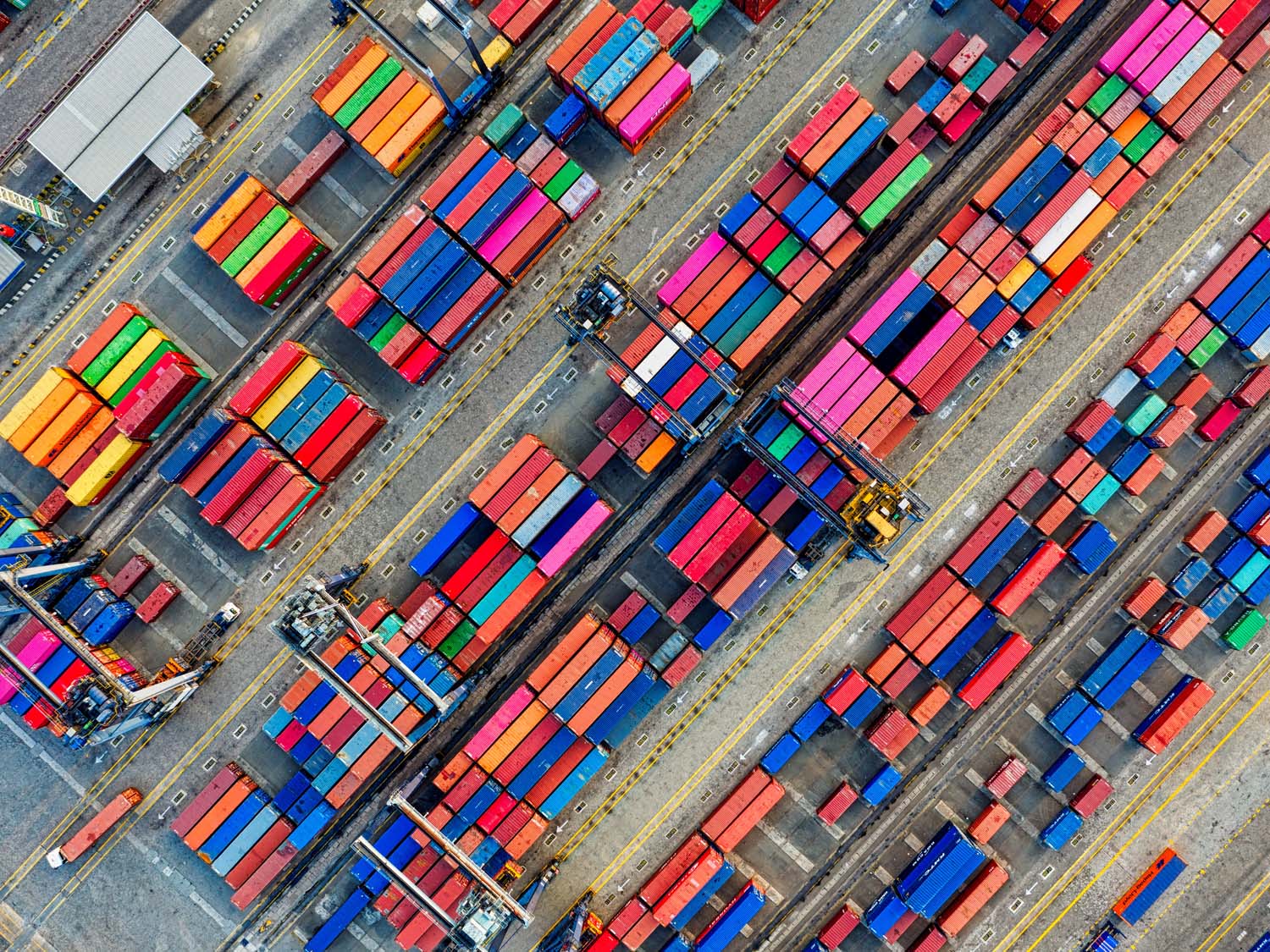
With ships now flooding back into Chinese ports, congestion has rapidly intensified:

  • Shanghai and Qingdao are experiencing berth waiting times of 24–72 hours.
  • Ningbo reports delays of 24–36 hours, while the congestion there is now worsening due to diverted volumes.
  • Busan is reporting 72-hour waits at the PNIT Terminal.
  • Singapore and Yokohama are also affected, with waiting times up to 36 and 24 hours, respectively.

Carriers are reporting widespread bunching and missed berths, forcing some vessels to skip port calls entirely. Simultaneously, container availability is tightening, especially in Shanghai and Ningbo, where carriers have begun rationing equipment based on rate levels and space commitments. Maersk and HMM are among those limiting container release in an attempt to balance capacity with available slots.

Further down the line, ports in southern China, Southeast Asia, and even intra-Asia trades are also reporting backlogs. Shenzhen, Hong Kong, Ho Chi Minh City, and Port Klang have all seen yard utilisation rise and service delays build.

Strain Spreads to Europe as Container Flows Disrupt
The congestion is not limited to Asia. As carriers reposition vessels and adjust service rotations to meet surging demand on eastbound transpacific routes, European ports are beginning to feel the knock-on effects.

In northern Europe:

  • Hamburg is facing 5–6½ days of berth delays,
  • Southampton and London Gateway are seeing 3-day waits,
  • Antwerp is experiencing severe disruption with delays extending to 15½ days,
  • Piraeus and Tangiers are also impacted, each facing waits of up to 4 and 3 days, respectively.

Labour shortages, reduced barge capacity on the Rhine, and tight schedules are compounding these delays. Meanwhile, rerouted vessels from Asia–Europe services are creating bunching at key transhipment hubs such as Bremerhaven and Hamburg, which in turn serve Scandinavia and the Baltic.

Equipment Shortages and Capacity Gaps Ahead of Peak Season
Container availability is expected to worsen in the coming weeks. With vessels already departing China at high utilisation levels, the return of empty containers and the repositioning of ships to Asia may not keep pace with demand.

If previously produced goods held in bonded warehouses are added to this surge in volumes during May, demand could increase by nearly 50%. A delay to June would ease the burden, but it could still be over 15%, which still represents a steep challenge ahead of the summer peak.

This front-loading of cargo to the US may lead to a sharp, compressed peak season starting now and stretching into mid-July, followed by potential equipment shortages and service volatility in August and beyond.

We are closely monitoring port performance, vessel schedules, and rate volatility across all major trade lanes, to support customers with:

  • Priority bookings and space management on transpacific and key routes
  • Equipment selection and container allocation strategies
  • Alternative routing and scheduling options to avoid bottlenecks
  • Global shipment visibility to SKU

EMAIL Managing Director Andrew Smith to discuss current conditions, risk mitigation, and booking options tailored to your business priorities.

Digger 1440x1080 1

Pressure Mounts on US Heavy Equipment Manufacturers

America’s machinery manufacturers have raised red flags over escalating tariff costs, reinforcing growing concern across the manufacturing sector.

With supply chains spanning the US, Europe, Mexico and China, heavy equipment manufacturers are experiencing firsthand how volatile trade policy is impacting cross-border operations, logistics flows and profitability.

Despite their strong domestic production footprints, manufacturers rely on global imports for key components—especially from Europe and China. These imports, once routine, have become financial pressure points in the wake of rising duties and retaliatory tariffs.

One leading manufacturer is forecasting up to $350 million in tariff expenses this quarter alone, while another expects annual tariff-related costs to top $500 million.

The problem isn’t just confined to import charges. Export volumes are also under pressure, as shifting trade dynamics alter demand patterns and reduce competitiveness in overseas markets.

North America-Centric, Globally Exposed
Two leading manufacturers source more than 75% of their components from within the United States, but their supply chains extend well beyond national borders. Equipment parts arrive from factories and suppliers across Canada, Europe and Latin America and a substantial proportion of inputs still come from Asia, most notably China.

With a growing share of international trade now subject to unpredictable tariffs, even these diversified sourcing strategies offer limited insulation. One manufacturer, for example, cited that half of its projected tariff costs stem from Chinese imports alone.

Even the recent 90-day tariff easing between the US and China, announced on 14 May, is unlikely to provide lasting relief. As one executive warned, the long-term environment remains uncertain: “Many mitigation strategies require clarity and certainty on tariffs, but the landscape is too volatile to act decisively.”

Sales are already reflecting these pressures. In the second quarter, one company reported a 16% drop in total revenue and a 23% fall in construction and forestry equipment sales. Its peer, reporting for Q1, posted a 10% decline in total revenue, with construction equipment hit hardest, down 19%.

Strategic Logistics Support from Metro
Metro works with world-leading manufacturers and understands the complexities of global equipment supply chains. Whether moving machinery from US heartlands like Illinois and Texas, or coordinating inbound component flows from Europe, Canada, Mexico or China, Metro helps manufacturers manage risk, maintain continuity, and adapt quickly.

We manage high-and-heavy, breakbulk and RoRo shipments across key corridors, with logistics and customs services designed specifically for industrial equipment movements. 

  • End-to-end customs expertise, including tariff classification, valuation, and compliance guidance
  • Integrated transport planning, enabling smarter decisions on routing, modal shifts, and consolidation
  • Support for North American, European and Asia-Pacific flows, backed by local teams and global visibility
  • Proactive trade advisory services, keeping clients informed and prepared as policies evolve

As political negotiations reshape tariff regimes and global supply chains remain under strain, manufacturers with international exposure need more than reactive logistics. They need strategic, agile partners that will future-proof their supply chains, reduce friction across borders, and protect performance in the face of mounting uncertainty.

EMAIL Managing Director, Andrew Smith, to discuss how Metro can support your global logistics strategy.

Long Beach2

Tariff Pause Triggers Early Transpacific Peak Season

The 90-day suspension of US-China tariffs has delivered a sharp jolt to transpacific ocean freight, triggering an unseasonal spike in demand and pushing spot rates up significantly.

This unexpected policy reprieve has not only created a narrow window of predictability for US importers, but also accelerated peak season behaviours months ahead of the traditional schedule.

With booking volumes surging and available capacity still constrained, shippers are entering a period of extreme competition for space and elevated freight costs, especially on Asia–US West Coast lanes.

Since the announcement of the tariff pause, transpacific spot rates have climbed steeply. The Shanghai Containerised Freight Index (SCFI) rose by 14% last week, with further gains expected. This marks the largest weekly increase of 2025 so far and reflects mounting pressure on space and capacity across eastbound transpacific routes.

  • Shanghai–Los Angeles FEU rates have climbed 16% in just one week.
  • Shanghai–New York DEU rates jumped 19%.

While these levels remain well below pandemic highs, they are trending upward quickly, particularly as US importers race to bring in goods during the tariff pause window, which expires on 14 August.

Sudden and Significant Capacity Crunch
The spike in demand has exposed a capacity shortfall that many believed had stabilised. Carriers had withdrawn substantial tonnage from Far East–US West Coast services in April and May, anticipating a slower season. Now, those services are being rapidly reinstated in full as bookings rebound sharply.

Carriers have responded with unusual speed, with suspended loops returning across multiple alliances, vessels are being upsized to handle growing volumes, additional services are being announced and blanked sailings reversed.

Despite these adjustments, near-term capacity remains tight, especially due to ongoing vessel redeployments, congestion at Chinese ports, and bottlenecks at container freight stations (CFS) in China.

Adding to the live bookings, is a wave of previously manufactured cargo stored in bonded warehouses, which is expected to enter the market imminently.

If this stored cargo flows into the system during the remainder of May, demand could spike by 16% to 48% on top of normal levels. If shipments are delayed until June, the increase would ease to a more manageable 5% to 16%, but that assumes no further acceleration from early peak season orders.

Importantly, this analysis does not yet account for traditional peak season volumes, which are expected to surge in the coming weeks as US importers seek to front-load shipments ahead of the 14 August tariff deadline.

Challenges and Considerations
The rapid resurgence in volumes is pushing logistics networks to their limits. Shippers can expect tight space availability, higher rates, with ongoing volatility through June and July, possible rollovers, even on confirmed bookings, and longer dwell times, with delays at origin due to congestion

While carriers are acting quickly to rebalance networks, the sheer speed and scale of the demand rebound mean constraints are likely to persist through Q3.

As always, Metro is working closely with clients to minimise disruption and capitalise on available capacity. With robust freight forwarding capabilities, deep ocean carrier relationships, and on-the-ground presence in the United States, we’re helping customers:

  • Secure space and locked-in rates on core transpacific lanes
  • Prioritise high-value or time-sensitive cargo
  • Adjust routing strategies to reduce risk and maintain delivery schedules

With early peak season now well under way, proactive planning is essential. Space is already tightening, and costs will likely continue to climb in the lead-up to August.

If your business relies on Asia–US trade flows, EMAIL Andrew Smith today and learn how we will keep your supply chain running smoothly, despite the disruption.

COSCO appoint Metro partner

US Port Fees on Chinese-Built Vessels

The United States Trade Representative (USTR) has finalised a revised plan to impose port fees on Chinese-built containerships calling at US ports.

This follows the reintroduction of the SHIPS for America Act, part of President Donald Trump’s broader push to revive the US shipbuilding industry and reduce reliance on Chinese maritime infrastructure.

While significantly less disruptive than the original February proposal, which threatened to add up to $1.5 million per port call and cost the industry $24 billion, the revised version will still increase shipping costs by approximately $1 million per voyage. These added costs may have ripple effects across global supply chains.

What’s Changing – and When?

USTR Port Fee

  • Start Date: Mid-October 2025
  • Escalation: Costs will increase every 180 days over a three-year period
  • Estimated Additional Costs:
    • Chinese operators (e.g. COSCO/OOCL): USD $250–$1,600 per TEU
    • Non-Chinese operators using China-built vessels: USD $100–$400 per TEU

Crucially, carriers will only be charged once per US rotation, not at every port call. Exemptions apply for:

  • Vessels under 4,000 TEUs
  • Voyages under 2,000 nautical miles
  • China-built vessels owned by US-based carriers

Carrier Reactions and Supply Chain Impacts
Most non-Chinese carriers are expected to redeploy tonnage to avoid the fees, shifting Chinese-built vessels away from US trades in favour of non-Chinese built ships. Some may elect to use transhipment hubs in the Caribbean to bypass direct calls to US ports.

Chinese carriers like COSCO and OOCL will be hardest hit. With limited ability to avoid the charges, these carriers may lean more heavily on alliance partners like CMA CGM or Evergreen, potentially distorting market dynamics and reducing competition on some transpacific routes.

Despite initial fears, widespread surcharges are currently seen as unlikely. Market competition and alternative capacity could prevent many carriers from passing costs directly onto shippers, tthough selective route-specific or carrier-specific fees may still emerge.

SHIPS for America Act
This proposed legislation, while not yet passed, aims to further penalise Chinese-built, -owned or -registered vessels. It also opens the door for other “countries of concern” to be added in future. No cost estimates have been released, but shippers should remain alert to potential follow-on impacts.

The evolving policy landscape introduces fresh uncertainty for importers and exporters, especially those with supply chains linked to Asia–US routes.

Metro is actively monitoring developments and engaging with carriers and industry bodies to stay ahead of the real-time implications. Our goal is to help customers navigate any changes smoothly and make informed decisions.

If your business could be affected by these measures, or you simply want to future-proof your supply chain with revised routing strategies and updated landed cost assessments, please EMAIL our Managing Director, Andrew Smith.