Cautious CNY trans-Pacific surge

Cautious CNY trans-Pacific surge

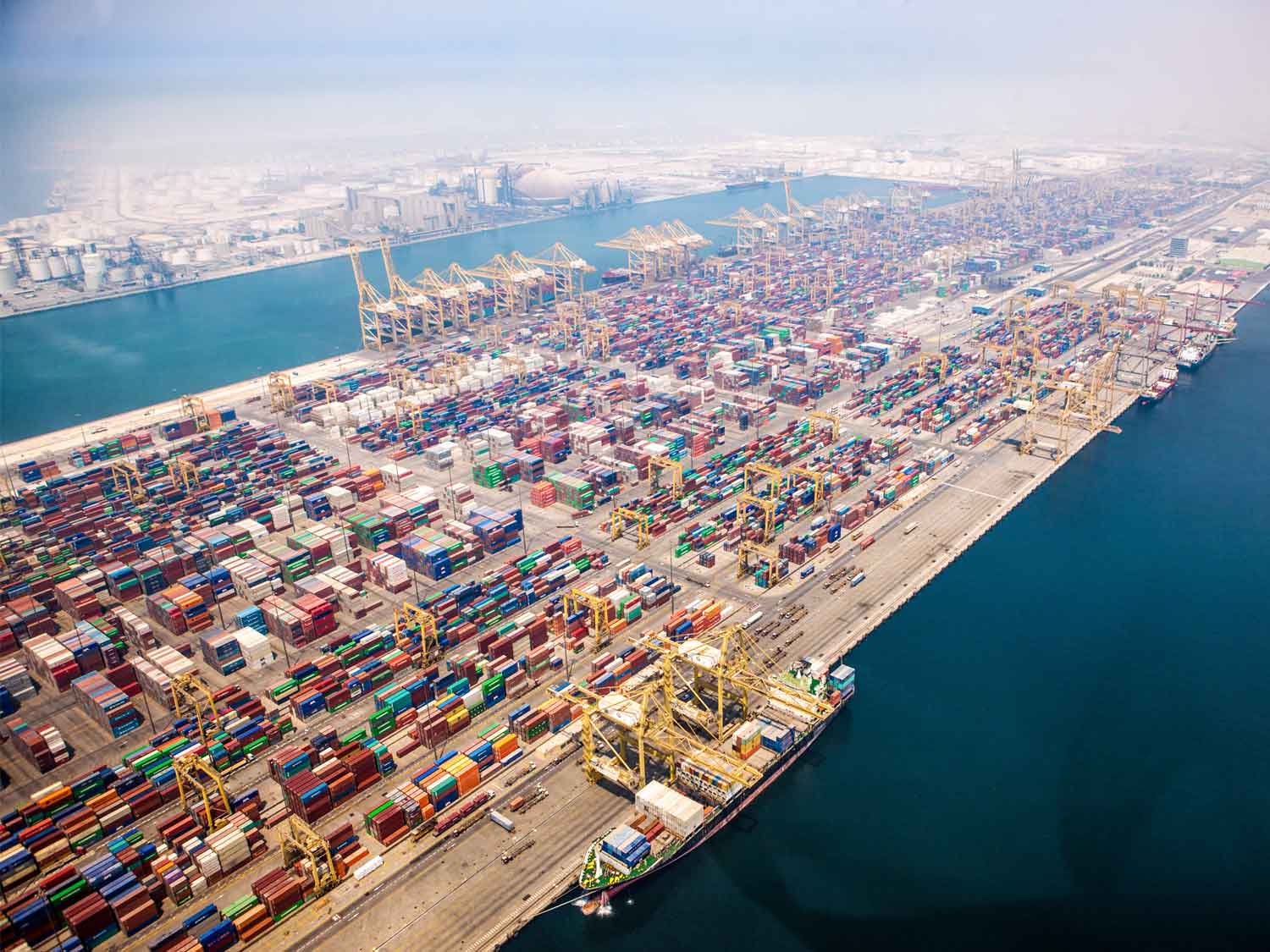
The trans-Pacific sea freight market is entering 2026 with pre-Chinese New Year volumes rising earlier than usual, spot rates climbing sharply and carriers leaning on capacity discipline to manage risk.

Despite Chinese New Year falling later than usual this year, shipment activity has moved forward, with volumes building three to four weeks earlier than the historical pattern. Import bookings from Asia to North America strengthened through December and into early January, marking the first month-on-month increase in six months.

According to the National Retail Federation, this uplift reflects a brief pre-holiday bump rather than a sustained restocking cycle. The organisation expects imports to soften again after Chinese New Year, in line with the usual post-holiday retail lull.

Forecasts for the US West Coast gateway show import volumes reaching a short-term high in early January, with weekly throughput at levels associated with a solid operating week. Volumes are then expected to ease back over the following weeks into a more typical seasonal lull, before recovering again from mid-February as cargo loaded just ahead of factory shutdowns arrives.

This pattern reinforces the view that the current lift is driven by timing rather than a fundamental demand shift.

Blank sailings shape the market response

Carrier behaviour has been decisive. In the five-week window from weeks 04 to 08, carriers have announced 68 blank sailings from approximately 698 scheduled departures from Asia, equating to around 10% of planned capacity being withdrawn.

Blankings are heavily concentrated on the trans-Pacific eastbound trade, which accounts for 47% of all announced cancellations. This targeted withdrawal has allowed carriers to manage utilisation closely, supporting pricing without widespread disruption to schedules.

Against this backdrop, spot rates from Asia to the US West Coast have increased by more than 40% over the past four weeks, with East Coast pricing up by around one-third over the same period. These gains follow a period of relatively muted demand and reflect a combination of seasonal lift and disciplined capacity management rather than space shortages.

Importantly, recent general rate increase attempts have shown limited staying power, indicating that while carriers have succeeded in lifting the rate floor, pricing remains sensitive to demand signals. The current rate environment is nevertheless viewed as sufficient to underpin upcoming service contract negotiations, with spot levels sitting comfortably above existing contract benchmarks.

Demand remains measured

Despite the visible rate movement, inventory indicators suggest a restrained demand environment. Importers are largely shipping against existing orders rather than aggressively pulling forward inventory. Inventory growth has slowed, and fourth-quarter volumes were slightly lower year on year, reflecting the unusually strong import levels seen in early 2025.

Looking ahead, expectations centre on a modest improvement rather than a repeat of last year’s surge. Trade growth forecasts for 2026 point to low single-digit expansion, consistent with a market returning to more traditional seasonal peaks and troughs.

With strategic capacity management and long-established ocean carrier relationships, Metro is helping customers secure space, optimise rates and keep high-priority cargo moving across key trans-Pacific lanes. As blank sailings and new rate initiatives reshape the market, proactive planning and flexible routing have never been more important.

Metro’s growing local presence in the United States further strengthens this approach, giving shippers on-the-ground support, closer carrier engagement and greater control across Asia–US supply chains.
https://metro.global/news/metro-global-usa-building-momentum-in-a-key-market/

If your business depends on reliable Asia–US trade flows, EMAIL Andrew Smith, Managing Director, to explore how expert guidance, tailored solutions and strong carrier partnerships can keep your supply chain agile and cost-effective—whatever the market brings.

Air freight volumes rebound and rates adjust post-peak

Air freight volumes rebound and rates adjust post-peak

Average east-west spot freight rates strengthened into December as peak-season demand lifted pricing, and while they eased back over the year-end, early January data shows a sharp rebound in demand.

Outbound air freight rates from Asia rose firmly into December, reflecting year-end demand and sustained e-commerce flows. Month on month pricing on both the Asia–US and Asia–Europe lanes rose by the strongest monthly averages of the year.

Despite this seasonal lift, rates closed the year marginally below December 2024 levels, highlighting that the 2025 peak was solid but less aggressive than the year before.

Asia–Europe pricing has proved more resilient over the year than Asia–US, supported by e-commerce flows increasingly oriented towards European consumers rather than the US market.

January volumes surge as markets reopen

Following the normal year-end slowdown, global air cargo volumes rebounded strongly in the first full week of January. Worldwide tonnages rose by more than 25% week on week, reversing the sharp declines seen in the final weeks of December. Compared with the same period last year, chargeable weight ran around 5% higher, indicating a stronger underlying start to 2026.

This rebound was broad-based across all major origin regions except Africa. Asia Pacific remained the largest contributor in absolute terms, continuing a trend seen throughout 2025.

Capacity began to recover as freighter operators reinstated services scaled back after the peak. Freighter capacity rose by over 15% week on week in early January, although overall global capacity still remained around 7% below mid-December levels.

Even with supply returning fast, average rates remain slightly ahead of the same point last year, reinforcing that the market reset reflects seasonality rather than a structural downturn.

Asia outbound lanes lead volume growth

Year-on-year volume growth in early January was led by Asia Pacific origins, up around 8%, in line with the full-year growth rate recorded in 2025.

On Asia–US routes, volumes increased by around 10% year on year, driven mainly by Southeast Asia, while flows from China and Hong Kong remained broadly flat. This points to a more diversified Asia export base rather than a single-country surge.

Asia–Europe volumes grew even faster, up around 15% year on year, supported by stronger flows from China, Hong Kong, Taiwan and Thailand, underlining Europe’s growing role as a destination market for Asian exports.

Beyond Asia, traffic from the Middle East and South Asia showed some of the strongest growth rates entering 2026, with double-digit year-on-year increases on both Europe- and US-bound lanes.

Securing lift and service predictability is about smart, proactive planning. Metro’s air freight team closely monitors capacity, fine-tunes routings and works with trusted carrier partners to keep cargo moving reliably and on time.

Metro’s digital platform adds confidence through live flight telemetry, delivering:
– Real-time aircraft position and route mapping
– Accurate departure and arrival confirmation
– Time-stamped milestones, updated as events unfold

This visibility means our customers can plan with certainty, optimise inventory and protect service levels—even as market conditions change.

EMAIL Andrew Smith, Managing Director, to explore smarter, faster and more resilient air freight solutions powered by live data and long-standing carrier relationships.

Disciplined capacity management shaping CNY sea freight

Disciplined capacity management shaping CNY sea freight

As Chinese New Year approaches, sea freight markets from Asia to Europe and the United States are being shaped less by price competition and more by carrier control.

This year’s seasonal peak has arrived earlier than normal, with demand pulled forward and capacity actively withdrawn to protect network balance. While spot rates have eased after a brief pre-holiday lift, this is a short-term, seasonal adjustment rather than a shift in market fundamentals.

Seasonal patterns are moving forward

Historic Chinese New Year patterns place rate peaks two to four weeks before factory shutdowns. This year, those peaks have arrived earlier across all major east–west lanes.

On Asia–Europe routes, rate momentum has advanced by around two weeks, while trans-Pacific trades are peaking three to four weeks ahead of normal.

This shift reflects early shipping activity as exporters accelerated cargo flows into January, compressing the traditional pre-CNY cycle and bringing forward rate support.

Targeted blank sailings tighten supply

Carrier response has been swift and highly targeted. In the five-week window from weeks 04 to 08, carriers have announced 68 blank sailings from approximately 698 scheduled departures, equating to around 10% of planned capacity being withdrawn.

Blankings are concentrated where pressure is greatest:

– 47% on trans-Pacific eastbound services
– 38% on Asia–Europe and Mediterranean routes
– 15% on transatlantic westbound services

Despite these cancellations, around 90% of sailings remain scheduled to operate, underlining that capacity management is selective rather than disruptive.

After six consecutive weeks of gains on Asia–Europe trades leading into a seasonal mini-peak, spot freight rates now sit below early-2025 highs, reinforcing that recent movements reflect timing effects rather than a weakening market.

Reliability and disruption remain constraints

Operational performance continues to limit flexibility. Global on-time performance stands at 47%, down two percentage points month on month, with reliability slipping on both trans-Pacific and Asia–Europe routes.

Winter weather disruption in Europe and ongoing geopolitical uncertainty around key maritime corridors are adding further unpredictability to schedules.

As the market moves through Chinese New Year and into the post-holiday reset, carriers retain the tools to rebalance supply quickly, meaning any near-term easing should be viewed as temporary rather than structural.

Metro’s sea freight team is already modelling Jan/Feb blank sailings and CNY rush patterns, so we can secure space, optimise routings and build contingency plans around your specific flows.

By sharing your forecasts and critical SKUs early, we can ring-fence capacity, minimise disruption and shield you as far as possible from threatened GRIs and last-minute surcharges.

EMAIL Andrew Smith, Managing Director, today to arrange a strategic review of your ex-Asia shipping patterns and lock in the resilience you need for CNY 2026 and beyond.

UK supply chain policy is reshaping shipper risk and resilience

UK supply chain policy is reshaping shipper risk and resilience

Government support for supply chains is increasingly being framed as a matter of national capability rather than short-term intervention. That shift was made explicit in June 2025, when the government’s Modern Industrial Strategy earmarked £600m for logistics sites, signalling that logistics, freight and supply chains are now viewed as strategic economic infrastructure.

Against that backdrop, current support for shippers and manufacturers is delivered through a mix of strategy, guidance and targeted funding, with a clear emphasis on resilience, economic security, clean energy and zero-emission freight rather than generic subsidies.

Strategic focus: critical imports and resilience

The UK Critical Imports and Supply Chains Strategy sets out how government will work with business and international partners across five priorities:

  • Improving supply chain analysis and risk visibility
  • Removing barriers affecting critical imports
  • Strengthening shock-response capability
  • Adapting supply chains to long-term global trends
  • Expanding collaboration with business and academia

The aim is not to control supply chains, but to ensure the UK can anticipate risk, respond faster to disruption and secure access to essential goods.

Practical resilience tools for business

To support this, the Department for Business and Trade has published a Supply Chain Resilience Framework, supported by practical guidance for organisations in both the public and private sectors. The framework focuses on five core areas:

  • Supplier diversification
  • Stock and inventory management
  • On-shoring and near-shoring options
  • Demand management
  • Data quality and supply-chain visibility

As part of the Critical Imports Strategy, government also plans to introduce an online reporting portal for businesses to flag red tape or disruption affecting critical imports, with a commitment to work with industry to remove barriers “wherever possible”.

Supply chains and economic security

The new Supply Chains Centre, based within the Department for Business and Trade, is being established to take a more assertive, strategic and data-led approach to supply-chain security. Its remit includes enhanced analysis, early warning of risks and targeted interventions to ensure continued access to essential goods.

This sits alongside published “Secure your supply chains” guidance, including resilience checklists and links to wider “Safeguarding Supply” resources. Together, these initiatives reflect a broader economic security agenda, where supply chains are treated as critical to both national prosperity and national security.

Innovation funding for resilient supply chains

Public funding is also being directed toward innovation and future-proofing initiatives, including:

  • ReImagining Supply Chains Network Plus (RiSC+), backed by UK Research and Innovation, supporting modelling tools and digital-twin approaches to anticipate disruption across sectors such as food and critical minerals
  • The Circular Critical Materials Supply Chains (CLIMATES) initiative, supporting UK-based supply chains for rare earths and other critical materials through project and partnership funding
  • Regional and sector-specific programmes, often co-funded via the UK Shared Prosperity Fund, offering R&D grants, training and specialist support for SMEs navigating international supply chains

Sector-specific programmes and logistics decarbonisation

Targeted funding is also being directed at strategic sectors. Great British Energy’s “Energy Engineered in the UK” programme includes £1bn of investment into clean-energy supply chains, with a £300m Supply Chain Fund focused on offshore wind and network infrastructure.

In logistics, government support for zero-emission HGVs has expanded, with grants now reducing the upfront cost of electric lorries by up to £120,000. This is designed to accelerate fleet transition, stimulate innovation in green logistics and strengthen the resilience and sustainability of freight supply chains.

What this means for shippers

The policy direction is clear: government expects importers and exporters to map critical dependencies, diversify sourcing and build more robust contingency plans. Resilience, transparency and data quality are no longer optional.

Shippers that can demonstrate strong risk management, clear visibility and close collaboration with carriers and logistics partners will be better positioned to benefit from government-backed initiatives — and to reassure customers operating in increasingly volatile markets.

How Metro can help

Metro works with shippers to translate policy intent into practical supply-chain execution — strengthening routing flexibility, inventory strategy, carrier engagement and contingency planning across ocean, air, road and logistics.

If you’d like support assessing supply-chain resilience, managing disruption risk or aligning your logistics strategy with evolving UK policy priorities EMAIL Managing Director, Andy Smith.