Manhattan skyline 1440x1080 1

Transatlantic Sea Freight Steadies

The North Europe to US, transatlantic trade-lane, is settling into a more predictable rhythm, after a trade deal and took much of the guesswork out of export planning, while carriers have lifted reliability and held blank sailings to minimal levels. 

The result is a market where prices are easing but services are firmer, though the traditional peak looks unlikely.

Westbound volumes have risen 2% year on year, defying earlier expectations of heavy front-loading, while the slots deployed  by carriers are 7% higher than 2024, giving buyers more choice and competitive pricing.

On the reliability front, Europe toUS on-time performance has surged to 52% in Q2 vs Q1, with August the best month since October 2023.

Pricing pressure without panic

While price benchmarks are trending down they are not collapsing. 

Long-term deals signed over the prior three months are down under a third, while average spot rates fell 20% over the last three months. However, despite the softer prices, carriers have not resorted to large-scale blankings, a signal that underlying demand remains sound and that utilisation on sailing vessels is still healthy.

Service quality has moved decisively in the right direction. On-time performance on North Europe to US routes has improved from 24% in January to 58%, while the Mediterranean to US leg has nudged up from 24% to 36%. 

One alliance has consistently posted 92% reliability on the transatlantic in H1, far ahead of non-alliance services and standalone carriers (36%), underlining the advantage of integrated rotations. The challenge now is keeping performance high through winter weather and any land-side pinch points.

With inventories in better balance and retailers expecting low growth for winter, the consensus is no classic peak in late 2025. Expect stable demand, ample capacity and rates in range into year-end unless weather or labour disruptions intrude.

What shippers should do now

  • Prioritise services with proven on-time performance and shorter port strings to reduce dwell and downstream buffer stock.
  • Use today’s attractive rates to book core volumes and keep tactical headroom on spot.
  • Backhaul eastbound pricing remains sensitive so secure equipment and minimise roll risk.
  • The policy environment is calmer, but not static; maintain landed-cost models that can absorb incremental fees without re-quoting.

With long-established ocean carrier relationships, our team is helping clients secure space, optimise rates, and keep high-priority cargo moving on transatlantic lanes.

If your business depends on dependable transatlantic trade flows, EMAIL Andrew Smith, Managing Director, today to discover how expert guidance and tailored solutions can keep your supply chain agile and cost-effective, whatever the market brings.

Typhoon HKG 1440x1080 1

Blank Sailings, GRIs and a Typhoon Disrupt Asia Shipping

Shippers moving goods out of Asia are bracing for the tightest space and schedule disruptions as the major container shipping lines accelerate blank sailings in the lead-up to China’s extended Golden Week holidays.

Following weeks of tentative planning, lines have now confirmed broad capacity withdrawals, cancelling between 14–17% of sailings on core Asia–Europe and Asia–US routes to offset softer demand amid seasonal and weather challenges.

The unprecedented combination of Golden Week and the Mid-Autumn Festival has pushed factory shutdowns to an eight-day stretch this year, pausing exports at the world’s manufacturing hub.

Just days before the holiday, Super Typhoon Ragasa hammered South China, triggering port closures, flight cancellations, and severe equipment shortages. Local experts now expect cargo backlogs and shipping delays to stack up for at least a week beyond the holiday’s official end, intensifying the regional congestion and supply chain volatility.

Carrier Alliances Adjust Rapidly

Analysis of carrier announcements reveals distinct strategies among the largest ocean alliances. Early movers blanked sailings soon after market signals softened, while others opted for aggressive, late-stage cuts in the final pre-holiday weeks. Whether by steady withdrawals or front-loaded cancellations, overall capacity reductions are now on par with historical Golden Week patterns, yet the scale and timing of adjustments this year dwarf previous years and reflect the urgent need for carriers to rebalance supply with dampened demand.

In parallel with capacity cuts, carriers are moving to restore profitability through new general rate increases (GRIs). One major line has announced GRIs effective from early October:

  • Far East–North Europe: $1,200 per 20ft and $2,000 per 40ft.
  • Far East–West Mediterranean: $1,750 per 20ft and $2,500 per 40ft.
  • Far East–East Mediterranean: $1,800–$2,150 per 20ft and $2,600–$2,700 per 40ft, depending on destination.

Meanwhile, another leading carrier has confirmed a peak season surcharge on the westbound transatlantic, at $400 per 20ft and $600 per 40ft.

These surcharges highlight how quickly pricing can swing when capacity is withheld and seasonal demand shifts.

Adding to the disruption, last week’s Typhoon Ragasa forced widespread factory closures and halted container movements across South China. Surges in trucking and equipment charges at origin have been exacerbated by the post-typhoon scramble.

Why Carriers Blank Sailings

Blank sailings, a carrier’s decision to skip or cancel specific port calls, or even entire voyages, are a crucial tool for controlling costs and freight market stability. These cancellations can occur due to falling demand, port congestion, storms, mechanical breakdowns, or as part of a calculated strategy to support freight rates in an oversupplied market.

Blank sailings happen for several reasons:

  • Low demand – such as after Chinese New Year or Golden Week.
  • Port congestion – strikes, bottlenecks, or canal delays.
  • Weather disruptions – storms or unsafe docking conditions.
  • Mechanical issues – urgent vessel repairs.
  • Market strategy – cutting supply to stabilise freight rates.
  • Regulatory or political disruption – new rules or regional instability.

The Shipper’s Challenge

Blank sailings mean longer lead times, unpredictable offloads, and more frequent cargo rollovers. Freight may get rerouted, remain at origin for extended periods, or be consolidated on later vessels, driving both and planning complexity up.

To keep shipments moving and mitigate delays, shippers should:

  • Build more time buffers into supply chain schedules during holiday and storm periods.
  • Use tracking and analytics tools for early indications of disruption.
  • Diversify carriers, prioritising reliability and fast rerouting capabilities.
  • Communicate proactively about possible delivery delays.
  • Explore alternative transport modes for urgent consignments.

With volumes likely to stay subdued until the seasonal year-end surge, further blank sailings could be triggered in response to lingering congestion and uneven recovery.

The weeks ahead demand vigilance, agility, and close collaboration.

At Metro, we work hand-in-hand with our network and carrier partners across China to keep your cargo moving, even when the market is disrupted. From time-sensitive shipments to sudden blankings, our sea freight team finds the capacity and alternative solutions you need.

By sharing forecasts on critical dates and volumes, you’ll help us secure the right space to safeguard your supply chains and shield you from looming GRIs.

EMAIL Andrew Smith, Managing Director, today to explore how we can protect your ex-Asia supply chains and insulate you from threatened GRIs.

RoRo in US 1440x1080 1

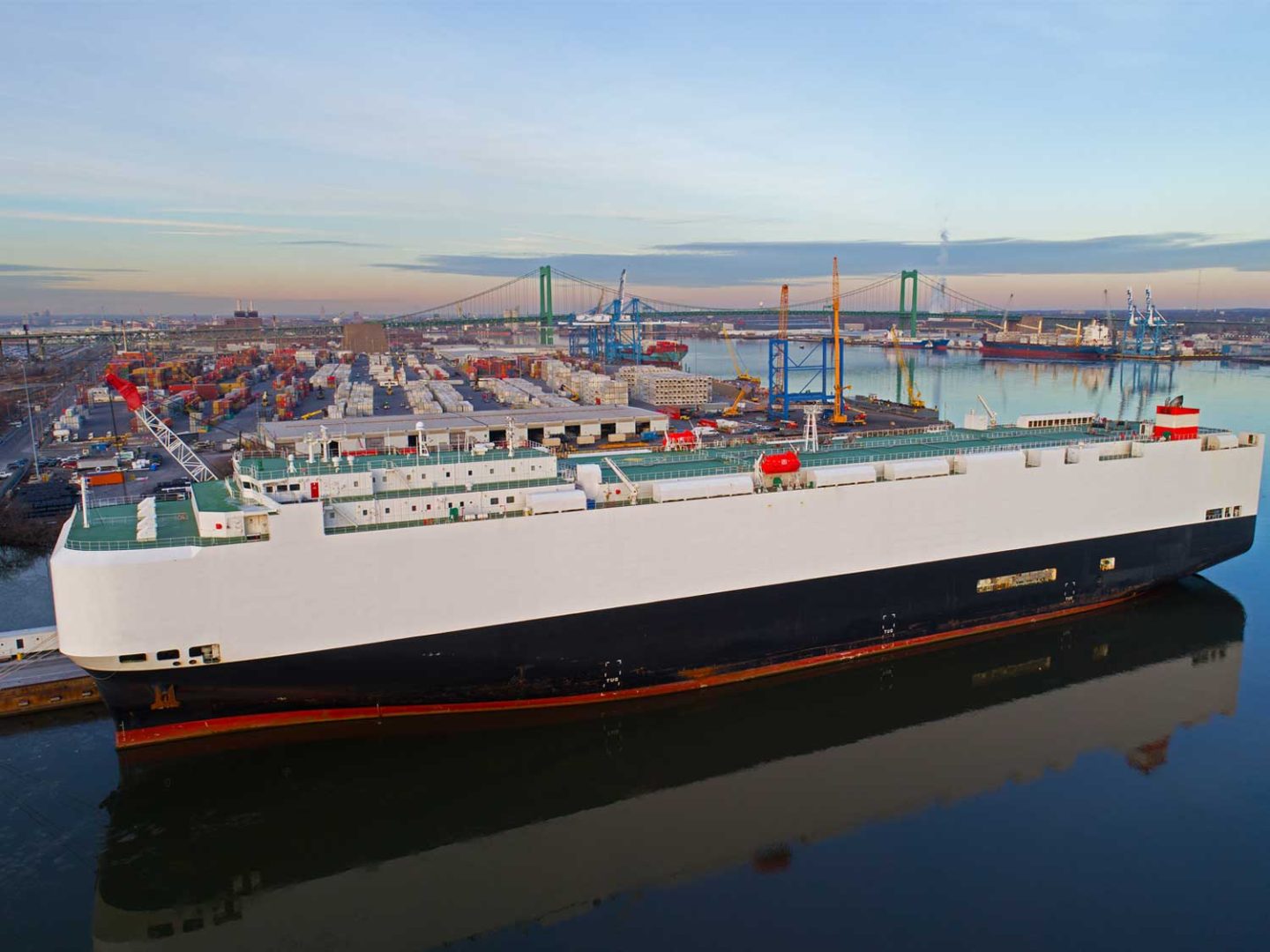
Automotive RoRo Market Steadies as Asian Exports Surge

The global car carrier sector is showing renewed stability as strong vehicle exports from Asia offset earlier trade uncertainty. 

Recent tariff adjustments in the US and falling charter rates have created favourable conditions for major roll-on/roll-off (RoRo) operators, sustaining volumes and underpinning solid earnings through mid-2025.

In the second quarter, leading carriers reported record levels of Asian exports. One operator saw a 13% sequential rise to nearly 14 million cubic metres of cargo, while another posted a quarterly record of 2 million cubic metres, up 47% year on year. 

The imbalance between rising Asian exports and weaker flows from Europe and the US is stretching capacity, driving operators to charter additional tonnage.

Charter rates have fallen sharply as new vessels enter the market, dropping from around $115,000 per day in early 2024 to $45,000 this summer for a 6,500-CEU ship. This decline has enabled carriers to secure short-term tonnage at competitive rates, either on single voyages or multi-month contracts, to match Asian demand.

Profitability also remains firm. One major operator posted a 28% increase in quarterly net profit to $403 million, supported by the sale of a logistics subsidiary, while another reported $123 million in profit on revenues of $367 million. 

Long-term contracts continue to provide earnings visibility, with more than 80% of capacity for 2026 already secured under multi-year deals worth over $300 million.

Regulatory changes have also played a part in stabilising the market. A reduction of US vehicle import tariffs to 15% from higher levels has limited disruption to trade flows, while revisions to proposed US port fees cut one operator’s projected annual bill by more than half. Although carriers remain wary of longer-term cost impacts, current trading conditions remain favourable.

The current developments can be translated into positives for shippers in a few ways:

Falling charter rates: Even though capacity is tight ex-Asia, the sharp drop in charter costs means operators can add temporary capacity more affordably, reducing the risk of bottlenecks.

Strong long-term contracts: With over 80% of 2026 capacity already secured, shippers benefit from predictability and stability in service.

Tariff clarity: Lower US import tariffs and revised port fees reduce immediate cost pressures and smooth near-term trade flows, creating a more stable environment for planning.

Fleet growth: The influx of new-build vessels soften rates, boost overall carrying capacity and help to balance future trade imbalances.

For automotive shippers, recent market shifts bring opportunities as well as challenges. Lower charter rates and greater tariff clarity are helping to stabilise trade flows, while long-term carrier contracts ensure continuity of service.

Metro’s automotive logistics specialists understand the complexities of the RoRo market. We work with leading carriers to secure reliable capacity, design resilient supply chains, and optimise distribution from factory to dealer.

EMAIL Metro’s Automotive Team today to discuss how we can safeguard your vehicle flows and unlock efficiencies in your global logistics.

LA terminal 1440x1080 1

Carriers Sustain Transpacific Rate Momentum with Strategic Blanking

Transpacific carriers have achieved notable success this September in upholding spot freight rates despite softer volumes and ongoing market pressures. Through a mix of strategic blank sailings and well-timed general rate increases (GRIs), the main carriers have sustained a robust rate environment and prevented any steep downturn even as demand has moderated heading into Golden Week.

Even as US import volumes in the lead-up to Golden Week have remained below prior years, carriers have managed to stop spot rates from falling sharply, with major lines blanking about 10% of westbound and nearly 20% of eastbound transpacific sailings for September and October.

This level of discipline has limited rate erosion and positioned the market for further stability as more blank sailings are announced for October.

Recent Rate Developments

September’s rate surge was driven primarily by a combination of a general rate increase and capacity reductions. Spot rates saw weekly gains approaching 6% on key legs, and some increases were as much as 21% compared to late August. While these rate gains provided temporary lift, spot prices have started to moderate, trending back to levels seen before the September 1 GRI. Carriers have succeeded in keeping rates comfortably above the lows reached in August, typically sitting up to 20% above those levels.

Many carriers are now offering voyage-specific spot rates, targeting marketplace flexibility to fill remaining slots. This approach, alongside tactical blankings, enables lines to preserve market discipline and ensure spot prices do not undercut contracted rate benchmarks. The current spread between spot market and fixed contract rates reflects ongoing efforts to support yields while maintaining service options for shippers.

Outlook

In September, eastbound transpacific blankings removed approximately 10% of capacity on West Coast routes and nearly 13% on East Coast strings.

Forecasts for October foresee blankings of about 10% on the West Coast and almost 20% to the East Coast, reflecting a more aggressive stance in supporting additional GRIs post-Golden Week. 

Their active management has proven successful in supporting rates under challenging conditions, emphasising a preference for maintaining pricing power over chasing fleeting short-term volumes. As a result, the transpacific market continues to resist a downward spiral, demonstrating resilience and strategic discipline.

With strategic capacity management and long-established ocean carrier relationships, our team is helping clients secure space, optimise rates, and keep high-priority cargo moving on key transpacific lanes.

As blank sailings and new rate initiatives reshape the market, proactive planning and flexible routing have never been more important.

If your business depends on reliable Asia–US trade flows, EMAIL Andrew Smith, Managing Director, today to discover how expert guidance and tailored solutions can keep your supply chain agile and cost-effective, whatever the market brings.