container ship and naval escort

SECURITY UPDATE: Red Sea

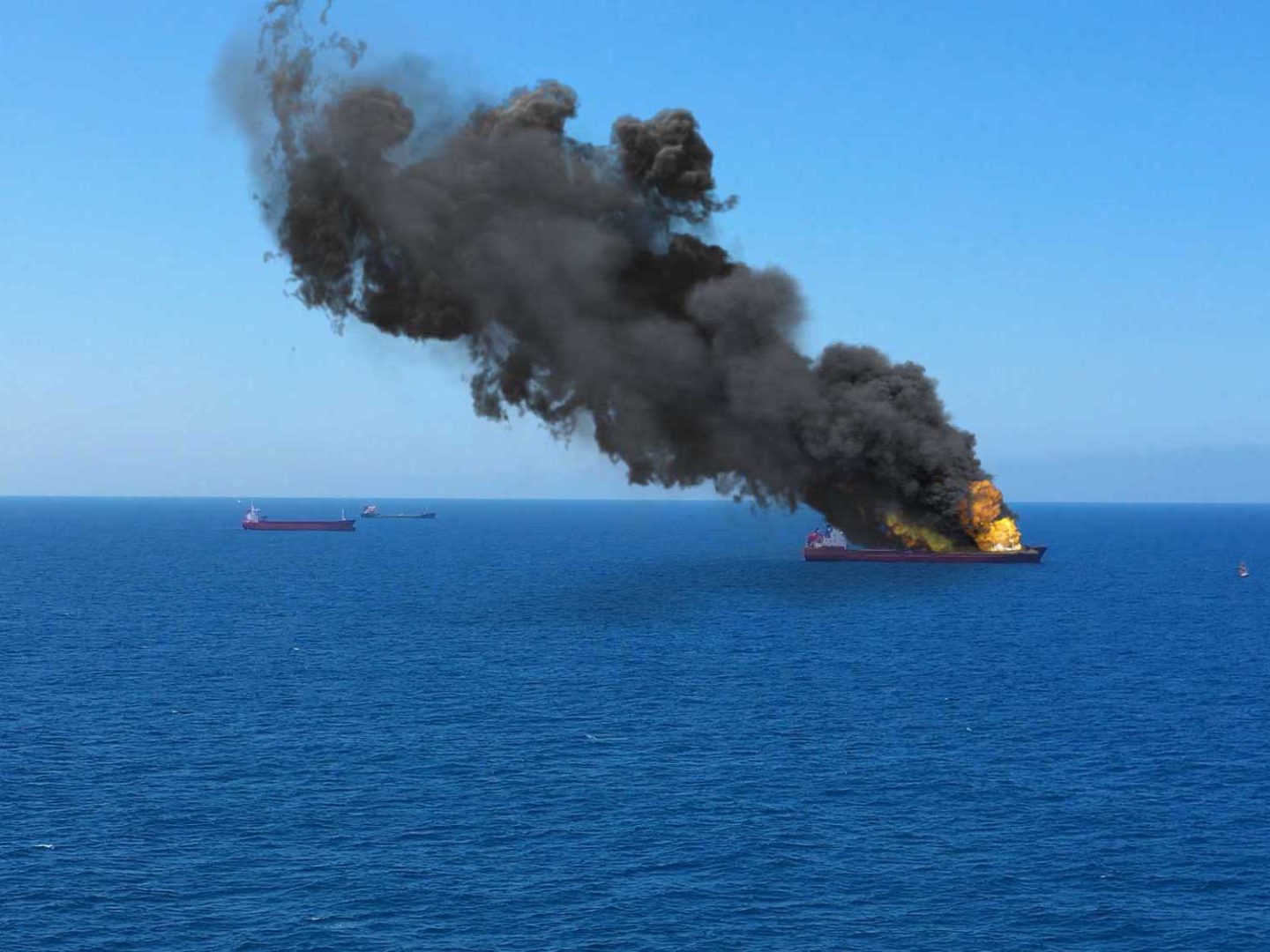
The recent sinking of the Prestige Falcon oil tanker, following a Houthi attack, marks the deadliest incident involving these strikes to date.

The vessel capsized near the Omani coastal city of Duqm, and while the Indian Navy rescued nine of the 16 crew members, one was found deceased, and six remain unaccounted for, feared to have gone down with the ship.

The Prestige Falcon, flagged under the Comoros, was targeted approximately 5 nautical miles southeast of Ras Madrakah, Oman, closer to the Persian Gulf than the typical Red Sea and Bab al-Mandeb strait attack zones. With at least 100 Houthi attacks on merchant ships so far, resulting in the deaths of four seafarers, this incident could significantly increase that toll.

These Red Sea attacks have contributed to elevated containership charter and freight rates. Industry experts predict continued Cape of Good Hope diversions until at least 2025, keeping rates high.

Recent escalations include Israel’s attack on the Hodeidah port in Yemen, following a Houthi drone strike on Tel Aviv. The method of the Houthi drone attack remains unclear, raising concerns about potential threats to shipping in the Eastern Mediterranean.

Speculation suggests the drone may have been launched with the aid of militants closer to Israel, highlighting the risk of supply chain disruptions if drones can be deployed from nearer locations or if groups like Hezbollah become involved.

The Houthi’s have already warned that they plan to expand their campaign of attacks on commercial shipping, to include vessels in the Mediterranean. While the Pentagon has stated that the US has seen no sign of the Iran-armed rebels attempting to do so yet, it has admitted to being worried about the possibility.

“The Houthis have an advanced array of weaponry and they have weapons that could reach the Mediterranean. It definitely is of concern that they have that capability.”

According to some projections, the current Houthi attack campaign will continue for at least the rest of this year, and many commercial vessels will keep avoiding the Gulf of Aden and southern Red Sea until 2025 or beyond. In fact, it could get much worse with some of the new developments this week between Israel and The Lebanon also. We will endeavour to keep you updated as frequently as news is issued and on the impact associated with your supply chain and logistics requirements.

Experts warn that until the Houthis are deprived of the weapons they are using to conduct these attacks at source, we should expect more attacks and damage to international trade.

If you have concerns or questions about the issues covered here, please EMAIL our Chief Commercial Officer, Andy Smith.

New York port 1440x1080 1

US port strike threats on East and Gulf Coasts

The International Longshoremen’s Association (ILA) contract with maritime employers, represented by the United States Maritime Alliance (USMX), is set to expire on the 30th September 2024 and with under 10 weeks remaining, negotiations have stalled, making a strike increasingly likely. 

Any strike that potentially impacts all Atlantic and Gulf Coast ports would cause significant disruption to containerised US import and exports, especially with West Coast port workers potentially refusing to handle diverted cargo in solidarity.

However, the ILA has a record of resolving contracts without strikes, with the last major disruption occurring in 1977 and had planned to resolve local jurisdiction contracts before starting master contract talks but these negotiations were cancelled due to a dispute at the Port of Mobile. The USMX has expressed a desire to move forward productively but acknowledges that time is running out.

Despite time running out to sign a new contract before the current deal’s expiration the ILA is unwilling to extend the current contract or accept intervention from outside agencies. 

The ILA is also seeking recognition for the longshore workers’ efforts during the pandemic, similar to the West Coast’s International Longshore and Warehouse Union (ILWU), which secured a significant pay increase in their recent contract.

The union’s firm stance against port automation, particularly the use of an auto gate system at the Port of Mobile, has been a significant sticking point. This system processes trucks without ILA labor, which the union claims violates the current master contract and resulted in the stalling of the most recent negotiations. 

The ILA alleges that increasing the number of IT personnel at marine terminals undermines traditional dockworker roles and they will not resume talks until these issues are resolved.

The looming strike poses a significant threat to maritime operations along the East and Gulf coasts, but there are questions as to whether the union would proceed with a potentially devastating strike just five weeks before the presidential elections in the United States.

If you are shipping to or importing through the US East or Gulf Coasts and have concerns about potential ILA strike action, we can assess your situation and, if necessary, develop contingency plans to safeguard your supply chains.

By exploring alternative access ports and adopting a collaborative approach, we will provide optimal solutions to meet your supply chain needs.

To learn how we can support your trade with the United States or for more information about our ocean solutions, please EMAIL our Chief Commercial Officer, Andy Smith.

Smoke 1440x1080 1

South Korea factory fire underline danger of lithium batteries

In June, a catastrophic factory fire erupted after several lithium batteries exploded, killing 22 people in South Korea. As a leading producer of lithium batteries, South Korea’s Aricell factory housed an estimated 35,000 battery cells, used in products ranging from electric vehicles to laptops.

The fire started with a series of battery cell explosions and due to the highly flammable nature of battery materials like nickel, the blaze spread rapidly, leaving workers with little time to escape. Officials stated that victims likely succumbed to toxic gases within seconds.

Lithium fires react intensely with water, forcing firefighters to use dry sand to extinguish the blaze, which took six hours to control.

Handling lithium batteries safely
Metro specialises in the safe handling, storing, and transporting of lithium batteries by road, air, and sea, with qualified personnel providing documentation and logistics solutions for hazardous cargoes.

Transporting dangerous goods is regulated based on the UN classification system, structured by mode of transport: IATA’s Dangerous Goods Regulations (DGR) for air; the International Maritime Dangerous Goods (IMDG) Code for sea; and the International Carriage of Dangerous Goods by Road (ADR).

When clients ship dangerous goods, including lithium batteries, Metro’s dangerous goods (DG) team advises on classification, quantity limits, documentation, packaging, and labelling requirements, as well as the best transport modes. Team members have completed health and safety training for transporting dangerous goods, supported by dangerous goods safety advisers (DGSA).

Proper documentation is crucial when shipping dangerous goods. Non-compliance can be dangerous and costly, with significant penalties for incorrect paperwork. Metro assists with necessary labelling and documentation, including Dangerous Goods Notes/Declaration and Material Safety Data Sheets (MSDS), ensuring hazardous cargo is handled safely and transported appropriately.

Shipping dangerous goods is inherently hazardous, which is why automotive brands, chemical suppliers, and manufacturers rely on Metro’s expertise to ensure correct classification and documentation. Attention to detail is paramount, as even a minor mistake can have severe consequences.

Metro prioritises the safety of products, people, and the environment during storage and transit. An emergency response plan is in place for accidents at any point. Metro operates a specialised distribution centre at Felixstowe, equipped with state-of-the-art safety features, dedicated to the secure storage of lithium batteries, whether in transit or awaiting call-off.

For further information on hazardous, chemical, and automotive capabilities, please EMAIL Ian Tubbs.

ship and graph

Peak season impact on container freight rates

The last week of June saw further gains on sea freight spot rates from Asia into Europe and North America, as a series of peak season surcharges (PSS) were imposed and new FAK levels from 1st July creating double-digit increases in spot freight rates.

With spot and FAK rates across all three carrier alliances approaching five figures, analysts predict that if the peak season extends into the traditional August/September period, 40ft spot rates could rise to $14,000-$15,000. And possibly higher, with a much longer application than originally anticipated into 2025.

Surcharges Affecting Asia-North Europe Trade
Along with other carriers CMA CGM has imposed a $1,500 PSS on Oceania-North Europe shipments and a $500 emergency space surcharge per box on India-North Europe shipments. Similarly, Hapag-Lloyd will implement a $1,000 per 40ft PSS on the Far East-India trade.

Spot Rate Indices and Transpacific Route Increases
Drewry’s World Container Index (WCI) composite index grew by 12% last week, with the Shanghai-New York leg showing the steepest growth at 17%. Similarly, the Shanghai-Rotterdam spot rate increased by 10%. Shippers on transpacific routes could see further double-digit rate jumps next week, with CMA CGM set to implement a $2,400 per 40ft PSS on all shipments from Asia to the US starting Monday.

As always. Metro are working tirelessly to mitigate the impact of these increases on our customers.

Space Shortages, Elevated Rates, and Container Equipment Shortages
Due to strong demand, many shippers are paying above quoted rates to secure space. Space availability from Asia to Europe has dropped by 30%-40%, leading major importers to pay space guarantee surcharges.

Higher rates are expected to persist until Golden Week, with some Asia-North Europe spot rates already breaching five figures. An early peak season, lasting until Golden Week in October, driven by importers’ determination to avoid Christmas stock shortages, indicates strong orders lasting at least until then. Should the peak extend, the market may not significantly decline until Q2 next year, even with additional capacity coming in.

Additionally, container equipment shortages are becoming more prevalent, with average container prices in China reaching their highest level in two years, and leasing rates on China-Europe routes tripling.

Ports are becoming congested globally – on all continents. The outcome of this is increased port blanking’s or sliding’s. These can be voluntary by the carriers, but more often than not are now involuntary and caused through long waits outside the port and an inability to discharge vessels, without having a major impact on their schedules.

The result is, whether you are on contract, spot or FAK pricing – if a vessel doesn’t call at the port,  you will not get your product moved until the next one does. And then, when the following vessel from whichever alliance does call, you do not get any retrospective protection on capacity that is simply ‘lost’.

Every importer and shipper who trades with China and Asia on a wider scale is being affected – it is impossible in the current and short term market to avoid the disruption.

In summary, spot rates show substantial growth, with space shortages increasing and elevated rates likely to persist until at least Golden Week, compounded by container equipment shortages and rising costs.

These trends suggest continued high rates and strong demand well into next year. However, we will continue to mitigate these costs where we can, but in a market where $10,000 + a FEU is becoming normality we will always endeavour through our pricing mechanisms and thoughtful considered approach to ensure that you receive the best pricing and reliability of service available in the market.

We will continue to communicate this to you daily/weekly/monthly, and as frequently and for as long as we need to, until the market settles.

We see challenges as opportunities to shine, and deliver a collaborative market-leading solution, that is appropriate for your business and tailored to your expectations.

With carriers in the ‘driving seat’, they are cherry-picking which contracts to honour, rolling lower-yield containers and blanking vessels, to try and recover schedules.

With the market this challenging, there is no ’silver bullet’ and many shippers that try to play the spot market are coming unstuck.

Metro are leveraging our long-standing carrier relationships and sensible annual contracts, to secure our customers space and set rates.

To learn how we can enhance your ocean freight solutions, please EMAIL our Chief Commercial Officer, Andy Smith.