Gulf of Oman 1440x1080 1

Container and RoRo flows disrupted as Gulf remains closed

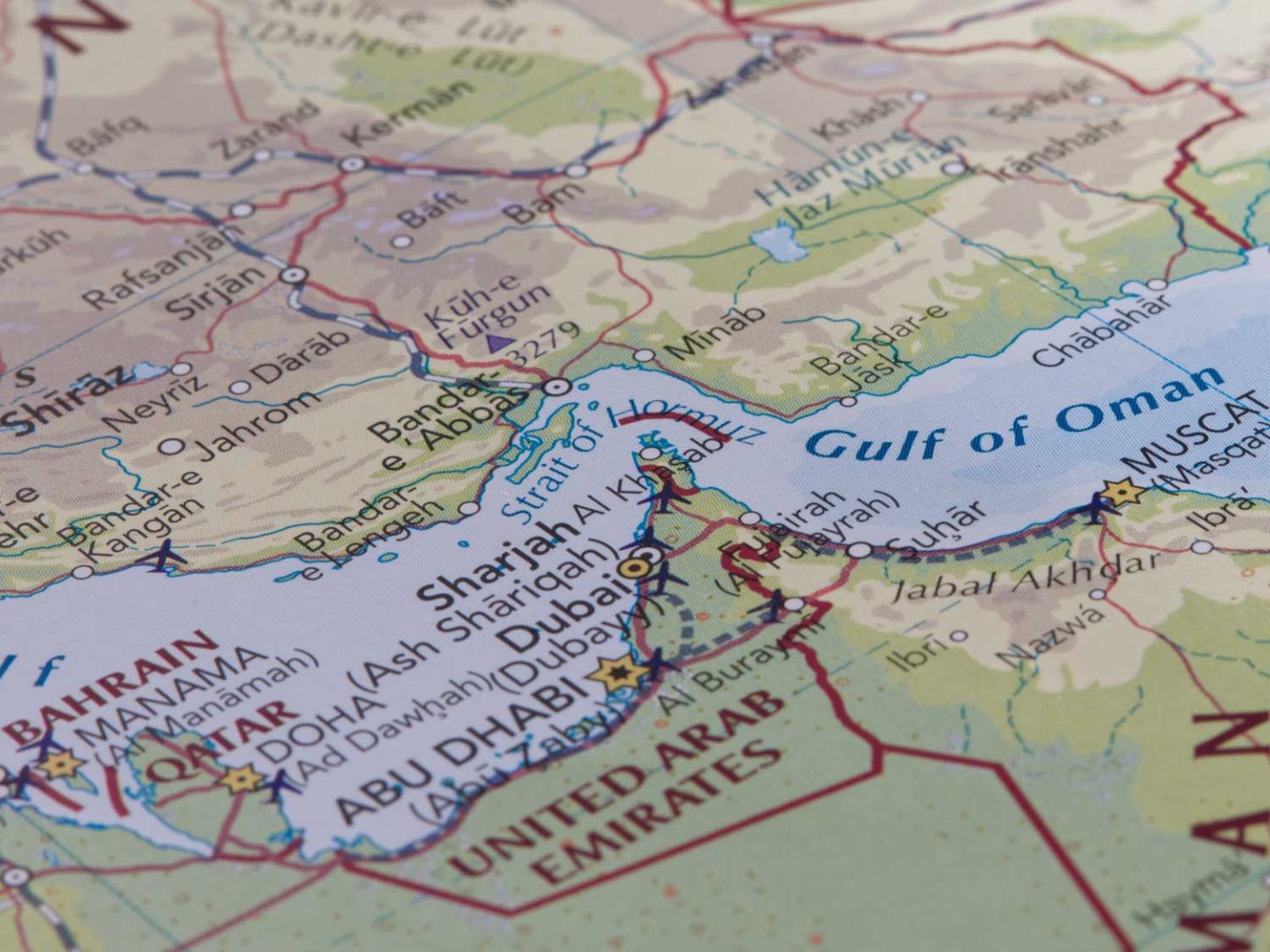
The effective closure of key Gulf shipping routes has halted vessel access to major regional hubs, leaving ships anchored or diverted and forcing carriers to discharge cargo at alternative ports across Oman and the UAE.

These ports are now acting as critical stopgap gateways, but they lack the scale, infrastructure and connectivity of established hubs such as Jebel Ali. As a result, cargo flows are becoming fragmented, with increased reliance on transhipment and secondary routing options.

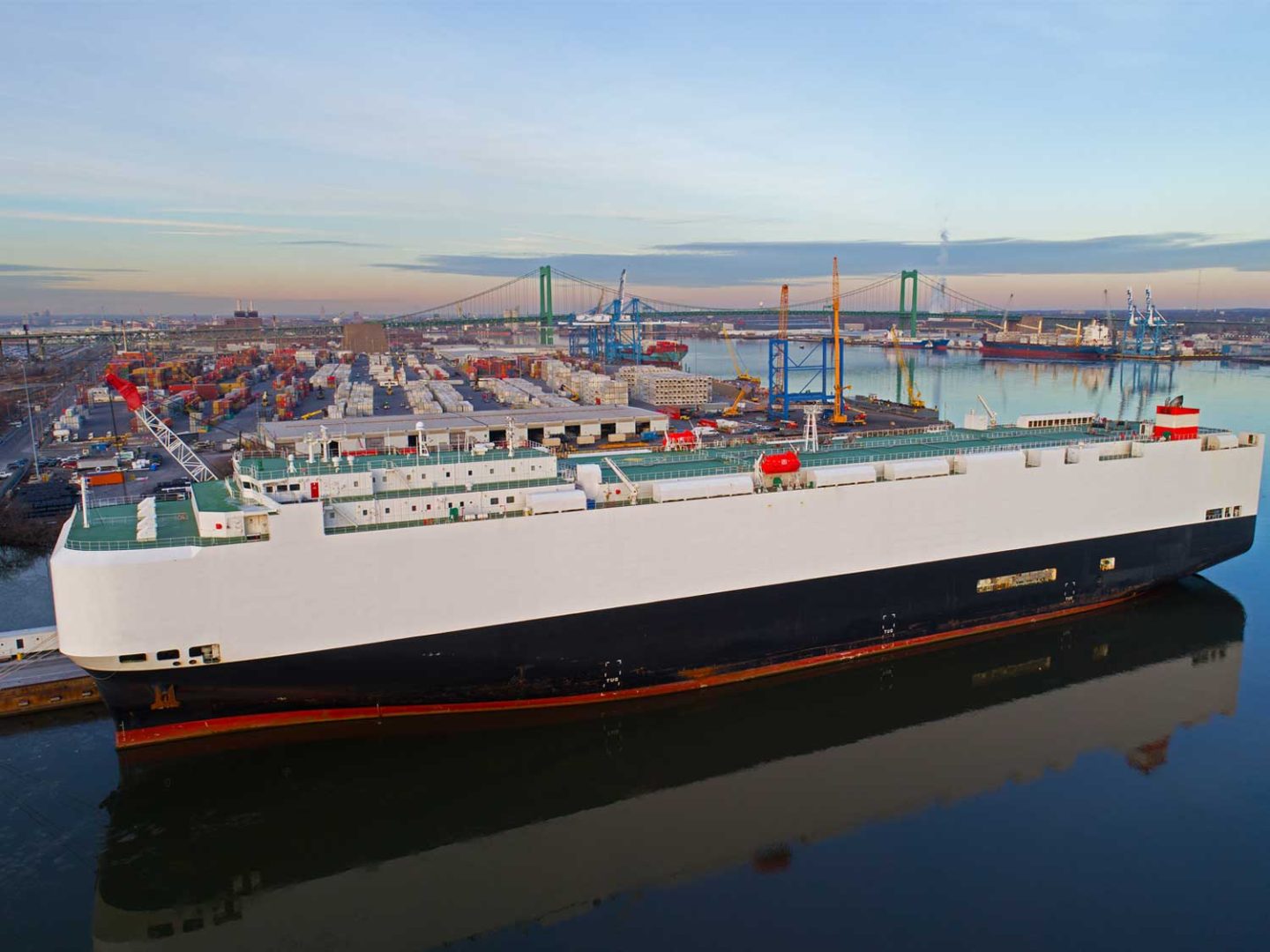
This disruption is also impacting automotive supply chains. As of 30 March, 15 deep-sea pure car and truck carriers (PCTCs) remain locked in the Persian Gulf, including vessels linked to major Asian operators. Prior to the escalation, more than two dozen PCTCs were calling Gulf ports weekly, underlining the scale of capacity now removed from the market.

Although the number of vessels directly affected is relatively limited, the impact is amplified by the volume of vehicles already loaded and destined for the region. With transit through the Strait of Hormuz effectively closed, operators are holding cargo on board, returning vessels to origin in Asia, or discharging at alternative locations.

East Africa is emerging as a temporary relief valve, with ports such as Lamu receiving diverted RoRo volumes. Thousands of CEUs are now being held in storage, awaiting clarity on onward routing, further extending lead times and tying up equipment.

At the same time, longer-term routing options remain constrained. Potential alternatives via Red Sea gateways such as Jeddah or Aqaba face their own limitations, particularly as ongoing security concerns continue to divert Asia–Europe RoRo traffic around the Cape of Good Hope.

Pressure is already building across container flows. Congestion is rising at substitute ports, while markets such as Western India are beginning to experience delays as they absorb displaced volumes. Although global trade lanes outside the region remain broadly stable, rerouting activity is increasing and reshaping network dynamics.

A drone strike on the Salalah container terminal on 28 March further exposed the fragility of these alternative networks. The incident forced a temporary closure of one of the region’s key transhipment hubs, disrupting operations at a critical access point for Gulf-bound cargo. While the port reopened three days later, operational constraints are expected to continue, limiting throughput and extending delays.

Equipment imbalances, cargo restrictions and congestion

Beyond routing disruption, structural pressure is building within the ocean freight system. Equipment availability is becoming increasingly uneven as flows are disrupted, with empty container shortages emerging in certain markets.

At the same time, cargo handling restrictions are tightening. Metro is seeing direct evidence across Oman and other regional ports that hazardous containers are no longer being accepted, regardless of classification. Units already on terminal are being required to move off port as a priority.

However, with no viable repatriation hubs available within the region, options are extremely limited. In many cases, hazardous containers must be redirected back to origin or moved to upstream ports outside the affected area, adding cost, delay and operational complexity.

Port congestion remains a persistent constraint. Around 3 million TEU of global capacity is currently tied up in port delays, highlighting the gap between theoretical vessel capacity and the reality of moving cargo through constrained infrastructure.

Even where vessel space exists, operational limitations at ports are restricting throughput. Alternative ports are not configured to handle sustained high-volume flows, while feeder networks and regional services are being adjusted to accommodate changing conditions.

The disruption is also creating wider scheduling challenges, with sailings being rerouted and transit times becoming less predictable as carriers respond to evolving constraints.

Pressure building, with risk of spillover across modes

For now, the global impact remains more contained than previous crises, with major east–west trade lanes continuing to operate. However, underlying pressure is increasing, and the longer disruption persists, the greater the risk of wider spillover across both container and RoRo networks.

Rerouting is becoming more widespread, congestion is building at key alternative gateways and equipment imbalances are beginning to take hold. At the same time, rising oil prices are feeding into bunker costs, adding a further layer of cost pressure across all trades.

The key variable remains duration. If disruption continues, today’s regional challenges are likely to extend into broader network instability, affecting schedule reliability, transit times and overall supply chain predictability across multiple cargo types.

For shippers and other supply chain participants, the focus is shifting towards maintaining flexibility, securing capacity early and planning for multiple routing scenarios as conditions evolve.

Maintain flow across container and automotive supply chains

Metro is helping customers minimise disruption across containerised and automotive supply chains with practical, experience-led solutions.

With secure vessel capacity, alternative discharge strategies and flexible routing options, Metro keeps cargo moving as networks shift, including complex RoRo diversions and delayed vehicle flows.

Metro’s on-the-ground insight into operational constraints, including hazardous cargo restrictions and port-specific limitations, enables early intervention and reduces the risk of costly delays, diversions or cargo being stranded.

Through MVT, customers gain real-time visibility of shipments, congestion and routing options, enabling faster, data-led decisions across both container and automotive movements.

To review your current ocean or automotive supply chain exposure, hazardous cargo options or contingency plans, EMAIL Andrew Smith, Managing Director.

PCTC 1440x1080 1

Capacity challenges continue for RoRo and project shipper

Roll-on/roll-off (RoRo) and project cargo shippers are entering a decisive phase, as fleet expansion, industrial investment and energy-driven demand are converging, creating both opportunity and pressure for shippers moving vehicles, machinery and oversized cargo.

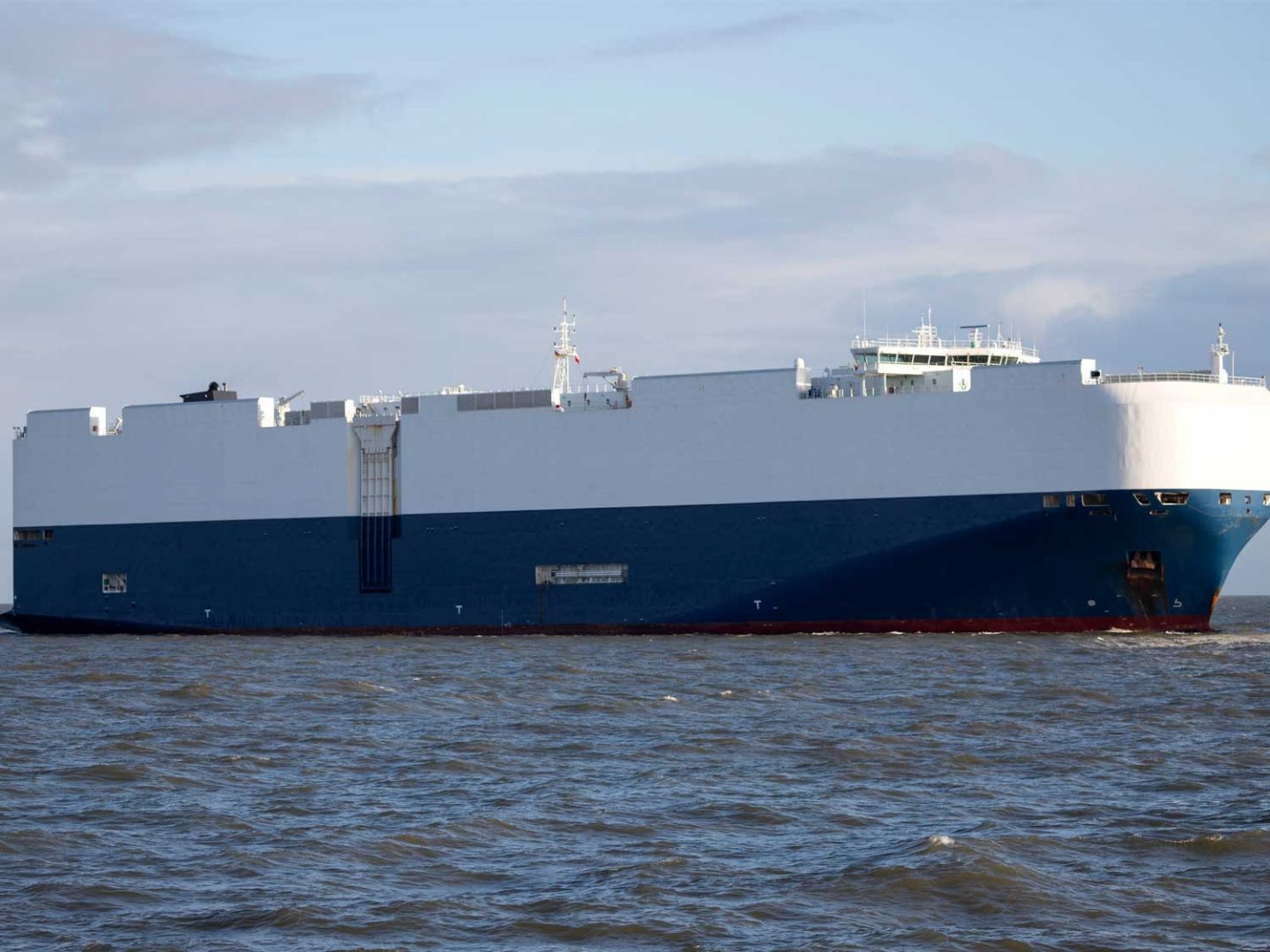
The global Pure Car Carrier (PCC) and Pure Car and Truck Carrier (PCTC) fleet is forecast to expand by around 40% over the coming years, with new vessels significantly larger than the ships they replace.

Latest-generation PCTCs are designed to carry 20–30% more car-equivalent units (CEUs) than legacy tonnage, lifting individual vessel capacity into the 9,000+ CEU range. Most new-builds are dual-fuel or alternative-fuel capable and ammonia-ready, reflecting a clear shift towards lower-emission operations.

Despite this expansion, RoRo capacity remains unevenly distributed. Vessel size growth primarily benefits vehicle flows, while availability for high and heavy cargo continues to depend on stowage flexibility, port infrastructure and trade imbalances.

High and heavy manufacturing: volumes steady, costs rising

Shipment trends from major global manufacturers of construction, agricultural and power-generation equipment provide a useful barometer for RoRo and breakbulk demand. While tariff-related costs are rising sharply, shipment volumes in key segments continue to grow.

Construction and forestry equipment shipments recorded year-on-year growth of more than 25% in the most recent quarter, driven by infrastructure spending and large-scale industrial projects. Power-generation equipment volumes also strengthened, with segment revenues rising by around one-third, reflecting accelerating demand from data centres and energy infrastructure.

Order backlogs across the sector have reached record levels, extending visibility well into 2026 and beyond. This supports steady outbound cargo flows, even as manufacturers maintain tight inventory control rather than front-loading production.

Project and breakbulk cargo enters a capacity-sensitive phase

Project and breakbulk shipping is being lifted by sustained growth in energy, metals and mining cargo. Global electricity demand linked to new power generation is forecast to grow at more than 3% per year through 2030, translating directly into increased movements of turbines, generators and transformers.

Fleet growth for heavy-lift capable vessels is projected at an average of just over 4% per year through the end of the decade. While sufficient for smaller and modular cargo, this pace risks falling short during peak periods for large, indivisible units.

Copper and other critical minerals are adding further pressure. Forecasts point to a potential 30% supply shortfall by the mid-2030s, driving investment in mining projects and associated movements of oversized equipment. These cargoes typically require specialised lift planning, crane operations and non-standard stowage.

As RoRo capacity grows by double-digit percentages and project cargo demand rises at a similar pace, the balance increasingly depends on planning, technical expertise and access to the right assets at the right time. 2026 is shaping up as a year where execution, sequencing and specialist capability determine success.

Metro’s dedicated automotive logistics and project shipping teams understand the operational, technical and scheduling complexities of RoRo, breakbulk and heavy-lift movements.

Working with leading global carriers, independent lines and charter operators, Metro helps customers secure reliable capacity, design resilient supply chains and optimise transport from factory gate through to dealer or point of use.

Email Andrew Smith, Managing Director, to discuss how Metro can safeguard your project cargo, vehicle flows and unlock efficiencies across your global logistics operations.

Med satellite 1440x1080 1

Smart 2026 supply chains are being engineered for pressure

Supply chains are no longer judged on efficiency alone, in 2026 they will be expected to anticipate disruption and adapt at speed to actively support growth. The experience of the past year confirmed that stability is no longer a realistic planning assumption, but performance under pressure is.

Rather than a single crisis, 2025 delivered constant friction. Congestion resurfaced across ports and inland networks, capacity existed but was selectively deployed, and geopolitical and regulatory shifts altered trade flows long before any formal policy changes took effect. 

The result was a decisive shift in mindset: supply chains must be designed to operate in volatility, not merely recover from it.

That shift accelerates in 2026, as technology, resilience and sustainability converge to redefine how supply chains are planned, financed and executed.

Resilience becomes a competitive advantage

If 2025 proved anything, it was that capacity on paper does not guarantee performance in practice. Across ocean, air and road freight, service reliability was dictated by execution: blank sailings, schedule volatility and inland bottlenecks determined what actually moved.

In response, supply chain design is moving beyond simple continuity planning toward resilience, where networks are designed to adapt and improve under stress.

Common characteristics include:

  • Multi-route and multimodal playbooks rather than single-lane optimisation
  • Near-shoring and regionalisation to shorten lead times and reduce exposure
  • Centralised planning paired with regional execution for faster response

These approaches reflect a broader shift away from cost-minimisation toward risk-adjusted performance.

Warehousing becomes a strategic control point

Warehousing emerged as one of the most critical differentiators in 2025 — a trend that intensifies in 2026. With transit times less predictable and congestion harder to avoid, inventory positioning and fulfilment speed have become central to supply-chain resilience.

High-performing shippers increasingly treat warehousing as an active control layer, not passive storage. Key developments include:

  • Greater use of strategically located facilities to buffer disruption
  • Tighter integration between warehousing, transport and customs planning
  • Investment in automation and robotics that flex with demand and seasonality

This is particularly important as omnichannel and e-commerce pressures continue to grow, demanding seamless support for direct-to-consumer, BOPIS and rapid fulfilment models alongside traditional B2B flows.

From reactive networks to intelligent systems

One of the most significant changes heading into 2026 is the role of technology within supply chains. What began as analytical support is now moving into operational control.

AI-enabled tools are increasingly embedded across planning, procurement, inventory management and risk assessment, enabling supply chains to:

  • Anticipate disruption through predictive insights
  • Optimise routing, inventory and capacity decisions in near real time
  • Coordinate responses across multiple functions and geographies

As these systems become more connected, cybersecurity and data governance also rise sharply in importance. Protecting sensitive operational, commercial and customs data is now a core supply-chain requirement, not an IT afterthought.

Data quality, skills and execution define winners

Technology alone is not enough. The past year also highlighted a widening gap between organisations that could convert insight into action and those constrained by fragmented systems and poor data quality.

In 2026, competitive advantage depends on:

  • Clean, trusted and consistent data across logistics, customs and finance
  • Integrated platforms rather than disconnected tools
  • Teams with the skills to manage AI-driven, data-rich operations

Workforce transformation is therefore as important as digital investment. Roles are evolving toward data analytics, systems oversight and exception management, requiring targeted up-skilling to unlock value from new technologies.

Sustainability and compliance move into the operating core

Environmental and regulatory pressures are no longer peripheral considerations. Carbon pricing, emissions transparency, stricter customs enforcement and evolving trade rules are now shaping routing, mode selection and inventory strategy.

For most shippers, progress in 2026 will come less from premium “green” options and more from practical levers:

  • Smarter planning and consolidation
  • Modal optimisation and regionalisation
  • Stronger traceability and data governance

Sustainability and compliance have become operational constraints — inseparable from cost, resilience and service performance.

Designing supply chains that perform under pressure

Taken together, the direction of travel for 2026 is clear. Supply chains are being rebuilt as intelligent, integrated systems — shifting from reactive cost centres to strategic growth engines.

The most resilient networks are those that:

  • Integrate finance, procurement, logistics and technology decisions
  • Combine centralised control with regional agility
  • Invest equally in data, platforms, people and process

The objective is not to eliminate disruption, but to design networks that continue to perform when conditions are uncertain.

At Metro, this same mindset underpins how supply chains are assessed and supported. Stress-testing assumptions, strengthening visibility and applying execution-focused logistics, warehousing and transport strategies. In 2026, the differentiator will not be avoiding disruption, but owning a supply chain designed to operate through it.

RoRo in US 1440x1080 1

USTR Port Fee Shockwave Hits Chinese Shipping and Vehicle Carrier Sectors

The U.S. Trade Representative’s (USTR) newly imposed port fee regime is massively impacting container and roll-on/roll-off (RoRo) operators, inflating operating costs, tightening vessel capacity, and prompting warnings of severe disruption to U.S. logistics.

UPDATE 30 OCTOBER – Donald Trump and Xi Jinping have agreed to end tit-for-tat levies on each other’s shipping industries, but there is no certainty yet as to when this will take effect.

Effective 14 October, the USTR introduced port service fees applying to all Chinese-operated and Chinese-built vessels calling at U.S. ports. Chinese-operated ships face a levy of $50 per net ton on their first port call of the year, escalating annually through 2028. For vessels merely built in China but operated by foreign lines, the higher of $18 per ton or $120 per discharged container applies.

Although originally aimed at Chinese maritime dominance, the policy has ensnared a much wider range of operators, including global RoRo and vehicle-carrier fleets built in Asian shipyards. The scope extends to nearly all non-U.S.-built ships, creating a sweeping cost burden across the international car-carrier sector.

Early Impact on China-Linked Carriers

Within the first week of implementation, Chinese shipping giants Cosco and OOCL incurred more than $42 million in port fees from just 15 U.S. port calls. Based on current deployment, annual exposure for the two lines could exceed $2 billion, representing as much as 7 % of combined revenue.

While some carriers have avoided Chinese tonnage by redeploying vessels built elsewhere, many have no alternative. Post-Panamax container ships and vehicle carriers built in China but owned by global operators remain fully liable under the new rules.

RoRo Operators Face Steep Increases

The new regime has been even more damaging for vehicle and equipment carriers. The levy on all foreign-built vessels, not just those tied to China, rose from $14 to $46 per net ton, tripling the original charge announced in June. This means a large car carrier now faces about $1.2 million per port call, capped at five annual calls per vessel.

Operators such as Wallenius Wilhelmsen and Höegh Autoliners are facing unprecedented annual costs, estimated near $1 billion and $225 million respectively, which will inevitably feed through to manufacturers and exporters. The burden will be particularly heavy on automotive and heavy-equipment producers that rely on U.S.–Europe and U.S.–Asia RoRo services.

Outlook

As public consultation on further extensions of the scheme continues, the maritime industry is bracing for additional cost escalation and route restructuring. Unless revised, the USTR’s fee framework could reshape port-call economics, amplify freight volatility, and reduce U.S. competitiveness in key manufacturing export markets.

Metro’s sea freight and RoRo specialists support automotive, machinery, and project cargo shippers potentially facing rising U.S. port charges amid changing compliance requirements. With deep expertise in vehicle logistics and carrier management, we minimise disruption and optimise cost efficiency across global trade lanes. EMAIL Andrew Smith, Managing Director, to discuss tailored solutions for your automotive supply chain.