stop trade

Customs is the bottleneck in global trade — Metro is removing it

The Global Trade Observatory Outlook 2026, based on insights from more than 3,500 senior supply chain executives globally, delivers a clear message: customs is now the single biggest operational constraint in global trade. 

According to the report:

  • 60% of executives cite customs clearance as the leading cause of disruption.
  • 36% rank trade facilitation among the top policy priorities for enabling growth.

At a time when 94% still expect trade growth, the implication is clear: growth is possible, but only if border friction is controlled.

For importers and exporters, speed through borders is now as important as speed of transit.

Border Friction Is No Longer a Back-Office Issue

Customs delays today are not just administrative inconveniences. They create:

  • Demurrage and storage costs
  • Production stoppages
  • Missed retail windows
  • Inventory distortion
  • Reputational risk

As supply chains diversify and multi-origin sourcing becomes more diverse, compliance complexity increases. Different rules of origin, changing tariff regimes, sanctions screening, high-risk product categories and new digital reporting requirements all increase exposure.

The Global Trade Observatory findings confirm what many businesses already feel: border friction is now the pressure point in supply chain resilience and execution at customs is no longer a milestone, it is a strategic necessity.

Metro’s Customs Brokerage: Built for Complexity

Metro’s Customs Compliance Services are designed specifically for this environment of volatility and regulatory intensity. 

Our AEO-accredited team manage the full spectrum of customs requirements, including:

  • Permanent and temporary imports
  • Transit (T1) procedures
  • Specialised food and high-risk product declarations
  • UK, EU and USA clearance at all ports
  • Sanctions-origin advisory and exemption cases

This is not simply about filing entries, it is about total compliance and controlling risk before it materialises.

For example:

  • 99.8% of food shipments clear without delay, with IPAFFS paperwork typically submitted within one hour of receiving slaughterhouse documentation.
  • Export declarations are routinely processed within 30–120 minutes.
  • Secureduty refunds through proactive review and HMRC engagement.

CuDoS: AI-Driven Customs Intelligence

Metro’s AI-driven CuDoS platform automates compliance for complex, multi-line entries. 

  • Aggregates multi-line invoices (300+ lines)
  • Reduces manual processing by 70%
  • Achieves 99.3% first-time declaration accuracy
  • Completes complex entries in under two hours

In a market where manual processes can take 6–24 hours and error rates remain high, automation and AI-driven validation are competitive advantage.

From Compliance to Competitive Advantage

The Global Trade Observatory Outlook highlights how trade growth will continue despite uncertainty, but only for those who can navigate friction effectively, and customs sits at the centre of that challenge.

As supplier diversification increases and new trade corridors open, customs complexity rises. Multi-origin supply chains multiply declaration volumes and compliance touch-points.

Without disciplined brokerage and intelligent automation, delays compound quickly.

The Global Trade Observatory data confirms that customs is now the primary bottleneck in global trade. 

Metro’s mission is simple: remove that bottleneck.

If your business is experiencing clearance delays, compliance pressure, or escalating duty exposure, Metro’s Customs Compliance team and CuDoS platform deliver measurable performance improvements in speed, accuracy and cost control. EMAIL managing director, Andrew Smith, to learn more.
HKG port

Pre-CNY sea freight reliability is breaking down at origin

Chinese New Year 2026 falls on Tuesday, 17 February, marking the start of the Year of the Fire Horse. While the official public holiday in China runs from 17–23 February, the operational impact on global supply chains is far longer.

In practice, factories, trucking networks and export operations begin winding down weeks before the holiday. Full production and logistics capacity typically does not return until early March, meaning the effective disruption window stretches across six to eight weeks.

In the run-up to Chinese New Year, ocean carriers are releasing significantly more bookings than they can physically load. This reflects the need to honour minimum quantity commitments (MQCs) while simultaneously building vessel pools ahead of the holiday shutdown.

The consequence is a sharp rise in rolled cargo at ports of loading and transhipment hubs. Confirmed bookings are increasingly failing to convert into loaded containers, particularly where space has been secured on standard spot terms. Even services that previously offered a degree of loading assurance are now seeing rollovers as pressure builds.

“Guaranteed” loading is increasingly limited to premium, prepaid options, while some previously protected spot services are now also experiencing rollovers. For shippers, this means booking confirmation alone no longer equates to reliability during the pre-CNY window.

Congestion is building at key Chinese ports

The impact of overbooking is being felt most acutely at Chinese ports of loading, where inbound container volumes are exceeding what terminals can process or load onto vessels.

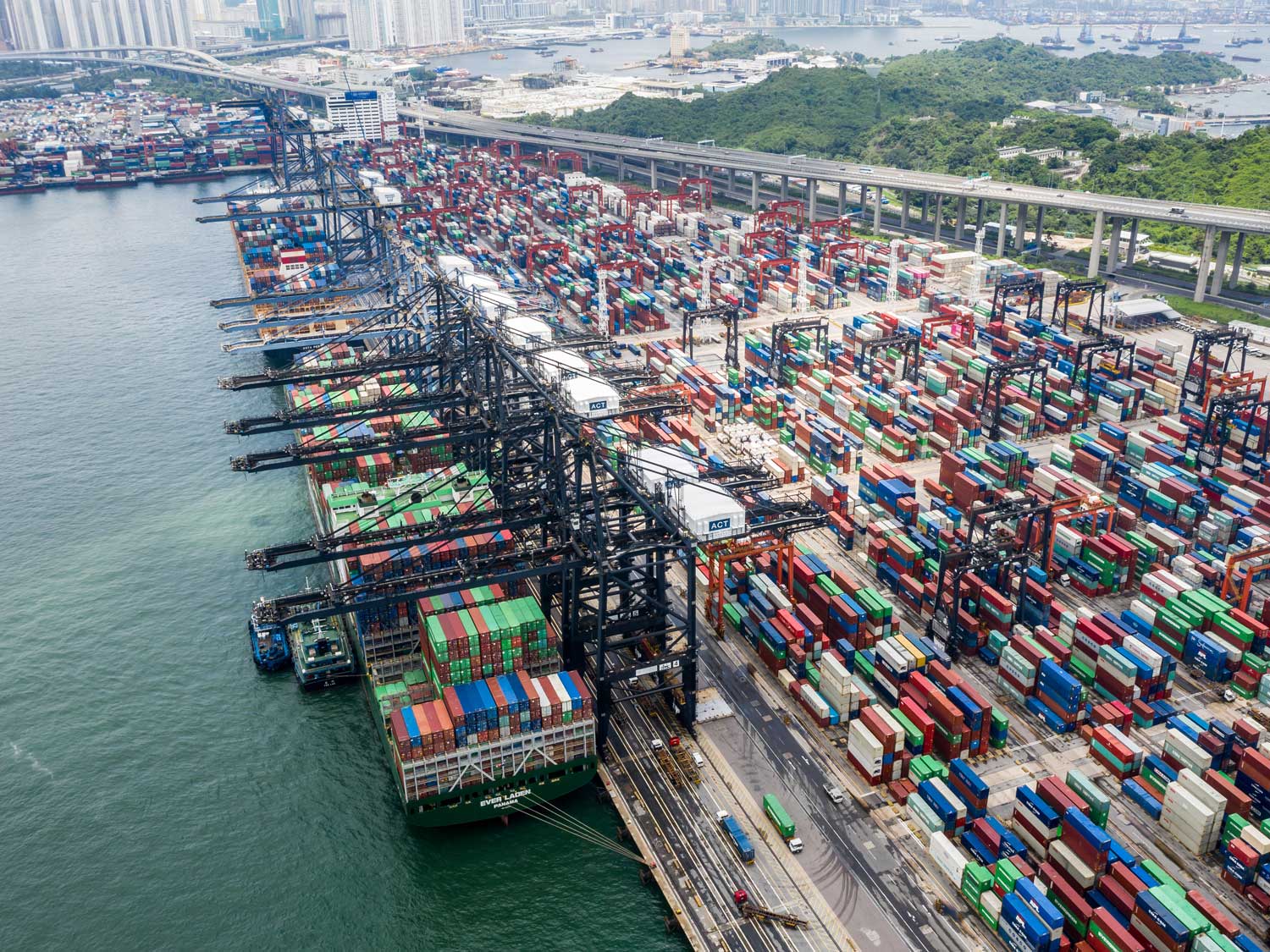
Ports such as Ningbo and Nansha are already experiencing severe congestion, with vessel delays compounding the problem. In some locations, terminals are restricting gate-in to containers with pre-booked slots only. Once a vessel’s allocation is reached, additional containers are rejected, forcing cargo to wait for later sailings and triggering extra storage, trucking and handling costs.

Even where shippers deliver cargo early, there is no guarantee it will be accepted or loaded as planned.

Alongside port congestion, a series of inland constraints are converging. Equipment shortages, delayed EIR release, limited truck availability and labour shortages are all becoming more pronounced as workers begin leaving ahead of the holiday.

Access to gate-in slots is tightening, CY cut-offs are less flexible, and minor delays can quickly cascade into missed sailings. These constraints mean that execution risk is now driven as much by inland logistics as by vessel capacity itself.

What this means for shippers

The key challenge for 2026 is that Chinese New Year disruption is not a single event, but a prolonged period of reduced reliability. In the Year of the Fire Horse — traditionally associated with speed, intensity and unpredictability — supply chains are feeling the effects in real time.

Some shipments will be rolled repeatedly. Others will ultimately miss the pre-holiday window altogether. As the holiday itself approaches, the focus shifts from optimisation to prioritisation: deciding which cargo must move and which can wait.

Planning beyond the holiday

Risk does not end on 23 February. Cargo that fails to ship before the holiday is likely to face a post-CNY gap of two to three weeks, as factories, terminals and trucking networks restart gradually. Many operations do not return to full capacity until early March, creating a temporary vacuum and renewed pressure on early post-holiday sailings.

If you are shipping from Asia ahead of Chinese New Year — or planning post-holiday restart volumes — now is the time to review priorities and timelines. EMAIL our Managing Director, Andrew Smith, to assess options and manage risk across your supply chain.

PCTC 1440x1080 1

Capacity challenges continue for RoRo and project shipper

Roll-on/roll-off (RoRo) and project cargo shippers are entering a decisive phase, as fleet expansion, industrial investment and energy-driven demand are converging, creating both opportunity and pressure for shippers moving vehicles, machinery and oversized cargo.

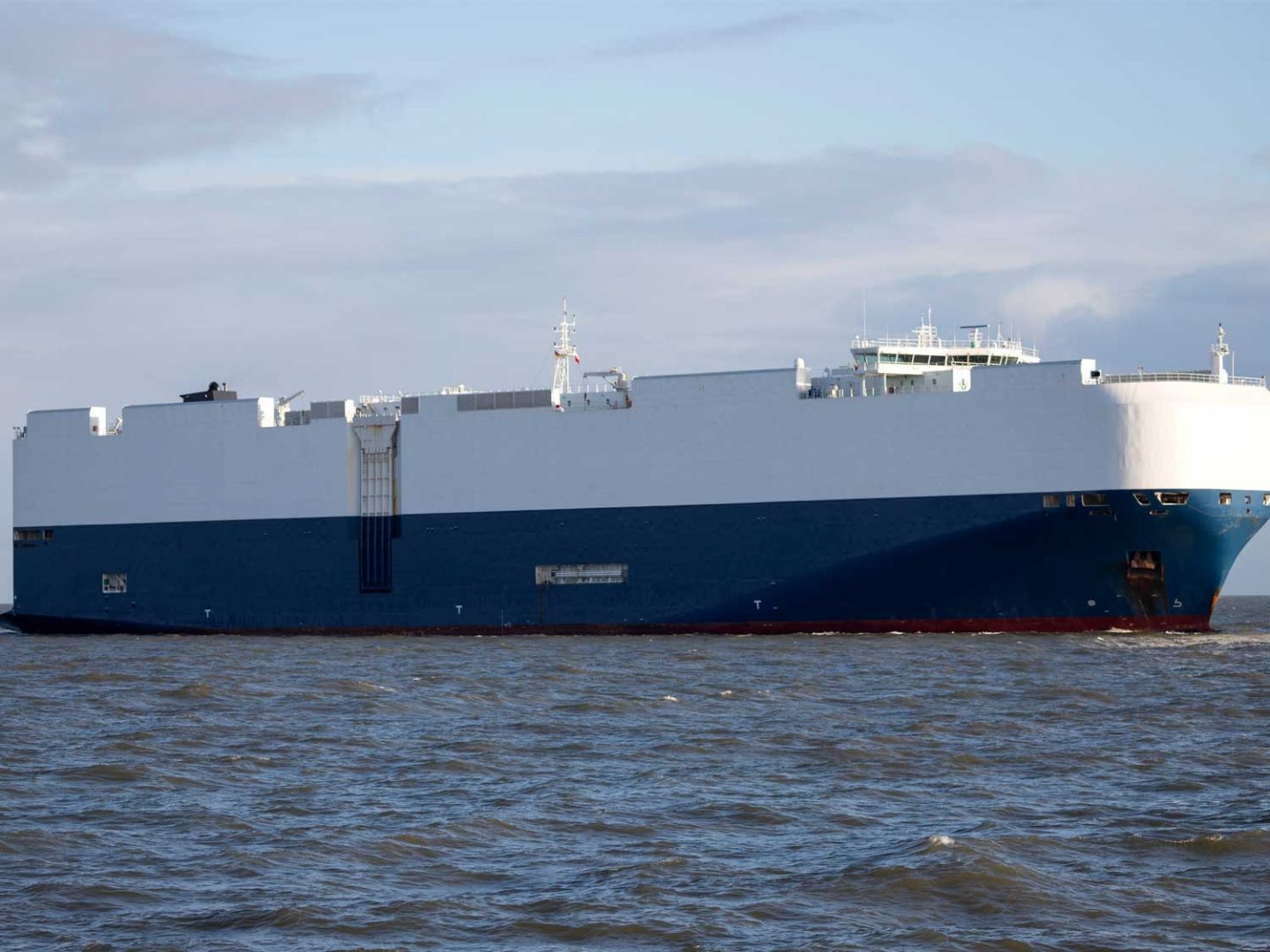
The global Pure Car Carrier (PCC) and Pure Car and Truck Carrier (PCTC) fleet is forecast to expand by around 40% over the coming years, with new vessels significantly larger than the ships they replace.

Latest-generation PCTCs are designed to carry 20–30% more car-equivalent units (CEUs) than legacy tonnage, lifting individual vessel capacity into the 9,000+ CEU range. Most new-builds are dual-fuel or alternative-fuel capable and ammonia-ready, reflecting a clear shift towards lower-emission operations.

Despite this expansion, RoRo capacity remains unevenly distributed. Vessel size growth primarily benefits vehicle flows, while availability for high and heavy cargo continues to depend on stowage flexibility, port infrastructure and trade imbalances.

High and heavy manufacturing: volumes steady, costs rising

Shipment trends from major global manufacturers of construction, agricultural and power-generation equipment provide a useful barometer for RoRo and breakbulk demand. While tariff-related costs are rising sharply, shipment volumes in key segments continue to grow.

Construction and forestry equipment shipments recorded year-on-year growth of more than 25% in the most recent quarter, driven by infrastructure spending and large-scale industrial projects. Power-generation equipment volumes also strengthened, with segment revenues rising by around one-third, reflecting accelerating demand from data centres and energy infrastructure.

Order backlogs across the sector have reached record levels, extending visibility well into 2026 and beyond. This supports steady outbound cargo flows, even as manufacturers maintain tight inventory control rather than front-loading production.

Project and breakbulk cargo enters a capacity-sensitive phase

Project and breakbulk shipping is being lifted by sustained growth in energy, metals and mining cargo. Global electricity demand linked to new power generation is forecast to grow at more than 3% per year through 2030, translating directly into increased movements of turbines, generators and transformers.

Fleet growth for heavy-lift capable vessels is projected at an average of just over 4% per year through the end of the decade. While sufficient for smaller and modular cargo, this pace risks falling short during peak periods for large, indivisible units.

Copper and other critical minerals are adding further pressure. Forecasts point to a potential 30% supply shortfall by the mid-2030s, driving investment in mining projects and associated movements of oversized equipment. These cargoes typically require specialised lift planning, crane operations and non-standard stowage.

As RoRo capacity grows by double-digit percentages and project cargo demand rises at a similar pace, the balance increasingly depends on planning, technical expertise and access to the right assets at the right time. 2026 is shaping up as a year where execution, sequencing and specialist capability determine success.

Metro’s dedicated automotive logistics and project shipping teams understand the operational, technical and scheduling complexities of RoRo, breakbulk and heavy-lift movements.

Working with leading global carriers, independent lines and charter operators, Metro helps customers secure reliable capacity, design resilient supply chains and optimise transport from factory gate through to dealer or point of use.

Email Andrew Smith, Managing Director, to discuss how Metro can safeguard your project cargo, vehicle flows and unlock efficiencies across your global logistics operations.

Med satellite 1440x1080 1

Smart 2026 supply chains are being engineered for pressure

Supply chains are no longer judged on efficiency alone, in 2026 they will be expected to anticipate disruption and adapt at speed to actively support growth. The experience of the past year confirmed that stability is no longer a realistic planning assumption, but performance under pressure is.

Rather than a single crisis, 2025 delivered constant friction. Congestion resurfaced across ports and inland networks, capacity existed but was selectively deployed, and geopolitical and regulatory shifts altered trade flows long before any formal policy changes took effect. 

The result was a decisive shift in mindset: supply chains must be designed to operate in volatility, not merely recover from it.

That shift accelerates in 2026, as technology, resilience and sustainability converge to redefine how supply chains are planned, financed and executed.

Resilience becomes a competitive advantage

If 2025 proved anything, it was that capacity on paper does not guarantee performance in practice. Across ocean, air and road freight, service reliability was dictated by execution: blank sailings, schedule volatility and inland bottlenecks determined what actually moved.

In response, supply chain design is moving beyond simple continuity planning toward resilience, where networks are designed to adapt and improve under stress.

Common characteristics include:

  • Multi-route and multimodal playbooks rather than single-lane optimisation
  • Near-shoring and regionalisation to shorten lead times and reduce exposure
  • Centralised planning paired with regional execution for faster response

These approaches reflect a broader shift away from cost-minimisation toward risk-adjusted performance.

Warehousing becomes a strategic control point

Warehousing emerged as one of the most critical differentiators in 2025 — a trend that intensifies in 2026. With transit times less predictable and congestion harder to avoid, inventory positioning and fulfilment speed have become central to supply-chain resilience.

High-performing shippers increasingly treat warehousing as an active control layer, not passive storage. Key developments include:

  • Greater use of strategically located facilities to buffer disruption
  • Tighter integration between warehousing, transport and customs planning
  • Investment in automation and robotics that flex with demand and seasonality

This is particularly important as omnichannel and e-commerce pressures continue to grow, demanding seamless support for direct-to-consumer, BOPIS and rapid fulfilment models alongside traditional B2B flows.

From reactive networks to intelligent systems

One of the most significant changes heading into 2026 is the role of technology within supply chains. What began as analytical support is now moving into operational control.

AI-enabled tools are increasingly embedded across planning, procurement, inventory management and risk assessment, enabling supply chains to:

  • Anticipate disruption through predictive insights
  • Optimise routing, inventory and capacity decisions in near real time
  • Coordinate responses across multiple functions and geographies

As these systems become more connected, cybersecurity and data governance also rise sharply in importance. Protecting sensitive operational, commercial and customs data is now a core supply-chain requirement, not an IT afterthought.

Data quality, skills and execution define winners

Technology alone is not enough. The past year also highlighted a widening gap between organisations that could convert insight into action and those constrained by fragmented systems and poor data quality.

In 2026, competitive advantage depends on:

  • Clean, trusted and consistent data across logistics, customs and finance
  • Integrated platforms rather than disconnected tools
  • Teams with the skills to manage AI-driven, data-rich operations

Workforce transformation is therefore as important as digital investment. Roles are evolving toward data analytics, systems oversight and exception management, requiring targeted up-skilling to unlock value from new technologies.

Sustainability and compliance move into the operating core

Environmental and regulatory pressures are no longer peripheral considerations. Carbon pricing, emissions transparency, stricter customs enforcement and evolving trade rules are now shaping routing, mode selection and inventory strategy.

For most shippers, progress in 2026 will come less from premium “green” options and more from practical levers:

  • Smarter planning and consolidation
  • Modal optimisation and regionalisation
  • Stronger traceability and data governance

Sustainability and compliance have become operational constraints — inseparable from cost, resilience and service performance.

Designing supply chains that perform under pressure

Taken together, the direction of travel for 2026 is clear. Supply chains are being rebuilt as intelligent, integrated systems — shifting from reactive cost centres to strategic growth engines.

The most resilient networks are those that:

  • Integrate finance, procurement, logistics and technology decisions
  • Combine centralised control with regional agility
  • Invest equally in data, platforms, people and process

The objective is not to eliminate disruption, but to design networks that continue to perform when conditions are uncertain.

At Metro, this same mindset underpins how supply chains are assessed and supported. Stress-testing assumptions, strengthening visibility and applying execution-focused logistics, warehousing and transport strategies. In 2026, the differentiator will not be avoiding disruption, but owning a supply chain designed to operate through it.