stop trade

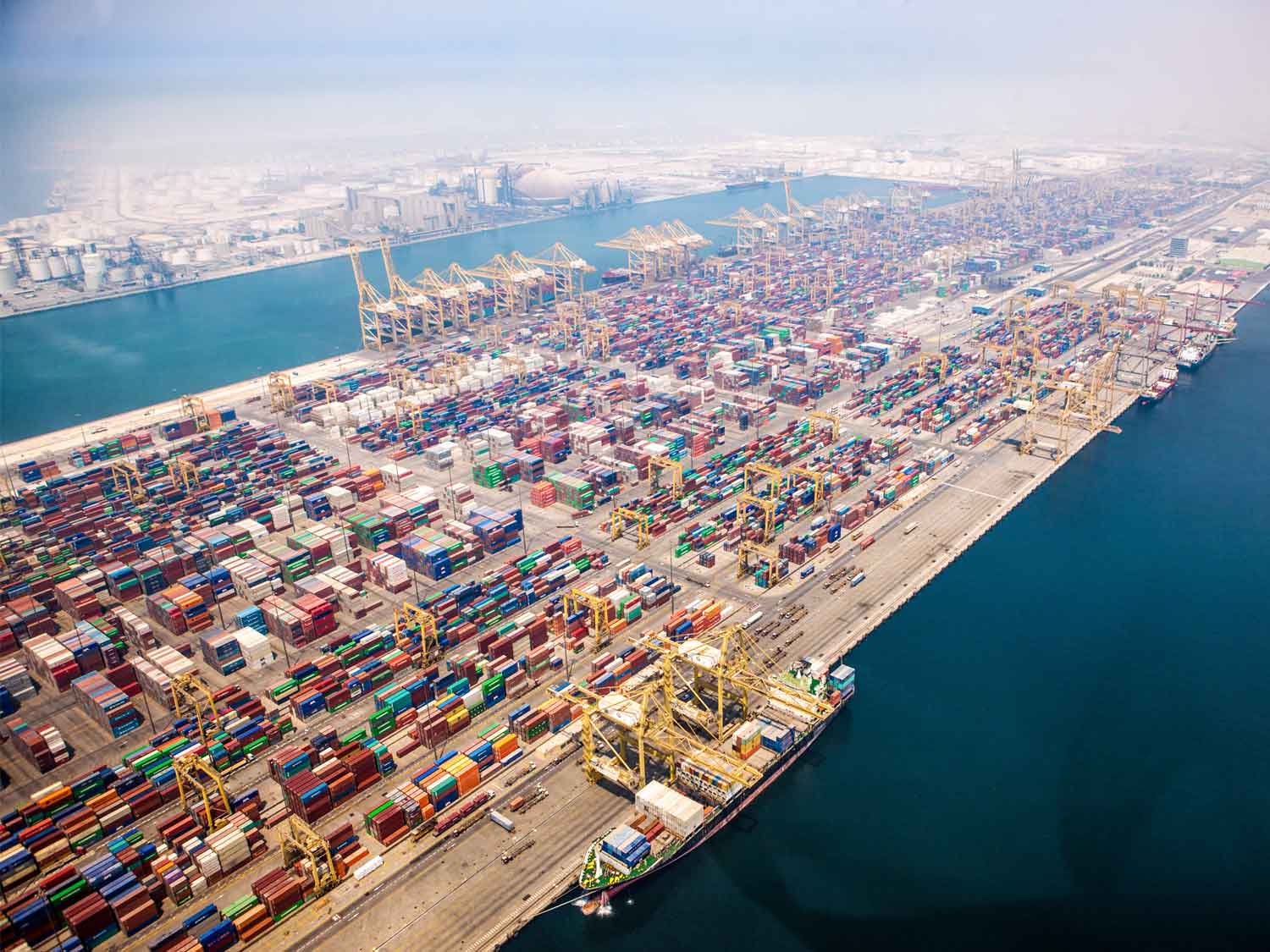
Customs is the bottleneck in global trade — Metro is removing it

The Global Trade Observatory Outlook 2026, based on insights from more than 3,500 senior supply chain executives globally, delivers a clear message: customs is now the single biggest operational constraint in global trade. 

According to the report:

  • 60% of executives cite customs clearance as the leading cause of disruption.
  • 36% rank trade facilitation among the top policy priorities for enabling growth.

At a time when 94% still expect trade growth, the implication is clear: growth is possible, but only if border friction is controlled.

For importers and exporters, speed through borders is now as important as speed of transit.

Border Friction Is No Longer a Back-Office Issue

Customs delays today are not just administrative inconveniences. They create:

  • Demurrage and storage costs
  • Production stoppages
  • Missed retail windows
  • Inventory distortion
  • Reputational risk

As supply chains diversify and multi-origin sourcing becomes more diverse, compliance complexity increases. Different rules of origin, changing tariff regimes, sanctions screening, high-risk product categories and new digital reporting requirements all increase exposure.

The Global Trade Observatory findings confirm what many businesses already feel: border friction is now the pressure point in supply chain resilience and execution at customs is no longer a milestone, it is a strategic necessity.

Metro’s Customs Brokerage: Built for Complexity

Metro’s Customs Compliance Services are designed specifically for this environment of volatility and regulatory intensity. 

Our AEO-accredited team manage the full spectrum of customs requirements, including:

  • Permanent and temporary imports
  • Transit (T1) procedures
  • Specialised food and high-risk product declarations
  • UK, EU and USA clearance at all ports
  • Sanctions-origin advisory and exemption cases

This is not simply about filing entries, it is about total compliance and controlling risk before it materialises.

For example:

  • 99.8% of food shipments clear without delay, with IPAFFS paperwork typically submitted within one hour of receiving slaughterhouse documentation.
  • Export declarations are routinely processed within 30–120 minutes.
  • Secureduty refunds through proactive review and HMRC engagement.

CuDoS: AI-Driven Customs Intelligence

Metro’s AI-driven CuDoS platform automates compliance for complex, multi-line entries. 

  • Aggregates multi-line invoices (300+ lines)
  • Reduces manual processing by 70%
  • Achieves 99.3% first-time declaration accuracy
  • Completes complex entries in under two hours

In a market where manual processes can take 6–24 hours and error rates remain high, automation and AI-driven validation are competitive advantage.

From Compliance to Competitive Advantage

The Global Trade Observatory Outlook highlights how trade growth will continue despite uncertainty, but only for those who can navigate friction effectively, and customs sits at the centre of that challenge.

As supplier diversification increases and new trade corridors open, customs complexity rises. Multi-origin supply chains multiply declaration volumes and compliance touch-points.

Without disciplined brokerage and intelligent automation, delays compound quickly.

The Global Trade Observatory data confirms that customs is now the primary bottleneck in global trade. 

Metro’s mission is simple: remove that bottleneck.

If your business is experiencing clearance delays, compliance pressure, or escalating duty exposure, Metro’s Customs Compliance team and CuDoS platform deliver measurable performance improvements in speed, accuracy and cost control. EMAIL managing director, Andrew Smith, to learn more.

Graph and pound coins 1440x960 1

Sterling strength becomes a supply-chain variable

Sterling has strengthened meaningfully against the US dollar and held a relatively firm range against the euro, reshaping landed costs, sourcing decisions and margin dynamics for UK importers and exporters.

As of early February 2026, GBP/USD has traded near multi-year highs, fluctuating in a 1.36–1.38 range, while GBP/EUR has remained comparatively stable around 1.158–1.159. 

The contrast between a sharply weaker dollar and a steadier euro tells an important story for businesses trading across global and regional markets.

USD weakness drives sterling gains

The most pronounced FX movement in January came from the US dollar. The USD weakened by approximately 2.5% over the month, with GBP/USD moving between 1.3379 in mid-January and 1.3823 by the end of the month. In practical terms, this means the pound became more expensive in dollar terms, reducing the GBP cost of US-sourced goods.

Several forces converged to drive this shift. Geopolitical uncertainty played a central role, with renewed tariff rhetoric and trade threats from the US administration creating what markets increasingly describe as a “sell-America” bias. At the same time, expectations that the US Federal Reserve would hold rates steady reduced the yield advantage of dollar-denominated assets.

On the UK side, domestic data surprised to the upside. Retail sales rose 0.4% month-on-month in December, while the UK PMI reached 53.9, its strongest reading in nearly two years. These indicators reinforced the view that the UK economy is proving more resilient than previously expected, prompting markets to scale back expectations of near-term Bank of England rate cuts. That repricing has provided additional support to sterling.

For UK importers sourcing from the US, this has delivered immediate cost relief. For exporters selling into dollar markets, however, it may narrow margins unless mitigated through hedging or contract renegotiation.

GBP/EUR remains contained, but risks persist

Throughout January, GBP/EUR traded within a relatively narrow band, with highs around 1.155 and lows near 1.146. Over the past 90 days, the pair has fluctuated between roughly 1.13 and 1.16, reflecting relative balance between the UK and eurozone outlooks.

Eurozone inflation has stabilised, allowing the European Central Bank to maintain policy continuity. That stability has limited volatility in the single currency. At the same time, the UK’s stronger-than-expected economic prints have helped sterling remain toward the upper end of its recent range, even as longer-term growth concerns cap further upside.

Short-term forecasts suggest modest bullishness for GBP/EUR over the coming month, but longer-term models still point to potential sterling weakness over a one-year horizon. 

For businesses trading within Europe, this relative stability supports planning and budgeting, but it does not remove FX risk altogether.

Steadier GBP/EUR rates support predictability, but logistics costs, energy pricing and regulatory pressures still demand close monitoring. FX stability should not be mistaken for the absence of risk. Currency moves are now interacting with freight rates, inventory placement and sourcing strategies more directly than at any point in recent years.

Metro is well placed to support UK manufacturers, exporters and importers as finance and logistics decisions increasingly intersect. If you would like to discuss how these factors may affect your supply chain in 2026, please EMAIL our CFO, Laurence Burford.

graph rising

Global trade powers towards a record 2025 with 2026 looking stronger

With the flow of goods providing the real momentum, global trade closed 2025 at record levels, with the outlook for an even more robust 2026. 

Despite geopolitical tension, shifting trade policy and lingering supply-chain risk, the movement of physical goods continues to expand, reinforcing the central role of logistics, freight forwarding and international distribution in the global economy.

Latest analysis from UNCTAD shows that global trade values reached unprecedented highs in 2025, driven primarily by growth in merchandise trade rather than services. Manufacturing output, consumer goods and industrial products have all contributed to the uplift, underlining how resilient goods-led supply chains have become after years of disruption.

Strong demand for manufactured products and critical raw materials has supported higher trade volumes across Asia, Europe and North America. Supply chains have adapted to volatility, with shippers diversifying sourcing, rebalancing inventories and building more flexible transport strategies.

A more constructive outlook for 2026

Forecasts point to continued expansion in global goods trade, supported by easing inflationary pressure, stabilising interest rates and renewed confidence among manufacturers and retailers.

For shippers, this means planning for growth rather than contraction. For logistics providers, it reinforces the need to invest ahead of demand: in people, systems, networks and international coverage.

As trade volumes rise, so does the need for globally connected logistics partners. End-to-end visibility, local market expertise and seamless coordination across borders are becoming prerequisites rather than differentiators. Businesses need partners that can support expansion into new markets without adding complexity or risk.

This is where international network strength becomes critical. Not just in headline trade lanes, but across secondary markets and emerging corridors where growth is accelerating fastest.

Supporting growth through global expansion

Metro’s own international expansion reflects these structural shifts in global trade. As goods flows increase and supply chains become more geographically diverse, Metro continues to invest in new offices both nationally and internationally, strengthening its ability to support customers wherever their trade takes them.

By expanding its global footprint, Metro is aligning its services with the realities of modern goods trade: faster decision-making, stronger local execution and closer proximity to customers and suppliers.

Whether you are entering new markets, reshaping sourcing strategies or scaling established flows, our teams combine local expertise with global reach to keep your goods moving reliably and competitively.

EMAIL Andrew Smith our Managing Director today to see how our expanding international footprint can support your global trade ambitions.

PCTC 1440x1080 1

Capacity challenges continue for RoRo and project shipper

Roll-on/roll-off (RoRo) and project cargo shippers are entering a decisive phase, as fleet expansion, industrial investment and energy-driven demand are converging, creating both opportunity and pressure for shippers moving vehicles, machinery and oversized cargo.

The global Pure Car Carrier (PCC) and Pure Car and Truck Carrier (PCTC) fleet is forecast to expand by around 40% over the coming years, with new vessels significantly larger than the ships they replace.

Latest-generation PCTCs are designed to carry 20–30% more car-equivalent units (CEUs) than legacy tonnage, lifting individual vessel capacity into the 9,000+ CEU range. Most new-builds are dual-fuel or alternative-fuel capable and ammonia-ready, reflecting a clear shift towards lower-emission operations.

Despite this expansion, RoRo capacity remains unevenly distributed. Vessel size growth primarily benefits vehicle flows, while availability for high and heavy cargo continues to depend on stowage flexibility, port infrastructure and trade imbalances.

High and heavy manufacturing: volumes steady, costs rising

Shipment trends from major global manufacturers of construction, agricultural and power-generation equipment provide a useful barometer for RoRo and breakbulk demand. While tariff-related costs are rising sharply, shipment volumes in key segments continue to grow.

Construction and forestry equipment shipments recorded year-on-year growth of more than 25% in the most recent quarter, driven by infrastructure spending and large-scale industrial projects. Power-generation equipment volumes also strengthened, with segment revenues rising by around one-third, reflecting accelerating demand from data centres and energy infrastructure.

Order backlogs across the sector have reached record levels, extending visibility well into 2026 and beyond. This supports steady outbound cargo flows, even as manufacturers maintain tight inventory control rather than front-loading production.

Project and breakbulk cargo enters a capacity-sensitive phase

Project and breakbulk shipping is being lifted by sustained growth in energy, metals and mining cargo. Global electricity demand linked to new power generation is forecast to grow at more than 3% per year through 2030, translating directly into increased movements of turbines, generators and transformers.

Fleet growth for heavy-lift capable vessels is projected at an average of just over 4% per year through the end of the decade. While sufficient for smaller and modular cargo, this pace risks falling short during peak periods for large, indivisible units.

Copper and other critical minerals are adding further pressure. Forecasts point to a potential 30% supply shortfall by the mid-2030s, driving investment in mining projects and associated movements of oversized equipment. These cargoes typically require specialised lift planning, crane operations and non-standard stowage.

As RoRo capacity grows by double-digit percentages and project cargo demand rises at a similar pace, the balance increasingly depends on planning, technical expertise and access to the right assets at the right time. 2026 is shaping up as a year where execution, sequencing and specialist capability determine success.

Metro’s dedicated automotive logistics and project shipping teams understand the operational, technical and scheduling complexities of RoRo, breakbulk and heavy-lift movements.

Working with leading global carriers, independent lines and charter operators, Metro helps customers secure reliable capacity, design resilient supply chains and optimise transport from factory gate through to dealer or point of use.

Email Andrew Smith, Managing Director, to discuss how Metro can safeguard your project cargo, vehicle flows and unlock efficiencies across your global logistics operations.