Ellerman boxes

European market review and group developments

The European freight market continues to face a complex landscape, characterised by fluctuating demand and evolving capacity challenges. In this review, we examine the current state of the road freight market and highlight recent group developments, including the acquisition of a Portuguese intermodal specialist and the launch of a new container shipping service.

Road Freight Market
Despite some positive economic developments, the road freight sector remains challenged by uncertain demand, with no indication of a trend reversal over the summer. This persistent issue is also evident in the capacity trends reported by TIMOCOM’s index. Significant capacity bottlenecks were noted in the first quarter, primarily due to reduced truck fleets.

This trend persisted into the second quarter, with the ratio of freight to cargo space standing at 77:23, dropping further to 73:27 in July, which is typical for the summer months. Despite these challenges, freight rates remain high. Although diesel prices have moderated, other costs, such as driver wages, continue to rise.

The TEG Index tracked a 6% year-on-year increase in haulage prices in July 2023, reflecting the rising costs that hauliers face. This index typically shows prices stalling over the summer before recovering in September, indicating that current trends are in line with historical patterns.

Acquisition of Portuguese Intermodal Specialist
We are pleased to announce the acquisition of Portuguese intermodal specialist KLOG. This acquisition allows us to enhance our intermodal transport capabilities, particularly for customers with significant continental volumes or those aiming to meet decarbonisation targets.

KLOG is renowned for its efficient, reliable, and cost-effective intermodal services to and from the Iberian Peninsula, serving some of Europe’s largest retailers, brands, and manufacturers. Their established rail services to and from Germany and Poland, via hubs in Spain and France, present significant opportunities for shippers trading between Northern Europe and Iberia.

KLOG currently operates two block train departures a week to and from their Portuguese rail hub to Poznan in Poland and Duisburg in Germany, routing via France and Spain. 

These services are complemented by short sea/rail connections. Additionally, four block trains run weekly between Entroncamento (Portugal) and Tarragona (Spain), with a further three block trains operating weekly in Spain between Tarragona, Bilbao, Valladolid, and Sevilla.

A wide range of 45’ equipment is available for all services, including curtain-side, dry container, and refrigerated containers, as well as 20’ ISO tanks. Last-mile delivery and/or collection from the Tarragona hub is available with e-trucks as an option.

Key Benefits:
– 24/7 Control Tower Service
– High rail frequency with daily departures
– Reliable lead-time comparable to road transport
– Sustainable solutions available year-round
– Reduction in truck usage and reliance on scarce driver resources
– CO2 emission reductions of 90% compared to road alternatives

New container shipping service connecting Spain, Portugal, and Northern Europe
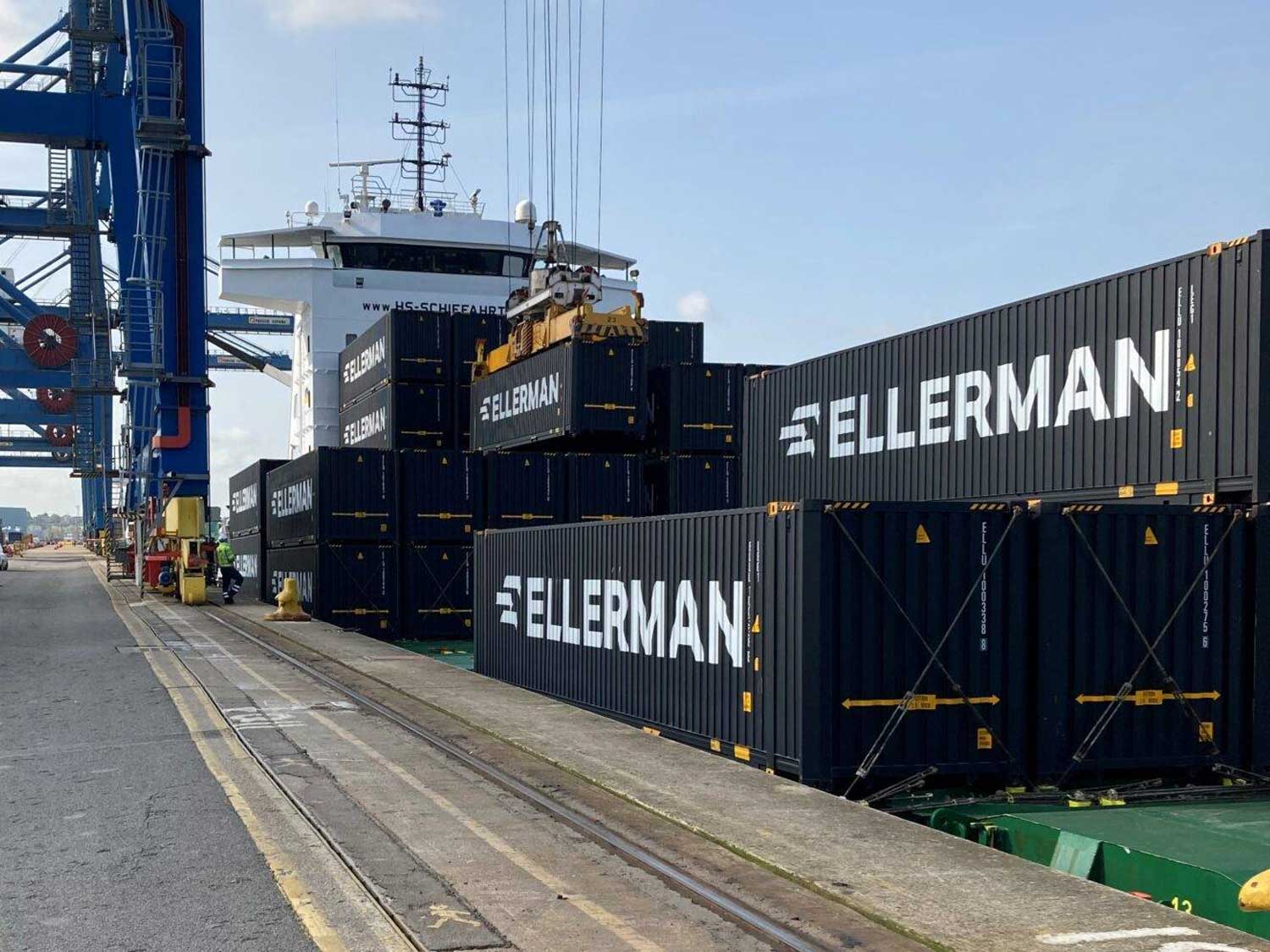
Ellerman City Liners, a group container shipping line with over 120 years of history, has introduced a new joint service with CMA CGM, connecting Spain, Portugal, and Northern Europe. This service aims to address ocean freight capacity shortages on key trade lanes, providing speed, service, and certainty to supply chains.

The first vessel of the new iNEX service departed Rotterdam on 9th July 2024. This service enhances efficiency, expands geographical scope, and reduces the carbon footprint for shippers. Operated with two 1,400 TEU vessels, the weekly sailing schedule includes the ports of Cadiz, Setubal, Leixoes, Ferrol, Tilbury, Dunkirk, and Rotterdam.

By working closely with partners Ellerman and KLOG, we are expanding the intermodal options available to our customers, delivering cost-effective and sustainable services as part of our commitment to decarbonising the supply chain.

Metro’s integrated transport services streamline import and export product flows across Europe, North Africa, and Turkey. By combining road, intermodal, and short sea modes, we ensure more efficient cargo transportation, reduced delivery times, and cost savings.

Our extensive partner network, multi-modal transport solutions, and MVT supply chain platforms are designed to meet even the most complex requirements across multiple regions, vendors, and customers.

Discover how we can enhance your trans-continental trading. EMAIL our Chief Commercial Officer, Andrew Smith, to arrange a consultation and scoping discussion.

Parliament blur

A New Government – a New Britain; Strengthening UK Supply Chains for Economic Resilience

The Labour party’s manifesto outlines a commitment to bolster the resilience of supply chains in key sectors, a task that Transport Secretary Louise Haigh will spearhead.

Recent global events, such as the war in Ukraine and pandemic-induced disruptions, have underscored the necessity of this mission. These crises have driven up energy prices and disrupted the supply of critical goods, exacerbating inflation.

Enhancing supply chain resilience not only mitigates risks but also presents growth opportunities and as the world faces more frequent external shocks, a resilient supply chain becomes crucial to safeguard the economy, because vulnerabilities can halt or divert production.

Labour’s plan includes several key policies to strengthen supply chains:

  • Investing £1.8 billion to upgrade ports and build supply chains across the UK
  • Ensuring a robust defence sector and resilient supply chains through long-term business-government partnerships
  • Maximising the economic and security potential of AUKUS, the trilateral security partnership with Australia and the US
  • Adopting a strategic approach to managing UK-China relations
  • Striking targeted trade agreements aligned with the UK’s industrial strategy
  • Leading international efforts to modernise trade rules and agreements, promoting deeper cooperation through organisations like the WTO and CPTPP
  • Seeking a new strategic partnership with India, including a free trade agreement, and enhancing cooperation with Gulf partners on security, energy, and trade

The government will work with international partners to align capacities in key sectors and advance international standards for supply chain diversification. Labour’s plan includes creating a Cabinet Subcommittee on National Resilience, conducting a COBRA review, and appointing a Minister for Resilience to coordinate responses.

Looking to a New EU Relationship
Labour’s manifesto also includes policies to improve the UK’s trade and investment relationship with the EU, which includes negotiating a veterinary agreement to reduce border checks and lower food costs. 

Upcoming EU legislation, such as the Corporate Sustainability Reporting Directive (CSRD) and the Corporate Sustainability Due Diligence Directive (CSDDD), will impact UK companies. These regulations will require companies to disclose data on suppliers and emissions, impacting those with substantial EU activity or those part of the EU value chain.

For example, a UK auto parts manufacturer selling to an EU car company will need to comply with these directives. Labour’s approach aims to remove unnecessary trade barriers and improve economic cooperation with the EU, ensuring UK businesses remain competitive and compliant with new regulations.

For over 40 years Metro has been providing stable and effective solutions for customers entering new export markets, or sourcing from new suppliers.

Supporting their regulatory compliance and finance requirements, with multi-modal transport services and guidance on insurance and packing, to protect their products.

Our MVT supply chain platform incorporates a suite of reporting modules, including the tracking of global CO2 emissions and templates for CSRD reporting.

If you have any questions, rate requests or would like further information on our global export capability, please EMAIL our Chief Commercial Officer, Andy Smith.

fxt derailment 1440x1080 1

Felixstowe train derailment

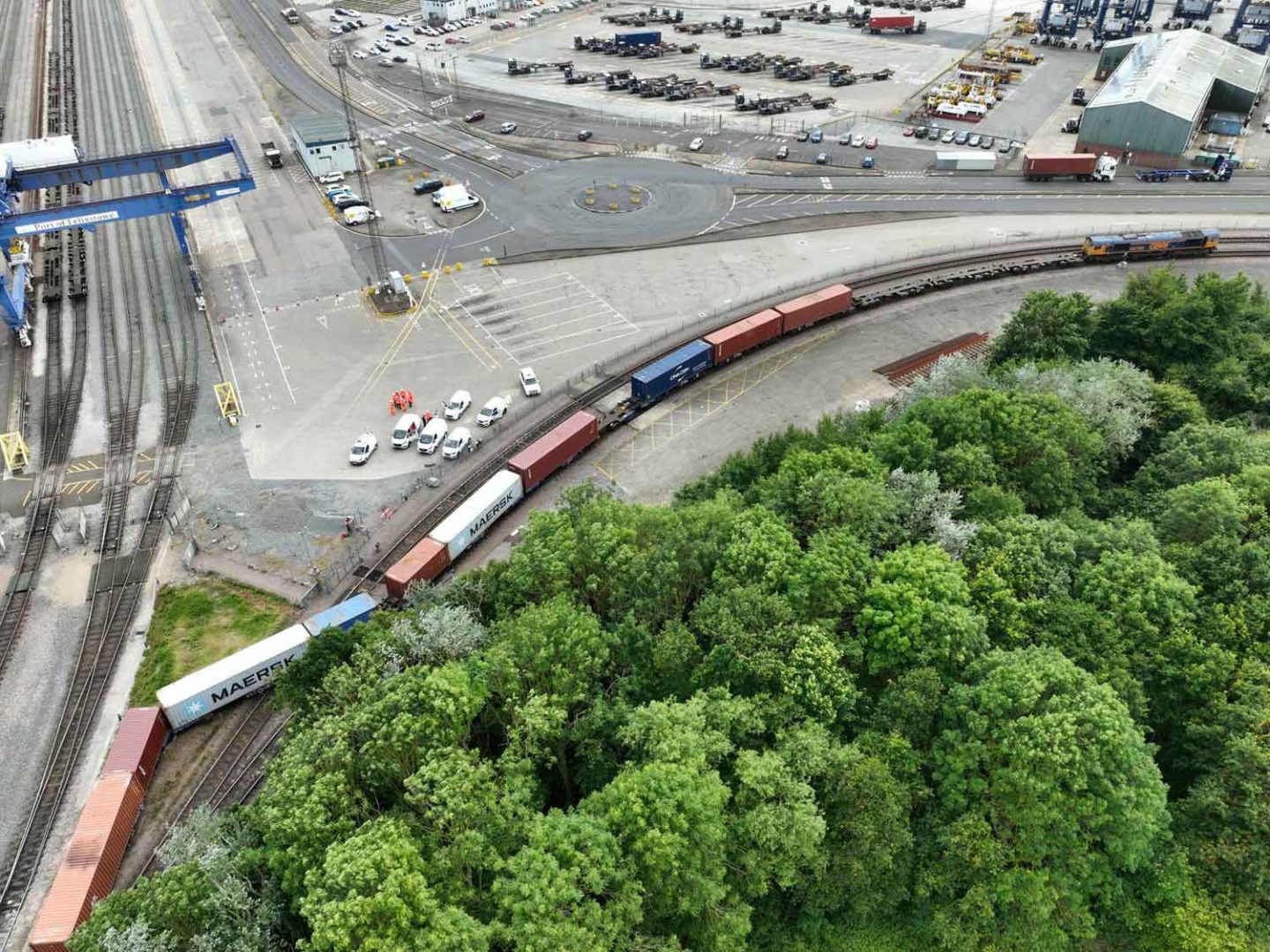
At 22:09 on Wednesday 19th June a GB railway locomotive and loaded wagons en-route to the Port of Felixstowe derailed on the branch line approaching the main Central and Northern railheads, causing significant damage to the track and closing both terminals to train movements.

The Central and Northern terminals, the main railheads at Felixstowe were closed, and while the Southern terminal continued operating, a large majority of import/export services were suspended, with rail throughput at 40% last Friday.

While access to all other areas of the container terminal remains unaffected, with shipping and haulage operations continuing as normal, the derailment impacted all train services serving the port, including those by Freightliner, GB Railfreight and Maritime Transport.

To help mitigate the impact, Felixstowe released additional vehicle booking slots for hauliers, which was welcome, but this does not entirely replace the lost collection/delivery capacity.

Network Rail engineers have been on site since the incident, clearing and repairing the damaged track, with the derailed wagons cleared at the weekend.

The Central terminal is now operating alongside the Southern terminal and rail throughput is back to 50%, but having undertaken a full assessment of required repairs the Network Rail engineers estimate that the port’s rail capacity may not be fully operational until next week.

Update 26th June 2024 – Port of Felixstowe confirm that normal rail service will resume on the 4th July 2024, from 12:00.

With rail companies cancelling services we are unfortunately being impacted by the consequential issues, for example exports missing booked trains as operators work around the situation.

Issues will continue to arise in the coming days, and potentially after normal service is resumed, as empty containers are left inland and not returned, as laden containers will be prioritised where space is limited.

These issues will work through and in the meantime we will continue with our contingency planning. If you have concerns about any consignments, or would like to discuss our transport strategy, please EMAIL Simon Balfe, our Multimodal Transport Manager.

Image courtesy of the Ipswich Star

Paris grandstand 1440x1080 1

Summer 2024; France supply chain alert

This summer, a number of large-scale sporting events are likely to create some supply chain disruption, with the Olympic and Paralympic Games taking place in Paris between the 26th of July to the 11th of August, and the 28th of August to the 8th of September.

The Paris 2024 Olympic Games, which begin on the 26th July, will take place in 36 locations and are expected to attract about 13.5 million people, with parts of Paris closed off and drivers expected to gain access through online applications.

We are following the situation closely with our French partners, but it is inevitable that the current installation of infrastructure, movement of athletes and visitors and the subsequent dismantling and clearing of temporary traffic routes to the end of October, will require widespread access restrictions to routes in Paris and the wider Metropolitan area during the summer, which will impact local distribution.

OPERATIONAL TIMELINE AND ROAD CLOSURES
April: Infrastructure assembly began at Grand Palais, Point Alexandre III, and Invalides
June: Assembly begins on the docks in the Opening Ceremony area
Early July: Assembly begins on the bridges at the area of the Opening Ceremony
Mid-July: Olympic Village is opened
26th July: Olympic Games begin, accompanied by the introduction of reserved lanes
Early August: Bridges and docks will start to open up again
September – October: Dismantling phase and gradual release of competition sites

As stated above most impacts will be caused due to infrastructure assembly and disassembly operations throughout the 35 Olympic sites, with on-road or road-adjacent sporting events also having impacts on road transportation due to road closures.

Delays and re-routings of cargo moving through this area during the summer are inevitable and we are aware of carriers announcing surcharges for transportation through the Île-de-France area. 

We are reorganising our activities to cope with all the restrictions and will keep you informed as the situation evolves. 

To discuss the potential impact of the Olympics on your French traffic EMAIL Richard Gibbs to begin a conversation.