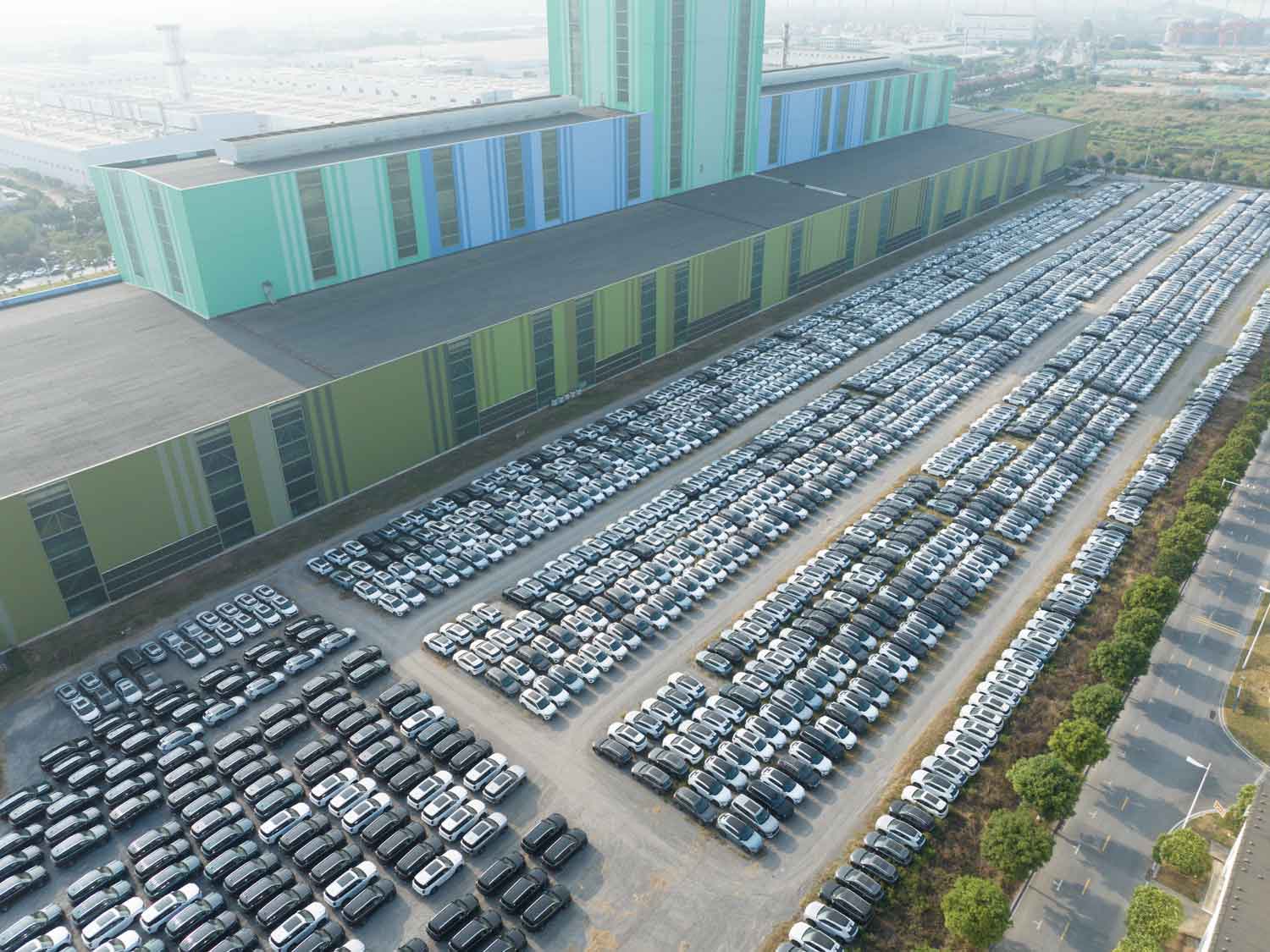
China car factory parking lot

China dumping fears growing

The United States is voicing increasing concerns that Chinese manufacturing overcapacity will hit world markets, while the EU launched an anti-dumping investigation into China’s EV industry last year.

Senior US Treasury officials told the Financial Times this week that a visiting US delegation made its concerns clear that Chinese policies are focused on supply and that overcapacity will hit world markets.

The US is most concerned about advanced manufacturing and clean energy sectors such as electric vehicles, solar panels and lithium-ion batteries, while the EU has already launched its own anti-subsidy probe into imports of Chinese electric vehicles.

Chinese brands exported 280,000 vehicles to the EU in the first ten months of last year, with BYD, China’s biggest EV maker, selling 526,400 EVs globally last year. Yet the carmaker wants to increase its sales in Europe to 10% of global volumes by 2030, equal to 800,000 vehicles a year.

Elon Musk has already gone on record to say that China’s EVs are extremely good and that if there are no trade barriers established, they will pretty much demolish most other car companies in the world.

However, exports from China have been affected by RoRo capacity shortages, with BYD among the manufacturers that have commissioned their own RoRo vessels.

The EU launched its anti-subsidy probe into China’s EV industry last year, alongside several other investigations into allegedly unfair Chinese trade practices, including punitive tariffs on imports of plastic for bottles and opening a probe into suspected dumping of biofuel.

China has launched reciprocal anti-dumping investigations and their commerce ministry this month announced plans to support the healthy development of overseas EV expansion, with BYD planning to build an assembly plant in Hungary.

The Chinese point to the fact that the US Inflation Reduction Act makes it cost-prohibitive to import Chinese lithium batteries and EVs, while nearly one-third of Chinese EV exports last year were cars of Elon Musk’s US company Tesla, produced at its factory in Shanghai.

And while US Treasury secretary Janet Yellen is expected to raise Chinese overcapacity with her G20 counterparts when they meet in São Paulo later this month, western manufacturers are facing US pressure to sever links with China following claims of forced labour in its supply chain.

US Customs impounded several thousand new VW vehicles because a Chinese subcomponent is alleged to have been manufactured in breach of forced labour laws.

And while we have seen significant spikes in demand from Thailand and Vietnam, with fashion brands in particular diversifying sourcing, there is still a huge proportion of the global supply chain reliant on China.

While leading global brands including Apple, Samsung, Sony and Adidas have shifted some production out of China, it only represents an incremental shift and it is clear that they are not leaving the region.

We continue to monitor the diversifying growth in production around south-east Asian countries, Latin America and EMEA, to support our customers’ diversification and sourcing strategies.

We have fixed price and long-term global capacity agreements in place with sea and air carrier partners, to support all your sourcing requirements with resilient, consistent and reliable supply chain solutions.

Our cloud-based supply chain management platform, MVT, simplifies global sourcing and vendor management, by making every milestone and participant in the supply chain transparent and controllable, down to individual SKU level.

EMAIL Andrew Smith to review our current freight profile movements to and from China and Asia.

wing merro dusk

Supply chain; a year in review

2023 was supposed to be the year that global supply chains bounced back from pandemic lockdowns and factory shutdowns, trade wars, tariffs and war in Europe, but now container shipping is disrupted by attacks in the Red Sea and restrictions on the Panama Canal.

The COVID pandemic and its aftermath, with supply-side fluctuations, shipping delays and port congestion created a logistics storm so brutal that many wondered if supply chains would ever recover.

The dramatic increase in consumer spending during the pandemic that left shippers scrambling for air, road and sea space, quickly fell away at the beginning of the year as consumers faced potential recession and a cost of living crisis.

That fall in demand provided the breathing space for carriers and ports to resolve their capacity and performance issues, clear backlogs and reposition equipment effectively, with markets reverting to pre-pandemic levels in terms of capacity and pricing.

The uncertainties surrounding tariffs, trade wars and geopolitical tensions remain, but there has been no significant move away from China, though we are seeing some diversification of sourcing, with Vietnam and Bangladesh - among other origins - increasingly popular.

While container shipping demand fell away the global shortage of RoRo capacity for finished vehicle shipments led to some car manufacturers to acquire their own vessel assets, while others looked to our containerised shipping solutions, for cheaper sea freight movement and certainty of service.

On the air freight front, having joined the Air France, KLM, Martinair Cargo Sustainable Aviation Fuel (SAF) programme in 2022, we were extremely pleased to support their second sustainable flight challenge in the summer, which was followed a few months later by the first transatlantic SAF-powered crossing, accelerating the transition to a more sustainable airline industry.

Metro’s road freight division has grown significantly in 2023, with more team members joining our UK Birmingham HQ and new support operations located close by manufacturing hubs in Desford and Wythenshawe.

Under new leadership the road freight team have increased European FTL/LTL capability, adding more lanes and expanded our groupage offering, alongside the increasingly popular European Distribution (EU/DDP) solutions. 

As the UK deferred post-Brexit food checks for the 5th time, to avoid adding to food inflation, the EU expanded its Emissions Trading System to the container shipping sector, in a move that will cost carriers, and by extension shippers, $Billions from the start of 2024.

In a move that took the market by surprise (but shouldn’t have) the European Commission announced that it would not renew the container shipping sector’s Consortia Block Exemption to operating alliances in 2024.

Despite the initial panic, it is likely that the EC’s decision will have little real impact, particularly as the Maersk and MSC 2M alliance was already ending, with the others likely to reorganise into new structures.

With 2024 just weeks away, scheduled Trans-Pacific and Asia to North Europe container shipping capacity was up 30% and 10%, raising fears of a massive blank sailing program to try and support rates, but now, with the Suez Canal transit suspended and Panama Canal disruption, we may see increased rates and delays, with air freight’s popularity rising.

We are hopeful that the US and coalition navies can restore maritime security quickly, because the prolonged re-routing of vessels away from the Suez Canal, via the Cape of Good Hope will increase transit times and costs, with a massive reduction in available capacity and a return to equipment imbalances.

Whatever challenges 2024 may bring, you can rest assured that we will keep you informed and protected, because we always have your back covered.

Trailer

EU road toll increases start in Germany

Increases in HGV road toll charges in Germany, which includes an additional CO2 emissions tax of €200 per tonne began on the 1st December 2023 and for vehicle combinations with a gross vehicle weight of up to 40 tons, prices will increase by almost 86% – giving 35.4 cents per kilometre.

The German MAUT, officially known as the Infrastructure Usage Charge or Levy, was introduced to finance and maintain Germany's highway infrastructure.

Funding is therefore paid not only by German carriers, but all those delivering, collecting or transiting the country, with the increase in freight prices passed on by the hauliers to their customers.

Depending on the vehicle weight capacity, number of axles and the emission class there will be an increase in German MAUT ( Toll ) of circa €0.158 per km.  Therefore, if transiting through Germany from the Netherlands border to Poland, a distance of circa 700 kms using the Toll roads, this is an increase of circa €110.00 per trip. 

The 1st December was the start date for trucks with a gross vehicle weight of more than 7.5 tons, while from 1st July 2024 the German Maut system will be expanded to include vehicles with a technically permissible total weight of 3.5 tons or more.

The toll is a fixed government tax and will be charged as a cent amount per kilometre driven. In particular, the CO2 emission class, the weight, the number of axles and the pollutant class of a vehicle have an influence on the amount of the surcharge.  

On the 1st October 2023, there was a 17.6% increase in the cost of the Hungarian toll system, while Austria and the Czech Republic are raising tolls in January and March 2024, following Germany's Maut increase. 

Austria's tolls will increase by 20-30%, and the Czech Republic's tolls will increase by 10-15%

The toll increases are a result of an EU directive to introduce road tolls based on CO2 emissions and ALL member states are tasked with implementing such a system by the 24th March 2024 at the latest.

Metro’s road freight teams are located close by major manufacturing and transport hubs in Birmingham, Desford and Wythenshawe.

To learn more about our expanded European capability, including our Customs Brokerage (CuDoS), European Distribution (EU/DDP), short-sea services and intermodal solutions, EMAIL Richard Gibbs. 

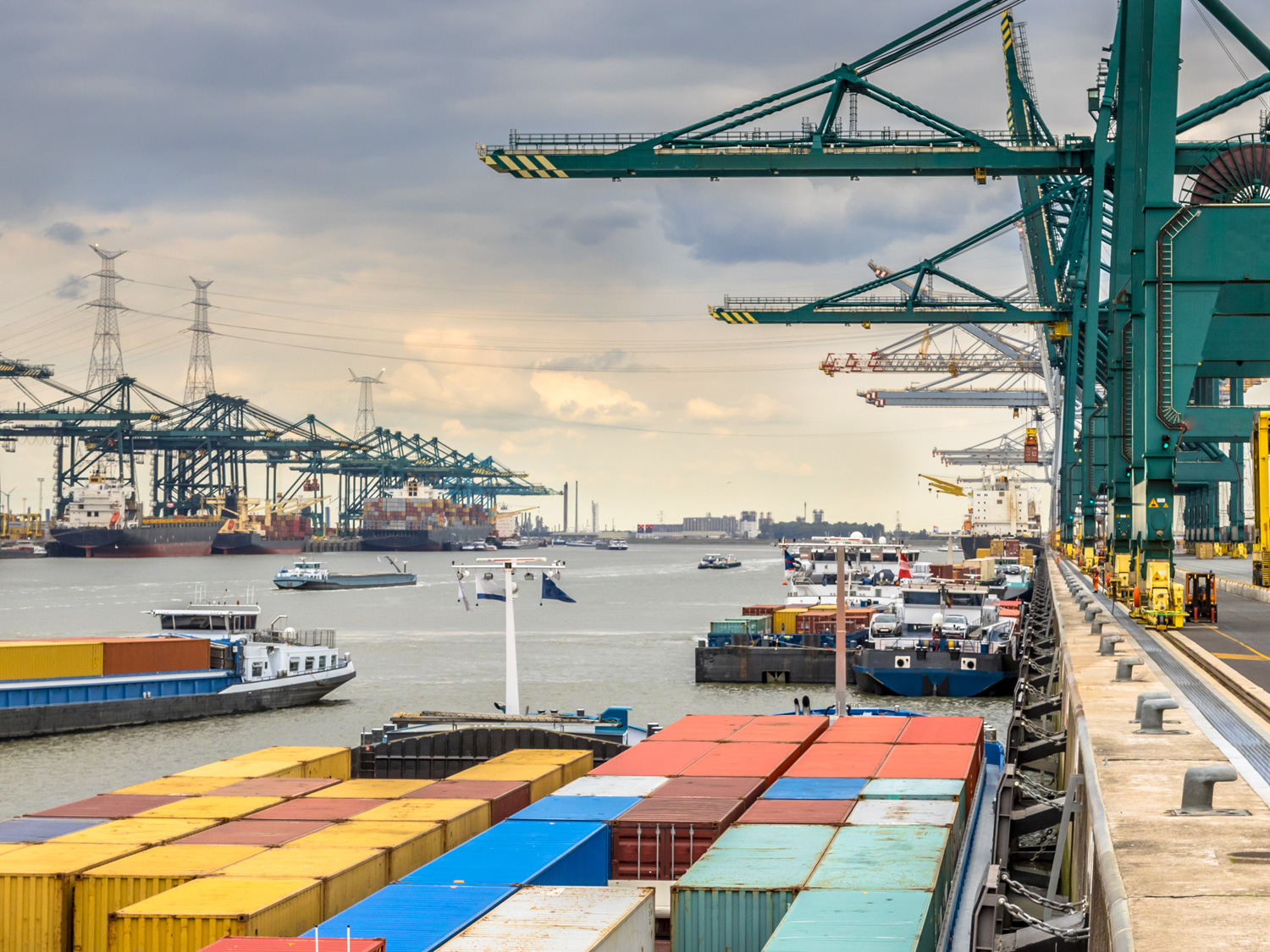
Antwerp

EU-ETS surcharge latest

From the 1st January 2024 the market-based mechanism to tackle greenhouse gas emissions within the European Union known as the EU Emissions Trading System (ETS) will be extended to shipping, triggering new emission linked surcharges.

EU ETS sets an annual absolute limit on greenhouse gas (GHG) emissions and requires the purchase of allowances for emissions known as EU Allowances (EUAs) by the shipping lines.

The inclusion of shipping in the EU ETS aims to create financial incentives for reducing greenhouse gas emissions and promoting a transition to more sustainable practices. 

There will be a phased implementation of carbon pricing for shipping with carriers required to submit allowances equivalent to a portion of their emissions:

2024; submit allowances for 40% of verified emissions
2025; submit allowances for 70% of verified emissions
From 2026; submit allowances for 100% of verified emissions

For every ton of reported CO2 emissions, one EUA must be purchased and submitted to the EU, with EUAs priced according to demand on exchanges such as ICE, EEX and Nasdaq.

The cost of compliance is expected to be significant and will keep increasing with the phased implementation, with the lines passing on the cost in the form of a standalone ‘Emissions Surcharge’ defined on trade basis. 

The Loadstar shared surcharge estimates for all the top carriers. 

Carriers have indicated that surcharge amounts will be reviewed on a monthly or quarterly basis as the volatile price of EUAs adds another layer of complexity to the surcharge, making it hard for the lines to predict how much they will cost.

In their latest Customer Advisory Maersk have stated that only bookings where the Load Port and/or Discharge Port of the ocean journey is located in the EU/EEA scope will be charged with the emissions surcharge.

However, for all bookings from China Maersk will add the EU ETS emissions surcharge to the base freight rate instead of an additional surcharge for regulatory reasons. 

This is a complex and evolving issue, which we will continue to monitor, sharing important developments, because the ETS surcharge, including its methodologies are subject to change.

The cost of ETS compliance for the lines will be significant and will keep increasing with the phased implementation.

EMAIL Andrew Smith, Chief Commercial Officer, if you would like to learn more, or have concerns about any of the issues raised here.