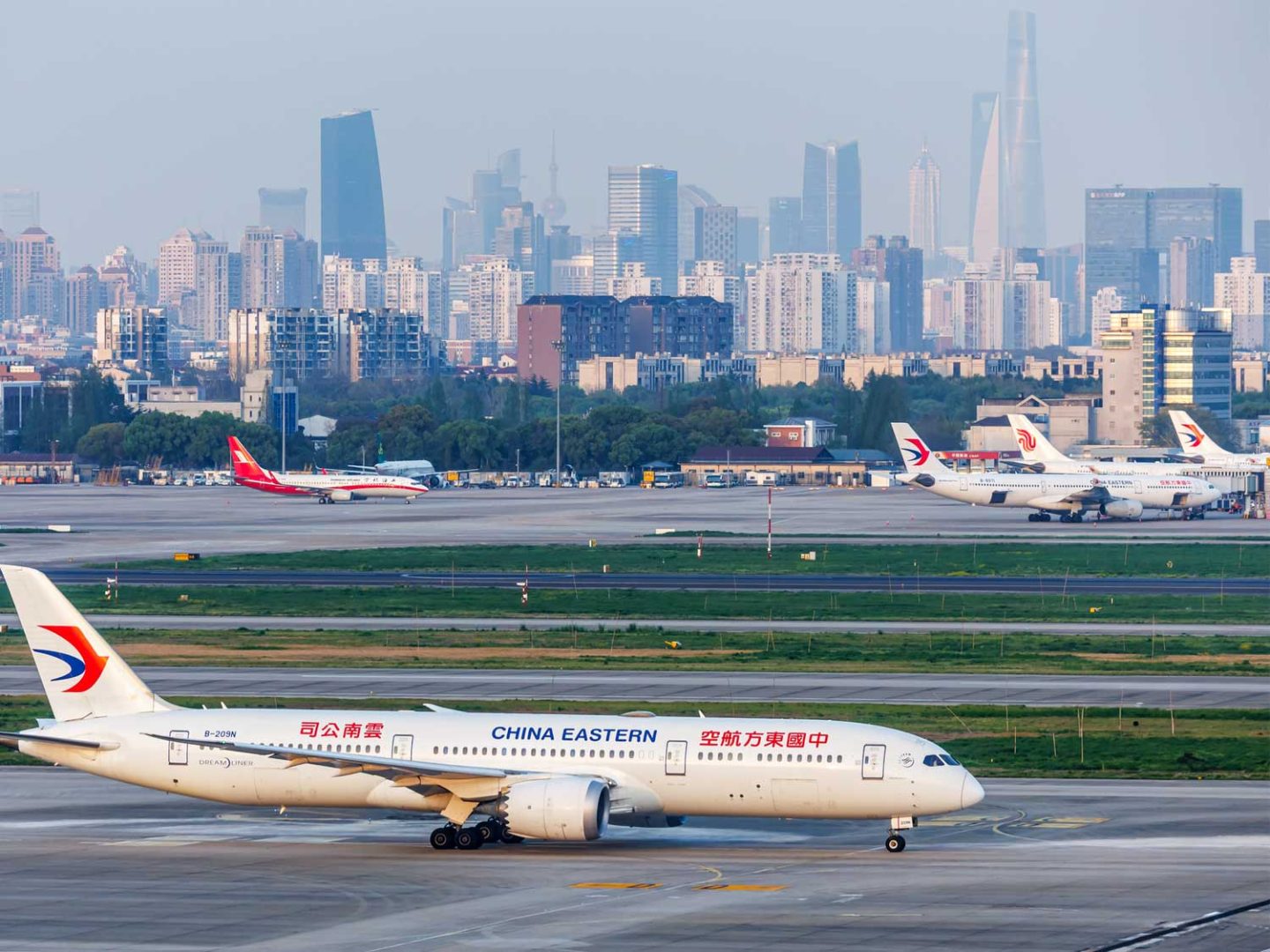
Shanghai Hongqiao Airport 1440x1080 1

Air freight markets firm as Chinese New Year front-loading reshapes early-year demand

Air freight markets have entered the new year on firmer footing than many expected, with volumes rebounding sharply through January as shippers accelerate movements ahead of earlier-than-usual Chinese New Year factory shutdowns. 

While underlying demand remains uneven, front-loading has concentrated uplift into a narrower time window, particularly on East–West and transpacific trade lanes.

Global air cargo volumes increased by around 5% year on year in the second and third weeks of January, with chargeable weight recovering rapidly from the post-Christmas slowdown. Volumes remain approximately 10% below mid-December peak levels, but are now close to pre-holiday norms and materially stronger than the same period last year, helped by a softer start to 2025.

Asia–Europe demand has accelerated faster than Asia–North America, reflecting front-loaded demand across North and Southeast Asia. Volumes from Asia Pacific to Europe rose by close to 20% year on year in mid-January, with particularly strong growth from Southeast Asian origins alongside solid demand from China and Hong Kong.

The transpacific market is also improving, but with more uneven performance. Asia–US volumes were up by around 6% year on year, masking significant divergence beneath the headline number. Shipments from Southeast Asia to the US have continued to post double-digit growth, while volumes from China and Hong Kong remain below last year’s levels. This pattern reflects ongoing supply-chain diversification rather than a uniform demand recovery.

Front-loading adds to traditional peak

This year’s Chinese New Year dynamic differs markedly from historical norms. Rather than a late-January surge, earlier factory shutdowns have pulled production and uplift forward into the first half of the month. Manufacturing windows are tighter, shipping schedules more compressed and cargo flows more concentrated.

Unlike previous years, ocean freight’s pre-holiday volume spike has been somewhat muted, pushing a greater share of time-critical shipments into the air. Air volumes are firm, but not at the extreme peak levels seen in prior cycles.

Capacity behaviour is now the dominant market influence. Freighter operators have reinstated aircraft quickly following the year-end peak, with freighter capacity rising by more than 15% week on week in early January. Overall global air cargo capacity remains around 7% below mid-December highs, but has rebounded faster than demand in several markets.

This rapid capacity return prevented the sharp rate escalation typically associated with Chinese New Year. Average global air freight rates sitting roughly 10% below mid-December levels, but still slightly above the same period last year. On transpacific lanes, pricing to the US West Coast has largely stabilised, with East Coast rates modestly higher.

Concentrated production cycles, e-commerce demand and high-value cargo flows are sustaining baseline volumes. At the same time, uncertainty around ocean routing and the unlikely return of container services through the Red Sea in H1 continues to underpin air demand on selected lanes.

Securing space at the right time, and at the right cost, requires proactive planning and real-time market insight.

Metro works closely with shippers and carrier partners to manage uplift around peak periods, optimise routing and balance speed against cost as market conditions shift. Our teams monitor capacity, rates and network changes daily to help customers move time-critical cargo with confidence.

EMAIL Andrew Smith, Metro’s Managing Director, today to review your air freight strategy and ensure your supply chain stays resilient through the first half of 2026.
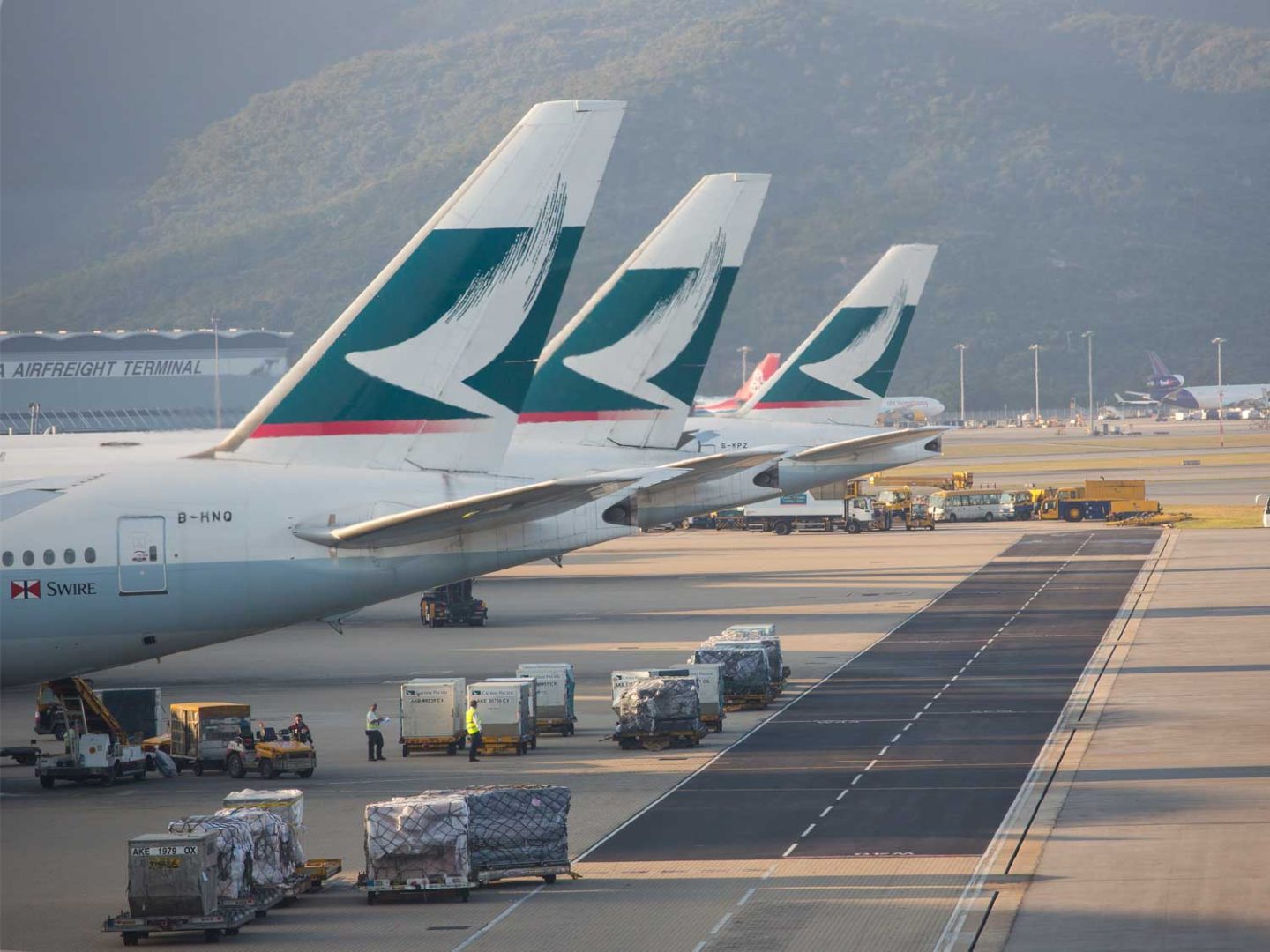

Cathay tailfins 1440x1080 1

Air freight volumes rebound and rates adjust post-peak

Average east-west spot freight rates strengthened into December as peak-season demand lifted pricing, and while they eased back over the year-end, early January data shows a sharp rebound in demand.

Outbound air freight rates from Asia rose firmly into December, reflecting year-end demand and sustained e-commerce flows. Month on month pricing on both the Asia–US and Asia–Europe lanes rose by the strongest monthly averages of the year.

Despite this seasonal lift, rates closed the year marginally below December 2024 levels, highlighting that the 2025 peak was solid but less aggressive than the year before.

Asia–Europe pricing has proved more resilient over the year than Asia–US, supported by e-commerce flows increasingly oriented towards European consumers rather than the US market.

January volumes surge as markets reopen

Following the normal year-end slowdown, global air cargo volumes rebounded strongly in the first full week of January. Worldwide tonnages rose by more than 25% week on week, reversing the sharp declines seen in the final weeks of December. Compared with the same period last year, chargeable weight ran around 5% higher, indicating a stronger underlying start to 2026.

This rebound was broad-based across all major origin regions except Africa. Asia Pacific remained the largest contributor in absolute terms, continuing a trend seen throughout 2025.

Capacity began to recover as freighter operators reinstated services scaled back after the peak. Freighter capacity rose by over 15% week on week in early January, although overall global capacity still remained around 7% below mid-December levels.

Even with supply returning fast, average rates remain slightly ahead of the same point last year, reinforcing that the market reset reflects seasonality rather than a structural downturn.

Asia outbound lanes lead volume growth

Year-on-year volume growth in early January was led by Asia Pacific origins, up around 8%, in line with the full-year growth rate recorded in 2025.

On Asia–US routes, volumes increased by around 10% year on year, driven mainly by Southeast Asia, while flows from China and Hong Kong remained broadly flat. This points to a more diversified Asia export base rather than a single-country surge.

Asia–Europe volumes grew even faster, up around 15% year on year, supported by stronger flows from China, Hong Kong, Taiwan and Thailand, underlining Europe’s growing role as a destination market for Asian exports.

Beyond Asia, traffic from the Middle East and South Asia showed some of the strongest growth rates entering 2026, with double-digit year-on-year increases on both Europe- and US-bound lanes.

Securing lift and service predictability is about smart, proactive planning. Metro’s air freight team closely monitors capacity, fine-tunes routings and works with trusted carrier partners to keep cargo moving reliably and on time.

Metro’s digital platform adds confidence through live flight telemetry, delivering:
– Real-time aircraft position and route mapping
– Accurate departure and arrival confirmation
– Time-stamped milestones, updated as events unfold

This visibility means our customers can plan with certainty, optimise inventory and protect service levels—even as market conditions change.

EMAIL Andrew Smith, Managing Director, to explore smarter, faster and more resilient air freight solutions powered by live data and long-standing carrier relationships.

Med satellite 1440x1080 1

Smart 2026 supply chains are being engineered for pressure

Supply chains are no longer judged on efficiency alone, in 2026 they will be expected to anticipate disruption and adapt at speed to actively support growth. The experience of the past year confirmed that stability is no longer a realistic planning assumption, but performance under pressure is.

Rather than a single crisis, 2025 delivered constant friction. Congestion resurfaced across ports and inland networks, capacity existed but was selectively deployed, and geopolitical and regulatory shifts altered trade flows long before any formal policy changes took effect. 

The result was a decisive shift in mindset: supply chains must be designed to operate in volatility, not merely recover from it.

That shift accelerates in 2026, as technology, resilience and sustainability converge to redefine how supply chains are planned, financed and executed.

Resilience becomes a competitive advantage

If 2025 proved anything, it was that capacity on paper does not guarantee performance in practice. Across ocean, air and road freight, service reliability was dictated by execution: blank sailings, schedule volatility and inland bottlenecks determined what actually moved.

In response, supply chain design is moving beyond simple continuity planning toward resilience, where networks are designed to adapt and improve under stress.

Common characteristics include:

  • Multi-route and multimodal playbooks rather than single-lane optimisation
  • Near-shoring and regionalisation to shorten lead times and reduce exposure
  • Centralised planning paired with regional execution for faster response

These approaches reflect a broader shift away from cost-minimisation toward risk-adjusted performance.

Warehousing becomes a strategic control point

Warehousing emerged as one of the most critical differentiators in 2025 — a trend that intensifies in 2026. With transit times less predictable and congestion harder to avoid, inventory positioning and fulfilment speed have become central to supply-chain resilience.

High-performing shippers increasingly treat warehousing as an active control layer, not passive storage. Key developments include:

  • Greater use of strategically located facilities to buffer disruption
  • Tighter integration between warehousing, transport and customs planning
  • Investment in automation and robotics that flex with demand and seasonality

This is particularly important as omnichannel and e-commerce pressures continue to grow, demanding seamless support for direct-to-consumer, BOPIS and rapid fulfilment models alongside traditional B2B flows.

From reactive networks to intelligent systems

One of the most significant changes heading into 2026 is the role of technology within supply chains. What began as analytical support is now moving into operational control.

AI-enabled tools are increasingly embedded across planning, procurement, inventory management and risk assessment, enabling supply chains to:

  • Anticipate disruption through predictive insights
  • Optimise routing, inventory and capacity decisions in near real time
  • Coordinate responses across multiple functions and geographies

As these systems become more connected, cybersecurity and data governance also rise sharply in importance. Protecting sensitive operational, commercial and customs data is now a core supply-chain requirement, not an IT afterthought.

Data quality, skills and execution define winners

Technology alone is not enough. The past year also highlighted a widening gap between organisations that could convert insight into action and those constrained by fragmented systems and poor data quality.

In 2026, competitive advantage depends on:

  • Clean, trusted and consistent data across logistics, customs and finance
  • Integrated platforms rather than disconnected tools
  • Teams with the skills to manage AI-driven, data-rich operations

Workforce transformation is therefore as important as digital investment. Roles are evolving toward data analytics, systems oversight and exception management, requiring targeted up-skilling to unlock value from new technologies.

Sustainability and compliance move into the operating core

Environmental and regulatory pressures are no longer peripheral considerations. Carbon pricing, emissions transparency, stricter customs enforcement and evolving trade rules are now shaping routing, mode selection and inventory strategy.

For most shippers, progress in 2026 will come less from premium “green” options and more from practical levers:

  • Smarter planning and consolidation
  • Modal optimisation and regionalisation
  • Stronger traceability and data governance

Sustainability and compliance have become operational constraints — inseparable from cost, resilience and service performance.

Designing supply chains that perform under pressure

Taken together, the direction of travel for 2026 is clear. Supply chains are being rebuilt as intelligent, integrated systems — shifting from reactive cost centres to strategic growth engines.

The most resilient networks are those that:

  • Integrate finance, procurement, logistics and technology decisions
  • Combine centralised control with regional agility
  • Invest equally in data, platforms, people and process

The objective is not to eliminate disruption, but to design networks that continue to perform when conditions are uncertain.

At Metro, this same mindset underpins how supply chains are assessed and supported. Stress-testing assumptions, strengthening visibility and applying execution-focused logistics, warehousing and transport strategies. In 2026, the differentiator will not be avoiding disruption, but owning a supply chain designed to operate through it.

ULD on tarmac

Continued Airfreight Growth Amid Emerging Challenges

Global air freight markets have continued to post positive year-on-year growth through September and October, reinforced by stronger than anticipated build up to peak season volumes, but recent indicators point to a moderating pace and emerging challenges that merit close attention.

While recent data points to a slowdown in momentum, overall performance remains solid, underpinned by stable demand, improved belly capacity and expanding connectivity on Asia-Europe and Trans-Pacific routes.

September: Stronger Demand and Broad-Based Recovery

According to IATA’s latest data, global air cargo demand rose nearly 3% year-on-year in September, with international volumes up 3.2%. Capacity grew by roughly 3%, maintaining a healthy balance between supply and demand. The Asia-Pacific region led the expansion with a 6.8% increase in volumes, while Europe recorded a 2.5% rise and Africa posted double-digit growth.

Growth was especially strong on the Europe–Asia (up over 12%) and 10% up within Asia corridors, reflecting continued confidence among exporters and manufacturers leveraging airfreight for time-sensitive and high-value cargo. With global manufacturing activity steadying and cross-border trade recovering, September marked one of the most stable months of the year for international air logistics.

October: Consistent Throughput Amid Changing Conditions

Preliminary October data shows global air cargo volumes continuing to rise (around 4% higher than last year) indicating that demand remains robust heading into the traditional year-end peak. Industry analysts note that the pace of expansion is easing slightly as the market adjusts to higher passenger aircraft capacity and shifting economic conditions, but the overall picture remains positive.

Regional patterns are mixed: Asia continues to drive growth, supported by strong eCommerce flows and resilient intra-regional trade, while the transatlantic market remains steady. Importantly, network connectivity and schedule reliability have improved further, helping shippers achieve greater predictability and shorter transit times across major gateways.

Outlook: Stable, Predictable and Customer-Focused

While the pace of growth is slowing, there are reasons for optimism, including sustained peak season volumes, robust growth across key Asian and African corridors, and ongoing demand from eCommerce and modal shifts due to ocean shipping disruption.

The industry faces headwinds from weakening rate trends and demand imbalances, but steady year-on-year increases, even as momentum tapers, position air freight for a resilient conclusion to 2025.

Overall, air cargo remains on a positive trajectory, delivering growth despite moderating demand and evolving market challenges, with adaptability and strategic planning key for stakeholders navigating this dynamic landscape.

With demand steady and networks evolving, securing lift and predictability is all about smart planning. Metro’s air team proactively monitors capacity, fine-tunes routings, and works with trusted carrier partners to keep your cargo moving—reliably and on time.

Our platform adds real-time confidence with flight telemetry that delivers:

  • Live aircraft position and route mapping
  • Accurate departure/arrival confirmation
  • Time-stamped milestones, updated in real time

Plan with certainty, optimise inventory, and protect service levels—even when conditions change.

EMAIL Andrew Smith, Managing Director, to explore smarter, faster, and more resilient air-freight solutions powered by live data and long-standing carrier relationships.