Air Freight Demand Surges on Tariff Pressures but Challenges Persists

Air Freight Demand Surges on Tariff Pressures but Challenges Persists

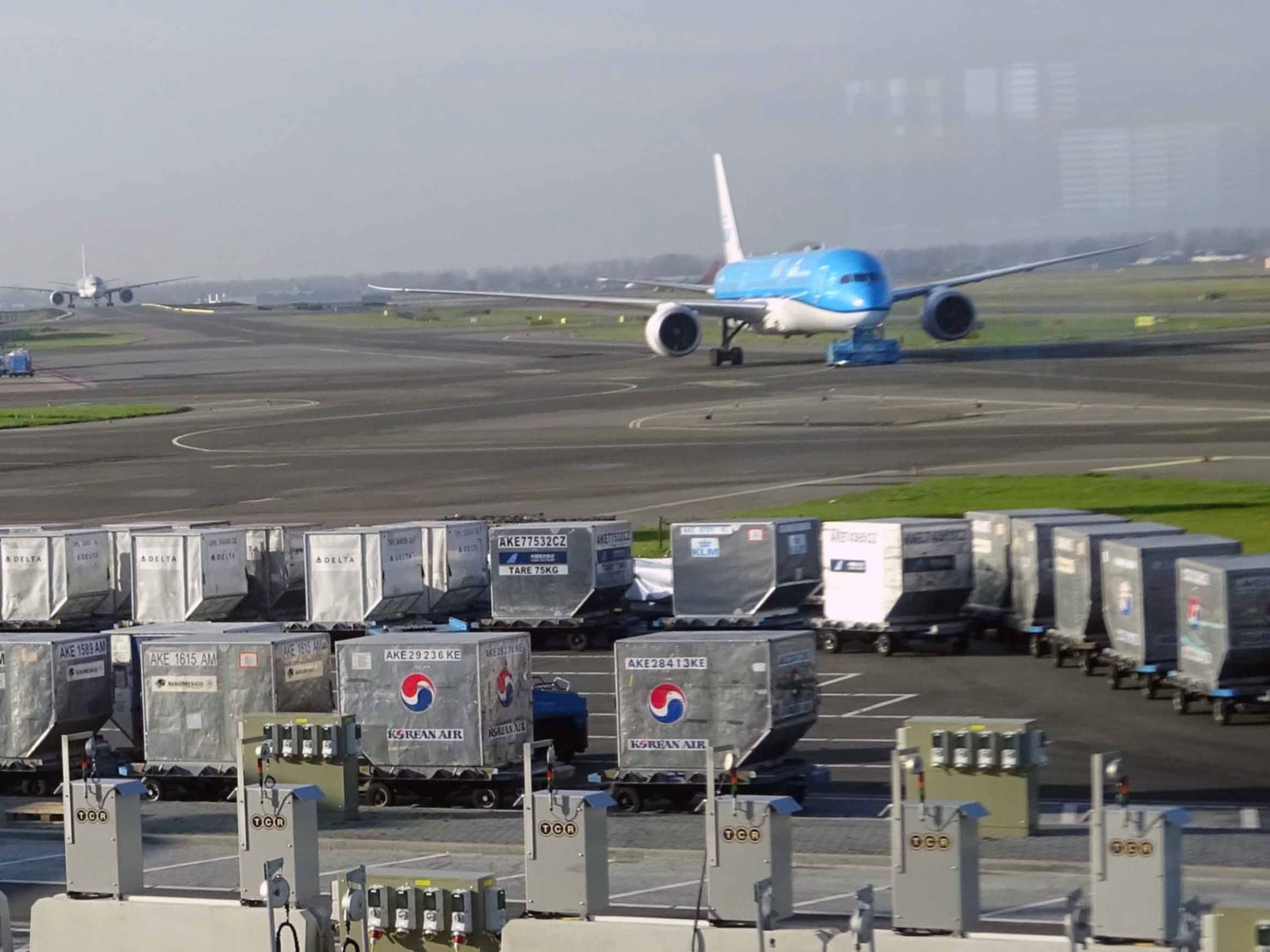
Global air cargo markets have entered an unusual mid-summer upswing as US importers accelerated shipments to avoid rising tariffs. July volumes rose strongly against seasonal norms, fuelled by front-loading, modal shift from ocean to air, and persistent trade uncertainty.

The sharp increase in shipments came as US tariff deadlines prompted companies to expedite goods by air rather than risk higher costs or long delays at sea. Businesses turned to aircraft to move time-sensitive cargo more quickly, driving a five per cent uplift in volumes compared with the previous year. The rise followed only modest growth in June and has temporarily restored load factors to levels last seen a year ago.

However, carriers now face the challenge of adjusting capacity after rapidly adding flights in anticipation of prolonged demand. With inventory-building cycles completed earlier than expected, airlines are rationalising schedules and redeploying aircraft across trade lanes to protect yields. Asian carriers, in particular, are having to reassess networks as the traditional electronics and consumer goods peak season has been disrupted.

Despite the boost in cargo volumes, global average spot rates continued to soften, recording a third consecutive monthly decline. The imbalance between seasonal contract rates and shorter-term spot prices has widened, signalling subdued confidence. Rates on major corridors show mixed trends: transpacific lanes weakened sharply from Southeast Asia and mainland China, while Northeast Asia held firmer thanks to strong demand for high-tech shipments. The transatlantic market was the rare exception, where reduced belly-hold capacity combined with tariff-related front-loading to push prices higher in both directions.

Additional headwinds loom. The imminent removal of the US de minimis exemption for low-value shipments will particularly impact eCommerce exports from Asia, the UK, Canada, and Mexico, further distorting flows. Earlier curbs on Chinese parcels already triggered a dramatic fall in volumes.

Looking ahead, uncertainty over tariff outcomes remains the single largest influence on airfreight demand. While disruption may continue to support short-term cargo volumes, analysts warn that once the “piggybacking” effect of front-loading subsides, demand could retreat quickly, leaving airlines exposed to excess capacity and weaker yields.

With demand surging, tariffs shifting, and carrier schedules in flux, securing space and certainty has never been more critical. Metro is actively monitoring capacity, adjusting routings, and working with trusted carrier partners to protect our clients’ cargo.

Our latest innovation takes visibility even further. Real-time flight telemetry tracking on Metro’s platform provides shippers with:

– Live aircraft position and route mapping
– Accurate departure and arrival confirmation
– Time-stamped milestone events, updated in real time

This level of transparency means you can plan confidently, optimise inventory, and protect service levels even in unpredictable conditions.

Partner with Metro for smarter, faster, and more resilient air freight solutions, powered by live data and long-standing carrier relationships.
EMAIL Andrew Smith, Managing Director, today to explore how we can support your success.

H1 2025: Six Developments Reshaping Global Trade

H1 2025: Six Developments Reshaping Global Trade

The first half of 2025 has been one of the most turbulent periods for supply chains in recent memory. From renewed tariff wars to fresh geopolitical flashpoints, logistics professionals have had to contend with a constantly shifting landscape.

At the same time, structural challenges around skills, safety, and sustainability have continued to grow. Here we review six developments that defined H1 2025.

1. Tariffs return to the fore
The pause in US tariff escalation ended in August, with the White House reintroducing “reciprocal” tariffs that apply baseline duties of 10% to all countries and higher rates of 10–41% depending on origin. The UK sit at the low end, while Syria faces the steepest levels. Brazil has been singled out further, hit by an additional 40% levy. Canada also saw tariffs raised from 25% to 35% on certain goods, justified by Washington’s claim that Ottawa has not done enough to curb fentanyl flows.

The executive order applies from 7 August 2025, with a grace period allowing cargo already loaded onto vessels before that date to arrive until 5 October 2025. To add complexity, US Customs will also impose new fees on Chinese-built or operated vessels from 14 October, potentially forcing alliances such as the Ocean Alliance into costly fleet reshuffles. Carriers are already working through how to redeploy capacity to avoid penalties, with COSCO and OOCL particularly exposed.

2. New shipping alliances reshape networks
The recomposition of global shipping alliances in Q1 has reshaped carrier strategies. The launch of the Gemini Cooperation between Maersk and Hapag-Lloyd marked one of the most significant realignments in recent years, focused on achieving 90%+ schedule reliability. Shippers are already seeing more dependable services, but questions remain about whether premium pricing will follow.

Other alliances, particularly Ocean and THE Alliance (now Premier Alliance), are recalibrating networks, with competition sharpening across Asia–Europe and transpacific trades. For shippers, the alliance changes mean rethinking service contracts and adapting to new network structures that could endure for much of the decade.

3. Houthi attacks deepen Red Sea crisis
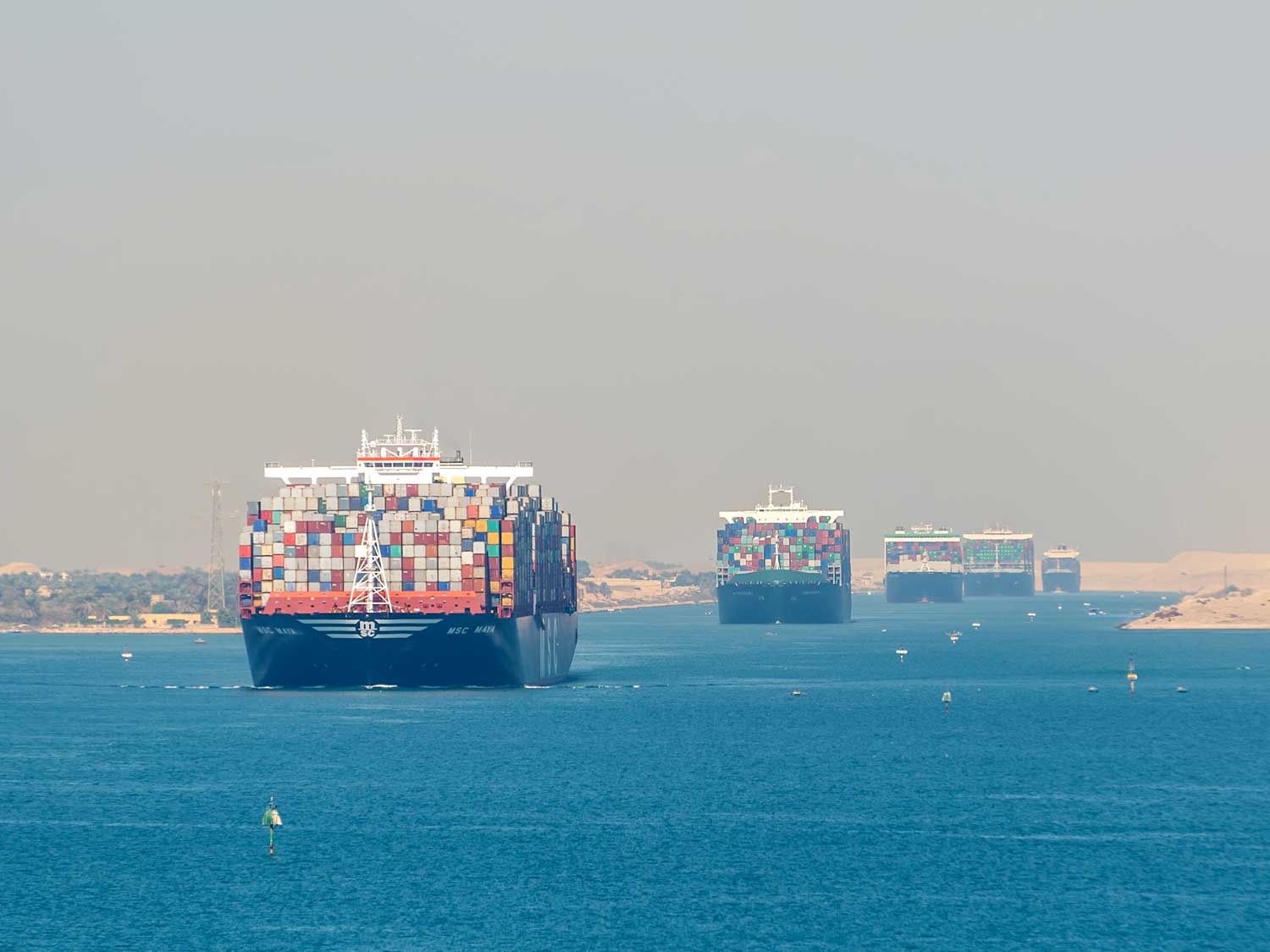
The Red Sea crisis, triggered by Houthi rebel attacks, has now stretched on for nearly two years. In July 2025 the threat escalated further with the sinking of the Magic Seas, a Greek-operated vessel targeted for its links to companies calling at Israeli ports. Analysis suggests that one in six vessels globally could now be considered threatened under the Houthis’ broad definition of violators.

For container lines, this effectively rules out a return to Suez Canal routings before 2026 — and possibly not until 2027. Rerouting around the Cape of Good Hope adds up to two weeks to Asia–Europe journeys, pushing up costs and insurance premiums, and putting additional strain on fleet capacity. The Red Sea instability has been a reminder of how localised conflicts can have global consequences for supply chains.

4. Logistics skills shortages persist
The UK continues to face a significant shortfall in logistics skills, with the Road Haulage Association estimating a deficit of around 50,000 HGV drivers. The ONS also reports 6,000 fewer courier and delivery drivers than the previous year. With 55% of HGV drivers aged between 50 and 65, the demographic imbalance remains a long-term concern.

Factors include reduced access to EU workers post-Brexit, poor industry perception, and limited uptake of government training schemes. Although the crisis is not as acute as during the height of the pandemic, the ageing workforce and lack of young entrants mean structural shortages will continue. Rising wage costs, recruitment struggles, and bottlenecks in road transport all add to the burden on UK supply chains.

5. EV shipping challenges raise alarm
The growth of electric vehicle (EV) trade has created new safety risks at sea. Several high-profile fires on car carriers have been linked to lithium-ion batteries, sparking concern among insurers, regulators, and shipowners. Insurers are pushing for tougher loading protocols, enhanced crew training, and more advanced fire suppression systems.

For supply chains, this adds cost and complexity to automotive logistics, with carriers facing higher insurance premiums and the need to retrofit vessels. It is also slowing the momentum of EV exports, just as demand for cleaner vehicles accelerates globally.

6. Sustainability regulations tighten
Sustainability regulation is reshaping procurement strategies. The EU’s Carbon Border Adjustment Mechanism (CBAM) is beginning to impact trade in carbon-intensive products such as steel, aluminium, and cement, with importers required to report embedded emissions.

At the same time, sustainable aviation fuel (SAF) is moving toward a tipping point. UK and EU mandates are pushing airlines to integrate SAF into their fuel mix, with new investments underway to scale production.

While tariffs and geopolitics grab headlines, sustainability is quietly becoming a decisive factor in supplier choice, cost structures, and long-term resilience planning. For many organisations, compliance with emissions and ESG frameworks is no longer optional but critical.

Outlook
H1 2025 has exposed the vulnerability of supply chains to political shocks, armed conflict, safety risks, and structural labour shortages. Tariffs, alliances, and attacks have disrupted networks, while long-term challenges around sustainability and skills remain unresolved.

The message for supply chain leaders is clear: resilience, agility, and visibility will be critical in the second half of 2025, as disruption becomes the new normal.

H1 2025 has underlined how vulnerable global supply chains have become and staying ahead demands visibility, expertise, and a trusted partner by your side.

Metro’s account management team works proactively with customers to anticipate risks, share insights, and design solutions that are resilient and adaptable to change.

Our expertise encompasses dangerous goods and lithium battery shipping, customs, and multimodal freight, backed by a strong people strategy that includes apprenticeships, engagement programmes, and our Great Place to Work certification.

We are also leading the way on sustainability. Metro has been carbon neutral for five years, pioneering the use of Sustainable Aviation Fuel (SAF), while our MVT ECO platform helps businesses forecast, measure, and offset emissions across their global supply chains.

EMAIL Andrew Smith, Managing Director, to learn how Metro can build resilience into your supply chain.

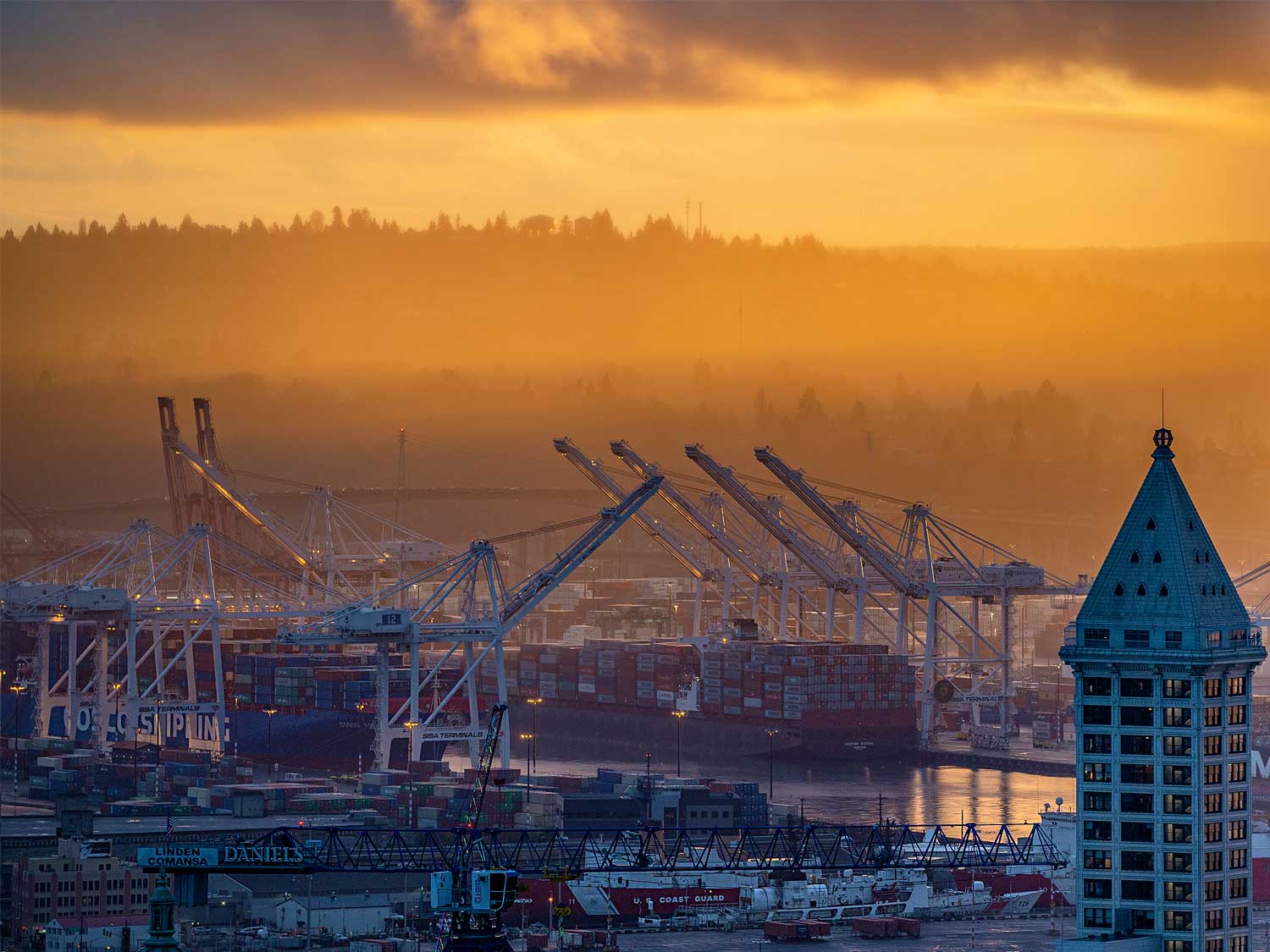
Asian Cargo Surge Threatens to Overwhelm North Europe Ports

Asian Cargo Surge Threatens to Overwhelm North Europe Ports

North Europe’s container gateways face a turbulent August and September as a surge of inbound cargo from Asia collides with already stretched terminal operations.

Strong import demand through the first half of the year has driven double‑digit growth in volumes, with the peak season now set to push many ports to breaking point.

For months, operators have battled chronic congestion, with delayed vessel arrivals throwing schedules into disarray and container yards struggling under sustained high occupancy. The anticipated wave of summer imports will magnify these pressures, raising the risk of longer delays and service disruption well into the autumn.

Rising volumes, falling reliability
Exports from Asia to Europe have maintained strong growth into the second half, with China–EU shipments in particular climbing at a double‑digit rate year‑on‑year. This pattern typically sees July sailings arrive in Europe through August and September, concentrating peak loads into an already fragile network.

Schedule reliability has deteriorated sharply. On‑time arrivals for Asia–North Europe services have dropped from more than two‑fifths in May to less than one‑third in July. Larger vessels deployed to circumvent southern Africa are adding to the strain, extending berth stays and raising yard utilisation. Prolonged transit times are feeding greater volatility and unpredictability across the supply chain.

Not all ports are equally affected, but the most severe congestion has been concentrated at London Gateway, Antwerp, Hamburg, and Rotterdam. Antwerp and Hamburg are further hampered by high barge delays, worsened by low water levels restricting inland waterway capacity. Some gateways still report healthy throughput, yet overall capacity buffers are now minimal.

Carrier work‑arounds
Lines are adjusting strategies to ease bottlenecks. Some are replacing transhipment legs with direct calls to Scandinavian ports, reducing container moves by two‑thirds on certain routes. Others are diverting volumes away from heavily congested hubs or shifting calls to less‑utilised terminals such as Le Havre, Zeebrugge, Bremerhaven, and Wilhelmshaven.

Carriers are also moving boxes from deep‑sea terminals into inland depots to free yard space, although low Rhine water levels continue to limit barge utilisation. With inland capacity already tight, this offers only partial relief.

While tactical adjustments may prevent a complete choke‑point, the outlook for the remainder of the summer remains challenging. Persistent high demand, combined with limited progress in clearing congestion, suggests the sector will remain under pressure until at least the final quarter of the year.

Metro’s sea freight teams are actively monitoring port performance, vessel schedules, and rate movements across all major trade lanes. We work with customers to secure priority bookings, optimise equipment and container allocation, and design alternative routings to avoid bottlenecks and minimise disruption.

Email Managing Director, Andrew Smith, to discuss current market conditions, risk‑mitigation strategies, and booking solutions tailored to your business priorities.

US–EU Trade Deal Signals New Trade Era

US–EU Trade Deal Signals New Trade Era

The US and EU have agreed a landmark trade framework taking effect 1 August, with a 15% baseline tariff, replacing many higher existing rates.

In addition to lowering tariffs the new trade deal opens markets, and pledges huge investment flows, with significant opportunities for UK traders able to leverage the EU’s expanded access to the U.S. market.

Headline tariff changes:

  • Cars & parts – Cut from 27.5% to 15%
  • Pharmaceuticals & semiconductors – 0% tariff until review; max. 15% after
  • Steel & aluminium – Stay at 50% pending quota deal
  • Zero‑for‑zero tariffs – On aircraft, some chemicals, generic drugs, semiconductor equipment, selected agri‑products, raw materials
  • Still under negotiation – Wine and spirits tariffs

Strategic commitments:

  • EU to buy $750bn in US oil, LNG and nuclear technology
  • EU firms to invest $600bn in the US over Trump’s second term
  • Defence procurement from US suppliers planned

Opportunities for US, EU & UK Traders

The agreement creates multiple areas of advantage for transatlantic trade:

For EU exporters to the U.S.:

  • Reduced tariffs on high-value sectors such as cars, pharmaceuticals, and technology components.
  • Greater certainty in supply chain planning with capped tariff rates post-investigation.

For U.S. exporters to the EU:

  • Immediate tariff elimination for priority goods, expanding competitiveness in aerospace, chemicals, and agri-products.
  • Increased market access supported by European government procurement in energy and defence.

For UK exporters and importers:

  • Ability to leverage EU supply chains for tariff-advantaged U.S. market access.
  • Opportunities to integrate into transatlantic supply networks in sectors such as automotive, chemicals, and renewable energy.

Leverage Metro’s EU network, in‑house customs brokerage, and on‑the‑ground teams in the United States to navigate this new trade landscape. Whether you’re reassessing sourcing strategies, managing new tariffs, or planning market entry, our experts can deliver compliant, cost‑effective solutions across every mode and market.

Email Managing Director, Andrew Smith, to explore how we can optimise your US/EU trade strategy.