Tariff Tensions Drive Short-Term Freight Surges and Long-Term Uncertainty

Tariff Tensions Drive Short-Term Freight Surges and Long-Term Uncertainty

Global freight markets remain under pressure as shifting US tariff policies continue to disrupt established trade patterns, prompting divergent responses across air and sea freight markets. While immediate demand surges have driven up short-term pricing, underlying market dynamics suggest a volatile road ahead.

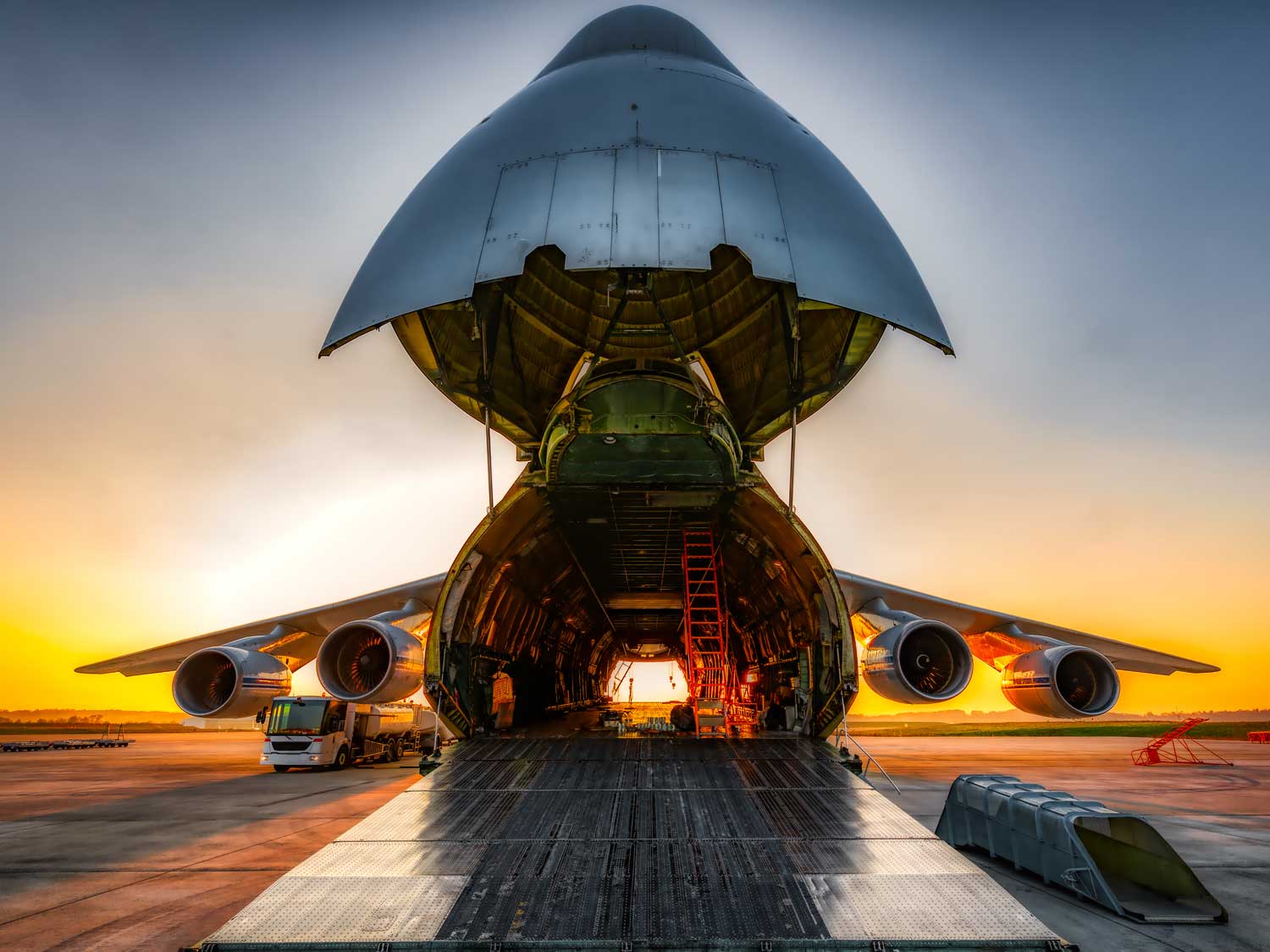
Air freight rates from the US to China have surged following China’s announcement of steep tariff increases on American imports. Faced with escalating duties – rising from 34% to 125% – Chinese importers rushed to move goods before the latest hike, triggering a sharp spike in demand for air freight. Rates have soared, in some cases quadrupling, particularly on express shipments booked close to the tariff deadline.

Freighter capacity has responded swiftly, with US–China volumes up nearly 60% in March compared to February, and year-to-date capacity 21% higher than in 2024. However, this may represent a short-term peak. As the market absorbs front-loaded shipments and the end of the de minimis exemption approaches on 2 May, analysts anticipate a rapid slowdown, potentially leading to overcapacity and falling rates across both air and ocean modes.

Despite a global drop in air cargo volumes last week, average spot rates rose by 1%, reaching their highest point this year. Combined spot and contract rates increased by 2% week on week and 3% year on year. However, some trade lanes showed early signs of softening. Volumes out of the Middle East and South Asia fell by 24%, with Asia Pacific down 7%, and North America 2%. China–US traffic dipped 5% week on week—the first decline of the year—although volumes remain slightly ahead of 2024.

Spot container rates on key east-west ocean trades showed modest increases despite widespread booking suspensions and heightened uncertainty. On the transpacific, rates from Shanghai to Los Angeles and New York rose by 3% and 2%, respectively. Yet forward-looking indices suggest softening ahead, with next-week quotes showing a 5% decline on west coast routes and a 2.5% fall on the east coast.

The tariff-driven disruption is also shifting contracting strategies. Many beneficial cargo owners are moving a larger share of their volumes into the spot market to retain flexibility, which can impact trade lane pricing stability.

Meanwhile, demand signals out of China remain mixed. Some cargo has been postponed, withdrawn from customs, or even abandoned mid-transit, as importers and exporters reassess risk exposure. Others are pressing ahead with shipments as scheduled, with a clear eye on alternative sourcing and destination markets.

On the Asia–Europe corridor, spot rate trends are more stable. Shanghai–Rotterdam rates increased by 4%, while Genoa-bound rates rose by 1%. The Shanghai Containerised Freight Index showed a 1.5% week-on-week increase to North Europe and a 6% gain to Mediterranean ports. Capacity control measures appear to be supporting rates, though competition among carriers can be fierce.

Temporary Highs, Lingering Uncertainty

While both air and sea freight markets are demonstrating resilience in the face of immediate shocks, structural uncertainty persists. Tariff changes, shifting trade alliances, and varying responses from shippers are driving short-term spikes but could give way to downward pressure as demand softens and inventory levels stabilise.

We understand the pressures global supply chains are under. That’s why we offer fixed-rate agreements on key ocean freight routes, helping you navigate rate volatility with confidence and control. 

Whether you’re managing critical lanes, looking for alternative routings or planning ahead for the year, our tailored sea freight solutions provide the stability you need to stay ahead.

To discover how Metro can strengthen your ocean supply chain and provide peace of mind, EMAIL our Managing Director, Andy Smith, today.

And if you’re seeking smarter, faster, and more resilient air freight strategies, with protected space and rates, we’re here to help. Metro’s air freight solutions are built to optimise your logistics – even in a shifting market.

EMAIL Elliot Carlile, Operations Director, today to explore how we can support your 2025 success.

Economic Uncertainty and Foreign Exchange Volatility

Economic Uncertainty and Foreign Exchange Volatility

International trade and global shipping has long been shaped by the ebb and flow of economic indicators, currency movements, and policy decisions. But in recent weeks, this interplay has intensified, with significant implications for importers and exporters.

While President Trump’s new trade tariffs have been dominating logistics headlines, attention has shifted to currency markets, where the strength or weakness of key currencies can influence freight costs, shipping routes, and overall competitiveness.

The US dollar’s recent slump to a three-year low against the euro is counter to typical market behaviour. In times of global financial stress, investors usually flock to dollar-denominated assets such as US Treasury bonds, reinforcing the dollar’s strength. But this time, the opposite is happening.

This trend reflects growing uncertainty around US policy, particularly in light of recent comments from Trump’s economic advisers, who argue that the dollar’s reserve status has undermined US manufacturing. There is concern that efforts to weaken the dollar could be revived, with significant consequences for global trade and logistics.

In response to the mounting challenges, the UK Government has taken steps to support British businesses. UK Export Finance (UKEF) has received a £20 billion boost to its lending capacity – now totalling £80 billion – with up to £10 billion set aside to assist those most affected by the US tariffs in the short term. Small and medium-sized businesses will also have access to loans of up to £2 million, providing vital financial headroom to help navigate increased costs and currency volatility.

This Thursday, the European Central Bank (ECB) is due to announce its latest interest rate decision and with inflation figures lower than expected – partly due to the economic impact of new US tariffs – analysts are speculating on an interest rate cut, with the Bank of England expected to follow suit in May in moves which may weaken the euro and pound.

Many freight charges – especially for ocean and air cargo – are priced in US dollars and a weaker dollar can reduce shipping costs. However, the downside is increased volatility, which complicates budgeting and contract negotiations.

Foreign Exchange Snapshots: USD, AUD, EUR

  • USD (US Dollar): Political developments and shifting trade policies have shaken the dollar. A notable shift in foreign direct investment away from China towards nations like Mexico, India, and Vietnam, so-called “friend-shoring”, reflects broader geopolitical realignments that are reshaping global logistics flows.
  • AUD (Australian Dollar): The AUD’s recent movements have mirrored broader market trends, often inversely correlated with the USD. Rising commodity prices and speculation over Reserve Bank of Australia interest rate decisions have driven AUD volatility. For logistics operators trading in the Asia-Pacific region, the AUD remains a currency to watch.
  • EUR (Euro): Europe’s energy dynamics continue to weigh on the euro. As energy imports shift and prices fluctuate, the EUR has responded in kind. The ECB’s monetary policy actions, particularly Thursday’s decision, could provide more clarity and potentially stability for euro-denominated trade.

Currency fluctuations, interest rate changes, and policy uncertainty all impact costs, demand, and delivery schedules. Businesses that invest in data-driven planning, real-time risk assessment, and flexible supply chain strategies will be best placed to weather the volatility ahead.

As the global economy navigates another complex chapter Metro will keep goods moving and supply chains protected, regardless of the challenges ahead.

Navigating the complexities of international trade requires real-time insights and expert guidance. At Metro, we continuously monitor market influences, including currency fluctuations, macroeconomic trends, and evolving regulations, to help you de-risk your supply chain and maximise opportunities.

Make informed decisions with Metro’s strategic support. For trade insights and risk management advice. EMAIL Laurence Burford, Chief Financial Officer.


New Tariffs and the End of De Minimis

New Tariffs and the End of De Minimis

On 2 April 2025, President Donald J. Trump announced sweeping new tariffs, targeting approximately 60 countries, with China singled out for the most severe action. In response to retaliatory tariffs from Beijing, the United States escalated its own duties, ultimately imposing a 125% tariff on all imports from China, Hong Kong, and Macau, in addition to previously existing tariffs.

While the White House has not made extensive public statements on the topic of de minimis imports – the long-standing policy allowing goods valued under $800 to enter the U.S. duty-free – key guidance released on 2 and 8 April confirms that this exemption will soon be withdrawn for goods from China and Hong Kong.

Escalation of U.S. Tariffs on China
The first of the new tariffs took effect on 4 February 2025, when a 10% duty was introduced on top of the existing Section 301 tariffs. This was increased to 20% on 4 March, and then, on 2 April, President Trump announced a 34% reciprocal tariff, which included a new 10% baseline tariff applicable to all countries starting 5 April.

However, after China retaliated with increased tariffs on U.S. exports, the White House raised the China-specific tariff to 84% on 8 April, and then to a staggering 125% on 9 April. 

This final rate became effective at 00:01 ET on 10 April. These duties are stackable, meaning that in many cases, importers will face a total duty burden of around 145%, factoring in earlier Section 301 tariffs and the new reciprocal tariffs.

De Minimis Policy Changes for Chinese Imports
The de minimis exemption, which allows shipments valued at or below $800 USD to enter the United States without duties or import taxes, is being formally eliminated for goods originating from China and Hong Kong, effective 2 May 2025 at 00:01 ET.

This change follows a period of confusion that began on 1 February, when the White House first announced the end of de minimis for Chinese-origin shipments. 

Implementation on 4 February resulted in significant logistical disruptions, including a temporary halt in parcel acceptance by the United States Postal Service (USPS). The policy was reversed just one day later, on 5 February, to give U.S. authorities time to prepare for full enforcement.

Now, with updated executive orders on 8 April and 9 April, the de minimis exemption will definitively end for China and Hong Kong on 2 May. The administration is also considering extending these rules to Macau.

Starting on that date, goods valued under $800 from China and Hong Kong will be subject to a duty calculated at 120% of the item’s value, and a postal fee of $100 per package. 

The postal fee will rise to $200 on 1 June 2025. These amounts were increased from earlier planned levels of 30% duty and $25/$50 postal fees through the two April executive orders.

Additionally, the exemption will no longer apply to low-value goods shipped through couriers or freight companies—not just postal shipments—ensuring broad application across all shipping channels.

What’s Next?
While the de minimis threshold remains in place for most other countries, both the White House and members of Congress are reportedly reviewing broader changes to this policy. 

For now, the key changes apply specifically to China and Hong Kong, but the political momentum suggests the U.S. may tighten or eliminate de minimis privileges more broadly in the near future.

TIMELINE: Tariffs on China
1 Feb Trump announces elimination of de minimis for China (initially).
4 Feb 10% tariff imposed on Chinese and Hong Kong imports. No drawback or exclusion process.
5 Feb De minimis reinstated temporarily due to USPS overload and customs issues.
4 Mar Tariff on China doubled to 20%.
2 Apr Trump announces 34% reciprocal tariff on 60 countries, starting with China.
5 Apr New baseline 10% reciprocal tariff applies to all countries (excl China).
8 Apr After China retaliates, U.S. increases China tariff to 84%; raises de minimis duty to 90%.
9 Apr Tariff on China raised to 125%. De minimis duty rises to 120%.
10 Apr 125% China tariff becomes effective.
2 May End of de minimis for China and Hong Kong. New duties and postal fees apply.
1 June Postal fee increases for low-value shipments from China.

If you’d like to review any potential impact of tariffs on your supply chain, assess your exposure, or explore strategic options, we’re here to help. Metro is well-placed to support you, backed by our expanded US footprint and strong focus on North American trade flows.

Make informed decisions with Metro’s compliance and regulatory insights. EMAIL Andrew Smith, Managing Director.

Tariff turmoil threatens US importers as China trade takes a hit

Tariff turmoil threatens US importers as China trade takes a hit

After weeks of speculation, US President Donald Trump has sharply escalated tariffs on Chinese goods to 125%, while simultaneously offering a 90-day reprieve to other trading partners.

The baseline tariff of 10% applies to imports from all countries other than China, including the EU. This rate applies in addition to any existing tariffs, with certain exemptions in place for key sectors such as semiconductors, copper, lumber, pharmaceuticals, bullion, energy, and minerals not found domestically.

Meanwhile, the separate 25% tariff on automobiles and auto parts, introduced last month, remains in effect.

Tariffs of 25% also continue to apply to steel and aluminium imports across the board, alongside the existing 25% duty on goods from Mexico and Canada that do not comply with USMCA free trade agreement terms.

US retailers and importers are reacting quickly. Delaying or cancelling orders and turning to existing inventory while they wait for clarity. According to the National Retail Federation (NRF), the outlook for imports is bleak, with volumes expected to fall sharply in the coming months.

Data from Dun & Bradstreet shows that just 225,900 TEUs of US imports from Asia were booked in the past seven days, down from around 633,000 TEUs the week before. Purchase orders for fall and holiday merchandise are also being postponed by 30 to 60 days.

The NRF’s Global Port Tracker estimates a 20% year-on-year drop in US imports for the second half of 2025. June volumes are forecast to be the lowest since early 2023, with the downturn starting as soon as May. While the 90-day reprieve on non-China tariffs may cushion the blow, the wide disparity in duty rates between China and other Asian nations is already influencing global sourcing decisions.

With tariffs now exceeding 150% on some goods, many Chinese-made products are no longer viable in the US market. By contrast, the impact on goods from countries facing lower tariffs is less severe. A 10% duty typically translates to a retail price increase of around 3%, making these supply chains more resilient in the near term. As a result, sourcing is shifting rapidly towards countries like Vietnam and Taiwan, where the tariff environment is more favourable.

Despite the disruption, shipping lines remain cautiously optimistic. Many believe that once the tariff situation stabilises import volumes could rebound strongly during the peak late summer to autumn season.

Meanwhile, the administration appears to be refining its approach on another controversial measure. The proposed port fees of up to $1.5 million on Chinese-built or operated ships calling at US ports. Speaking before the Senate Finance Committee, USTR Jamieson Greer sought to ease concerns, indicating adjustments are being made to avoid damaging American export competitiveness.

“The president will look very carefully to make sure we have the right amount of time and the right incentives to create shipbuilding here without impacting our commodity exports,” Greer said.

Meanwhile, pressure is building on US Customs and Border Protection (CBP). The increased complexity of tariff codes and documentation is creating more manual processing work, and staffing levels have not risen in line with demand. There is growing concern that CBP could be overwhelmed if volumes rise suddenly or new duties are introduced.

For now, the only certainty is continued volatility. Trade flows are being redrawn, sourcing strategies are in flux, and the longer-term consequences of this tariff upheaval are only just beginning to surface.

We will share further updates as new details emerge, particularly around the EU and shifts in UK trade policy.

If you’d like to review any potential impact on your supply chain, assess your exposure, or explore strategic options, we’re here to help. Metro is well-placed to support you, backed by our expanded US footprint and strong focus on North American trade flows.

If we can help, or simply answer your questions, contact us now for prompt and tailored advice.