BYD Chinese EV 1440x1080 1

US tariff increases on China EV’s have wider ramifications

Only 2% of US electric vehicle (EV) imports come from China and while economists ponder how effective President Biden’s new 100% tariff will be in protecting US markets, it is likely that EV flows will be redirected to Europe by manufacturers eager to exploit profitable markets.

On the 14th May the United States imposed 100% tariffs on Chinese EV’s, tripled the tariff on steel and aluminium, and increased tariffs on solar cells to 50%, with the rate on semiconductors set to be doubled from 2025.

The US president said that the Chinese government had heavily subsidised industries, including semiconductors, EVs and solar panels for years, pushing manufacturers to produce far more than the rest of the world can absorb and then dumping excess products at unfairly low prices.

The US move came as the European Commission is struggling to protect their own green technology industries, with officials stressing that Brussels lacks the powers to compete with Washington and Beijing in a global trade war.

They predicted that the US measures would likely increase an already uncomfortably large trade deficit with China and while Brussels is under pressure to impose countervailing duties to address that imbalance, the fear of a trade war grows.

To recoup steep development costs and to continue growth China’s EV makers have little option but to expand overseas and with the US, the largest auto market after China, more challenging, the next largest market is Europe.

Just a week ago China signalled that it was ready to unleash tariffs of up to 25% on imported cars, as trade tensions escalated with the US and European Union, but Reuters is reporting today that China may be looking at de-escalating tension by lowering tariffs on EU auto imports to 10% from the current level of 15%.

Chinese EV makers can sell cars in Europe for more than twice the China price, which  leaves plenty of room to absorb additional tariffs and the German Chancellor Olaf Scholz has said that it would be better for Europeans to press China on lowering its auto import tariffs than to start a trade dispute.

Manufacturers are also investing in Europe, with BYD building an EV plant in Hungary and eyeing a second, while Chery Auto, China’s largest automaker, is opening its first European plant in Catalonia and SAIC, China’s second-largest auto exporter, is searching for its first European plant.

The CEOs of Mercedes-Benz and BMW have spoken against trade barriers and argued that German automakers can handle Chinese competition.

A joint venture between Stellantis and China’s Leapmotor will see the Franco-Italian automaker sell the Chinese EVs across Europe and shows how established automakers can pivot on whether they see China as a threat or an opportunity.

Stellantis CEO Carlos Tavares, who had previously called for higher tariffs on Chinese EVs before partnering with Leapmotor, said that tariffs were a major trap and that “Instead of being purely defensive vis-à-vis the Chinese offensive, we want to be part of the Chinese offensive.”

If you would like further information, or have questions or concerns about any of the developments outlined here, please EMAIL our Automotive team who are standing by to assist.

Paris grandstand 1440x1080 1

Summer 2024; France supply chain alert

This summer, a number of large-scale sporting events are likely to create some supply chain disruption, with the Olympic and Paralympic Games taking place in Paris between the 26th of July to the 11th of August, and the 28th of August to the 8th of September.

The Paris 2024 Olympic Games, which begin on the 26th July, will take place in 36 locations and are expected to attract about 13.5 million people, with parts of Paris closed off and drivers expected to gain access through online applications.

We are following the situation closely with our French partners, but it is inevitable that the current installation of infrastructure, movement of athletes and visitors and the subsequent dismantling and clearing of temporary traffic routes to the end of October, will require widespread access restrictions to routes in Paris and the wider Metropolitan area during the summer, which will impact local distribution.

OPERATIONAL TIMELINE AND ROAD CLOSURES
April: Infrastructure assembly began at Grand Palais, Point Alexandre III, and Invalides
June: Assembly begins on the docks in the Opening Ceremony area
Early July: Assembly begins on the bridges at the area of the Opening Ceremony
Mid-July: Olympic Village is opened
26th July: Olympic Games begin, accompanied by the introduction of reserved lanes
Early August: Bridges and docks will start to open up again
September – October: Dismantling phase and gradual release of competition sites

As stated above most impacts will be caused due to infrastructure assembly and disassembly operations throughout the 35 Olympic sites, with on-road or road-adjacent sporting events also having impacts on road transportation due to road closures.

Delays and re-routings of cargo moving through this area during the summer are inevitable and we are aware of carriers announcing surcharges for transportation through the Île-de-France area. 

We are reorganising our activities to cope with all the restrictions and will keep you informed as the situation evolves. 

To discuss the potential impact of the Olympics on your French traffic EMAIL Richard Gibbs to begin a conversation.

Algeciras 1440x1080 1

Red Sea diversions create Western Mediterranean port congestion

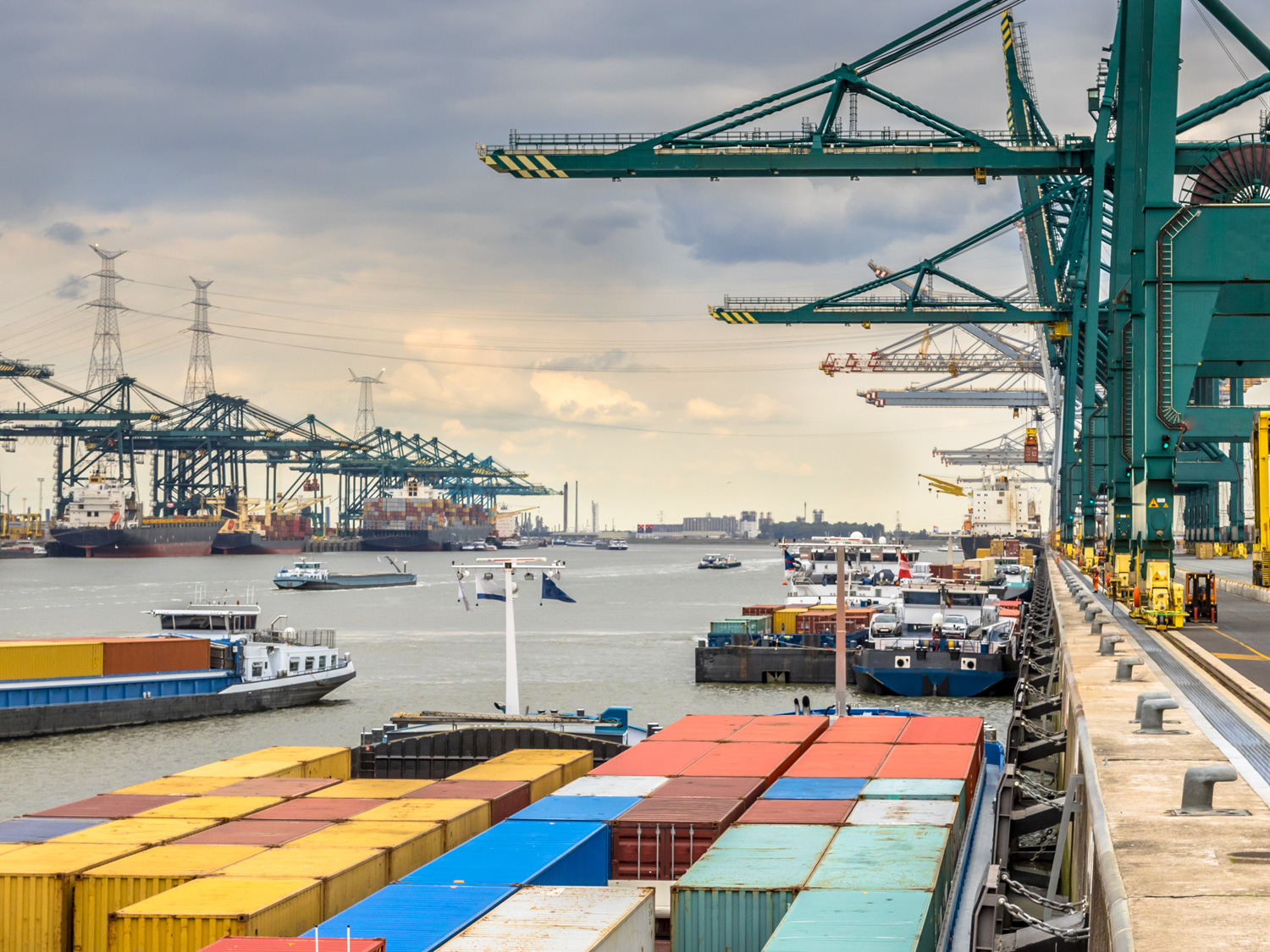
The mass diversion of container ships away from the Red Sea since December has raised fears of congestion across west Mediterranean container ports, as carriers from Asia drop boxes destined for the eastern Mediterranean.

Instead of entering the Mediterranean Sea dead end, created by the effective closure of the Suez Canal, Ultra-large container ships from the Far East are offloading containers at western Mediterranean ports such as Barcelona, with smaller feeder vessels transporting them to final central and eastern Mediterranean destinations.

Transhipment traffic in Barcelona was up year on year by 22%, 64% and 63% in January, February and March, while Algeciras, Valencia and Las Palmas grew at 7%, 18% and 33% in Q1 2024.

And while the ports managed the first quarter’s throughput, they are operating at (or are close to) operational capacity, which means that any continuation or increase in volumes could lead to a dangerously high level of utilisation and potentially serious congestion.

Alternatives, to spread volumes out, include the Moroccan hub of Tanger Med, but its utilisation is already sitting at 83%, so even a relatively small increase in volumes could fill it up.

The southern Portuguese port of Sines has capacity to handle an additional 1.4m teu, while the ports of Malaga and Castellon may also be worthy of consideration, to avoid a potential supply chain bottleneck, with storage yard capacity drying up at ports in the western Mediterranean.

The seven-day average vessel waiting time at Barcelona increased two days due to increased cargo flow, lowered productivity, IT issues and bad weather. Shipping lines are asking customers to pick up both their import units and empty containers as early as possible, due to congested line-up and increased waiting times.

One of the two container terminals at Algeciras confirmed that their facility was “quite full” and warned that “capacity is very limited”, leading them to restrict the amount of cargo accepted, to avoid severe congestion.

There are two potentially significant negative outcomes due to the current Mediterranean situation:

First, transshipment networks require more ships for the feeder services and carriers may remove ships from other trades, particularly those in North Europe, which could create a capacity squeeze and push rates up.

Second, port congestion creates a de-facto reduction of available vessel capacity, which leads to an increase in blank sailings, because there is a schedule gap when vessels are unavailable, which squeezes capacity and pushes up rates.

If you have any questions or concerns about the issues outlined in this article, or would like to discuss any aspect of your Mediterranean supply chain, please EMAIL our Chief Commercial Officer, Andy Smith.

Food factory 1440x1080 1

Importers concerned at cost of Brexit trade checks

Delayed five times by the UK government, post-Brexit physical border checks of animal products, plants and plant products through the Port of Dover and Eurotunnel were finally implemented on the 30th April 2024. However, importers of affected products express concern about additional costs.

The common user charge (CUC) was also introduced on the 30th April for commercial movements of animal products, plants and plant products through the Port of Dover and Eurotunnel.

It covers imports, goods in transit and goods eligible for sanitary and phytosanitary (SPS) checks at a government-run border control post.

The CUC applies to small imports of products such as plants, seeds, fish, salami, sausage, cheese and yoghurt. The flat-rate of £10 or £29 per commodity has been capped at £145, “specifically to help smaller businesses”, Defra said.

Health certificates were introduced in January on EU goods ranging from cut flowers, to fresh produce including meat, fruit and vegetables, but physical checks for the goods came into force two weeks ago.

Physical checks will be based on the “risk” category that goods fall into, so high-risk goods, such as live animals, will be subject to identity and physical checks at the border.

Products that present a medium risk to biosecurity will also be checked, while low-risk goods, such as canned meat will not require any checks.

But businesses, especially smaller companies, have raised concerns that the new checks from the EU could disrupt their supply chains and despite the £145 cap will increase their costs, with one importer interviewed by the BBC, suggesting “the checks would cost his business between £200,000 and £225,000 per year.”

Controls for SPS goods from the rest of the world are long-established and traders are aware of the responsibilities and inherent risk of goods moved from the rest of the world, but the extensions to goods moving from the EU is catching them out.

An additional CUC cost of £29 for a single commodity is minimal, but if you have four trailers carrying five or more commodities arriving every day then you easily add £200,000 plus to your supply chain.

There have been some easements with Customs, which allow fewer inspections and there are processes which can reduce costs, but preparation is key and the correct documentation is critical in ensuring a smoother frontier transition.

Metro are at the forefront of customs brokerage solutions, with our automated CuDoS declaration platform.

We can automate your CHED import notification, on the import of products, animals, food and feed system (IPAFFS) and simplify customs compliance, to safeguard your supply chain and cut costs.

To learn more about CUC or CuDoS, or how we can simplify and automate customs declarations for your business, please EMAIL Andy Fitchett, Brokerage Manager.