Metro & Beyondly are driving sustainable supply chains

Metro & Beyondly are driving sustainable supply chains

Sustainability in logistics isn’t just a challenge—it’s an opportunity. An opportunity to rethink the way goods move, to reduce emissions, and to turn compliance into a competitive advantage.

At Metro, we’ve embraced this challenge head-on, becoming carbon neutral for five years, monitoring emissions across 250,000 shipments, and pioneering sustainable solutions that help our customers meet their environmental goals.

But sustainability doesn’t stop at logistics. It stretches across the entire supply chain ecosystem—from packaging regulations to waste reduction, from carbon foot-printing to compliance with global sustainability laws. That’s where Beyondly comes in.

Metro and Beyondly, both members of the GB Global Group, share a common goal: helping businesses navigate the complexities of sustainability while staying ahead of industry regulations. Together, we offer a holistic approach to sustainability, ensuring that every aspect of a company’s supply chain—from transport emissions to packaging compliance—is not just managed, but optimised.

Measuring and reducing carbon emissions
Reducing carbon emissions isn’t just about switching transport modes—it’s about understanding where the biggest environmental impacts lie.

Metro’s MVT ECO platform gives businesses the power to forecast, measure, avoid, or offset global supply chain emissions, with detailed, accredited emissions tracking across all transport modes.

Beyondly takes this further, ensuring businesses aren’t just reducing transport emissions but aligning their entire supply chain with sustainability regulations—from Extended Producer Responsibility (EPR) compliance to waste reduction strategies.

It’s one thing to measure carbon emissions; it’s another to actively reduce them.

Metro was the first UK freight forwarder to commit to Sustainable Aviation Fuel (SAF) and is continuously working on reducing carbon output across road, sea, and air freight.

Beyondly empowers businesses to take action beyond logistics, providing carbon footprint assessments, ESG strategy development, and Net Zero roadmaps—ensuring that sustainability is built into every decision, not just an afterthought.

From compliance to competitive advantage
Environmental regulations are evolving faster than ever, and businesses that fail to keep up risk falling behind their competitors.

Metro simplifies compliance, ensuring that every shipment is tracked, measured, and meets environmental standards, while continuing to invest in emission reduction technologies, digital visibility tools, and collaborative industry initiatives.

Beyondly ensures businesses stay compliant across the board and helps them develop long-term strategies, guiding them through B Corp certification, sustainability reporting, and corporate ESG leadership.

Sustainability is no longer a tick-box exercise—it’s a business imperative. Companies that embrace it don’t just reduce risk; they unlock new opportunities, enhance brand reputation, and future-proof their operations.

By partnering with Metro and Beyondly, businesses can integrate sustainability across their entire supply chain, from logistics and transport to packaging, compliance, and beyond.

Learn more about Metro’s sustainable logistics solutions.

Explore how Beyondly can help your business.

Together, let’s move beyond compliance—toward a truly sustainable future.

Ellerman City Liners expands fleet with sustainable new container ships

Ellerman City Liners expands fleet with sustainable new container ships

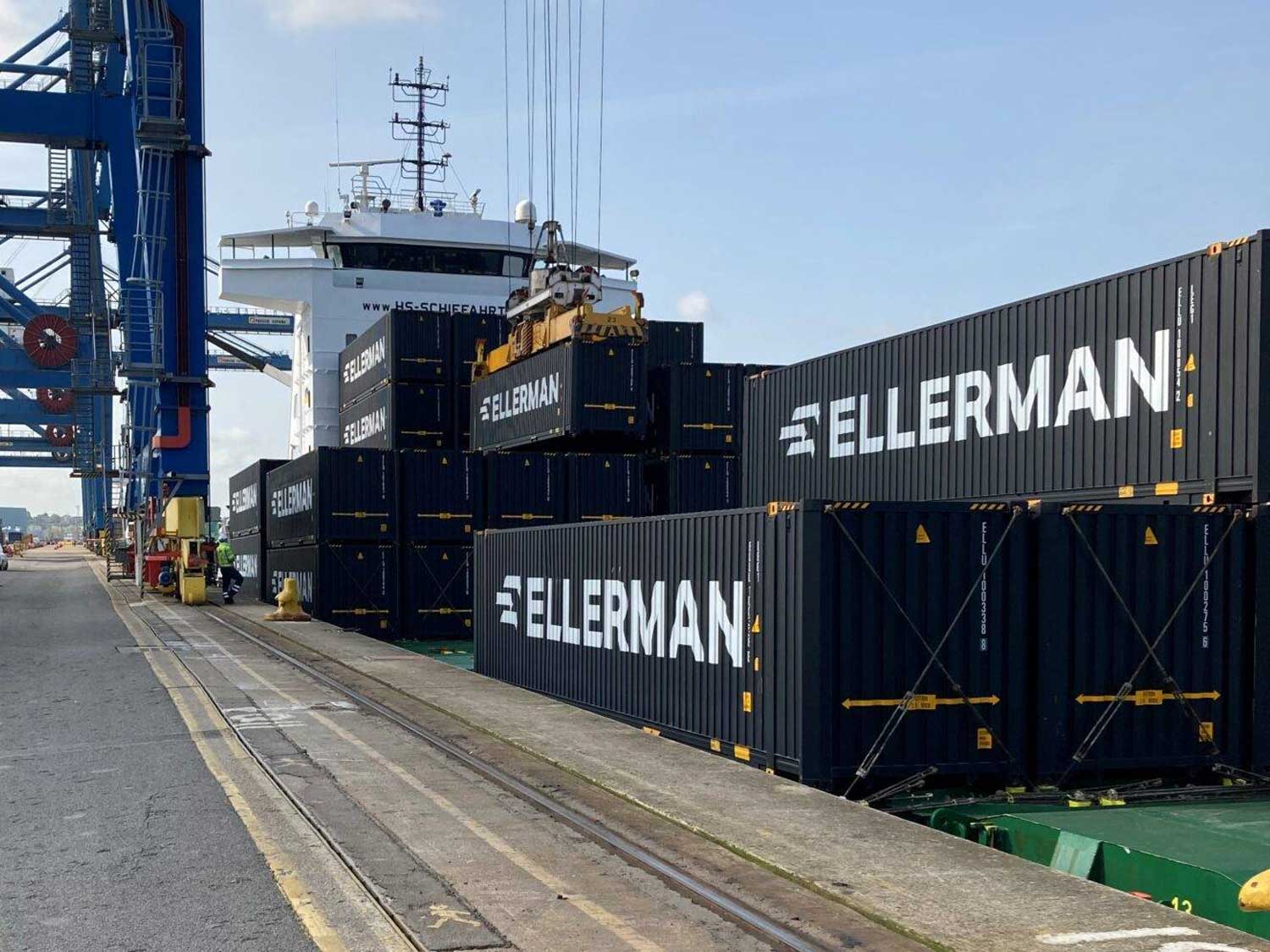
Group member, Ellerman City Liners, a historic and customer-focused shipping line, is enhancing its container vessel fleet with two newly chartered 1,400 TEU ships, designed to meet current and future environmental regulations.

These new-build additions mark a significant step forward in Ellerman’s commitment to providing sustainable and efficient container shipping services, and will bolster the company’s capabilities on key routes across Europe and the United States.

Enhanced service with sustainability in focus
The new vessels, equipped with impressive 45’ intake, offer increased cargo handling efficiency, supporting Ellerman’s objective to deliver reliable shipping solutions with a reduced carbon footprint. Reflecting Ellerman’s proactive approach to sustainability, these vessels not only meet existing environmental standards but are also designed to comply with future regulations, positioning Ellerman at the forefront of eco-friendly shipping.

As part of a joint service with CMA CGM, the first vessel, will connect ports in Northern Europe, including Tilbury and Rotterdam, with destinations in Iberia, such as Cadiz, Setubal, Leixoes, and Ferrol, through weekly sailings. The second vessel, the Elbbridge, will join Ellerman’s United States Express Service (USX), linking the UK and continental Europe with the US East Coast.

Modernising a historic brand
Originally founded by John Reeves Ellerman in 1892, Ellerman City Liners was one of the most recognised names in British Merchant Navy history. With its relaunch in 2021, the company remains committed to its roots while adapting to the modern needs of global logistics.

The addition of these advanced vessels underscores Ellerman’s dedication to sustainable practices, supporting the evolving requirements of the industry and reinforcing its position as a trusted name in ocean freight.

Shared commitment to the environment
Ellerman’s focus on sustainability mirrors Metro’s long-standing commitment to reducing environmental impact. Certified carbon neutral for three years, Metro actively supports the West Midlands Net Zero Business Pledge and the goal to achieve a net zero carbon economy by 2041.

Through proactive carbon reduction initiatives, offsetting projects, and ISO 14001 accreditation, Metro empowers customers to make positive environmental changes. 

Using tools such as the MVT Eco module, Metro enables customers to measure, monitor, and offset emissions for every shipment. This free tool, which aligns with Global Logistics Emissions Council (GLEC) standards, simplifies Scope 3 reporting and helps clients work towards carbon neutrality in their supply chains.

To request a demo or discuss your sustainability goals, please EMAIL Ian Powell. Together, we can take meaningful steps toward a greener future.

To learn more about our Ellerman solutions, please EMAIL Chief Commercial Officer, Andy Smith.

Seasonal measures for Brown Marmorated Stink Bug (BMSB)

Seasonal measures for Brown Marmorated Stink Bug (BMSB)

The 2024/25 Brown Marmorated Stink Bug (BMSB) season is now underway, which means strict import regulations are implemented by Australia and New Zealand, with the United Kingdom a target risk country.

The BMSB is an agricultural pest native to China, Japan, the Korean peninsula, and Taiwan, and is renowned for the widespread damage it may cause to fruit and vegetable crops.

Accidentally introduced into the United States twenty years ago, the BMSB is now also established in South America and Europe.

Seasonal measures are crucial to protect agricultural industries from the significant biosecurity threat posed by BMSBs, which are known to damage over 300 plant species and can cause serious economic and ecological harm.

From the 1st September 2024 to 30th April 2025, Australia and New Zealand are enforcing seasonal measures on goods originating from 41 target risk countries.

This year, China and South Korea have been added to the heightened vessel surveillance list, alongside existing risk countries like the United Kingdom, which is subject to random inspections of shipments. Australia will randomly inspect UK-origin goods between 1st December and 30th April, while China-origin shipments will face inspections between 1st September and 31st December.

The BMSB measures apply to high-risk goods, including those shipped in break bulk, open containers, or on flat racks. These goods must undergo mandatory offshore treatments, such as fumigation or heat treatment, to mitigate the BMSB threat before arrival.

Treatment and packaging regulations
Both Australia and New Zealand require that all high-risk goods be packaged to allow for effective treatment. Packaging must permit fumigants or heat to reach all surfaces, meaning plastic wrapping may need to be adjusted or slashed to ensure proper infiltration. The regulations apply only to the goods themselves, not to packaging materials like cardboard or pallets, though these materials must still meet general non-commodity requirements.

To comply with these requirements, importers must ensure that their goods are treated by approved offshore BMSB treatment providers, registered with the relevant authorities. Australia’s AusTreat system and New Zealand’s Ministry for Primary Industries (MPI) offer lists of authorised treatment providers.

Minimising delays and non-compliance risks
Non-compliance with BMSB regulations can lead to severe delays, additional costs, or even exportation of the shipment. To avoid these complications, importers are strongly encouraged to complete BMSB treatments offshore before the goods arrive in Australia or New Zealand. Accurate and early documentation, including treatment certificates, is essential for expediting inspections and clearing shipments.

By staying updated with these regulations and ensuring compliance, importers can minimise potential disruptions to their supply chains during the BMSB risk season.

Dedicated staging facilities
Metro has established dedicated staging facilities at origin and destination ports to comply with seasonal measures for the Brown Marmorated Stink Bug (BMSB).

These facilities are sterilised to meet quarantine and inspection standards, such as those set by the Australian Quarantine and Inspection Service (AQIS), providing a controlled environment for the inspection, cleaning, and fumigation of high-risk cargo.

By ensuring that cargo is treated and transported within a sterile environment, it bypasses quarantine checks upon arrival and moves directly to the destination staging facility for unloading and further distribution, thus streamlining the delivery process and meeting BMSB compliance standards.

Sustainability focus

Sustainability focus

When managed effectively, supply chains not only reduce costs and boost profitability but also play a crucial role in sustainability. The impact of climate change has underscored the need to improve supply chains to protect our ecosystem and conserve natural resources for future generations.

As the global push for decarbonisation intensifies, both the maritime and aviation sectors are under pressure to adopt sustainable practices. Metro has been at the forefront of these efforts, investing in new fuel technologies that will support the green transition.

Ocean
In July, the International Maritime Organisation (IMO) set a new climate strategy aiming for net-zero greenhouse gas emissions by around 2050. Interim targets include reducing emissions by 20%-30% by 2030 and 70%-80% by 2040, compared to 2008 levels. To achieve the 2030 target with green fuels alone, over one-third of international shipping would need to transition to low or zero-emission fuels within 5-6 years, which is highly challenging.

However, the IMO could meet its 2030 goal with only 10% of ships using green fuels if it also significantly improves energy efficiency. This would require increasing the energy efficiency target from 22% to 38% by 2030, which could involve widespread adoption of wind technologies and reduced operating speeds.

Shipping CEOs have united to push for faster decarbonisation in global maritime transport, advocating for an end date for fossil fuel-only ships and urging the International Maritime Organization (IMO) to establish regulations that will speed up the shift to green fuels.

Their joint declaration outlines four key regulations:
1. Set an end date for new fossil fuel-only ships and establish a timeline for greenhouse gas (GHG) intensity standards to encourage investment in green technologies
2. Implement GHG pricing to make green fuels competitive with traditional fuels during the transition
3. Allow vessel pooling for GHG compliance, where a group’s overall performance counts, accelerating decarbonisation
4. Adopt a Well-to-Wake (lifecycle) GHG approach to guide investments and avoid stranded assets

LNG is seen as the most practical current solution for decarbonisation, with the ability to transition to net-zero carbon fuels like bio-LNG and e-LNG. LNG-fuelled ships are growing in numbers, with over 1,000 expected by 2027, compared to just 36 a decade ago.

Air
The aviation industry is relying on SAF to achieve 65% of its net-zero emissions target by 2050, but current production is a fraction of the 500 million tonnes needed annually by 2050 and the challenge now lies in financing, not engineering.

Investors are being urged to fund large-scale SAF ventures, as this could lead to a new industry that transforms aviation, creates jobs, and offers substantial financial returns.

Redirecting some of the $7 trillion in fossil fuel government subsidies could significantly accelerate the shift to sustainable fuels, with countries like Japan, Singapore, and the US already incentivising SAF production.

Metro has been investing in Sustainable Aviation Fuel for years, and was the first forwarder to join the Air France KLM Martinair Cargo (AFKLMP Cargo) SAF programme.

Grant Liddell, Metro’s managing director said. “We are proud to take this collaborative approach directly with the airlines. Air France and KLM have been pioneering SAF since 2009 and Metro’s participation will help fund the research and development, which can increase production and make SAF available in greater quantities and in more locations.”

Metro has been certified carbon neutral for three years and is committed to extending this zero-emission strategy as far down customers’ supply chains as possible. 

The same toolkit we use to measure, reporting and offset our emissions, to achieve carbon neutrality, is available ‘free of charge’ to our customers.

Part of our MVT supply chain platform, the ECO module monitors the energy emissions, emission costs and CO2 equivalent emissions, of customers’ consignments, by every mode. 

Reports and key eco statistics related to their movements, allow them to see which areas will benefit most from emissions offsetting and where efforts can have the most impact.

To request a demo or discuss your requirements, please EMAIL Ian Powell.