US Targets Tariff Evasion

US Targets Tariff Evasion

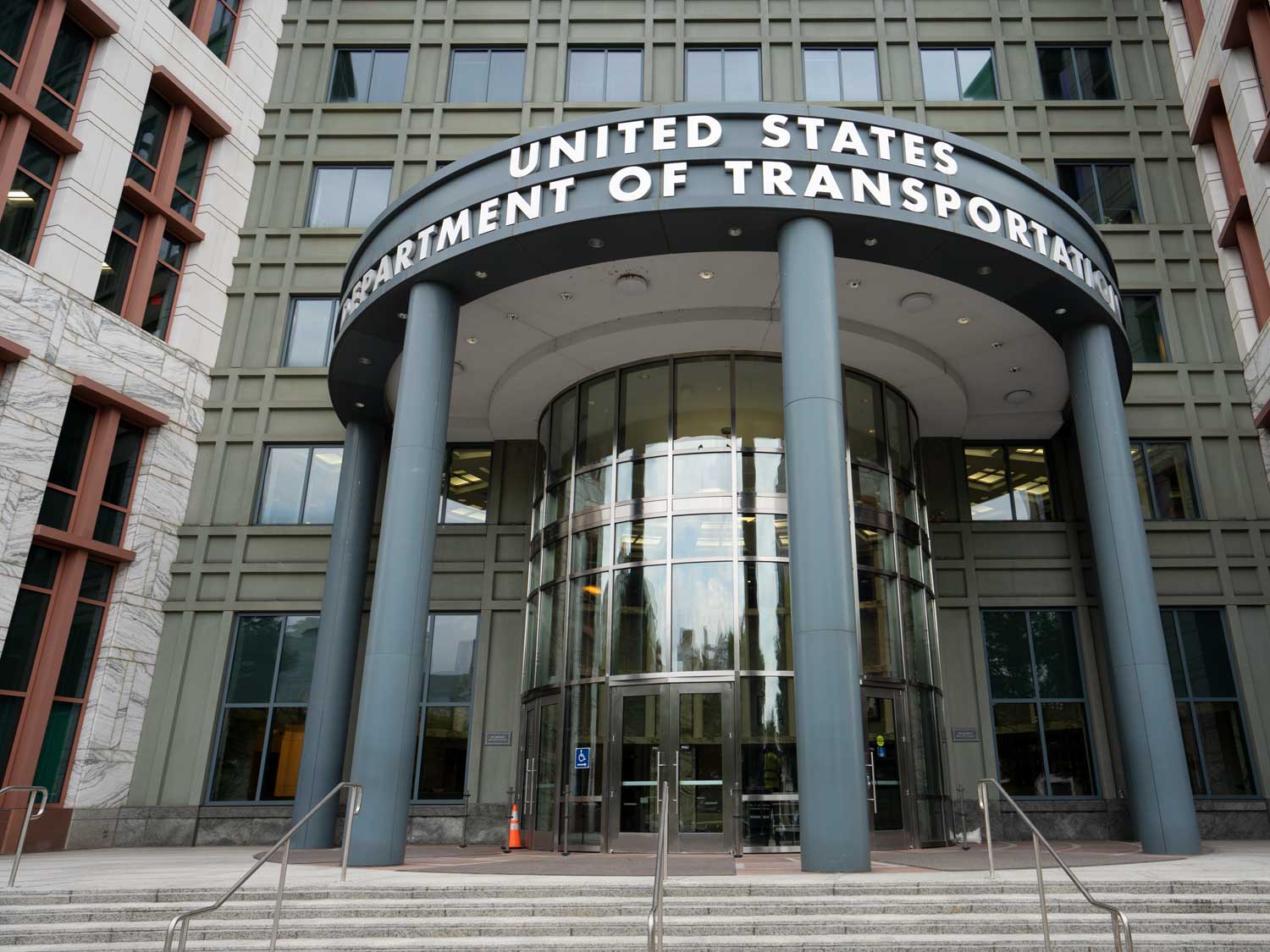
The White House has launched a revitalised Trade Fraud Task Force to clamp down on tariff evasion and customs violations. This coordinated cross-agency initiative is set to bring sharper enforcement tools and greater scrutiny to a trading environment already complicated by regulatory uncertainty and shifting tariffs.

The new Task Force brings together agents and specialists from Customs and Border Protection (CBP), DOJ, and Immigration and Customs Enforcement (ICE), with the explicit aim to aggressively pursue importers and affiliates who attempt to evade tariffs, duties, and import restrictions.

Exporters, as well as importers, should note that enforcement now targets not only mis-declaration of country of origin and tariff classification but also complex global fulfilment models and transhipment tactics commonly used to optimise duty payments.

Recent enforcement cases have involved importers penalised for inaccurately reporting the origin of goods or misrepresenting tariff categories, with multimillion-dollar fines levied under the False Claims Act.

As these measures ramp up, UK exporters must be prepared to demonstrate robust compliance processes, maintain meticulous records, and ensure transparency in customs documentation.

Civil and Criminal Measures

The launch builds on recent DOJ activity, where multiple settlements involving trade fraud have been reached since President Trump returned to office.

Recent cases include both failure to declare correct country of origin and deliberate misrepresentation of goods, with penalties reaching into the millions. The False Claims Act, traditionally used for government contractor and healthcare fraud, is now increasingly deployed to investigate and penalise customs violations, expanding the law’s scope within the trade sector.

A major element of this strategy is the expansion of whistleblower programmes, rewarding those who provide actionable leads on tariff, customs, and trade fraud. The DOJ has made clear that it intends to continue scaling these enforcement efforts and leverage whistleblower-driven intelligence to bolster the detection and prosecution of evasion schemes.

Uncertainty for Importers

Importers face growing compliance pressure as a direct consequence of these changes. The rapid rollout of enforcement comes as legal battles rage over tariff legitimacy and definitions, compounded by lingering ambiguity on what constitutes transshipment or qualifying country-of-origin. Shifting tariff rates by trading partner and category further complicates import cost management and supply chain transparency.

Companies manufacturing overseas, utilising complex fulfilment or multi-country storage, and those unfamiliar with recent regulatory changes risk exposure to sanctions and penalties.

With Customs and Border Protection continuing to flag difficulties in identifying and assessing duty on goods moved through indirect or deceptive routes, the new Task Force signals a more determined and well-resourced effort to close these enforcement gaps.

Takeaways for Global Traders

For businesses engaged in cross-border trade with the US, renewed vigilance is now essential. Meticulous record-keeping, robust compliance audits, and transparent reporting are key steps to minimise risk under the heightened enforcement regime.

As the Task Force expands its remit to cover a broad array of customs and tariff breaches, organisations must prepare to meet more demanding legal standards and guard against evolving investigation tactics.

In this fast-changing regulatory climate, proactive compliance and expert guidance offer the best defence, and securing a competitive foothold in US markets means staying one step ahead of enforcement trends.

For Metro clients, this trend creates new challenges in export planning and risk management. Those sending goods to the US must ensure their paperwork, origin declarations, and valuation methods strictly align with current customs codes.

Metro’s sector experience enables British exporters and US importers to navigate these requirements with confidence and reduce exposure to unexpected penalties.

EMAIL Andrew Smith, Managing Director, today to explore how we can support regulatory compliance and success in the United States.

Resetting UK–EU trade

Resetting UK–EU trade

Five years on from the Trade and Cooperation Agreement (TCA) and with the 2026 review fast approaching, the UK and EU have a chance to move beyond firefighting and design a trading relationship that works in today’s economy.

A new Parliamentary report from the Chartered Institute of Export & International Trade sets out a practical roadmap to turn trade friction into advantage, by prioritising digital connectivity, trusted cooperation and real-world fixes for businesses, especially SMEs.

Exports in services have grown, but goods trade, and particularly for smaller exporters, still hits too many barriers. The Institute proposes a coherent package of measures that reduces cost and complexity at the border, unlocks mobility and skills, and aligns climate and industrial policies so supply chains can invest with confidence.

h4b>The Institute’s eight recommendations

1) Streamline borders and customs

  • Build interoperable UK–EU digital trade corridors to remove duplication and delays.
  • Create a Common Security Zone to simplify newer safety and security requirements.
  • Align the UK’s Trade Strategy with the EU Customs Reform programme to deliver a seamless user experience.

2) Make SPS trade predictable

  • Implement the Common Sanitary and Phytosanitary (SPS) Area via a joint SPS committee (as trailed at the 2025 summit).
  • Work directly with industry to fix recurring pain points in food, plant and animal movements.

3) Modernise rules of origin

  • Simplify and harmonise product-specific rules in the TCA.
  • Enable diagonal cumulation with shared FTA partners.
  • Consider UK participation in the Pan-Euro-Mediterranean (PEM) Convention to increase sourcing flexibility.

4) Deepen regulatory cooperation

  • Use outcome-based equivalence and dynamic alignment where it matters most.
  • Strike targeted “side deals”, including mutual recognition for conformity assessment, and collaborate on emerging areas such as AI and digital trade.

5) Link carbon and energy frameworks

  • Link UK and EU emissions trading schemes and align CBAM approaches.
  • Broaden energy cooperation to support secure, affordable decarbonisation.

6) Back Northern Ireland’s dual-market role

  • Build on the Windsor Framework to deepen trade, energy and mobility links.
  • Position Northern Ireland as a practical model of friction-reduction that benefits both sides.

7) Enable skills and mobility

  • Launch a reciprocal youth mobility scheme and explore re-entry to Erasmus+.
  • Accelerate mutual recognition of professional qualifications in high-impact sectors.

8) Align industrial and digital policy

  • Establish a UK–EU Industrial Cooperation Council to coordinate investment, innovation and regulation.
  • Add a dedicated digital trade chapter to future-proof the partnership.

The last five years have shown that technical workarounds are not enough. SMEs need consistent rules, fewer duplicative checks and clearer pathways. By sequencing border simplification, SPS certainty and origin reform, policymakers can cut costs quickly while building a platform for long-term competitiveness.

What success would look like

  • Lower cost-to-export for SMEs through simplified formalities and interoperable systems.
  • Faster, more predictable food flows via an SPS framework that solves problems at source.
  • More resilient supply chains thanks to compatible rules and modernised origin provisions.
  • A digital-ready TCA that reflects how firms actually trade in 2026 and beyond.

From rules-of-origin compliance to fast-changing customs requirements, our experts deliver integrated and automated solutions that simplify compliance, cut costs and keep your trade moving.

To learn about our automated CuDoS platform and how we can help you navigate the evolving UK–EU trade environment with confidence, please EMAIL our Managing Director Andrew Smith today.

EU Freight and Customs Round‑Up

EU Freight and Customs Round‑Up

The movement of goods between Great Britain, Northern Ireland and the EU is entering one of its most challenging and complex periods in recent years. Regulatory changes are reshaping established routes, creating new administrative demands, and raising questions about supply chain resilience.

From the phased enforcement of ICS2 safety and security filings, to the evolving requirements of the Windsor Framework and the digitalisation of EU border controls, operators are facing a series of overlapping obligations. Understanding and preparing for these changes will be critical to maintaining efficiency, avoiding disruption, and keeping trade moving in the months ahead.

ICS2 Phase 3 Staggered Rollout

The EU’s ICS2 Release 3 – requiring detailed safety and security filings for road and rail freight – was due to become fully mandatory on 1 September 2025. While the system itself is active, several Member States have secured temporary derogations delaying enforcement until December 2025.

Germany and the Netherlands, however, are pressing ahead, meaning accompanied RoRo shipments to those markets may face compliance risks if operators are unprepared. Northern Ireland RoRo traffic has also been given a phased start, with the new TIMS platform offering a gradual introduction later this year.

The patchwork of deadlines across Europe underscores the need for close monitoring and proactive compliance to avoid penalties and delays.

GB–NI Trade Under Pressure

The Windsor Framework remains a source of disruption for operators moving goods between GB and Northern Ireland. Complicated “at risk” classifications, excessive paperwork, and inconsistent enforcement are driving inefficiency and higher costs.

Some suppliers are rerouting freight via Dublin rather than using the Irish Sea, while consumers in NI face reduced product choice as online sellers and retailers scale back deliveries.

Industry bodies argue that reforms such as classifying goods at the point of sale and simplifying Just-in-Time exemptions are urgently needed to stabilise trade volumes and restore reliability.

EU Entry/Exit System

The EU’s new Entry/Exit System (EES) is scheduled to go live on 12 October. Designed to digitise border checks by capturing biometric data, the system will eventually cover all non-EU drivers entering the bloc.

While intended to streamline processes and enhance security, the transition will create additional steps for hauliers and could slow traffic on critical corridors such as Dover–Calais if infrastructure proves inadequate.

UK hauliers face further constraints from the 90/180-day driver access rule, raising concerns over flexibility in meeting customer demand. With weeks left to prepare, shippers should ensure that drivers are prepared, documentation and contingency measures are in place.

Staying Ahead of the Changes

The common thread running through these developments is clear: shippers face a rising tide of complexity at the intersection of GB and EU trade. From border checks and customs filings to NI market access, regulatory shifts demand preparation, agility and informed support.

Metro is committed to helping customers navigate this evolving environment – from expert customs guidance and training to cross-border contingency planning and operational resilience.

To discuss how these changes could affect your supply chains, and the practical steps to stay compliant and competitive, please EMAIL our managing director Andy Smith.

H1 2025: Six Developments Reshaping Global Trade

H1 2025: Six Developments Reshaping Global Trade

The first half of 2025 has been one of the most turbulent periods for supply chains in recent memory. From renewed tariff wars to fresh geopolitical flashpoints, logistics professionals have had to contend with a constantly shifting landscape.

At the same time, structural challenges around skills, safety, and sustainability have continued to grow. Here we review six developments that defined H1 2025.

1. Tariffs return to the fore
The pause in US tariff escalation ended in August, with the White House reintroducing “reciprocal” tariffs that apply baseline duties of 10% to all countries and higher rates of 10–41% depending on origin. The UK sit at the low end, while Syria faces the steepest levels. Brazil has been singled out further, hit by an additional 40% levy. Canada also saw tariffs raised from 25% to 35% on certain goods, justified by Washington’s claim that Ottawa has not done enough to curb fentanyl flows.

The executive order applies from 7 August 2025, with a grace period allowing cargo already loaded onto vessels before that date to arrive until 5 October 2025. To add complexity, US Customs will also impose new fees on Chinese-built or operated vessels from 14 October, potentially forcing alliances such as the Ocean Alliance into costly fleet reshuffles. Carriers are already working through how to redeploy capacity to avoid penalties, with COSCO and OOCL particularly exposed.

2. New shipping alliances reshape networks
The recomposition of global shipping alliances in Q1 has reshaped carrier strategies. The launch of the Gemini Cooperation between Maersk and Hapag-Lloyd marked one of the most significant realignments in recent years, focused on achieving 90%+ schedule reliability. Shippers are already seeing more dependable services, but questions remain about whether premium pricing will follow.

Other alliances, particularly Ocean and THE Alliance (now Premier Alliance), are recalibrating networks, with competition sharpening across Asia–Europe and transpacific trades. For shippers, the alliance changes mean rethinking service contracts and adapting to new network structures that could endure for much of the decade.

3. Houthi attacks deepen Red Sea crisis
The Red Sea crisis, triggered by Houthi rebel attacks, has now stretched on for nearly two years. In July 2025 the threat escalated further with the sinking of the Magic Seas, a Greek-operated vessel targeted for its links to companies calling at Israeli ports. Analysis suggests that one in six vessels globally could now be considered threatened under the Houthis’ broad definition of violators.

For container lines, this effectively rules out a return to Suez Canal routings before 2026 — and possibly not until 2027. Rerouting around the Cape of Good Hope adds up to two weeks to Asia–Europe journeys, pushing up costs and insurance premiums, and putting additional strain on fleet capacity. The Red Sea instability has been a reminder of how localised conflicts can have global consequences for supply chains.

4. Logistics skills shortages persist
The UK continues to face a significant shortfall in logistics skills, with the Road Haulage Association estimating a deficit of around 50,000 HGV drivers. The ONS also reports 6,000 fewer courier and delivery drivers than the previous year. With 55% of HGV drivers aged between 50 and 65, the demographic imbalance remains a long-term concern.

Factors include reduced access to EU workers post-Brexit, poor industry perception, and limited uptake of government training schemes. Although the crisis is not as acute as during the height of the pandemic, the ageing workforce and lack of young entrants mean structural shortages will continue. Rising wage costs, recruitment struggles, and bottlenecks in road transport all add to the burden on UK supply chains.

5. EV shipping challenges raise alarm
The growth of electric vehicle (EV) trade has created new safety risks at sea. Several high-profile fires on car carriers have been linked to lithium-ion batteries, sparking concern among insurers, regulators, and shipowners. Insurers are pushing for tougher loading protocols, enhanced crew training, and more advanced fire suppression systems.

For supply chains, this adds cost and complexity to automotive logistics, with carriers facing higher insurance premiums and the need to retrofit vessels. It is also slowing the momentum of EV exports, just as demand for cleaner vehicles accelerates globally.

6. Sustainability regulations tighten
Sustainability regulation is reshaping procurement strategies. The EU’s Carbon Border Adjustment Mechanism (CBAM) is beginning to impact trade in carbon-intensive products such as steel, aluminium, and cement, with importers required to report embedded emissions.

At the same time, sustainable aviation fuel (SAF) is moving toward a tipping point. UK and EU mandates are pushing airlines to integrate SAF into their fuel mix, with new investments underway to scale production.

While tariffs and geopolitics grab headlines, sustainability is quietly becoming a decisive factor in supplier choice, cost structures, and long-term resilience planning. For many organisations, compliance with emissions and ESG frameworks is no longer optional but critical.

Outlook
H1 2025 has exposed the vulnerability of supply chains to political shocks, armed conflict, safety risks, and structural labour shortages. Tariffs, alliances, and attacks have disrupted networks, while long-term challenges around sustainability and skills remain unresolved.

The message for supply chain leaders is clear: resilience, agility, and visibility will be critical in the second half of 2025, as disruption becomes the new normal.

H1 2025 has underlined how vulnerable global supply chains have become and staying ahead demands visibility, expertise, and a trusted partner by your side.

Metro’s account management team works proactively with customers to anticipate risks, share insights, and design solutions that are resilient and adaptable to change.

Our expertise encompasses dangerous goods and lithium battery shipping, customs, and multimodal freight, backed by a strong people strategy that includes apprenticeships, engagement programmes, and our Great Place to Work certification.

We are also leading the way on sustainability. Metro has been carbon neutral for five years, pioneering the use of Sustainable Aviation Fuel (SAF), while our MVT ECO platform helps businesses forecast, measure, and offset emissions across their global supply chains.

EMAIL Andrew Smith, Managing Director, to learn how Metro can build resilience into your supply chain.