ship and graph

Shipping lines get creative with charges

With sea freight rates so low, below cost on many important trade lanes the container shipping lines are looking to surcharges and all manner of ancillary charges to boost their cash flows.

Macro-economics continue to work against the shipping lines, with global demand suppressed and costs rising leaving them struggling to impose general rate increases, with a long-term surplus of shipping capacity adding to their problems. 

The deterioration of their operating results is encouraging carriers to introduce temporary surcharges as a mean of compensating, at least partially, for current low freight rates.

Shipping lines have long been accused of using surcharges to pass additional costs and restore their profit margins and while some surcharges were expected, like the EU-ETS emissions surcharge, which is due to come into operation on the 1st January, other surcharges, like those for war risks, have turned out to be much heavier than expected.

There is a strong likelihood that we will see surcharges become a much larger component in the costing of sea freight services in 2024, with combined surcharges accounting for 20% of the overall freight rate. 

On the spot market, in particular, surcharges are added to the basic freight rate and the lines will do all they can to ensure that these surcharges are applied

War Risk
Surcharges for war risks are applied when cargo transits close to conflict zones and are usually justified by the fact that the insurers themselves apply surcharges to the shipping companies. 

This is not always the case and there is potentially an opportunity for the shipping lines to make some additional profit.

However, today, there is no shortage of geopolitical hotspots. The war between Russia and Ukraine has made the Black Sea a particularly exposed area, with a Turkish ship colliding with a mine and Russia opening fire on commercial vessels. 

The conflict in Israel raises the risk of regional contagion and a direct threat to one of the world's key sea freight routes, with the Gulf of Aden and Suez Canal exposed.

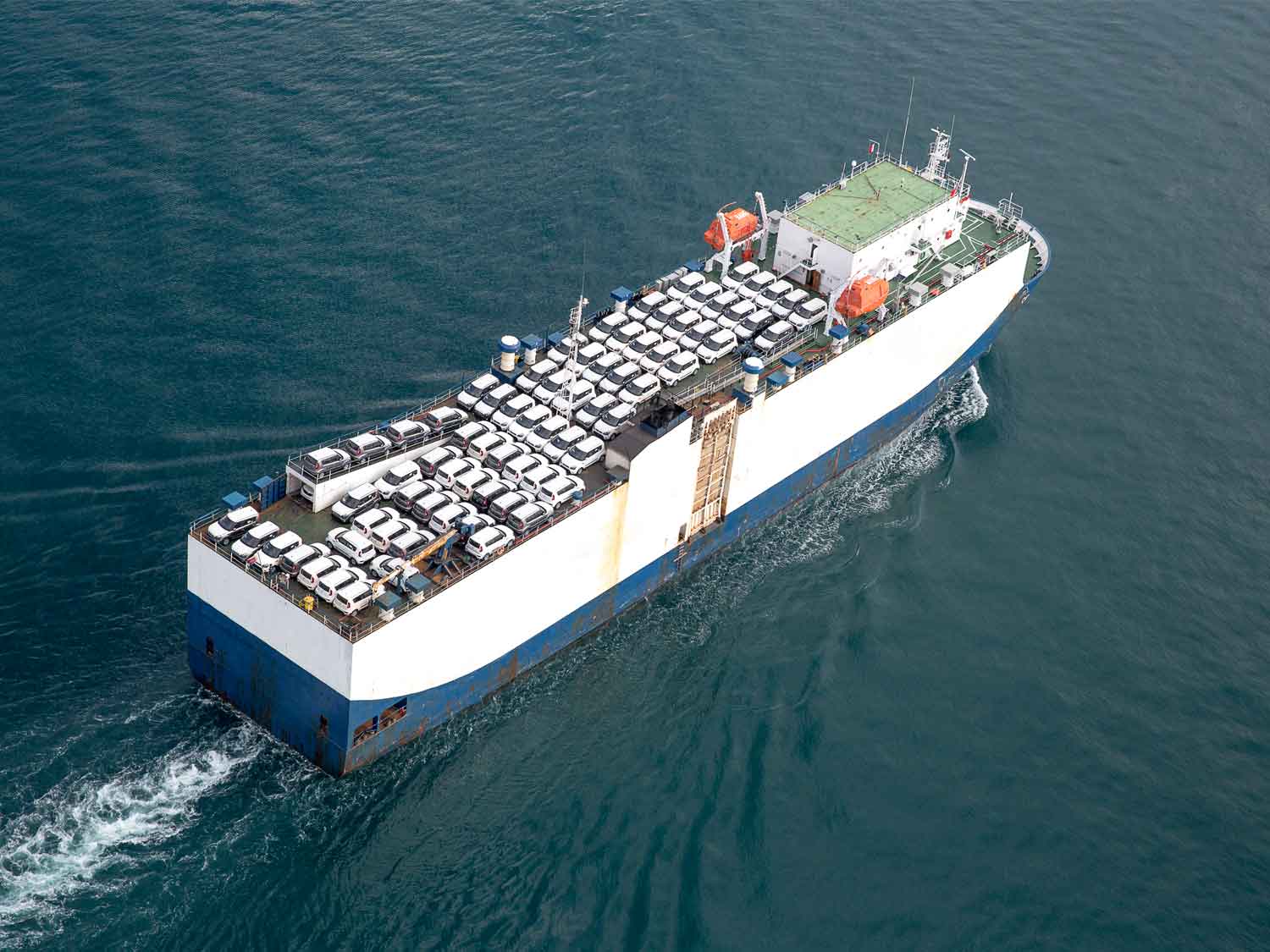
Already we have seen an NYK car carrier hijacked, a CMA CGM container ship seemingly attacked by a small drone in the Indian Ocean and Maersk replacing two vessels in the region, presumably due to ownership concerns.

Zim is re-routing some vessels resulting in longer transit times, due to security concerns and has applied a war risk surcharge.

Fuel
There is currently a high risk of speculation on refined product prices and if there is a major escalation of the Israeli-Palestinian conflict, they are likely to become even higher. 

This means that there is a risk that a general Emergency BAF surcharge could be introduced to take account of these potential cost increases.

Aden
With the USA seeking a coalition to protect shipping, this surcharge could be extended to cover the extra cost of securing merchant shipping convoys crossing the Gulf of Aden. 

The increased risk involved in transiting the gulf could result in a significant increase in this surcharge, which was originally created to cover the cost of anti-piracy measures.

Suez Canal
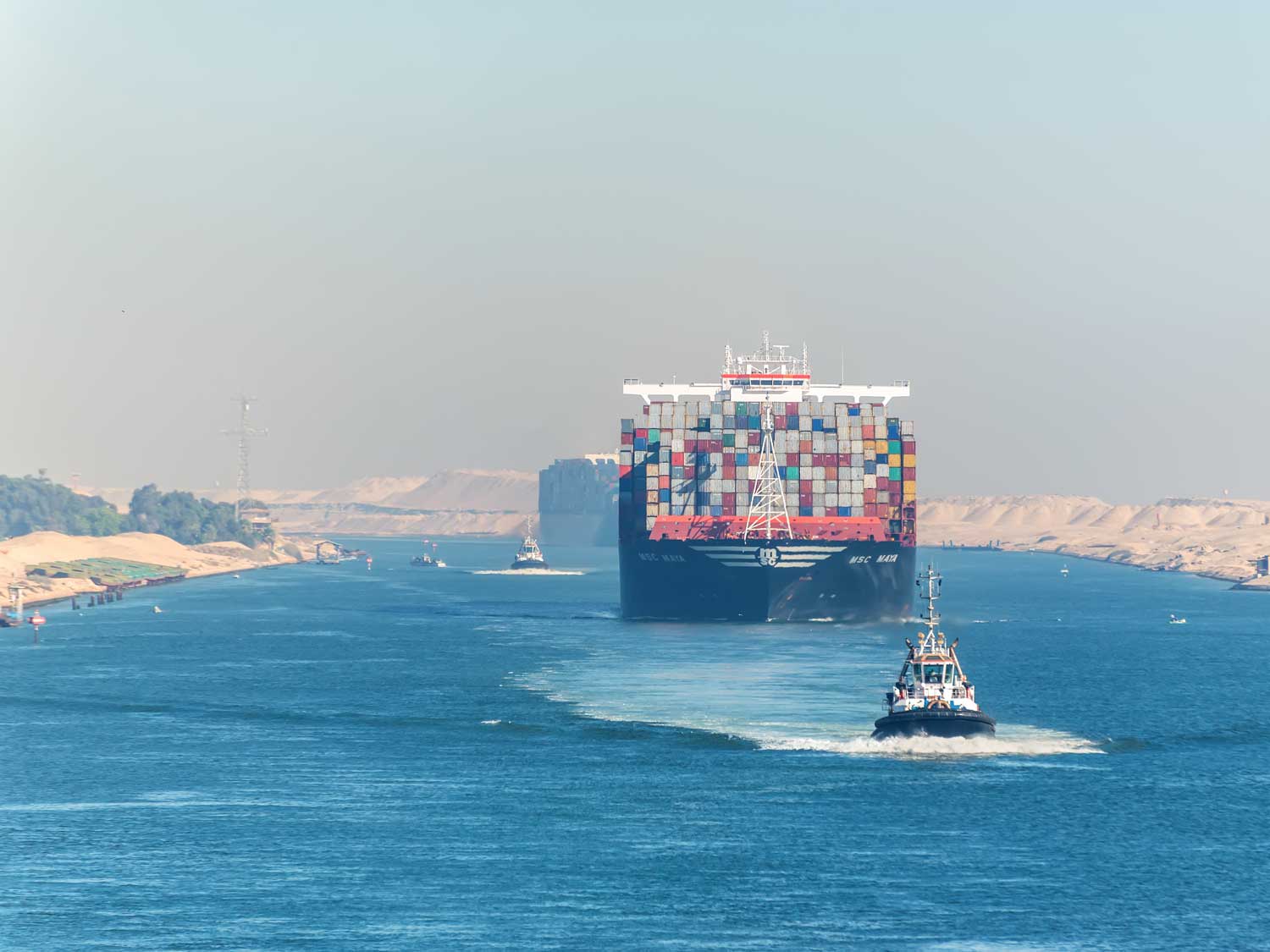
The Suez Canal is increasing fees by 15% for Asia-Europe traffic from the 15th January 2024. 

Again, if the Israeli-Palestinian conflict escalates, the carriers could be asked to contribute to the cost of securing the Suez Canal militarily, which would be in addition to war risk surcharges.

Panama
Transit and draught restrictions were imposed by the Panama Canal Authority (ACP) in response to persistent low water levels from the drought that has hampered operations since May. 

Container shipping lines have reacted to the restrictions by adding canal transit surcharges ranging from $300 per teu to $500 and restrictions may stay in place for years.

Container shifting
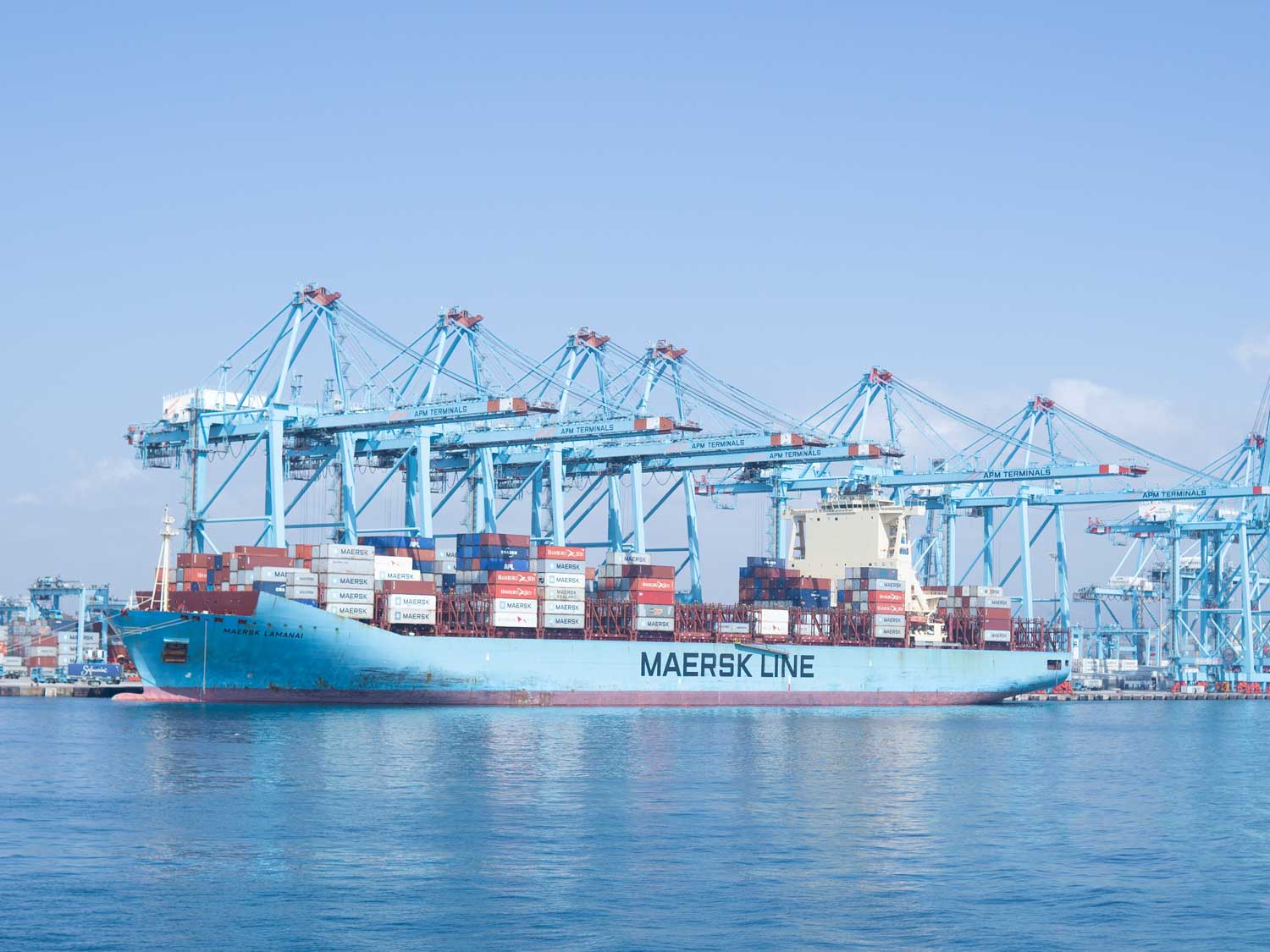
Maersk has said that from the 1st January it will introduce a varying ‘container shifting’ charge at various ports in North Europe and the Mediterranean to cover re-stows on its ships.

Maersk explained: “This charge is for additional operational expenses due to extra container moves for reasons like re-stacking because of a change of destination or vessel, or moving of the container from load stack to gate.”

It said it did not cover extra moves related to customs inspections, or to facilitate the stuffing or stripping of the container, as these services were already covered by separate charges.

Surcharges like BAF and CAF have become a standard feature of freight rate calculations and the same often goes for the ISPS (shipping and port security) and MARPOL (ship pollution) surcharges.

While many of these new surcharges are justified we will, as always, pressure our carrier partners to fully justify the imposition or increase of charges.

EMAIL Andrew Smith, Chief Commercial Officer, if you would like to learn more, or have concerns about any of the issues raised here.

emissions ship

EU Emissions Trading Scheme surcharge

The EU’s Emissions Trading Scheme (EU ETS) extends to container shipping from the 1st January 2024, with significant legal, commercial and financial consequences for carriers and a new surcharges for shippers.

Under the EU ETS carriers will purchase a capped number of permits, known as EU Allowances (EUAs) at auction that allow discharge of a specified quantity of greenhouse gas emissions (GHGs) over a set time period. 

ETS is a ‘cap and trade’ scheme where a limit (the cap) is placed on the amount to emit specified pollutants and obliges individual shipping lines to hold an allowance for each tonne of CO2 or other carbon equivalent gases they emit.

The cap reduces annually over four years to lower emissions and if a company exceeds its allowance, it may be penalised with a heavy fine.

There will be no set price list for these emission allowances – instead, the price will be defined by supply and demand on the market. 

Taking into account the ETS phase-in period covering 40% of emissions in 2024, 70% in 2025 and 100% in 2026, the shipping industry could be liable for €3.1bn in 2024, €5.7bn in 2025 and €8.4bn in 2026. With container shipping potentially accounting for 30% of overall emissions.

Unlike the standard bunker adjustment factor (BAF) which is adjusted quarterly, based on publicly available fuel prices, that will not be possible with ETS, because the cost is only known post-fact and hence the lines will have to make upfront assumptions.

Maersk and Hapag-Lloyd recently shared their ETS surcharge indications, at €70 and €24 per 40’ but there is no transparency on how these numbers are arrived at and the way legislators have defined ETS makes transparency an almost impossible task.

The EU-ETS high-level surcharge tariff assumption and calculation logic shared by another carrier underlines just how opaque the new surcharge will be with their caveat:

“This is just an estimation of the surcharge tariff with current information, therefore, this will not guarantee the future surcharge tariff or its calculation logic. The actual surcharge tariff will be announced separately before the actual implementation. “

And getting alignment, with carriers agreeing on a common standard for the ETS surcharge, would constitute illegal collusion under EU competition law, so no help there.

This is a complex and evolving issue, which we will continue to monitor, sharing important developments, because the ETS surcharge, including its methodologies are subject to change.

The cost of ETS compliance for the lines will be significant and will keep increasing with the phased implementation.

EMAIL Andrew Smith, Chief Commercial Officer, if you would like to learn more, or have concerns about any of the issues raised here.

Yantian 4

Container carriers may impose massive blanking programme

With 2024 just weeks away, scheduled container shipping capacity post-Golden Week on both the trans-Pacific and Asia to North Europe trade-lanes is up massively. Over 30% to the USEC and over 10% to Europe, raising fears of a massive blank sailing program between now and the end of the year.

Just a year ago container shipping lines were awarding huge bonuses, some equivalent to more than a year’s pay and today the bottom has fallen out of the carriers’ bottom-line, while they battle uncertain demand and rampant overcapacity.

With rates well off their 2022 peak and now absorbing massive increases in new-build capacity, many shipping lines are facing losses for the first time in years, with some having recorded record profits in the same quarter last year.

The container shipping sector is in a new normal with subdued demand and prices back in line with historical levels, while facing inflationary pressure on costs and overcapacity in many regions.

And even with average operating margins for the leading container carriers falling to 1.5% in the third quarter and a vessel order-book of almost 8 Mteu, some are still negotiating further new vessels, though this may be to fill specific tonnage needs and continue the fuel transition toward LNG, methanol and even ammonia. 

With these levels of capacity growth, and absent any real demand growth, the carriers have two fundamental choices. 

Either implement a massive blank sailings program between now and the end of the year, which will reduce capacity, but will create massive disruption for unprepared shippers, as it will leave them scrambling to find scarce capacity. 

Or, the shipping lines simply ride the market and accept the likely downward pressure on freight rates into the new year, with the hope of recouping losses during Chinese New Year.

Given the pressure already on carriers’ bottom line, analysts believe that the implementation of blank sailings is more consistent and tied to the pulse of what they see in the markets.

They suggest that carriers will see blanked sailings as the short-term answer, cutting ships from loops wherever they can. Lay-ups and period charter negotiations will be next, as they seek to absorb so many new ships, as scrapping older tonnage cannot offset the new capacity.

Going into 2024, the shipping industry will continue to grapple with reduced demand and oversupply, potentially leading to fierce competition, possible mergers and acquisitions. 

Although container schedule reliability is improving, persistent challenges remain and blank sailings will negatively impact schedules, while imbalanced container availability, driven by economic crises, may continue in certain regions.

Container carriers are forecast to report a combined loss of $15bn in 2024 and it may not be until 2026 that fleet and demand growth will be in sync.

With the likelihood of significant blanked sailings and service suspensions at a high level, providing us with your shipment forecasts will help us secure the capacity you need at the best rates. 

Whatever the market challenges, our sea freight team keep your cargo moving, finding capacity and alternative services in the event of unforeseen blankings. 

If you have any questions or concerns about your Asia supply chain or the developments outlined here, please EMAIL our Chief Commercial Officer, Andy Smith.
Panama COSCO ship

Panama Canal situation may trigger wider supply chain issues

Following the driest year and October on record, the Panama Canal Authority (ACP) has been steadily cutting daily vessel transit numbers and draught levels across the canal, with some restrictions possibly staying in force until 2028, with wider supply chain ramifications.

With each transit of the Panama Canal consuming a large amount of water, drought has forced the ACP to reduce draught limits on its larger locks by six foot as well as cutting daily transits from 40 to just 18 from February next year.

Container ships sailing from Asia to the U.S. East and Gulf Coast ports typically need more than the current limit of 44 feet of draught when fully loaded. 

Down from 50 feet at the beginning this year, the loss of six feet of draught is equivalent to 2,100 teus, which means that vessels sail with fewer containers, or unload containers and rail them across the isthmus for reloading to a vessel on the other side.

Maersk warned shippers to prepare for transit issues at the waterway, but said advanced planning was currently enough to mitigate potential delays, while CMA CGM looks set to become the first major carrier to apply a new Panama Canal surcharge, in response to the ongoing capacity reductions.

The French carrier’s latest customer advisory relayed the issues they faced, but gave no indication what level their surcharge would be set at. Expect other carriers to follow suit.

Limits on transits and draughts, will remain in place at least until after June 2024. However, the ACP says it sees no significant relief until 2028, and that’s if the government of Panama addresses years of underinvestment, stimulating some carriers to question the long-term viability of the waterway.

The Panama Canal’s operating restrictions that were first implemented in July, initially had a limited impact on container shipping operations as carriers had yet to get aggressive in blanking capacity to match weak demand. 

However, lighter loadings mean empty holds where 2,100 x 20’ containers should be and is pinching the bottom line of carriers, as inflation is pushing their operating costs up. 

Unlike the Panama Canal the Suez Canal has no locks or changing water levels which means it can handle the largest ships all year round - subject to effective piloting, as evidenced by the Ever Given grounding in March 2021.

With the Panama Canal’s ongoing restrictions and the growth in trade to the U.S. East Coast from Southeast Asia and the Indian Subcontinent accelerating, we are likely to see more services diverted or restructured to route through the Suez Canal.

If you have concerns or questions about any of the issues raised in this article, we can review your situation and explain your options, including alternative carriers, ports and routes.

Whatever your challenges, we leverage long-term ocean carrier relationships to deliver cost-effective, resilient and reliable ocean solutions.

EMAIL Andrew Smith, Chief Commercial Officer to learn more.