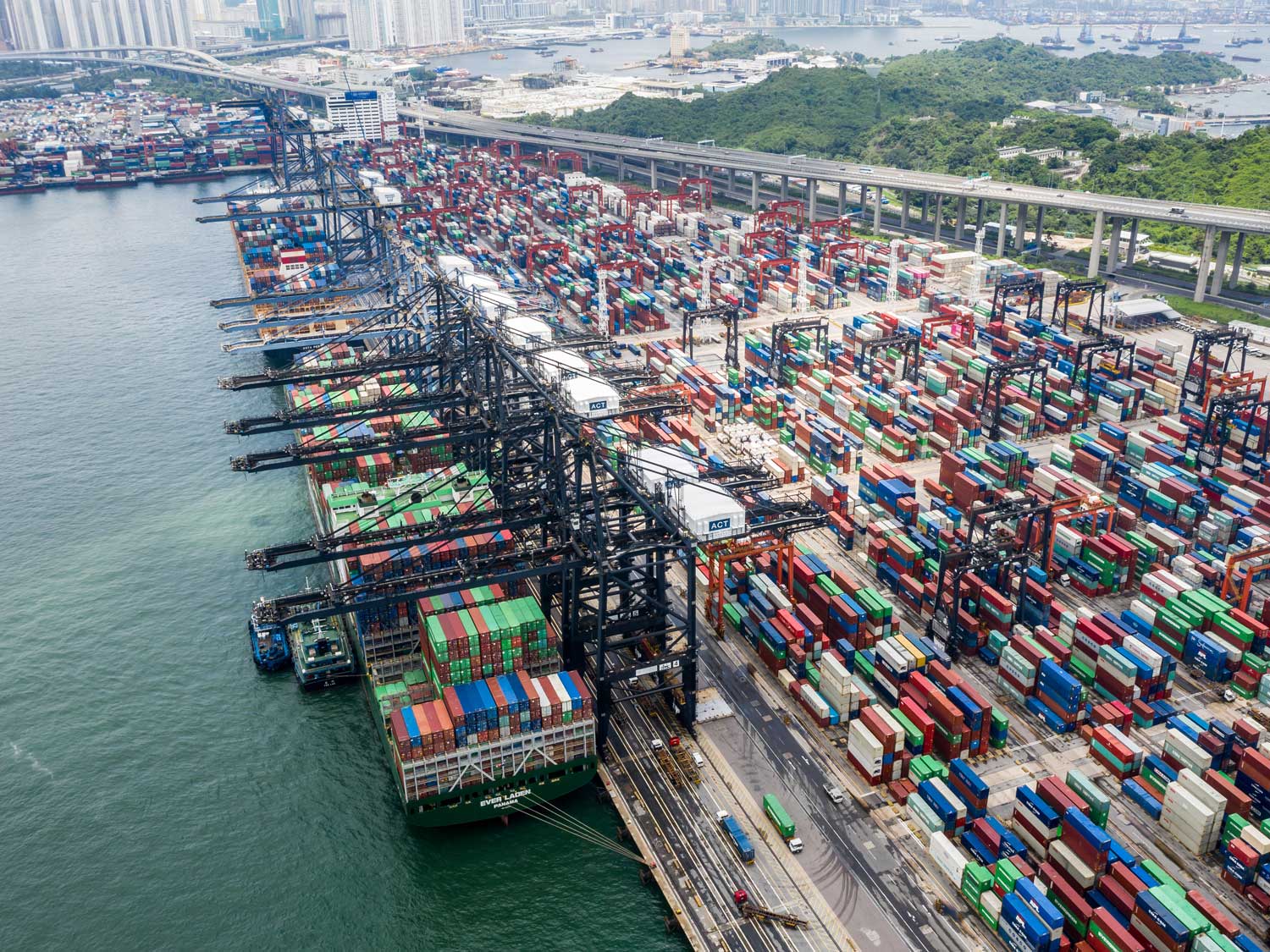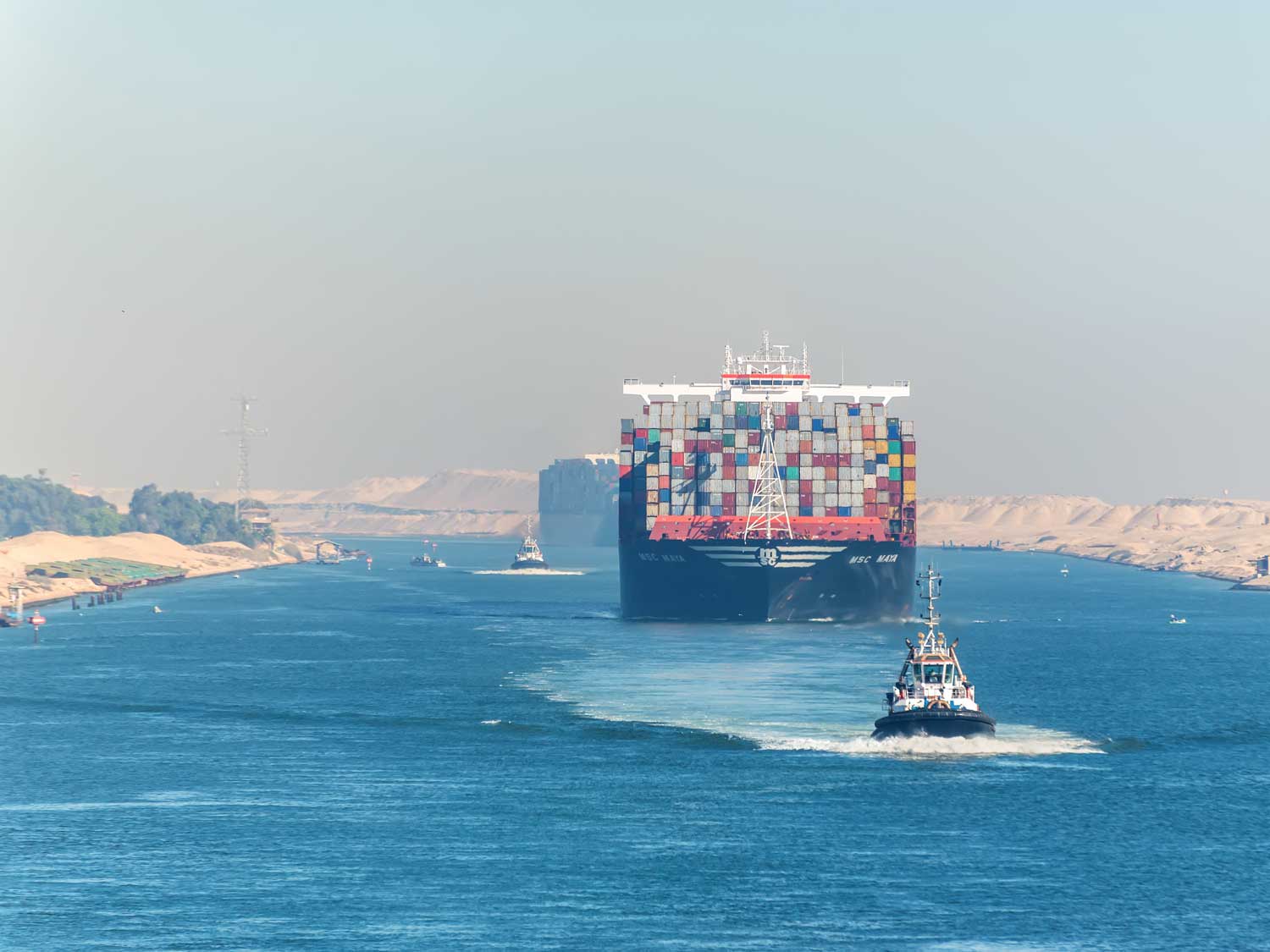
Panama COSCO ship

Transpacific container shipping

If we were to try and define a single factor that defined transpacific container shipping (along with most other routes) in 2023, it would probably be shipper complacency brought about by the rebalancing and normalisation of supply chains, following the unprecedented disruption of the COVID years. 

However, ‘normal’ tends have a very limited span in shipping, and the next cycle of disruption is never far away. 

The first warning signs began to emerge last summer when the Panama Canal Authority first began to restrict canal transits due to the historic drought impacting Central America. 

Then in December the Red Sea Crisis first made headlines and within a matter of weeks hundreds of container ships were forced to divert away from the Suez Canal routing to avoid attacks by Houthi rebels off the western coast of Yemen. 

The resulting diversion around southern Africa’s Cape of Good Hope has absorbed much of the capacity carriers had laid up during the lull, delayed cargo deliveries, and doubled rates on some lanes, while also prompting carriers to implement war-risk and other surcharges. 

Cooling spot market
Spot rates from the Far East into the US have softened since the last round of GRIs at the start of February, with FAK rates into both the West Coast and East Coast falling slightly, but remaining at very elevated levels.

But a cooling spot market doesn’t mean the crisis is over, with spot rates from the Far East to the US West Coast still almost 200% higher than the end of 2023, with East Coast rates  up 140% and the shipping lines will be doing everything they can to make the latest mid-February GRIs stick.

How long the Red Sea disruption will continue is unknown, but it’s likely that shippers will face pressure on prices and disruption through the first half of 2024. 

Uncertainty and unease
While the Panama Canal situation did not result in excessive delays during H2 2023, it has created disruption and added cost, encouraging many US importers to seek East Coast services and/or overland rail connections from the West Coast.

And now we learn that, with the drought continuing, water levels in the reservoir that feeds the operation of the Panama Canal will sink below the record low levels seen last year – around 8ft lower than ideal for safe navigation.

If established rainfall trends hold, reservoir water levels will fall well below last year’s record lows, forcing limits on the number of vessels that use the canal, restrictions on vessel utilisations and surcharges of some 6.5%.

Add to that the uncertainty surrounding labour negotiations that will begin in the spring on a new longshore contract on the East and Gulf coasts, and 2024 is shaping up to be a year of great unease for transpacific shippers.

If you have any questions or concerns about the issues raised in this article, we can review your situation and explain your options, including alternative carriers, ports and routes.

To discover how we can support your transpacific or transatlantic trade, or to learn more about our ocean solutions, please EMAIL Metro’s Chief Commercial Officer, Andy Smith. 

Ellerman boxes

Our unique transatlantic shipping line

We have been supporting bi-lateral UK/USA trade, with air and sea freight services, for over four decades, which is why we are so excited by our in-house shipping line, Ellerman City Liners, transatlantic capacity deal with the world’s biggest shipping line, MSC.

Ellerman’s weekly sailing United States Express Service (USX) is supported by our own offices and delivers some of the fastest containerised transit times available – direct to Philadelphia from just 13 days – and because it utilises non-congested ports and terminals, port clearance and inland movements are seamless too. 

USX is the only direct service operating to and from Jacksonville, serving the Baltic, Scandinavia, Europe and the United States, with four calls on the East Coast, including Philadelphia.

The MSC and Ellerman City Liners agreement utilises a combination of MSC capacity and our own independent vessel between ports, with a set weekly volume and an option to increase as required, covering dry and refrigerated containers.

Pasquale Formisano, Senior Vice President of MSC, said, “I’m very pleased we’re extending our strategic partnership with Ellerman, one of the shipping industry’s great names. This agreement is all about efficiency. Guaranteed cargo means we can operate at maximum capacity and, therefore, minimise the environmental impact of each TEU we carry. The more we can do that, the more we can reduce emissions.”

Peter Andrews, Commercial Director of Ellerman, said, “We are delighted to announce this co-operation with MSC, the world’s largest shipping company. This agreement allows Ellerman to operate with greater efficiency, reducing our environmental footprint whilst also broadening our geographical scope in both Europe and the United States.”

The agreement covers routes between ports in Sweden, Poland, Lithuania, Germany, UK, Belgium and France, and ports on the Atlantic Coast of the United States, from New York to Florida. It also includes the capacity to extend services to include routes around the world.

The Ellerman US Express (USX) service has a complete port rotation of Klaipeda – Gdynia – Gothenburg – Bremerhaven – Felixstowe – Antwerp – Le Havre – New York – Philadelphia – Norfolk – Jacksonville.

ELLERMAN CITY LINERS – United States Express Service 
– Fast and reliable transit times with a weekly service
– Tailor made end to end solutions
– Direct port calls in Scandinavia and Baltics 
– Own offices in Spain, Portugal, UK and Germany 
– All equipment types offered
– Only direct sailings to/from Jacksonville
– Fast & reliable transhipment options 

To learn more about our USX solutions, please EMAIL Chief Commercial Officer, Andy Smith.

Header image reproduced courtesy of Ellerman City Liners

Long Beach 1

The transpacific container shipping outlook

Transpacific container shipping lines are imposing surcharges and higher freight rates due to the ongoing Suez and Panama Canal disruptions, with the cost burden felt most by small volume shippers, but the biggest cargo owners are also feeling the heat. 

Since the major container shipping lines began diverting vessels around Africa’s Cape of Good Hope in mid-December, spot container rates have, on average, doubled globally.

Shipping lines have told the US government that the longer transit around southern Africa increases the distance a container ship travels from Asia by about 3,300 nautical miles. Resulting in an additional five to 16 days of transit time depending on the destination.

Along with the higher operating expenses of a 40% longer voyage, the lines argue that they need to rewire their entire global network. Which means making schedule changes, adding ships to maintain weekly port calls on a service loop and repositioning containers, all of which point to higher costs for carriers.

The sudden and sharp increase in ocean freight costs came as the market was expecting normalised demand and a surplus of new ships to keep freight rates suppressed during 2024.

Since the unfolding of the Red Sea crisis, and the drought impacting ship transits on the Panama Canal, carriers have levied an array of surcharges, but the surcharges are not being widely applied to BCOs, as they often have protections in their contracts, and mostly carriers are honouring those protections.

But ocean carriers are now looking for ways around those protections. In January, the FMC granted waivers to its 30-day notice period for adding new surcharges, allowing carriers to immediately add the charges due to the urgency of the Red Sea security situation.

A poll of the biggest shippers, beneficial cargo owners (BCOs) found that only 35% of them are having laden containers accepted under their original contract terms, with the vast majority being pushed to FAK [freight-all-kinds] spot market rates, which include added surcharges.

BCOs in the United States believe that ocean carriers have been targeting certain customers for higher rates and surcharges, pushing them towards FAK spot rates that are 400% higher to the US West Coast and 300% higher to the East Coast, for cargo loading in the second half of January.

Many major BCOs with volume commitments above 60,000 FEUs annually are still paying their contracted rates, which suggests an unwillingness by the transPacific shipping lines to upset their largest customers, particularly for gains that may be short-term.

Ocean carriers including Maersk, Hapag-Lloyd and CMA CGM are also using emergency clauses to say they cannot fulfil existing contracts under current terms, requiring shippers to pay surcharges to move their freight.

While ocean freight rates are nowhere near the highs experienced during the pandemic, increases are not just being applied to directly impacted cargo, but also to other routes, because of equipment availability, with shippers often subject to “emergency operational surcharges” on various trade lanes due to the Red Sea crisis.

The impact of Suez-related surcharges and rate hikes on shippers will be the focus of a Federal Maritime Commission hearing this week, to ensure the new fees and surcharges actually cover real costs and are not intended for profit.

We negotiate long-term and protected contracts with shipping lines across the alliances to secure space and rates, so that we can provide the best alternatives and options, whatever the situation.

To learn how we can support transpacific trade, or to learn more about our ocean and air solutions, please EMAILour Chief Commercial Officer, Andy Smith. 

marine insurance

Red Sea Crisis insurance withdrawals – fact or fiction?

In addition to fast-rising ocean freight rates and extended transit times, as the container shipping lines divert around Africa, shippers have been struggling to understand what (if any) insurance is in place, with insurance companies massively increasing war risk premiums and no longer willing to cover Red Sea voyages. 

In this constantly shifting situation it is critical that shippers understand what insurance covers are being referred to in current news report and what this means for their cargo.

As with all markets impacted by the Houthi rebel attacks the insurance market is changing almost daily with rumours and facts being thrown around in equal measure.

Insurance has been impacted like all areas of the supply chain, with costs increasing as the risk increases. This is true of hull insurances (to protect the vessel), as it is with the general war risk cover applied to marine cargo policies.

For those unfamiliar with insurance and when and how they apply, goods in transit insurance covers cargo against loss or damage whilst being transported from one place to another, or being stored during a journey.

If you are shipping goods by sea for example, you would take out marine cargo insurance which can be written on an annual basis, or purchased for individual shipments.

NOTE – Marine insurance is not included within the freight charges and agreements. 

For marine cargo insurance to be in place, with cover applicable to your goods, you need to specifically request insurance with a separate premium being payable.

Marine cargo insurance is different to marine hull insurance, with the latter covering the cost of repairs or replacement of the vessel, in the event of any loss and/or damage.

Hull insurance is typically purchased by ship owners, boat owners and charterers to protect against a range of risks associated with owning and operating vessels.

War risk cover, which provides insurance on losses resulting from events such as war, invasions, strikes and terrorism can be included within these policies or be purchased separately from specialist markets.

Insurers across the markets all take individual approaches to what cover they are applying, or withdrawing as the case may be.

Ships and vessel owners are being hit with high insurance premiums with reports that some insurers are refusing to cover vessels against war risk in the key commercial shipping corridor through the Red Sea.

For Lloyds insurers, their Joint War Committee has widened the areas in the Red Sea that are categorised as “high risk”, with war risk insurance premiums for vessels intending to sail through such areas rising from 0.07 to 0.7% – that’s a 900% increase in a month.

With the potential removal of some covers, including war risk cover, this can dictate the need for specific routes on the movement of goods. Whilst it may be reasonable for ship owners to request that routes through the Rea Sea be avoided, on a commercial basis, due to safety concerns. As a shipper you need to make sure that your insurers are comfortable with the changes and that the level of risk and cover you have is still sufficient to protect your cargoes.

Shipping around the coast of Africa also has its own complications, with the return of piracy off the coast of Somalia.

If you do find your insurer or insurance team changing or amending your policy and you need some advice in understanding what options are open to you, please do not hesitate to EMAIL our Chief Finance Officer Laurence Burford who will be happy to assist where possible.

There may be alternative insurance products that could protect your business more effectively in this ever changing world, but their merits need to be reviewed on a case by case basis with varying factors impacting cost and availability.

It is important to note that the surcharges that are raised by shipping lines during a time of war or crisis, despite how they may be worded, do not cover risks for the value of cargo moved on vessels.

These surcharges are designed solely to recoup additional costs incurred by the ship’s owner and/or operator, including higher insurance premiums for potential damage or destruction of a ship, and not for the container contents stowed on-board.

If you have any questions or concerns about the insurance related to the Suez situation, or would like to discuss its wider implications please EMAIL our Chief Finance Officer Laurence Burford.

Should you wish to obtain a quote on a particular insurance product please provide as much information as possible where known including but not limited to cargo type, cargo value, route, vessel details and such.