City of London

Market Stability Following Labour’s Victory

The UK financial markets have shown remarkable stability following Labour’s landslide victory in the snap election called by Rishi Sunak. Labour’s win has bolstered investor confidence, with UK stocks, bonds, and sterling all seeing gains.

Since late May, the pound has been the only G10 currency to appreciate against the dollar, highlighting the UK’s appeal in a turbulent global economic climate.

Investors view Labour’s win as a turning point, marking the end of a period of instability under Conservative leadership. This political stability is seen as a positive signal for UK assets, especially as other major economies face political uncertainties.

The substantial majority achieved by Labour suggests the potential for a two-term government, which could lead to consistent and long-term policy implementation, including crucial planning reforms that could boost the UK economy.

UK’s Comparative Attractiveness
The UK’s calm financial environment contrasts sharply with the situation in France, where political turmoil has unnerved investors. The rise of the far right and President Emmanuel Macron’s unexpected decision to call an election have led to significant declines in French markets, with the Cac 40 stock index dropping nearly 4%. The yield premium on French debt over Germany has surged, reminiscent of the Eurozone debt crisis.

In the UK, the Labour government’s cautious borrowing plans are expected to attract foreign investors to gilts. The stability of UK gilts is further highlighted by the recent fluctuations in the US Treasury market, influenced by political developments and economic policy proposals under the potential second Donald Trump presidency.

The UK’s transformation in the mind of investors can be most clearly seen in the pound. The currency has been the best performer across the Group-of-10 this year and a gauge of expected price swings on sterling over the coming month fell to 5.76% last week, its lowest since May.

Challenges and Future Outlook
Despite the newfound stability, Labour faces significant challenges in delivering on its promises amid tight borrowing constraints and modest economic growth forecasts. Rachel Reeves, the incoming chancellor, has committed to maintaining debt reduction targets, limiting the scope for increased borrowing.

To address these challenges, Labour will need to focus on supply-side reforms aimed at stimulating investment, improving productivity and international trade. A softer approach towards the European Union might marginally enhance growth and trade prospects, though the extent of EU cooperation remains uncertain.

The relative calm in UK markets provides a contrast to the turmoil seen elsewhere, positioning the UK as a potential safe haven for investors seeking stability in a volatile global economic landscape.

How does this affect your logistics planning?

  • FX is stable – always a good thing to ensure predictability with currency exchange. Remember the Liz Truss impact a few years back – very painful
  • Probably closer and more desirable trading terms with the EU. Which has already been stated by the new government as an objective
  • Possibly better trade deals with other countries around the world, created through an energised and proactive approach by the government
  • More investment in UK infrastructure and logistics related routes to market, including the rail and energy markets

These are just a few of the potential benefits, but reality is, time will tell. One thing you can rely on is that as the evolution occurs Metro will be at the forefront of the market ensuring that you gain benefit with your own business strategy and global trading opportunities. We will adapt, as we always do.

We are constantly monitoring and sharing the latest news on market influences, including currency FX and macro-economic performances, which can impact our customers supply chains.

We follow the barometers of global trade and money markets and are happy to share knowledge, to help you de-risk currency fluctuations and achieve the best returns.

For advice and recommendations please EMAIL Laurence Burford, our Chief Financial Officer.
Auto industry Brexit warning

Europe may experience its own near-shoring boom

As planes descend into Monterrey airport, an expanse of warehouses and manufacturing complexes stretches out for miles, exemplifying the near-shoring boom that has swept through Mexico in recent years, as Asian companies and their supply chains move closer to the United States.

Drivers of Mexican Industrial Growth
One might argue that this surge in Mexican industrial production and exports to the US is part of a 30-year evolution, initially driven by the North American Free Trade Agreement (NAFTA), which established a free trade area among Canada, the US, and Mexico.

However, additional factors have recently propelled Mexico to replace China as the US’s most important trading partner.

1. US-China Trade War: Trade has shifted from China to countries like Mexico due to the ongoing trade conflict
2. Biden Administration’s Supply Chain Strategy: Emphasis on near-shoring has highlighted Mexico’s role in the China+1 strategy
3. Production-Sharing Schemes: Mexico’s longstanding expertise in these schemes makes it a valuable partner in regional manufacturing and trade
4. Low Labor Costs: Average manufacturing wages in Mexico are lower than those in China

Ironically, many of the companies that are being set up for manufacturing and transition to Mexico are actually owned by Chinese entities and companies. It is a migration of Chinese manufacturing to Mexico and this also has the benefit of lowering supply chain and shipping costs and the big one – reducing some of the duty and anti-dumping duty that has been, and will likely continue to be, levied on Chinese origin goods and raw materials.

Lessons for Europe
A critical element is the presence of a long-standing free trade agreement, because near-shoring thrives in an environment that fosters supply chain relationships and networks over time and effective near-shoring relies on a regulatory and trading environment that supports such activities. 

Expecting near-shoring to emerge without a developed and supportive environment is unrealistic. The EU, with its well-developed internal free trade and regulatory framework, together with external trade agreements with countries like Egypt and Morocco is well-positioned to adopt near-shoring strategies.

In Europe, geopolitical relations with China are a concern, but recent supply chain disruptions are increasingly driving the adoption of China+1 strategies. Europe has been shifting its manufacturing and supply chain activities eastward and into North Africa.

Opportunity
Countries like Turkey, Hungary, Egypt, Morocco, Poland, and Romania offer compelling near-shoring opportunities due to their lower wage rates and higher productivity compared to Western Europe.

The EU is well-positioned to capitalise on near-shoring activities and so too is the UK, with its close EU ties and inherited trade agreements. This has already been highlighted by the new UK government, as a goal to re-negotiate trade agreements with the EU and could make closer sourcing a more prevalent and cost effective strategy going forward in the next few years.

We are seeing regular migration of manufacturing and sourcing closer to the UK and EU and this has many benefits, as long as the material price is comparable with Far East manufacturing costs, which have been the big incentive.

Metro and our associate companies, are well positioned to give advice, recommendations and adapt supply chains regardless of the areas that you are sourcing from or selling to.

We have a variety of services and solutions covering overland trucking, rail freight, short-sea containerised solutions on our own vessels and local warehousing and distribution at most industrial hubs throughout Europe and North Africa. 

Please arrange a call/meeting and we can go through the current and future options, to add value to your global development strategy. We can guarantee that it will not be time wasted!

Stable, well-regulated trading environments and cost-effective, high-productivity production locations in Central and Eastern Europe and North Africa provide a strong foundation for supporting near-shoring initiatives.

Metro’s integrated transport services are designed to support JIT manufacturing requirements across the EU, North Africa and Turkey and are ideally positioned to support new near-shoring requirements.

Our partner network, multi-modal transport solutions and MVT supply chain platforms are all geared towards supporting an evolving sourcing programme and on-boarding new suppliers. 

If you would like to learn how we can boost your ability to source from alternative manufacturing regions, EMAIL our Chief Commercial Officer, Andrew Smith, to arrange a consultation and scoping discussion.

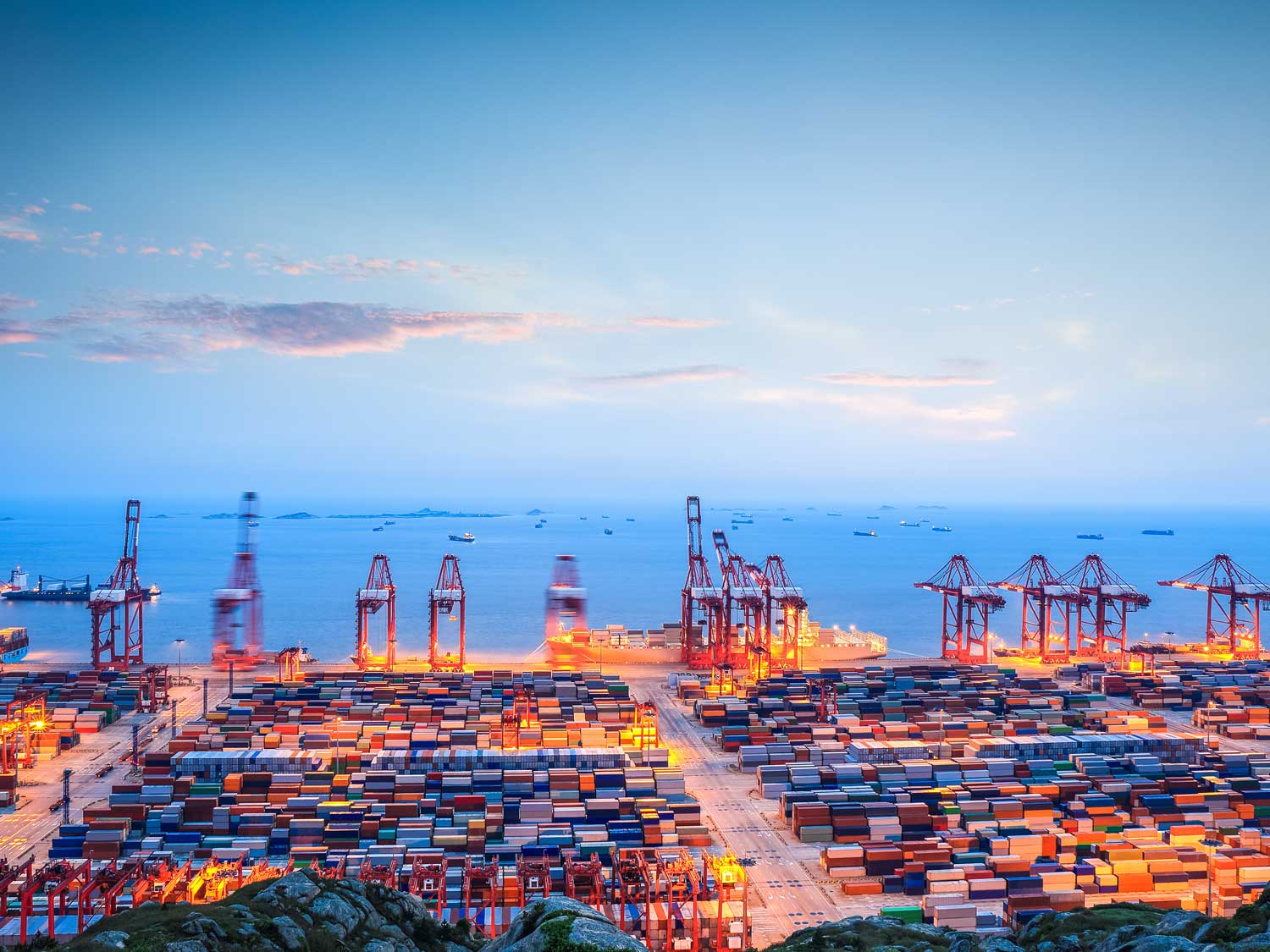
Shanghai port

Port congestion (amongst other things) continues to push rates up

With increasing amounts of ocean freight capacity soaked up by COGH (Cape of Good Hope) diversions and port congestion, spot rates are spiking, with indexes up significantly on 2023 and market led spot/FAK rates up by nearly 500%. Now, carriers desperate for ships and more capacity are setting new chartering records, to try and accommodate the shortfall in supply against demand.

Over 1.6milllion teu of capacity has been added to the global container fleet so far this year, as new vessels have been delivered, and all that new capacity has been fully absorbed by the market’s diversion round the Cape of Good Hope.

So, despite the record-breaking new vessel deliveries, there remains a shortage of capacity and container ships globally, with freight and charter rates continuing to surge ahead as the market enters the traditional summer peak season.

Port disruption and bottlenecks are tying up capacity, which is making already tight vessel availability worse. Analysts suggest that the recent increase in port congestion in Asia and the Mediterranean has taken a further 500,000 teu from circulation, reducing vessel schedule reliability and impacting equipment availability.

The Loadstar reports that 2.5m teu were on ships queueing for berths at ports worldwide last week, which is equivalent to nearly 9% of the global fleet, and the bunching of ships arriving from Asia is creating berthing delays in northern Europe, particularly Rotterdam.

Freight rates from Shanghai to Rotterdam increased 11% per feu, while rates from Shanghai to Los Angeles grew 7% and up 3% to New York.

Drewry expects that freight rates from China will continue to rise, due to congestion issues at Asian ports, the continued ongoing situation in the Red Sea and further port delays now occurring around the globe, as an impact of the market conditions.

Ship bunching and congestion has spread to ports in Asia including Port Klang, Shanghai, Qingdao, Guangzhou and Shenzhen, and while equipment availability has improved vessels have been waiting up to four days to berth at Shanghai, two days at Qingdao and up to three days at Port Klang.

Singapore’s berthing delays have improved, but there are longer dwell times as carriers discharge more containers to forgo subsequent voyages and catch up on sailing schedules.

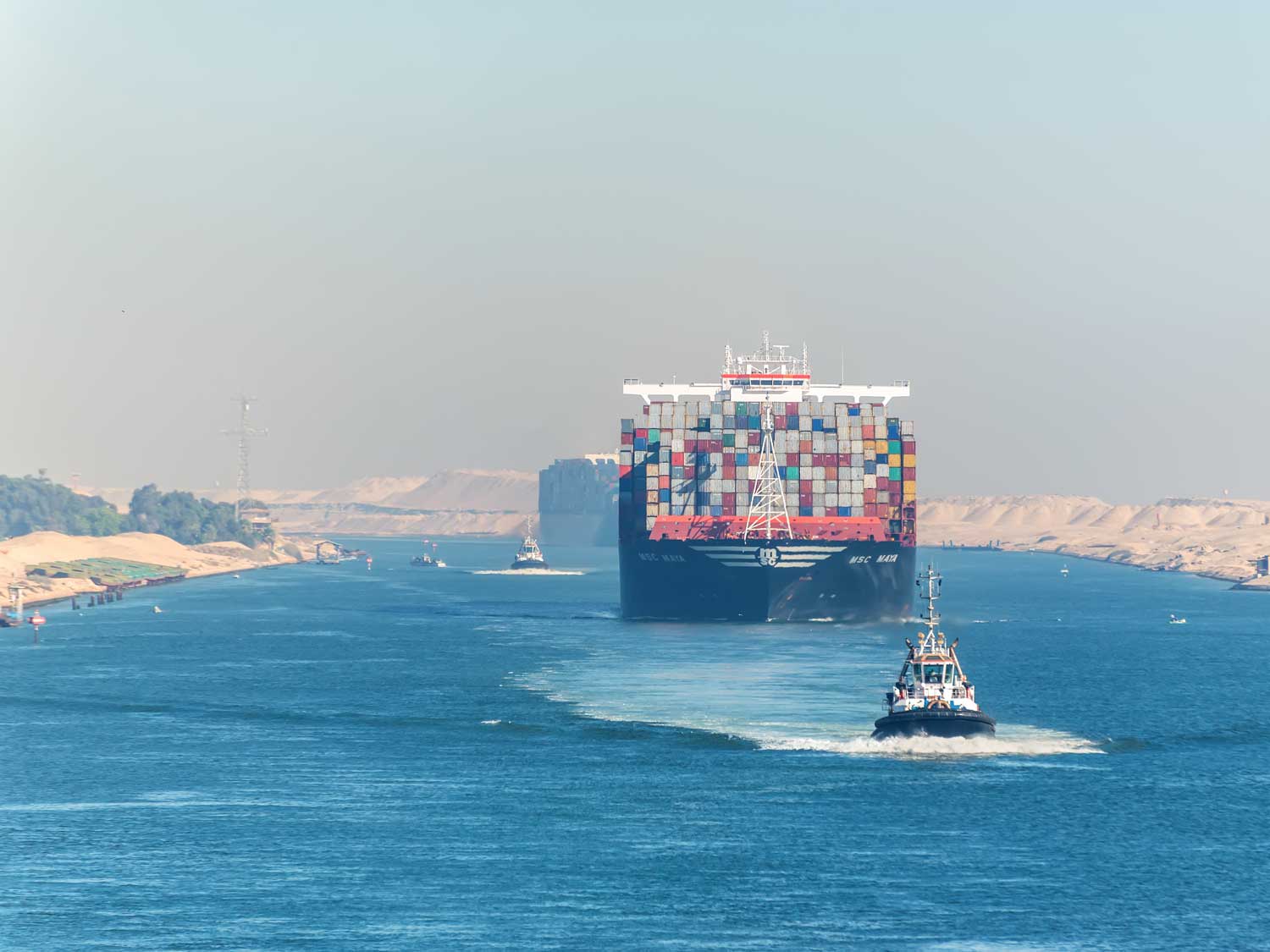
Routing away from the Suez Canal means that cargo is now being dropped at western Mediterranean ports for transshipment to the east of the region, with ships having to wait longer for a berth.

In the north of Europe, ports and terminals are performing pretty well, though Rotterdam, Hamburg, and Aarhus have experienced increases in yard densities, with customers requesting to pick up import containers as soon as possible after discharge.

Strikes update
Port workers in Germany implemented a ‘warning’ strike which affected the ports of Hamburg, Bremerhaven, Bremen, Emden, and Brake, and the Verdi trade union has threatened more action if negotiations for a new collective labour agreement do not progress.

After 24 hour stoppages at the container ports of Le Havre and Marseille-Fos, French trade union members had been threatening a month of strikes at major ports, but the snap election called by president Macron means that the Fédération Nationale des Ports et Docks CGT (FNPD) has no-one with whom to negotiate and has therefore suspended action until late September.

We are monitoring all the issues outlined here, while working closely with our local partner office network and carrier partners to mitigate any impact on our customers.

We will keep you updated and provide alternative solutions where appropriate or necessary.

If you have any questions, concerns, or would like any further information regarding the situation outlined here, please EMAIL our Chief Commercial Officer, Andy Smith.

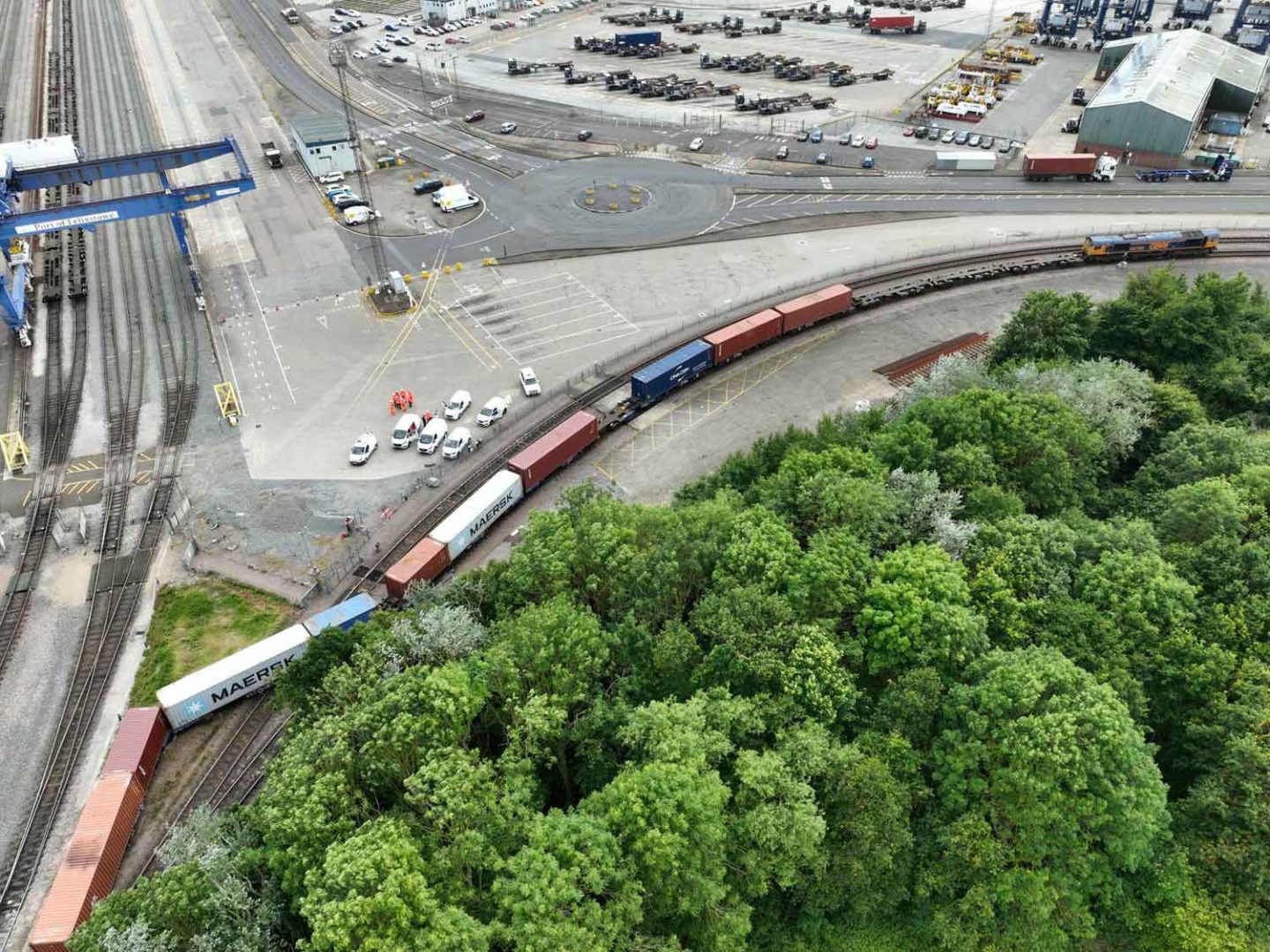
fxt derailment 1440x1080 1

Felixstowe train derailment

At 22:09 on Wednesday 19th June a GB railway locomotive and loaded wagons en-route to the Port of Felixstowe derailed on the branch line approaching the main Central and Northern railheads, causing significant damage to the track and closing both terminals to train movements.

The Central and Northern terminals, the main railheads at Felixstowe were closed, and while the Southern terminal continued operating, a large majority of import/export services were suspended, with rail throughput at 40% last Friday.

While access to all other areas of the container terminal remains unaffected, with shipping and haulage operations continuing as normal, the derailment impacted all train services serving the port, including those by Freightliner, GB Railfreight and Maritime Transport.

To help mitigate the impact, Felixstowe released additional vehicle booking slots for hauliers, which was welcome, but this does not entirely replace the lost collection/delivery capacity.

Network Rail engineers have been on site since the incident, clearing and repairing the damaged track, with the derailed wagons cleared at the weekend.

The Central terminal is now operating alongside the Southern terminal and rail throughput is back to 50%, but having undertaken a full assessment of required repairs the Network Rail engineers estimate that the port’s rail capacity may not be fully operational until next week.

Update 26th June 2024 – Port of Felixstowe confirm that normal rail service will resume on the 4th July 2024, from 12:00.

With rail companies cancelling services we are unfortunately being impacted by the consequential issues, for example exports missing booked trains as operators work around the situation.

Issues will continue to arise in the coming days, and potentially after normal service is resumed, as empty containers are left inland and not returned, as laden containers will be prioritised where space is limited.

These issues will work through and in the meantime we will continue with our contingency planning. If you have concerns about any consignments, or would like to discuss our transport strategy, please EMAIL Simon Balfe, our Multimodal Transport Manager.

Image courtesy of the Ipswich Star