Labour disputes at European ports disrupt container shipping

Labour disputes at European ports disrupt container shipping

Trade union action across major European ports, particularly in Rotterdam and France, are causing significant disruptions to container shipping, exacerbating existing supply chain challenges.

Strikes at Rotterdam’s Delta II terminal and ongoing industrial action at French ports have created congestion, delays, and logistical bottlenecks, prompting carriers to reroute vessels and seek alternative solutions.

Rotterdam turmoil and ripple effects
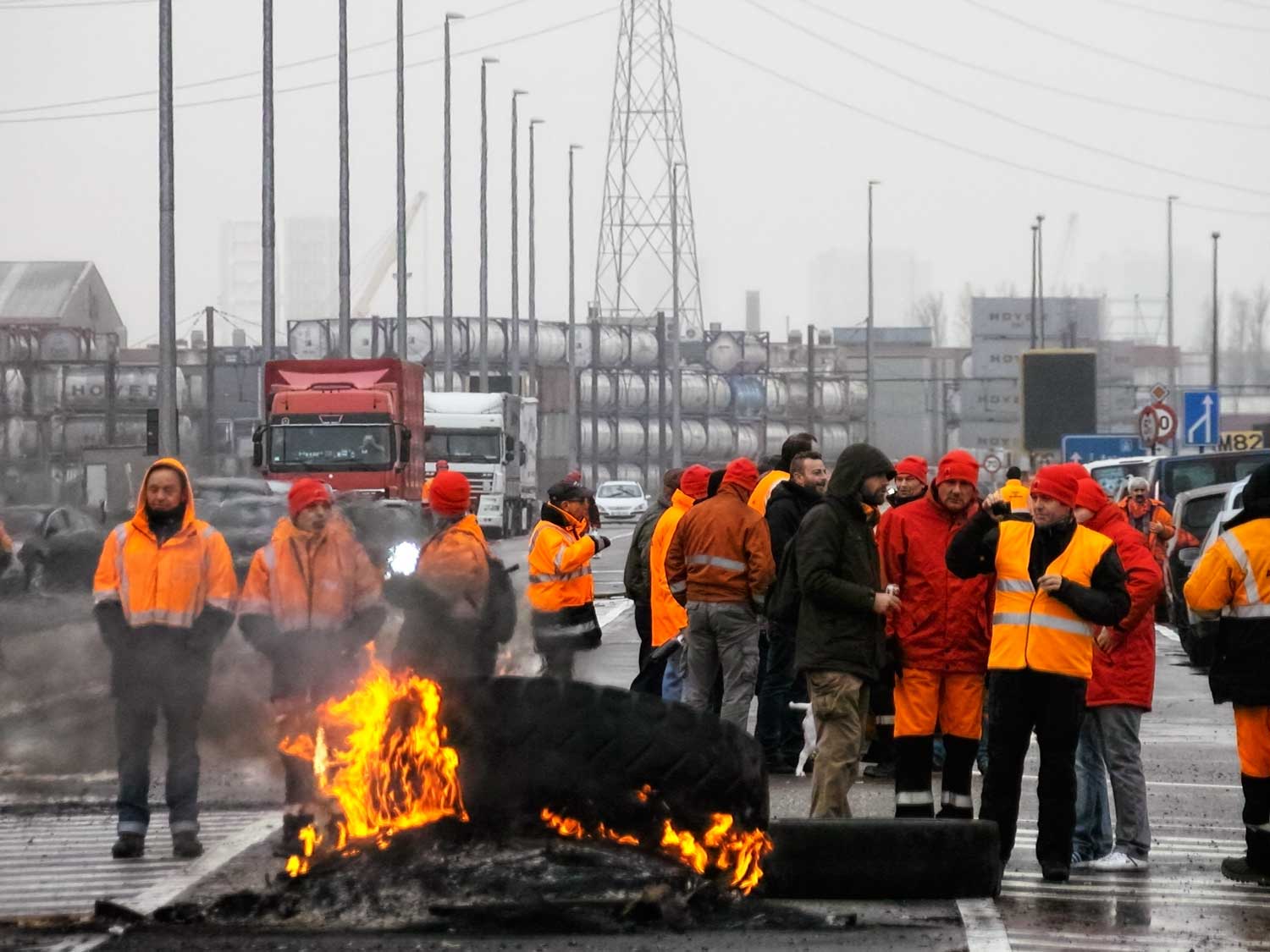
Contract negotiations that began in November have stalled, while the FNV Havens and CNV unions have been locked in dispute with employers since the second half of last year over port automation concerns. Dockworkers have been staging intermittent strikes that have severely impacted deep-sea vessel operations, feeder ship schedules, and inland-bound cargo movements. The situation has escalated with calls for solidarity action across Europe, urging other ports not to handle diverted vessels. While no widespread solidarity strikes have been reported, shipping lines remain on high alert, monitoring developments and adjusting vessel rotations as necessary.

Congestion at Rotterdam has intensified due to a combination of adverse weather, holiday-related backlogs, and surging cargo volumes from Asia. As a result, vessels are facing extended waiting times, with some opting to bypass the port altogether. The container yard capacity is nearing full utilisation, and precautionary measures, such as limiting empty container acceptance, have been implemented to manage the strain.

French port strikes deepen crisis
Meanwhile, industrial action at French ports is compounding the disruption. Dockworkers are protesting against pension reforms, with frequent work stoppages and a series of strikes planned throughout March. These actions have significantly impacted cargo handling operations at key ports, including Le Havre and Marseille-Fos, leading to increased transport costs and supply chain strain for businesses dependent on timely shipments.

The business community has voiced concerns over the economic fallout, citing rising supply chain costs, shipment delays, and a decline in sales due to the port closures. Calls for government intervention and a coordinated public-private response have been made in an effort to mitigate the impact and prevent further damage to trade and industry.

Wider European impact
As Rotterdam and French ports struggle with ongoing disruptions, other European hubs, such as Antwerp-Bruges, are facing additional pressure. With cargo diversions increasing, terminal congestion at Antwerp has reached critical levels, forcing operators to implement emergency measures. 

Import deliveries are being prioritised over exports, and yard space constraints are leading to restrictions on transshipment volumes. Barge and feeder operations are experiencing significant delays, further straining inland logistics networks.

With no immediate resolution in sight for either the Rotterdam or French port disputes, container carriers are bracing for continued volatility.

With escalating labour disputes at key European ports, including Rotterdam and France, container shipping is facing increasing delays, congestion, and logistical challenges. At Metro, we have contingency plans in place to bypass affected ports, leveraging alternative routes and entry points to keep your cargo moving.

To minimise disruptions, we encourage you to share your shipping forecasts as early as possible so we can proactively mitigate potential issues.

For tailored solutions and expert guidance on protecting your supply chain, 

EMAIL Andrew Smith, Managing Director, today.
Road freight resilience amid industry turbulence

Road freight resilience amid industry turbulence

Despite rising costs, political uncertainties, and sluggish economic growth presenting formidable obstacles for road freight operators, Metro remains a standout performer, driving forward with an optimistic outlook, bolstered by sustained expansion and strategic investments.

The UK’s haulage sector is bracing for what could be its most difficult year since the Covid-19 pandemic. Businesses are contending with increased operational expenses, stemming from policy changes such as National Insurance contribution adjustments and minimum wage hikes. These factors place additional financial strain on operators already struggling with freight volumes and inflationary pressures.

Across Europe, the freight industry has struggled with stagnating demand, particularly in Germany, where truck mileage—a key indicator of transport activity—has continued to decline. While a modest economic recovery is forecast, growth in the road freight volumes are expected to remain tight, reflecting broader economic uncertainties.

Challenging yet recovering market

The European road freight market is set to experience a gradual recovery in 2025, with overall activity expected to increase by 2%. This is largely driven by a projected improvement in GDP growth across the eurozone and a stabilisation of inflation. The international freight segment is forecast to grow at a slightly higher rate, indicating renewed confidence in cross-border trade.

However, challenges persist. The UK’s fiscal expansion is anticipated to temporarily boost domestic demand, yet higher operational costs are expected to maintain inflation at elevated levels. The market-wide outlook remains cautious, with operators needing to navigate a delicate balance between cost pressures and service efficiency.

Positioned for success

Despite the challenging conditions affecting the broader industry, Metro’s road freight division continues to defy trends, delivering exceptional year-on-year growth. While many competitors have struggled to maintain volumes, Metro has expanded significantly, with a marked increase in team size and service capabilities.

Key to this success is the company’s strategic focus on expanding its European network. Recently introduced groupage services to the Netherlands, Poland, and Iberia are set to drive further growth, complementing well-established French and German routes. 

Additionally, Metro’s investment in less-than-truckload (LTL) and full-truckload (FTL) services positions it for continued success, ensuring efficient and scalable transport solutions across Europe.

By prioritising service expansion, operational efficiency, and customer-driven innovation, the company continues to outpace market trends. Metro’s proactive approach ensures its customers benefit from reliable, cost-effective, and resilient transport solutions in an otherwise volatile market.

To explore the potential and benefits of our road freight services EMAIL Richard Gibbs to begin a conversation.

Road freight market update and Metro review

Road freight market update and Metro review

The road freight market in the UK and Europe is grappling with structural cost challenges, evolving regulations, and capacity constraints, while Metro’s road freight division continues to expand, delivering innovative solutions and outperforming market trends.

In the UK and Europe, road freight rates have remained under pressure due to structural cost drivers. The market stabilised in Q3 as softer short-term demand provided some relief. However, higher costs associated with fuel, tyres, insurance, and maintenance are sustaining elevated freight prices.

New truck registrations in Europe have fallen by 7.5% year-to-date, limiting capacity growth. As a result, many carriers are extending vehicle lifespans, with the average truck age now at 14.2 years. This decline in fleet renewal, combined with new EU regulations banning non-compliant rubber imports by year-end, has further tightened capacity and increased costs.

The TEG Road Transport Index showed a slight month-on-month decline but remains 4.4 points higher than the same period last year. Similarly, the haulage price index rose marginally in November but has seen a 10.4-point increase year-on-year.

Consumer demand around Black Friday offered a brief boost to the sector, with UK retail destinations seeing an 11% rise in footfall compared to the previous Friday. However, this temporary spike is unlikely to offset the ongoing challenges posed by inflationary pressures and volatile diesel prices, which continue to drive rates higher.

Metro’s road freight performance
Metro has made significant strides in its road freight division, upgrading its groupage services to France and Germany to deliver greater speed, efficiency, and customer satisfaction. These enhanced services ensure regular, reliable departures and seamless distribution throughout key regions.

France: Metro’s groupage services remain a standout feature, offering efficient, dependable shipping across the country.

Germany: Metro has expanded its presence, particularly in the Ruhr area, a vital industrial hub. Frequent departures ensure swift distribution through a trusted partner network.

Metro’s commitment to excellence extends beyond speed and cost. By prioritising communication, reliability, and trust, the company has built a reputation for hassle-free European shipping. Features such as GPS-tracked vehicles, dedicated routes, and door-to-door solutions ensure customers benefit from transparency and timely updates throughout the process.

Metro’s growth and outlook for 2025
The road freight division has seen exceptional growth, outpacing the market. While many competitors have experienced flat volumes, Metro has achieved over 50% year-on-year expansion, with a 60% increase in team size in the last year alone. The division is projected to grow by a further third in 2025, targeting an additional 40% volume increase.

Key priorities for 2025 include:
New groupage services: Recently launched lanes to the Netherlands, Poland, and Iberia are expected to play a significant role in Metro’s growth strategy.

French and German services: Continued development of these high-demand routes will remain a focus, with plans to enhance service frequency and efficiency.

Pan-European LTL and FTL services: The bulk of Metro’s volume is expected to come from its less-than-truckload (LTL) and full-truckload (FTL) offerings, supporting both inbound and outbound trade across Europe.

The road freight market faces continued pressure from rising costs and capacity constraints, but Metro’s proactive approach and investment in innovative solutions position it as a leader in the sector. By prioritising customer satisfaction and expanding its services, Metro is set to maintain its strong growth trajectory in 2025, even as the broader market navigates challenging conditions.

To explore the potential and benefits of our road freight services EMAIL Richard Gibbs to begin a conversation.

November 2024; Customs and compliance update

November 2024; Customs and compliance update

Our customs consultancy team provide insights on the latest changes, making it easier for you to stay on top of your planning and development needs.

To help us better support your compliance and efficiency goals, including duty/tax reclaims, we encourage you to click the button below to complete our short, five question survey. By responding, you’ll receive tailored insights and support to address any gaps or opportunities within your customs and trade processes.

Carbon Border Adjustment Mechanism (CBAM)
As attention focused on the recent UK government budget, many missed the announcement about the UK’s own carbon border adjustment mechanism (CBAM), coming into effect on 1st January 2027. This CBAM will place a carbon price on high-risk goods imported to the UK from sectors including aluminium, cement, fertiliser, hydrogen, iron, and steel. This measure aims to prevent “carbon leakage” by ensuring the UK’s decarbonisation efforts truly reduce global emissions rather than simply shifting them abroad.

Key points:
• Goods from the glass and ceramics sectors are excluded from CBAM requirements starting in 2027.
• Only businesses importing over £50,000 of CBAM goods annually will need to comply.
• Lessons from the EU’s recent CBAM rollout, which faced data challenges, may offer valuable insights as the UK implements its own system.

Safety & Security Great Britain (SSGB)
The SSGB requires an Entry Summary Declaration (ENS) for all goods imported to Great Britain from the EU, effective from 31st January 2025. Responsibility for filing lies with the carrier or haulier, but as the UK importer, you hold the key data.

Here’s what you need to know:
• For accompanied freight, the origin freight forwarder or haulier is responsible for the ENS submission.
• For unaccompanied freight, the ferry line is responsible.
• Some of the required data can be found on your import customs entry, but certain details may depend on direct or indirect liability, particularly if ENS filing is requested by another party.
• A GB EORI number is essential for those needing access to the system.
• HMRC requires accurate and updated departure details before sailings, although some linking issues with GVMS remain unresolved.

Final guidance is pending, but obtaining EORI information from your suppliers will support this new requirement.

Windsor Framework
The Windsor Framework, replacing the Northern Ireland Protocol, has seen its implementation date pushed from 30th September 2024 to 31st March 2025.

This framework introduces Red and Green lanes for goods traffic and replaces the TSS (Trader Support Service) with the UKIMS (UK Internal Market Scheme). It will simplify trade, particularly for agrifoods moving into Northern Ireland, with the Northern Ireland Retail Movement Scheme (NIRMS) reducing administrative burdens for certain goods.

import control system 2 (ICS2)
As ICS2 progresses for EU surface cargo, European hauliers have voiced concerns about the challenge of gathering essential data. Metro can assist exporters by preparing data in advance from the export entry, keeping hauliers on the move.

Key details:
• Much of the required information is found on the customs entry.
• Emphasis has shifted to 6-digit commodity codes, and the EU consignee’s EORI number is now required.

Simplifying the complex
While the list of complex abbreviations and requirements continues to grow, don’t worry because our team can break down the jargon and provide clear, actionable guidance to ensure smooth customs compliance.

Client survey: Insight into your compliance needs
Please take a few moments to complete our survey. Your responses will help us understand your needs and provide solutions that enhance your compliance and streamline your processes. Thank you for your feedback!

Metro are at the forefront of customs brokerage solutions, with our automated CuDoS declaration platform and dedicated team of customs experts, reacting swiftly to any changes in the UK and EU’s trading regimes.

To learn more about compliance, CBAM, SSGB, The Windsor Framework or ICS2 – OR to see how we can simplify and automate customs declarations – please EMAIL Andy Fitchett, Brokerage Manager.