Progress and Paralysis in US Trade Policy

Progress and Paralysis in US Trade Policy

After weeks and months of economic tension and political uncertainty, a flurry of developments in early November have reshaped the outlook for US trade and logistics.

From tariff rollbacks to port fee suspensions, and a potential landmark Supreme Court ruling and continuing government shutdown, the policy landscape is shifting rapidly, bringing both relief and unease across global supply chains.

Tariffs Eased Under New US–China Agreement

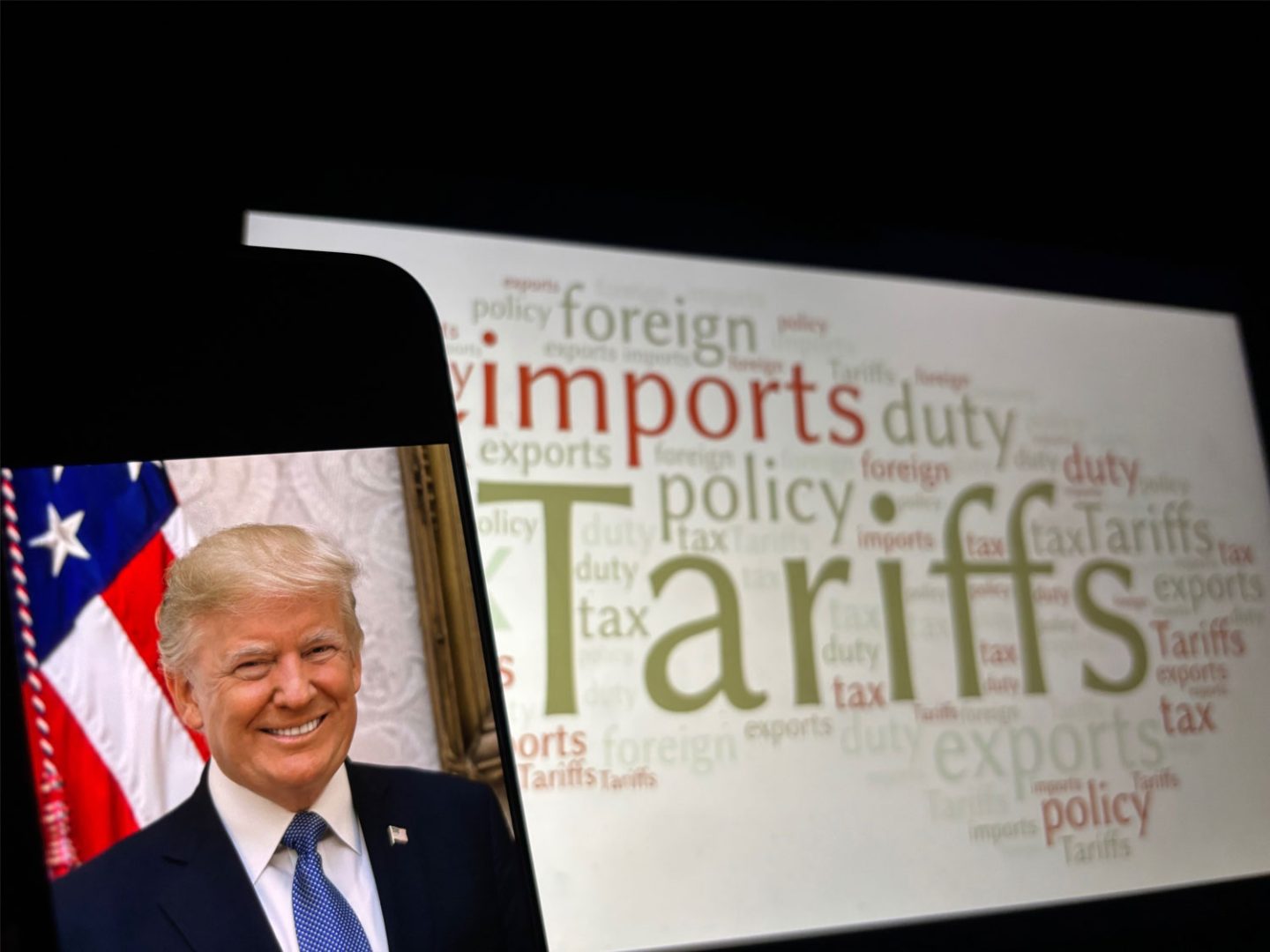
The reduction of tariffs between the US and China took effect on 10 November, following a trade accord reached between Presidents Trump and Xi. The agreement lowers import duties on a wide range of goods, from agricultural products and industrial components to consumer electronics.

Importers welcomed the easing as a means to restore competitiveness and predictability in sourcing, with improved freight flows anticipated on trans-Pacific lanes. Analysts note that while the tariff cuts do not resolve underlying geopolitical tensions, they provide welcome breathing space for manufacturers balancing cost pressures and re-shoring considerations.

Port Fee Suspension Brings Relief to Carriers and Shippers

Complementing the tariff reductions, both Washington and Beijing have suspended reciprocal port fees for one year, from 10 November. The decision, announced 30 October, pauses the retaliatory levies that had been applied to vessels linked to either country.

The inclusion of RoRo and car carrier vessels in the suspension was particularly well received by the automotive and heavy-equipment sectors, which had faced additional costs on each port call.

The agreement is widely viewed as a pragmatic step toward de-escalation in maritime trade policy, easing operational costs for shipping lines and restoring confidence among automotive exporters and manufacturing supply chains reliant on consistent vessel rotation between US and Chinese ports.

Supreme Court Tariff Showdown: Uncertainty Persists

The fate of President Trump’s ability to impose sweeping tariffs remains unresolved, with the Supreme Court having recently heard oral arguments but yet to issue a ruling. Lower courts previously ruled against the administration’s use of emergency powers to levy broad tariffs under the International Emergency Economic Powers Act (IEEPA), but the decision has been put on hold pending Supreme Court review.

The justices are split, with three seen as likely to support Trump’s position, three clearly against, and three in the middle, making the outcome difficult to predict. During oral arguments, skepticism was evident from across the bench regarding whether the statute provides a president such expansive tariff powers without congressional authorisation.

If the Supreme Court rules against Trump, attention will turn to the array of alternative mechanisms available to maintain tariffs. Even without IEEPA authority, legal experts note that the administration could rely on statutes such as Section 301 of the Trade Act of 1974, which permits tariffs against unfair trading practices, or Section 338, a Depression-era law, which allows for steep duties of up to 50% if US businesses are discriminated against abroad. While each legal tool has varying thresholds and limitations, trade analysts are convinced there remain multiple pathways for the US to reimpose tariffs on targeted imports, underscoring the persistent uncertainty facing global shippers and manufacturers.

Government Shutdown Disrupts Trade Flows

Meanwhile, the US government shutdown, which began on 1 October, continues to disrupt logistics and international trade operations. Although a Senate compromise now appears close, any deal is likely to offer only temporary relief, funding government activities through January and leaving open the possibility of renewed disruption early next year.

While ports remain open, reduced staffing at US Customs and Border Protection has slowed documentation and inspection processes, lengthening clearance times and increasing dwell periods at major gateways such as Los Angeles-Long Beach.

Exporters are facing further obstacles as the Bureau of Industry and Security and the Directorate of Defence Trade Controls have paused most export licence reviews, while trucking and aviation sectors face delays in driver certification and airworthiness approvals.

Global supply chains are already feeling the ripple effects, with European and Asian manufacturers reporting shipment delays and additional inventory costs. The episode underscores the vulnerability of cross-border trade to US political impasse, a reminder that even as tariff and port fee tensions ease, operational continuity remains at the mercy of Washington’s budget negotiations.

With tariffs shifting, port policies evolving, and the risk of government shutdowns disrupting customs and regulatory processes, keeping your cargo moving demands proactive coordination and local expertise.

Metro’s US brokerage and logistics teams work closely with CBP and partner agencies to maintain clearance continuity and minimise disruption during periods of political or operational uncertainty. Supported by our CuDoS customs automation platform and expanding Metro Global USA network, we ensure every declaration meets filing deadlines accurately, efficiently, and fully compliant.

EMAIL Andrew Smith, Managing Director, to learn how Metro can help you navigate US trade policy changes, mitigate shutdown risks, and protect your supply chain from volatility.

France Ends Regime 42: What It Means for Exporters and Why You Should Attend Metro’s December Customs Webinar

France Ends Regime 42: What It Means for Exporters and Why You Should Attend Metro’s December Customs Webinar

France will withdraw Regime 42 from 1 January 2026, removing the VAT simplification that currently allows goods to enter France without import VAT when they are destined for another EU member state.

The ending of Regime 42 has attracted little publicity, but it will directly affect UK exporters shipping on DDP terms through the primary Dover–Calais Channel crossing.

Under DDP, the UK exporter is responsible for EU import formalities. Once Regime 42 is removed, any DDP shipment entering France will require French import VAT accounting, unless the exporter holds a French VAT registration. For many businesses, this introduces new administrative steps and potential cash-flow exposure.

Some exporters may look to reroute via alternative EU entry points, like Belgium or the Netherlands, where Regime 42 will continue. However, the Dover–Calais corridor remains the fastest, most reliable and most cost-efficient route into mainland Europe.

Diverting freight via Belgian or Dutch ports will inevitably add cost, extend transit times and risk congestion if volumes surge.

To ensure continuity, Metro can support exporters with three practical solutions:

  • T1 Transit Solution
    Goods can transit France under a T1, avoiding the need to pay French import VAT. Clearance takes place at the final EU destination, maintaining full route flexibility.
  • French VAT Registration and Returns
    For exporters wishing to continue using Dover–Calais without a transit procedure, Metro can arrange and manage French VAT registration and periodic returns.
  • Routing via alternative port pairs
    Where customers prefer to use Dutch or Belgian ports to retain Regime 42 benefits, Metro can support and coordinate these routings through established carrier and agent networks.

For many DDP exporters, the T1 transit route or French VAT registration, supported by Metro, will offer the best combination of compliance, speed and cost-efficiency.

Exporters should review their EU import arrangements early to ensure seamless operations ahead of January 2026.

Metro’s customs and compliance specialists are working with exporting customers to identify exposure, adapt procedures, and ensure every movement remains compliant and cost-efficient under the new rules.

EMAIL Andrew Smith, Managing Director, to discuss how we can help safeguard your European exports and keep your goods flowing smoothly through the transition.

Upcoming Metro Webinar: Essential Customs Changes for 2026

To help businesses prepare for these and other major regulatory shifts, Metro’s customs specialists will host a one-hour webinar in December.

Webinar Title

Avoid EU Border Disruption in 2026: The Key Customs Changes and How to Prepare Now

What We’ll Cover
A focused, practical review of:

  • ICS2 and the new GB ENS requirements
  • The end of Regime 42 in France: who is affected and what to do
  • French Douane ELO rules and their impact on all French port traffic
  • EUDR, CBAM and the UK’s expected approach
  • 2026 trade agreements and anticipated regulatory changes
  • Accessing CDS data free of charge
  • De minimis rule changes and the end of low-value relief
  • Compliance requirements for 2026 – what they mean in real terms

5 December @ 11:00 AM (1 hour) – CLICK TO BOOK

Exporters, importers and supply chain managers are strongly encouraged to attend. This session provides clarity on the border changes that will define 2026, and the actions businesses need to take now to stay compliant and competitive.

RoRo-in-US

USTR Port Fee Shockwave Hits Chinese Shipping and Vehicle Carrier Sectors

The U.S. Trade Representative’s (USTR) newly imposed port fee regime is massively impacting container and roll-on/roll-off (RoRo) operators, inflating operating costs, tightening vessel capacity, and prompting warnings of severe disruption to U.S. logistics.

UPDATE 30 OCTOBER – Donald Trump and Xi Jinping have agreed to end tit-for-tat levies on each other’s shipping industries, but there is no certainty yet as to when this will take effect.

Effective 14 October, the USTR introduced port service fees applying to all Chinese-operated and Chinese-built vessels calling at U.S. ports. Chinese-operated ships face a levy of $50 per net ton on their first port call of the year, escalating annually through 2028. For vessels merely built in China but operated by foreign lines, the higher of $18 per ton or $120 per discharged container applies.

Although originally aimed at Chinese maritime dominance, the policy has ensnared a much wider range of operators, including global RoRo and vehicle-carrier fleets built in Asian shipyards. The scope extends to nearly all non-U.S.-built ships, creating a sweeping cost burden across the international car-carrier sector.

Early Impact on China-Linked Carriers

Within the first week of implementation, Chinese shipping giants Cosco and OOCL incurred more than $42 million in port fees from just 15 U.S. port calls. Based on current deployment, annual exposure for the two lines could exceed $2 billion, representing as much as 7 % of combined revenue.

While some carriers have avoided Chinese tonnage by redeploying vessels built elsewhere, many have no alternative. Post-Panamax container ships and vehicle carriers built in China but owned by global operators remain fully liable under the new rules.

RoRo Operators Face Steep Increases

The new regime has been even more damaging for vehicle and equipment carriers. The levy on all foreign-built vessels, not just those tied to China, rose from $14 to $46 per net ton, tripling the original charge announced in June. This means a large car carrier now faces about $1.2 million per port call, capped at five annual calls per vessel.

Operators such as Wallenius Wilhelmsen and Höegh Autoliners are facing unprecedented annual costs, estimated near $1 billion and $225 million respectively, which will inevitably feed through to manufacturers and exporters. The burden will be particularly heavy on automotive and heavy-equipment producers that rely on U.S.–Europe and U.S.–Asia RoRo services.

Outlook

As public consultation on further extensions of the scheme continues, the maritime industry is bracing for additional cost escalation and route restructuring. Unless revised, the USTR’s fee framework could reshape port-call economics, amplify freight volatility, and reduce U.S. competitiveness in key manufacturing export markets.

Metro’s sea freight and RoRo specialists support automotive, machinery, and project cargo shippers potentially facing rising U.S. port charges amid changing compliance requirements. With deep expertise in vehicle logistics and carrier management, we minimise disruption and optimise cost efficiency across global trade lanes. EMAIL Andrew Smith, Managing Director, to discuss tailored solutions for your automotive supply chain.

U.S. Power Plays Shape Global Climate and Asian Trade Policy

U.S. Power Plays Shape Global Climate and Asian Trade Policy

The United States exerted its influence on two critical stages this month, by blocking consensus on global maritime climate regulation in London and sealing a series of trade pacts across Southeast Asia. 

At the International Maritime Organization (IMO) in London, U.S. pressure proved decisive in delaying adoption of a new net-zero emissions framework for shipping. After weeks of tense negotiation, the vote to postpone the measure by one year passed narrowly, with 57 in favour and 49 against, derailing what would have been the industry’s first global carbon-pricing mechanism.

The U.S. argued that the proposed levy on maritime emissions would raise consumer costs by around 10%, and threatened sanctions, visa restrictions, and port fees against nations voting in favour. Backed by Saudi Arabia, Russia, and Venezuela, the U.S. successfully persuaded several key flag states to withdraw support, effectively halting progress on a binding framework.

The decision has angered environmental groups and investors seeking a predictable framework for green fuel investment. Analysts now warn of fragmented regional carbon schemes, slower progress on decarbonisation, and renewed dominance of liquefied natural gas (LNG) as the default transition fuel.

However, the delay appears to have done little to dent the industry’s confidence. In the two weeks since the IMO vote, shipping lines have continued to place significant new-build orders, with the containership order-book ratio surpassing 33% of the global fleet for the first time since 2009. 

More orders are expected in the coming weeks as carriers push ahead with long-term fleet renewal plans, signalling sustained appetite for capacity growth despite regulatory uncertainty.

Trump’s Asia Tour: Trade Wins and Strategic Balancing

Even as Washington disrupted global climate diplomacy, President Donald Trump was securing new trade concessions across Southeast Asia. During his recent tour, the U.S. concluded four separate deals aimed at deepening regional economic ties and diversifying away from China.

  • Vietnam agreed to maintain 20% tariffs on U.S. goods but will move toward zero tariffs on selected products. The two countries will also cooperate on digital trade, export-control enforcement and anti-evasion measures.
  • Thailand retained its 19% tariff rate but committed to eliminate duties on 99% of U.S. goods, opening a broad range of consumer and industrial markets.
  • Malaysia and Cambodia went further, signing comprehensive reciprocal agreements that cap ad valorem tariffs at no more than 19%.

U.S.–China: A Cautious Thaw

Trump’s whirlwind tour culminates on Thursday 30 October with a long-awaited meeting with Chinese President Xi Jinping, their first in six years. The two leaders will meet on the sidelines of an Asia-Pacific summit, where negotiators have already framed a tentative agreement that would halt new U.S. tariffs and ease Chinese export controls on rare-earth minerals, which are essential for EVs, semiconductors and defence technology.

With U.S. trade agreements, compliance requirements, and sustainability regulations evolving fast, Metro can help you assess exposure and opportunities, maintaining compliance and resilient supply chains. 

EMAIL Andrew Smith, Managing Director, to review the latest policy impacts and ensure your business stays aligned with shifting global trade and environmental frameworks.