Brexit uncertainty hurting UK car industry

European ports turned into EV car parks

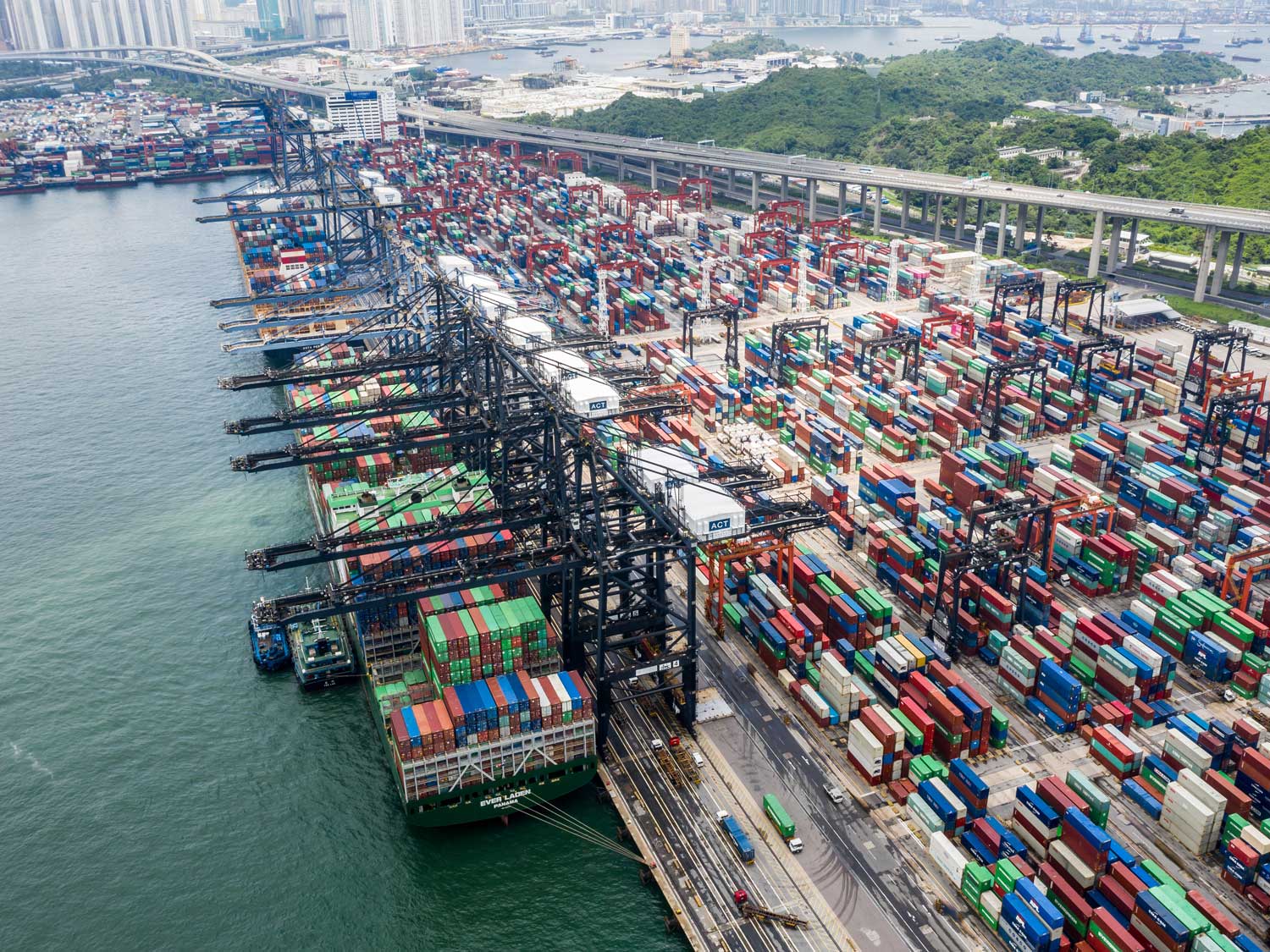
European ports are overflowing with imported electric vehicles (EVs), especially from China, as manufacturers rush to ship cars before new tariffs take effect. This surge in imports has turned car terminals into vast car parks, with dealers hesitating to accept more vehicles due to slowing sales.

Ports like Zeebrugge and Bremerhaven, which are among the largest car handling facilities in Europe, are particularly congested. A shortage of truck drivers and transport equipment has exacerbated the issue.

At Calloo near Antwerp and Zeebrugge, parking lots that can hold 130,000 vehicles are packed with Chinese brands like MG, BYD, and Nio. Chinese vehicle exports to Europe reached 1.3 million in Q1 2024, a 33% increase from the previous year, with most being EVs. Antwerp-Bruges, Europe’s second-largest port, expects between 600,000 to 1 million Chinese vehicles this year.

Registrations of Chinese-made EVs in Europe increased by 23% from January to April 2024. Western and Japanese brands manufactured in China, such as Tesla and Volkswagen, accounted for 54% of these registrations.

Tariffs and Strategic Moves
The US imposed a 100% tariff on Chinese EVs starting on the 1st August 2024, while the EU applied additional duties of 17-38% from the start of July, on top of an existing 10% tariff. BYD, China’s largest EV maker, faces the lowest additional tax at 17.4%.

To avoid EU tariffs, BYD is setting up a $1 billion manufacturing plant in Turkey, which is part of the EU’s Customs Union, allowing vehicles produced there (up to 150,000 p.a.) to avoid additional tariffs.

UK’s Post-Brexit Tariff Options
The UK can avoid negative impacts of the EU’s punitive tariffs on Chinese EVs, as its interests differ. With most volume car production moved to the EU, the UK has a £25bn trade deficit in motor vehicles with the EU. Nissan is the only major producer left in the UK, exporting 70% of its output to the EU. Thus, EU tariffs inadvertently protect Sunderland’s car manufacturing.

The UK’s auto industry is shifting towards high-value, customized vehicles, which dominate its £28bn global exports. These premium vehicles are not threatened by Chinese imports but could be if retaliatory tariffs from China occur. Post-Brexit, the UK can choose to stay out of the trade war, attracting auto investment and reducing the trade deficit with the EU.

RoRo Capacity Issues
The lack of RoRo capacity to transport vehicles continues to plague global car manufacturers, with the major brands establishing long-standing relationships with shipping lines, or owning their own fleets.

China’s automotive giants are constructing their own RoRo vessels, with Chinese companies set to control the fourth largest car carrying fleet in the world by 2028, controlling an estimated 8.7% of vessels in service.

Deliveries of new generation dual-fuel ships loading up to 8,000 CEU have already started, while even bigger 9,000 CEU capacity vessels have been contracted for delivery between 2025 and 2028.

Metro is exporting finished vehicles in containers, with significantly lower port to port freight costs, for a number of UK manufacturers.

In addition to avoiding the long wait for delayed (and much more expensive) RoRo services, they have no worries about congestion or shortage of space.

Standard 40’ containers can accommodate two large cars, and up to four smaller vehicles, secured on a rack, with massive efficiency gains and costs that are in line with historic RoRo levels.

If you would like further information on our containerised solutions, or have any questions or concerns about your Automotive supply chain, please EMAIL our Automotive team who are standing by to assist.
Shanghai port

Port congestion (amongst other things) continues to push rates up

With increasing amounts of ocean freight capacity soaked up by COGH (Cape of Good Hope) diversions and port congestion, spot rates are spiking, with indexes up significantly on 2023 and market led spot/FAK rates up by nearly 500%. Now, carriers desperate for ships and more capacity are setting new chartering records, to try and accommodate the shortfall in supply against demand.

Over 1.6milllion teu of capacity has been added to the global container fleet so far this year, as new vessels have been delivered, and all that new capacity has been fully absorbed by the market’s diversion round the Cape of Good Hope.

So, despite the record-breaking new vessel deliveries, there remains a shortage of capacity and container ships globally, with freight and charter rates continuing to surge ahead as the market enters the traditional summer peak season.

Port disruption and bottlenecks are tying up capacity, which is making already tight vessel availability worse. Analysts suggest that the recent increase in port congestion in Asia and the Mediterranean has taken a further 500,000 teu from circulation, reducing vessel schedule reliability and impacting equipment availability.

The Loadstar reports that 2.5m teu were on ships queueing for berths at ports worldwide last week, which is equivalent to nearly 9% of the global fleet, and the bunching of ships arriving from Asia is creating berthing delays in northern Europe, particularly Rotterdam.

Freight rates from Shanghai to Rotterdam increased 11% per feu, while rates from Shanghai to Los Angeles grew 7% and up 3% to New York.

Drewry expects that freight rates from China will continue to rise, due to congestion issues at Asian ports, the continued ongoing situation in the Red Sea and further port delays now occurring around the globe, as an impact of the market conditions.

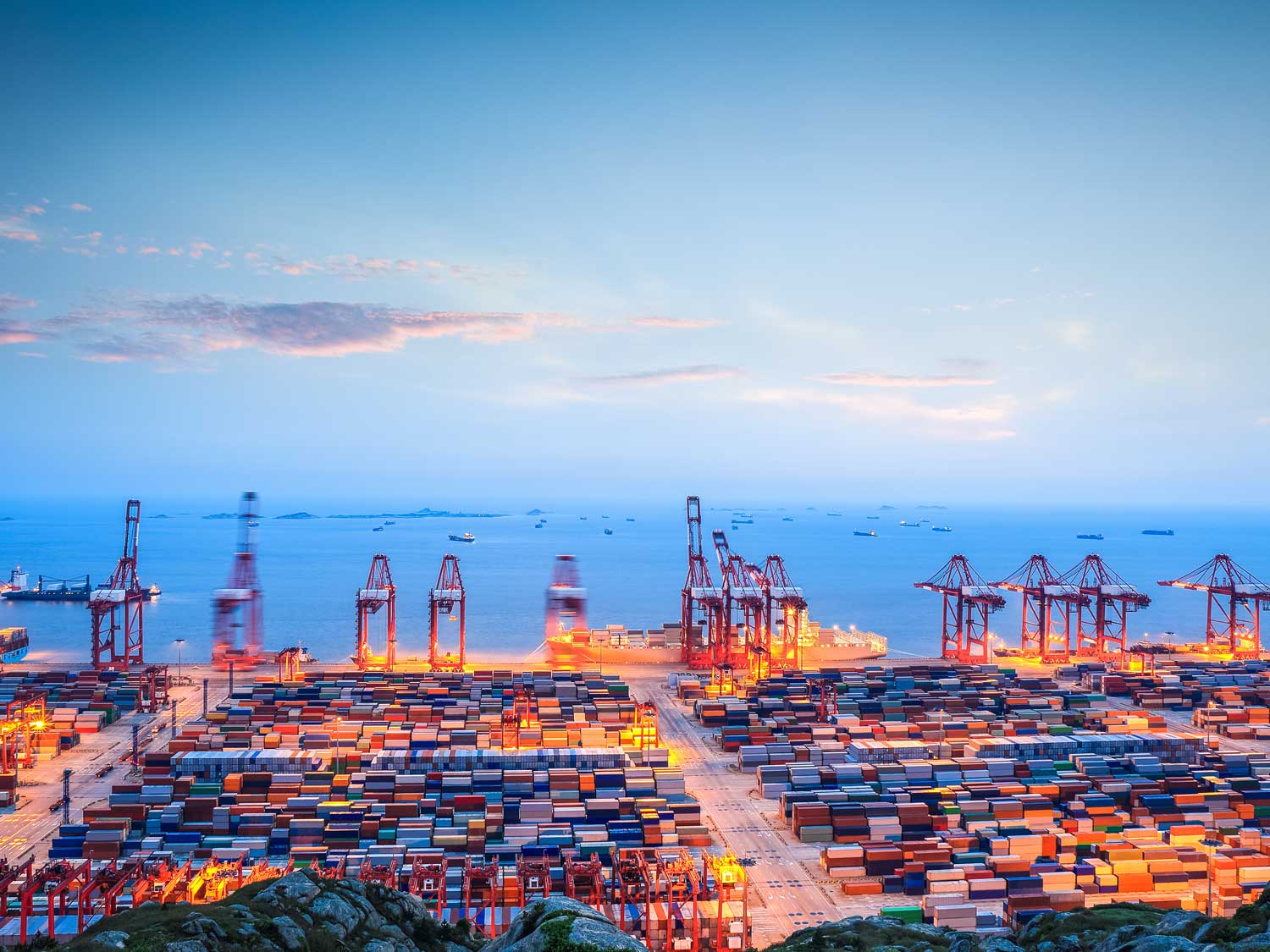
Ship bunching and congestion has spread to ports in Asia including Port Klang, Shanghai, Qingdao, Guangzhou and Shenzhen, and while equipment availability has improved vessels have been waiting up to four days to berth at Shanghai, two days at Qingdao and up to three days at Port Klang.

Singapore’s berthing delays have improved, but there are longer dwell times as carriers discharge more containers to forgo subsequent voyages and catch up on sailing schedules.

Routing away from the Suez Canal means that cargo is now being dropped at western Mediterranean ports for transshipment to the east of the region, with ships having to wait longer for a berth.

In the north of Europe, ports and terminals are performing pretty well, though Rotterdam, Hamburg, and Aarhus have experienced increases in yard densities, with customers requesting to pick up import containers as soon as possible after discharge.

Strikes update
Port workers in Germany implemented a ‘warning’ strike which affected the ports of Hamburg, Bremerhaven, Bremen, Emden, and Brake, and the Verdi trade union has threatened more action if negotiations for a new collective labour agreement do not progress.

After 24 hour stoppages at the container ports of Le Havre and Marseille-Fos, French trade union members had been threatening a month of strikes at major ports, but the snap election called by president Macron means that the Fédération Nationale des Ports et Docks CGT (FNPD) has no-one with whom to negotiate and has therefore suspended action until late September.

We are monitoring all the issues outlined here, while working closely with our local partner office network and carrier partners to mitigate any impact on our customers.

We will keep you updated and provide alternative solutions where appropriate or necessary.

If you have any questions, concerns, or would like any further information regarding the situation outlined here, please EMAIL our Chief Commercial Officer, Andy Smith.

Singapore

Asia market update; June

The Asia export trades are now as challenging as it was during the pandemic, with extremely tight vessel space, equipment shortages and port congestion colliding leading to a surge in spot rates, with analysts speculating it could reach USD 20,000/FEU on the Asia-Europe trade before too long.

Vessel schedule reliability is slipping, dropping below 50% on Asia-Europe and Asia-US East Coast trades in April, with further deterioration expected across all trade lanes.

Compared to a year ago, spot rates on the major Asia export trades are up significantly. For example, Asia-Europe +300%, Asia-US West Coast +200%, Asia-Mediterranean +200% and Asia-US East Coast up almost 150%.

The level of weekly increases is not slowing with week on week increases of between 10-20% now a sustained pattern with no sign of slowing.

There are several factors driving the rate increases, but the speed of change has created nervousness in the market, generating more demand and ‘highest bidder’ pricing.

Typically, retailers start importing goods for the November Black Friday sales and Christmas shopping season between late summer and autumn, but having experienced the pandemic’s capacity crisis, they are front-loading orders, fearing that there may be a capacity squeeze during the Q3 peak season.

This report by the BBC – ‘Shops rush for Christmas stock as shipping costs surge’ – confirms that retailers are placing orders early, as soaring costs and disruption threaten their supply chain deliveries.

One business told the BBC that increased costs were likely to feed through to the price on the high street and they were having to plan and book well in advance to make sure their Black Friday and Christmas stock arrive on time.

And even though it impacts cashflow and creates warehouse capacity challenges as they must store the goods for longer, they can’t risk ordering later, and potentially paying even higher freight rates or risk not being able to get cargo on a vessel at all.

There have been many articles in the trade press recently, reporting that container shipping lines are restricting allocations to beneficial cargo owners and freight forwarders alike, as carriers try to allocate space and equipment in a market where demand is far exceeding forecasted volumes.

We note that such reports refer to ‘sources’ rather than cite examples and whilst we are not immune to this, our carrier partners continue to be supportive and the strategic agreements we agreed are still intact, underpinned by strong relationships and decades of partnership.

In the current market we believe communication is paramount and we ask our customers to support us by providing advanced forecasts and early booking. This enables our team to plan and allocate capacity in an optimal way and reduces the risk of not being able to ship as planned.

To learn how we can enhance your ocean freight solutions, please EMAIL our Chief Commercial Officer, Andy Smith.

HKG port

Port congestion cannot be ignored

Significant and sustained terminal congestion in major Mediterranean and Asian ports is soaking up available capacity, which directly impacts freight rates and results in substantial delays to vessel schedules, with reliability dropping and the likelihood that delays will persist through the summer.

Port congestion has been building for months, adding more complexity to an already over-stretched container shipping market that is struggling to cope with shortages of vessel space and container equipment at key origins, as a consequence of the Red Sea diversions. Today, approximately 8% of global capacity (or 2.3m TEU) is now absorbed due to port congestion. This is expected to rise further in the coming weeks.

Ship bunching and congestion has spread to ports in Asia including Singapore, Shanghai, Qingdao and Shenzhen, with vessels waiting up to five days for a berthing slot in some ports.

Singapore, one of the world’s largest ports, has seen container volumes rise nearly 10% so far this year, and berthing delays are now extending beyond five days, with over 350,000 TEU currently waiting to berth. Singapore’s Maritime and Port Authority (MPA) said the congestion is the culmination of months of disruption triggered by the vessel diversions avoiding the Red Sea leading to bunching of vessels arriving into the port.

In the first week of the June, only six out of eleven Asia-Europe sailings departed on schedule, due to delays on the Eastbound voyage caused by the port congestion at the key hub ports of Singapore and Tanjung Pelepas.

Looking ahead
With ocean freight demand expected to continue into the summer, the danger is that average vessel waiting times will continue to lengthen, due to increased cargo flows and lowered terminal productivity, which in turn impedes facility operations. And when terminal capacity is limited, operators restrict the amount of cargo accepted, to avoid severe congestion, which simply serves to exacerbate the situation.

As primary hubs fill, transshipment networks require more ships to feed into peripheral ports, which means carriers may remove ships from other trades, which could create a new capacity squeeze and add further fuel to the fire pushing spot rates even higher.

Port congestion creates a de-facto reduction of available vessel capacity, which leads to an increase in blank sailings, because there is a schedule gap when vessels are unavailable, which again squeezes capacity.

We continue to monitor the evolving situation, while working closely with our local network and carrier partners to mitigate any impact on our customers.

We will keep you updated and provide alternative solutions where appropriate or necessary.

If you have any questions, concerns, or would like any further information regarding the situation outlined here, please EMAIL our Chief Commercial Officer, Andy Smith.