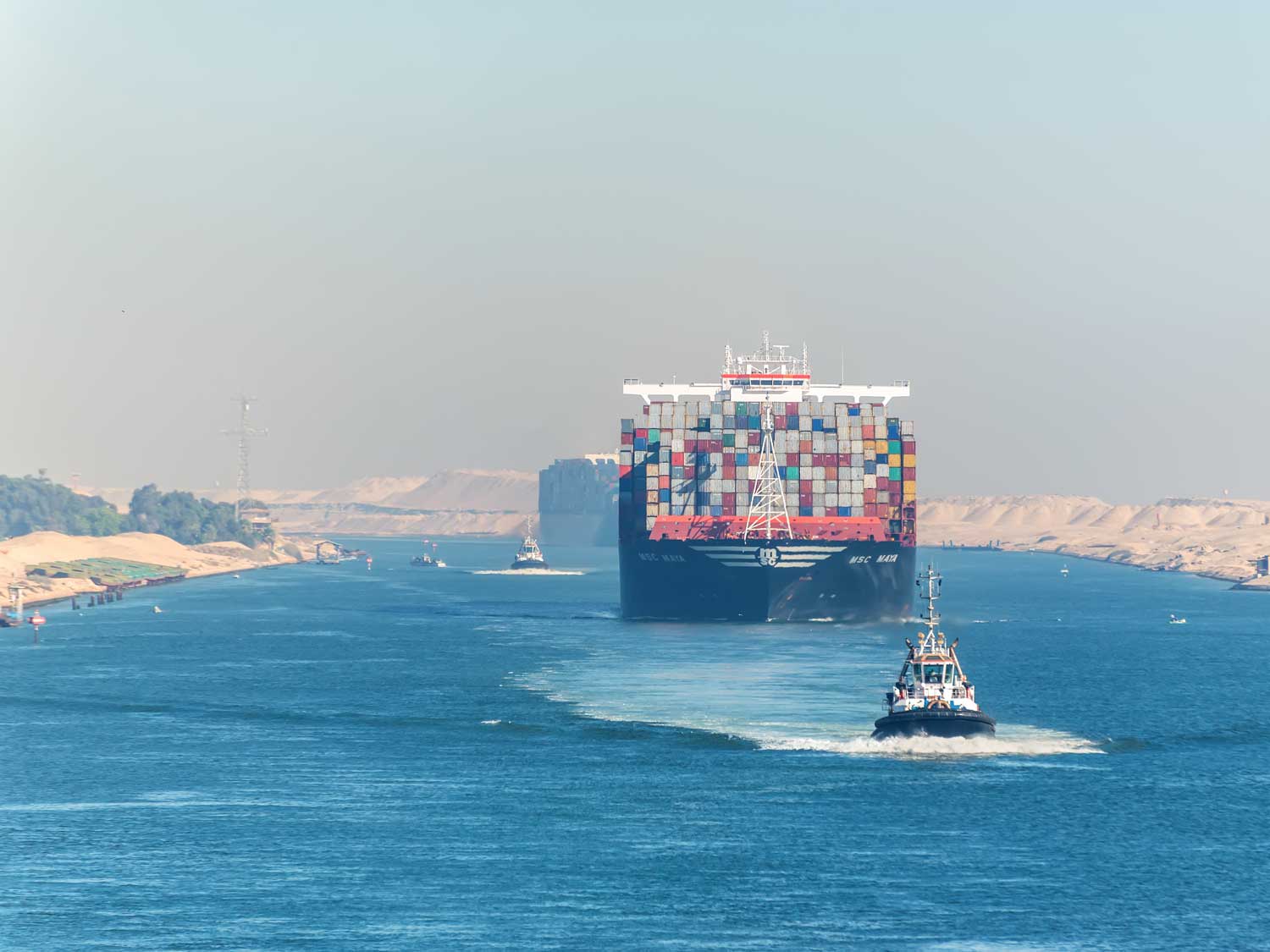
container ship and naval escort

Shipping routes likely to remain diverted until August

The diversion of container shipping around the Cape of Good Hope is expected to continue well into 2025 as carriers prioritise stability over the potential risks of returning to the Red Sea, despite recent advancements in the Suez Canal’s infrastructure

The reluctance to return to the Red Sea stems from attacks on commercial shipping by Iran-backed Houthi forces, which have created a precarious operating environment. Earlier incidents prompted carriers to divert ships around the Cape of Good Hope, and the industry remains cautious about resuming transits until the risks are fully mitigated.

Efforts by carriers like CMA CGM to reintroduce Suez services under naval protection have met resistance from shippers who fear both financial and operational uncertainties. As a result, even if the Red Sea crisis were resolved, it is likely that diversions around the Cape of Good Hope would persist for several months while confidence is rebuilt.

The logistical complexity of reconfiguring networks, combined with the risk of potential attacks, has led carriers to maintain their Cape of Good Hope detours and with the lines set to phase in new networks over February and March, further adjustments to accommodate Suez transits are unlikely before August at the earliest.

Shippers, too, are hesitant to support a return to the Red Sea. The concern is not just the extended transit times around Africa but the financial risks associated with general average (GA). If a ship were to be attacked and damaged, resulting in environmental cleanup or other liabilities, insurers may not cover GA in such high-risk zones.

Egypt has successfully tested a new 10 km extension of the Suez Canal, which allows for two-way traffic and increases the canal’s daily capacity by an additional 6 to 8 ships. This improvement also reduces the likelihood of severe disruptions, such as the grounding of the “Ever Given” in the single-lane section of the canal.

As conditions stabilise, the Suez will likely regain its position as the preferred route, but for now the added capacity is not required.

With geopolitical risks casting uncertainty over the industry, building resilient supply chains, securing comprehensive cargo insurance, and managing budgets effectively will be essential for shippers navigating the complexities of the 2025 sea freight landscape.

In this volatile market, our marine insurance cover and fixed-rate agreements on key shipping routes help minimise risk and provide budgetary stability.

To discover how Metro’s insurance solutions and fixed-rate options can support your business in 2025, please EMAIL Managing Director Andy Smith.

Year of the Snake 1440x1080 1

Preparing for Chinese New Year: Avoiding supply chain disruption in 2025

Chinese New Year (CNY) is a time of celebration across China but presents significant challenges for shippers and careful planning is essential to navigate the disruption effectively.

In 2025, the holiday officially runs from 29th January to 4th February, with its effects on production and logistics stretching weeks before and after these dates.

Production and logistics in China begin slowing well before the official holiday period. Workers start taking leave in early January, significantly reducing manufacturing output by mid-month. During the official CNY public holidays, factories, ports, and freight services shut down entirely. Although operations resume after the Lantern Festival on 12th February, it can take until mid-March for production and shipping networks to return to normal capacity.

This extended downtime creates a ripple effect across industries dependent on Chinese manufacturing, including electronics, textiles, toys, and automotive parts. The period is characterised by delayed production schedules, increased freight costs, and severe supply chain bottlenecks.

Key challenges during CNY
1. Severe delays: Factory closures lead to delayed production and delivery schedules, particularly for industries with complex supply chains.

2. Increased costs: Freight rates spike before the holiday due to high demand, often including peak season surcharges. Post-CNY, container shortages and port congestion further inflate costs.

3. Labour shortages: Even after the holiday ends, the staggered return of workers impacts production capacity, causing additional delays.

4. Inventory challenges: Businesses relying on “just-in-time” manufacturing face stock shortages as lead times lengthen significantly.

Mitigation strategies for businesses
To minimise disruption, businesses must adopt proactive strategies to maintain continuity during and after the CNY period.

Plan shipments early: Secure carrier bookings well in advance to avoid delays or last-minute surcharges. Less-than-container loads (LCL) can offer flexibility if full container capacity is unavailable.

Diversify suppliers and routes: Reduce dependency on single suppliers or ports. Consider alternative shipping methods, such as air freight, to mitigate delays.

Optimise inventory management: Build up stock levels for high-demand products before January to account for production slowdowns.

Enhance communication: Collaborate with suppliers, logistics providers, and customers to align timelines and contingency plans. Clear communication ensures all parties are prepared for potential delays.

Post-holiday recovery: Prepare for a gradual return to normalcy by staggering production schedules and allocating resources to handle delayed shipments.

Key dates to consider
22nd January to 9th February 2025: Potential for reduced production.
29th January to 4th February 2025: Official public holidays.
12th February 2025: Lantern Festival; operations typically resume.

Metro’s proactive strategies, powered by our advanced MVT technology, keep your supply chain running smoothly during Chinese New Year.

With our MVT technology, vendor management is seamless and fully transparent down to SKU level. This powerful tool empowers you to monitor every milestone in your supply chain, enabling timely and informed decisions to effectively navigate challenges.

Chinese New Year doesn’t have to disrupt your operations. With Metro’s expertise, global partnerships, and cutting-edge MVT technology, you can avoid delays, optimise costs, and maintain critical inventory levels.

EMAIL Andrew Smith, Chief Commercial Officer, today to discover how Metro can support your supply chain through Chinese New Year 2025.

Singapore boats at anchor 1440x1080 1

Shipping lines blank sailings from Asia to support rates

Container carriers operating between Asia, Europe, and the United States are leaning heavily on blank sailings to manage capacity and stabilise freight rates amidst ongoing market challenges.

With a significant proportion of scheduled sailings cancelled, this strategy has become a defining feature of the current sea freight landscape, impacting reliability and operating across key trade lanes.

Capacity cuts to sustain rates
Over the next five weeks, approximately 10% of scheduled sailings on major East-West trade lanes have been cancelled. These blank sailings, which represent 70 cancelled voyages globally, are concentrated on the transpacific eastbound trade (50%), followed by transatlantic westbound (27%) and Asia-Europe westbound routes (23%).

This strategic capacity reduction reflects carrier efforts to curb the downward pressure on freight rates, with alliances such as THE Alliance, OCEAN Alliance, and 2M each cancelling 14 voyages. Additionally, non-alliance services have contributed to 28 blank sailings during this period. However, this comes at the cost of declining schedule reliability, with around 10% of vessels expected to miss their planned departures.

Freight rate trends and challenges
Despite capacity cuts, Asia-Europe rate hikes have struggled to gain traction, with carriers introducing new general rate increases (GRIs) and freight all kinds (FAK) rates which have pushed spot rates higher.

While some Asia-Europe rates showed modest gains—with increases of over 20% on certain legs—the overall impact of GRIs has been limited, with transpacific routes struggling. We remain sceptical about the sustainability of further December hikes, as past increases have often dissipated quickly.

Evolving dynamics
The annual contract cycle for Asia-Europe routes is shifting from a January-December framework to a more flexible Q1-to-Q1 arrangement, with some carriers delaying agreements until after the Chinese New Year in late January, in the expectation of some stability.

The heavy reliance on blank sailings highlights the precarious balance carriers are attempting to strike between capacity management and rate stabilisation. While this strategy has mitigated some downward pricing pressures, it has also introduced operational disruptions and diminished schedule reliability.

As carriers continue to adjust capacity in the coming weeks, further blank sailings are expected, underscoring the importance of sharing shipping forecasts, to ensure resilience in the supply chain.

We recommend talking to us now, if you have high-priority orders and sharing your shipping forecasts, so that we can secure your space, on the services that meet your deadlines, at the best possible rates.

To learn how we can safeguard and enhance your ocean supply chain, please EMAIL our Chief Commercial Officer, Andy Smith. 

MSC and Maersk 1440x1080 1

New alliances reshape East-West trade container shipping

Container shipping faces a transformative year in 2025, as key East-West and transatlantic shipping routes are set for substantial realignment, with the dissolution of existing alliances and the formation of new ones.

Carriers are optimising their networks to enhance competitiveness and meet the evolving demands of global trade, with the emergence of two new alliances: the Gemini Cooperation, a partnership between Maersk and Hapag-Lloyd, and the Premier Alliance, a collaboration of Yang Ming, HMM, and ONE, alongside new slotting arrangements with MSC.

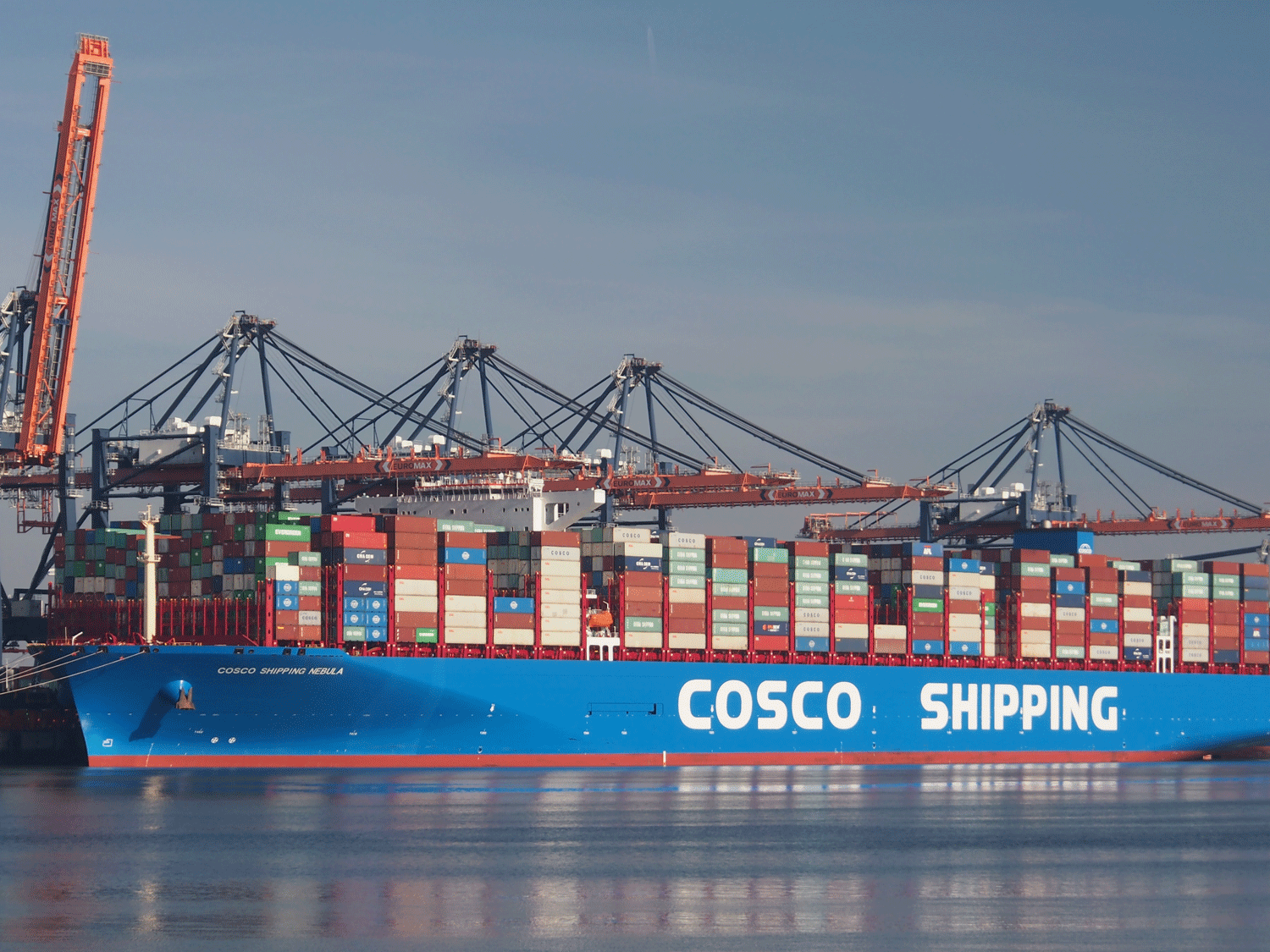
The Ocean Alliance remains unchanged, continuing with CMA CGM, Evergreen, Cosco, and OOCL. These shifts will impact service offerings, schedules, and direct port-pair connections across major East-West routes, providing shippers with a mix of increased options and competition.

New alliances drive service innovation
MSC’s standalone network, set to operate independently of the previous 2M Alliance with Maersk, offers massive connectivity across five key trade routes: Asia to North Europe, the Mediterranean, North America West Coast, North America East Coast, and the transatlantic. The network promises high direct connectivity through both the Suez and the Cape of Good Hope, featuring over 1,900 direct port pairs, making it a formidable standalone competitor.

In contrast, the newly formed Gemini Cooperation offers few direct port-port pairs, concentrating on transhipment and feeder services to optimise efficiency. On the Asia-Europe route, MSC offers three-and-a-half times more direct connections than Gemini, while the Premier Alliance has structured its services with a high frequency of calls on selected port pairs, adding competitive pressure, especially on the Asia-North America route.

Competitive corridors and service options
For Asia-Europe, key origins including Shanghai and Ningbo will see extensive service coverage, with MSC offering the most direct options, followed closely by Ocean Alliance. MSC’s standalone network is set to offer daily services along some of these high-demand corridors, which will include major destination ports in North Europe, such as Antwerp and Felixstowe.

The Ocean Alliance will leverage its consistent service network with regular calls to European hubs, meeting demand with a steady schedule. In contrast, the Gemini Cooperation will focus on select routes with a more streamlined approach, prioritising efficiency over frequency, while the Premier Alliance positions itself as a flexible choice with direct connectivity to both large and mid-size European ports.

On the transatlantic route, the landscape is also evolving. MSC’s expanded standalone service includes comprehensive transatlantic offerings, with high-frequency connections to both North American and European ports. These routes cater to demand for direct services between major East Coast ports in the US and destinations such as Hamburg, Antwerp, and Rotterdam. The Premier Alliance, through its slot exchanges with MSC, will also deliver enhanced transatlantic options, further enriching service choices on this important corridor. The Gemini Cooperation, however, has chosen to limit its transatlantic service focus, concentrating on key North European ports.

Flexibility and choice
While 36 key port pairs will see direct services from all alliances, offering shippers competitive choices, 139 port pairs will be exclusively serviced by a single alliance, providing unique service propositions.

The distinct approaches taken by each alliance highlight a shift towards service flexibility, with alliances focusing on varying service concepts, transit times, and reliability levels to cater to different market needs.

As new alliances settle into their operational structures and MSC advances as a powerful standalone force, the reshaped East-West trade-lanes, including transatlantic services, will give shippers a broader selection of service configurations.

Metro negotiate rates and volume agreements with a broad portfolio of carriers, including MSC and across the alliances, to offer our shippers the widest range of service offerings, port-pairings and rates.

Our bespoke solutions uniquely reflect our customers requirements and expectations. For further information please EMAIL Chief Commercial Officer, Andy Smith, who would be delighted to review your situation.