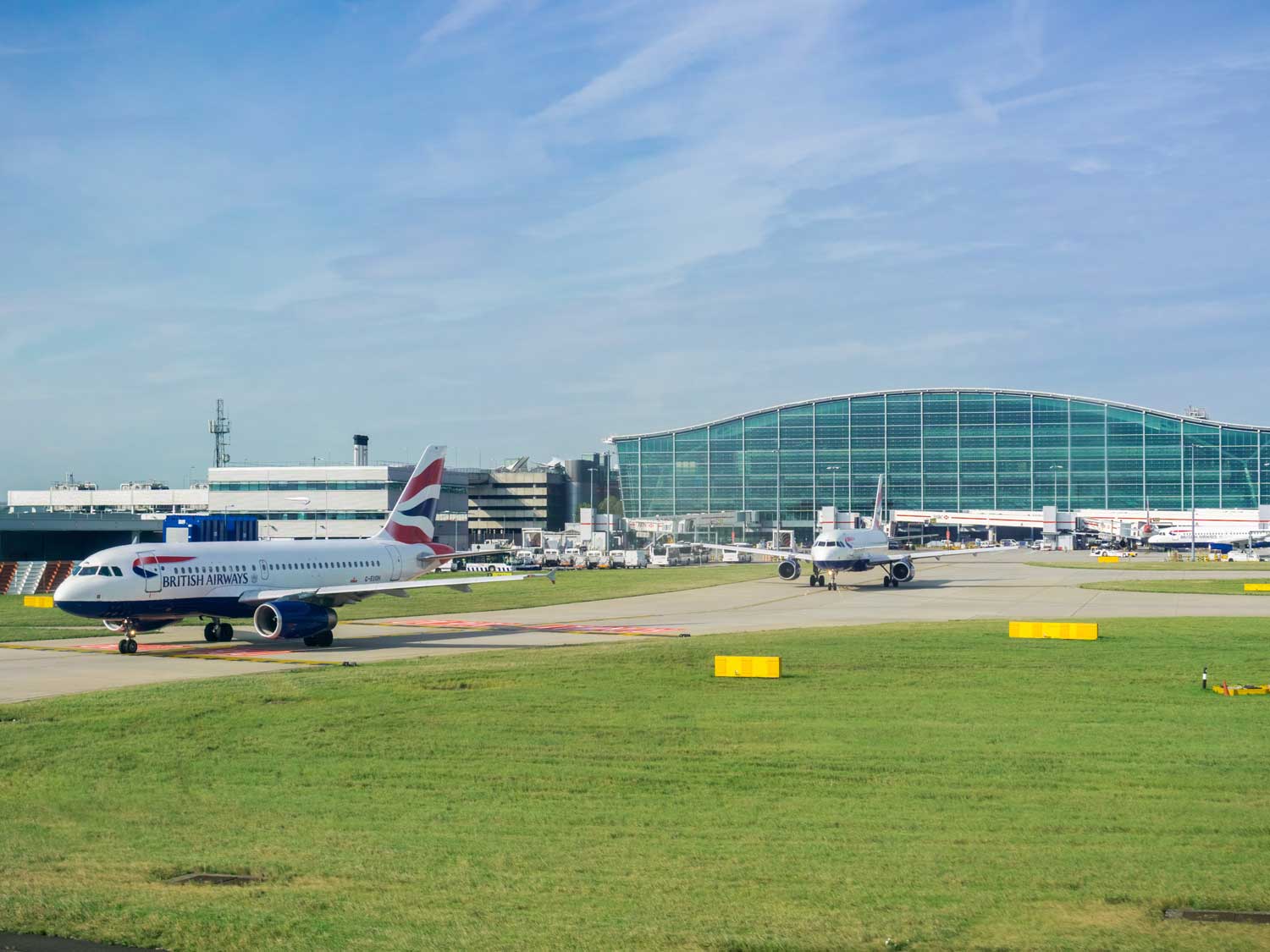
LHR BA landing

Preparing for Air Cargo Peak Season Amid Tariff Uncertainty

Air freight markets are entering the second half of 2025 in a state of volatility, as early signs of peak season demand clash with consumer caution and a shifting tariff landscape.

Despite President Trump suggesting that the next round of US tariffs may not take effect until August, the legal reality is firmer: the executive order issued on 9 April mandates that reciprocal tariffs will be enforced from 12:01 am EDT on 9 July, unless a further Executive Order is made. This deadline is already influencing behaviour across key trade routes and sectors, with shippers attempting to front-load freight and adjust their sourcing strategies.

As expected, June saw a seasonal lull across many air freight corridors. Rates out of Hong Kong to both Europe and North America softened slightly month-on-month, falling by low single digits, while year-on-year declines were sharper to North America, reflecting weaker consumer demand and reduced eCommerce.

The removal of de minimis exemptions combined with the imposition of tariffs on many goods, has triggered a pronounced shift in flows: air cargo volumes from China to the US have fallen around 15% since March, while rates have dropped by more than 15% over the same period. In contrast, tonnage from China to Europe is up 15% year-on-year, supported by stable rates and reallocated capacity.

Transatlantic lanes also reflect the summer dynamic. With increased belly-hold capacity from passenger flights, rates between Europe and North America dipped slightly in June. However, spot freight prices on both directions of the transatlantic remain higher than a year ago, suggesting underlying resilience.

Spot Market Dominance and Capacity Volatility
One of the most significant developments this quarter has been the dramatic shift toward the spot market on Asia Pacific–US lanes. By June, more than 70% of general cargo bookings on these routes were made on spot terms, up from around 50% in the same period last year. This trend reflects carrier uncertainty, volatile demand, and diverging expectations around tariff timing and impact.

For comparison, spot market activity on Asia-Europe lanes has remained relatively stable, with roughly 47% of cargo moving under short-term rates. The growing disparity between contract and spot pricing points to the challenges of forecasting capacity needs in politically sensitive markets.

Peak Season Prospects: Uncertainty Over Tradition
Traditionally, air freight demand accelerates from mid-August as retailers ramp up inventory for back-to-school, autumn sales, and the holiday period. However, the current market is anything but traditional. Consumer confidence remains fragile due to rising living costs and trade friction, with the largest shippers increasingly hesitant to commit to long-term air freight contracts.

Global air cargo volumes rose by just 1% year-on-year in June, with capacity growth outpacing demand for the first time in over 18 months. This imbalance is likely to pressure rates across many lanes, even as jet fuel prices spike and geopolitical risks persist.

While some Southeast Asia–US routes saw modest rate gains in June, buoyed by pre-tariff demand and capacity rebalancing, overall expectations for Q3 remain muted. Analysts warn that weaker consumer spending and ongoing tariff complications could limit any meaningful peak season surge, especially on transpacific routes.

Outlook 
Despite the structural pressures, there are opportunities for shippers in the current environment. Short-term rates are more flexible, capacity is more available than in past peak seasons, and carriers are actively repositioning services to match evolving demand patterns.

The real wildcard remains US trade policy. Without a new executive order, 9 July marks the start of a new tariff chapter that will ripple across global supply chains, just as the air freight industry typically gears up for its busiest season.

Now is the time to plan ahead.
With more flexible short-term rates, improved capacity availability, and carriers adapting to demand shifts, shippers have a unique window to secure cost-effective and reliable air freight solutions before peak season pressure builds.

EMAIL our managing director, Andrew Smith today to assess your options and take advantage of current market conditions.

Dubai

Middle East Air Freight Disruption Despite Partial Recovery

Qatar Airways has resumed operations from Doha following a temporary airspace closure triggered by Iranian missile attacks on US bases in Qatar and Iraq. The reopening has offered some relief, but flight schedules remain heavily disrupted, and wider instability across the Middle East continues to affect air freight flows.

The recent hostilities briefly grounded flights from Doha and contributed to a fresh wave of cancellations across the region, just days after US airstrikes on Iranian nuclear facilities escalated the conflict. Although a short-lived ceasefire between Iran and Israel allowed for a partial resumption of services, tensions have reignited, forcing airlines and cargo operators to remain cautious.

Qatari airspace reopened in the early hours, but Qatar Airways warned of significant delays as flights resumed and schedules were rebuilt. Meanwhile, Emirates SkyCargo confirmed it has begun uplifting additional fuel on flights from Dubai to allow for longer rerouting — a measure that could reduce payload and force the offloading of some shipments.

Despite these challenges, cargo operations in the region have proven relatively resilient. From Saturday to Monday, around 13,000 tonnes of air freight moved from the Middle East to Europe, only slightly down from early June levels. Capacity from Asia Pacific into the Middle East has even increased over the same period, climbing to 18,000 tonnes.

Airline Suspensions and Reroutes Continue
Passenger services, many of which carry belly-hold cargo, remain widely impacted. Airlines including British Airways, Air France KLM, Singapore Airlines, United Airlines, American Airlines, Air Canada, Finnair, and Air Astana have cancelled or suspended flights to key Gulf hubs such as Dubai, Doha, and Riyadh. Flights to Israel, Iraq, Iran, Lebanon, Jordan, and Syria also remain suspended due to the continuing risk.

Flight tracking data confirms extensive rerouting around Iranian and Iraqi airspace. Empty corridors now dominate the skies over key parts of the Middle East, with many services opting for longer paths via Egypt, Saudi Arabia, or the Caspian region adding time, fuel cost, and operational complexity.

While the overall air freight network remains intact, the situation is highly volatile. The risk of sudden airspace closures, GPS interference, and further retaliatory strikes remains high, particularly for carriers linked to the United States. Capacity constraints, schedule delays, and routing inefficiencies may persist until regional tensions ease.

We’re actively monitoring events, adjusting routings, and working with trusted partners to safeguard your shipments. If your supply chain is exposed to disruption in the Middle East, EMAIL our managing director, Andrew Smith, for clear advice and fast solutions.

Airfreight Tracking 3.0 v2 1440x1080 1

Real-Time Visibility Takes Flight

New live flight tracking powers smarter airfreight decisions with MVT Track & Trace.

We’re excited to share a powerful new upgrade to MVT Track & Trace, Metro’s shipment visibility platform, that delivers even greater control and confidence when managing your airfreight.

Our latest enhancement introduces real-time flight telemetry tracking, giving you an instant, accurate view of your air cargo’s location, live and in motion. For every shipment, you can now follow its journey across an interactive map, complete with precise flight paths and positional data updated in real time.

Whether you’re monitoring standard freight or time-critical consignments, this new feature transforms how you track air movements, with benefits that include:

  • Live flight tracking for every airfreight shipment
  • Visual map interface showing the current aircraft position and route
  • Accurate flight data, including departure, ETA, and arrival confirmation
  • Time-stamped milestone events, clearly logged for full shipment oversight

Each key status change is automatically captured and displayed through a clean, user-friendly interface, so you’re always in the know, without the need for chasing updates.

This level of transparency is especially valuable when speed and certainty matter most. By enriching your operational visibility, our new flight telemetry feature supports smarter decisions, tighter planning, and more resilient supply chains.

At Metro, we’re committed to continuous innovation that makes logistics smarter, faster, and easier to manage. This upgrade to MVT Track & Trace is just one of the ways we’re helping you stay ahead.

Want to see it in action? Log in to your MVT portal today or EMAIL Ian Powell,
Customer and Technical Solutions Director.

Freighter

Air Cargo Outlook Strengthens

Global air cargo demand continues to show signs of recovery, driven by seasonal trends, front-loaded shipments and shifting trade flows. However, market conditions remain volatile, with varying regional dynamics, capacity fluctuations and ongoing uncertainty.

Air cargo demand, measured in cargo tonne-kilometres (CTKs), rose nearly 6% year-on-year in April, supported by the seasonal uplift in fashion and consumer goods, pre-emptive shipping ahead of US tariff changes, and falling jet fuel prices. Month-on-month, demand rose 2.3%, building on a strong March performance and growing again in May.

Freighter capacity returns to the trans-Pacific
Freighter capacity is rising again, especially on the transPacific, as airlines cautiously reintroduce wide-body lift in response to improving demand. Asia–Europe and Middle East–Asia freighter supply grew 11%, while Asia Pacific–North America increased 8% in the first week of June.

After a sharp fall in eCommerce volumes triggered by new US tariff rules, capacity had shifted away from China–US lanes. But as volumes recover, albeit slowly, freighters are returning.

Freighter services are also being bolstered through indirect routings. Chinese carriers, for example, have added new air–air links via Hanoi to support Vietnam–US demand, while capacity from South Korea is tightening, especially for high-tech and perishables.

Tariff volatility driving unpredictable rate trends
The Baltic Air Freight Index rose 1.2% month-on-month in May, but was over 5% down win the same period in 2024. Spot freight rates on lanes out of China softened in early May before rising sharply later in the month. The spot rate index for Hong Kong was up 1% compared to April but down 6.3% year-on-year.

A patchwork of changing US tariff rules created considerable mid-month turbulence. eCommerce shipments, which made up 50% of China–US air freight in 2024, have been hit hard. The May 2 removal of the de minimis exemption for low-value shipments was followed by a brief truce and a reduction in duties. First from 145% to 120%, then to 54%, with a flat $100 fee on postal items. These changes triggered both short-term front-loading and momentary drops in volumes.

Carriers are warning that further disruptions may arise if shippers wait too long to secure capacity, especially with the current 90-day tariff truce due to end in mid-August. Late-quarter demand and compliance bottlenecks could create pressure points, especially on high-traffic lanes such as China–US and intra-Asia.

Regional variation and trade lane shifts
Rates and demand trends continue to diverge across regions. Intra-Asia demand is firm, supported by high-tech and perishables, while South Korea–US routes require bookings up to two weeks in advance. Rates from Japan to Europe are rising, though capacity from Guangzhou and other hubs has been reduced. Meanwhile, outbound rates from Vietnam and India remain lower year-on-year.

In the Americas, rates from the US to South America are significantly higher than a year ago, although some observers are beginning to flag early signs of overcapacity. Rates from Europe are mixed, and seasonal factors like cherry and peach exports are also starting to influence flows and capacity allocation.

Jet fuel remains a bright spot for airlines. Prices were 21% lower year-on-year and 4% down month-on-month, offering margin support even in the face of softening yields.

As air cargo markets navigate shifting demand and volatile rates, securing reliable space at the best rates is more critical than ever. Metro’s global air freight specialists work across key trade lanes, including Asia, Europe and the Americas, to help you air freight with confidence.

Whether you’re moving high-tech, fashion, perishables, eCommerce or anything else, our team ensures fast, reliable and cost-effective air freight solutions tailored to your needs.

EMAIL managing director, Andrew Smith, today to secure capacity, avoid disruption and keep your supply chain moving efficiently.